Reviewed · TOURS
Tokyo: True Crime And Ghost Stories Tour
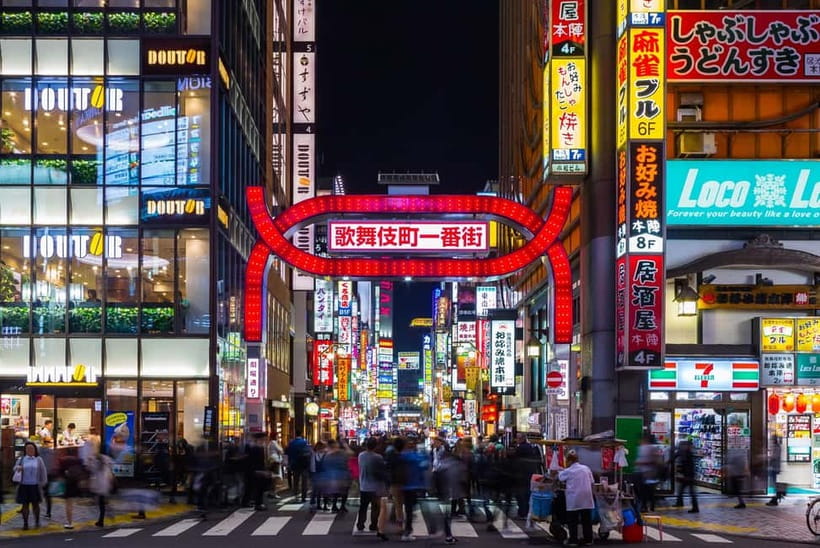
Tokyo’s polished surface slips quickly on this three-hour dark-history walk. Starting at Hanazono Shrine near Golden Gai, guide John leads you through Kabukicho’s crime and adult-entertainment districts, Toyama Park’s grim wartime past, and Aoyama Cemetery’s ghost stories. I like the unusual route and the way it connects crime, war, folklore, and modern Tokyo. I also like that John’s animated storytelling and dry humor keep heavy subjects from becoming a grim lecture.
In This Article
- Key points to know before booking
- Starting at Hanazono Shrine beside Golden Gai
- Kabukicho: Tokyo’s nightlife with the lights turned down
- Toyama Park and the weight of Unit 731
- Aoyama Cemetery after dark
- John’s storytelling is the real value
- Walking conditions and who should join
- Weather, timing, and group format
- Should you book the Tokyo True Crime and Ghost Stories Tour?
- FAQ
- How long does the Tokyo True Crime and Ghost Stories Tour last?
- Where does the tour meet?
- Where does the tour finish?
- What language is the tour conducted in?
- Is the tour suitable for children?
- Are transportation and meals included?
This is not a gentle ghost walk. You will hear about murder, organized crime, prostitution, human experimentation, and other painful subjects. The route also involves a good deal of walking, stairs, and roughly 200 yen in transport costs, so I would skip it if you tire easily, dislike graphic material, or want a polished family activity.
Key points to know before booking
- Kabukicho opens the story: Learn about gang conflicts, murders, love disputes, love hotels, and Tokyo’s quasi-legal sex industry.
- Toyama Park brings wartime crimes into view: The tour discusses Unit 731 and the victims of human experimentation.
- Aoyama Cemetery supplies the atmosphere: Expect Japanese ghost stories in Tokyo’s largest cemetery, along with a visit to Hachiko’s grave.
- John is the central attraction: His acting, jokes, expressive delivery, and command of Japanese history shape the experience.
- The walk is for adults and reasonably fit walkers: Children under 14 are not accepted, and wheelchair users may find the route unsuitable.
- At $35, the value is strong for a private-feeling history walk: There are no admission charges, but you pay about 200 yen for transport and dinner is not included.
Starting at Hanazono Shrine beside Golden Gai
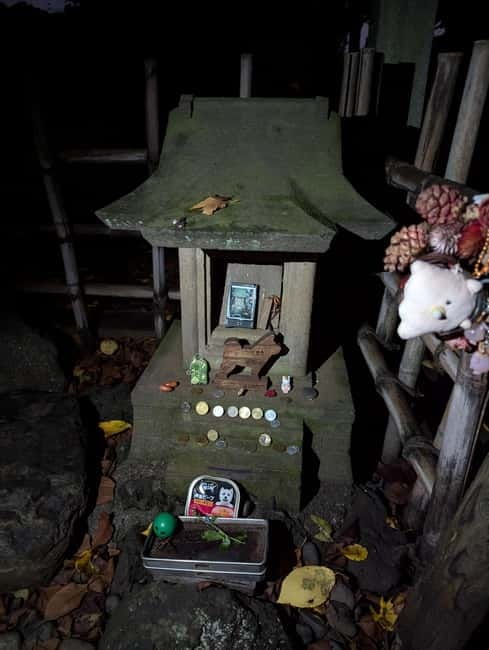
The meeting point is inside Hanazono Shrine, just in front of the stairs leading toward the main shrine building. That location matters. You are not starting beside a large station sign or a bright tourist office, so check your booking messages before setting out. The guide is described as John, a thin, bald white man, which should make him fairly easy to identify.
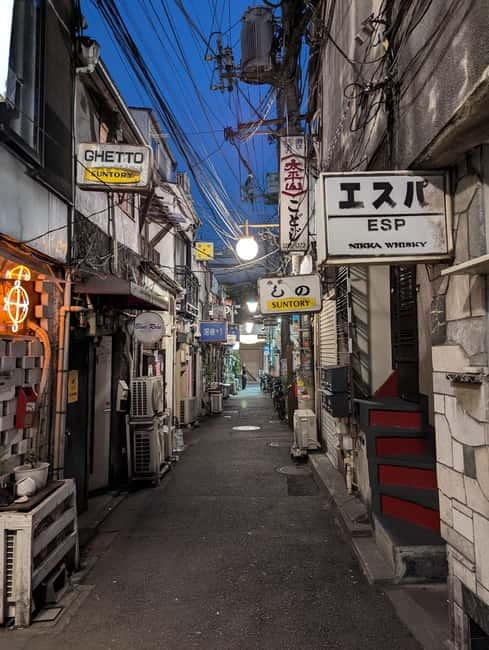
Hanazono Shrine sits near Golden Gai, the tiny drinking quarter made up of narrow lanes and small bars. This is an effective beginning because the shrine and the surrounding nightlife create an immediate contrast: quiet religious space on one side, neon and late-night entertainment on the other.
John’s personality is a major part of the outing. He uses acting, comic timing, side stories, and what several comments describe as wicked or dark humor. I would expect a performance as much as a standard guided walk. He also welcomes questions about Japan beyond the planned subject, which can make the experience feel more like a lively conversation than a fixed script.
The humor is not for everyone. Adult language appears at times, and the jokes can be dirty or irreverent. That tone helps make difficult material bearable for the right audience, but it can feel misplaced if you prefer a solemn treatment of crime or wartime suffering.
If you're still narrowing it down, here are other tours in Tokyo we've reviewed.
Kabukicho: Tokyo’s nightlife with the lights turned down
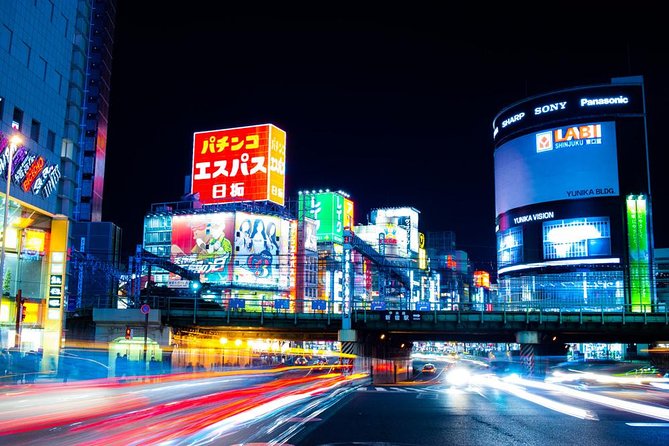
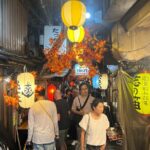
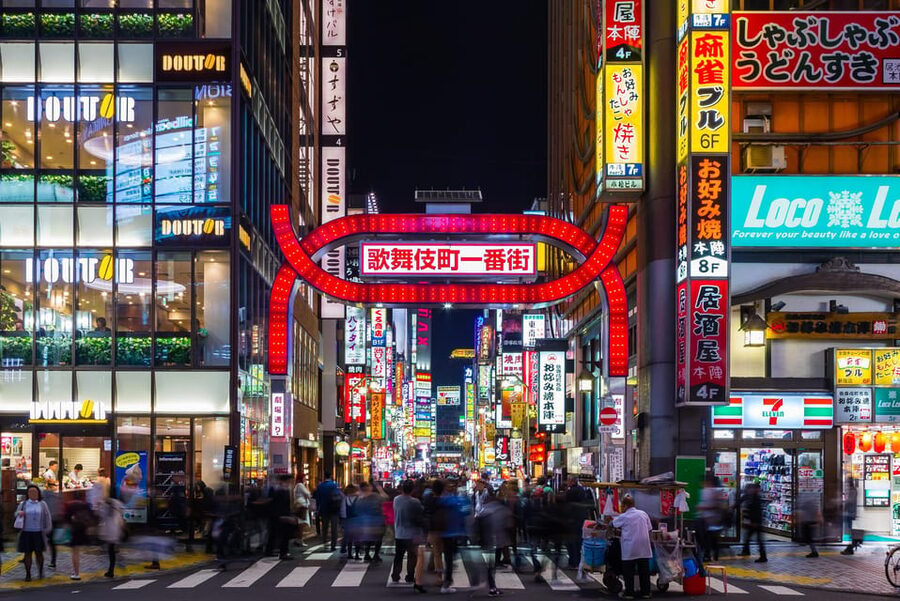
The first main section takes place in Shinjuku’s Kabukicho, Japan’s largest red light district. You will spend about 45 minutes hearing how organized crime, nightlife, sex businesses, and ordinary city life overlap in this part of Tokyo.
The appeal here is not simply seeing neon signs. John explains the forces behind the district: gang wars, shocking murders, abandoned or betrayed lovers, love hotels, and girl and boy clubs. He also discusses the legal gray areas around the sex industry. That context gives you a more useful way to read the neighborhood after the tour. Instead of seeing only bright signs and crowded streets, you begin to notice the business structure and social tensions behind them.
I particularly like this part for first-time visitors who have already seen Tokyo’s clean, orderly image. Kabukicho shows a city that is not less organized, but more complicated than the usual postcard version. The stories help you understand why this district has such a strong reputation without pretending that every dark rumor is fact.
The route passes through a major entertainment zone, so you should expect city noise, signs, and the distractions of normal nightlife. This is not a secluded crime scene tour. The power comes from standing in an active neighborhood while John explains the events and subcultures linked to it.
The discussion can include prostitution, murder, sex, and criminal groups. If you are sensitive to those topics, this is the point to decide if the rest of the evening suits you. For true crime fans, it sets the right tone: factual material, unsettling stories, and jokes used as pressure relief.
Toyama Park and the weight of Unit 731
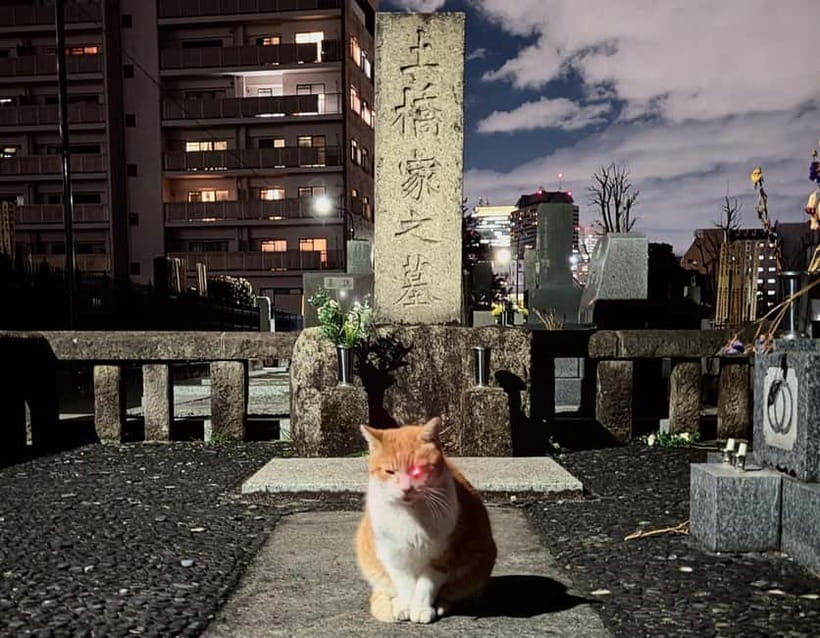
The next section shifts sharply from urban nightlife to wartime history. Toyama Park is described as Tokyo’s mini-Auschwitz, a deliberately forceful comparison that signals the seriousness of the subject. Here, John talks about Unit 731 and the human experimentation carried out during Japan’s wartime period.
This is the most difficult part of the walk. The subject is not ghost-story entertainment. It concerns crimes against humanity and the victims of medical experiments. I appreciate that the tour places this history alongside crime and folklore because it shows that the dark side of Tokyo is not limited to gangsters and haunted places. Some of the worst acts connected with Japan took place under military authority and belong to the history of war crimes.
You should prepare yourself for sensitive details. The description promises some of the most gruesome material on the route, and the subject alone may be upsetting even when presented with care. The tour’s humor continues around the broader experience, but I would not assume every moment receives a light treatment.
Toyama Park also gives the walk a change of pace. After the dense streets of Kabukicho, you have room to think about what you have heard. The tour does not list an admission fee here, and the value comes from John’s explanation rather than from a museum display or formal memorial visit.
The exact stop sequence is not fully detailed beyond the main locations, so do not expect a large exhibition or an indoor historical site. This is a storytelling walk built around place and context. If you want extensive documentation, photographs, or a formal academic presentation, you may find the format too informal. If you want a guide to connect difficult history with the city around you, it can be a powerful section.
Aoyama Cemetery after dark
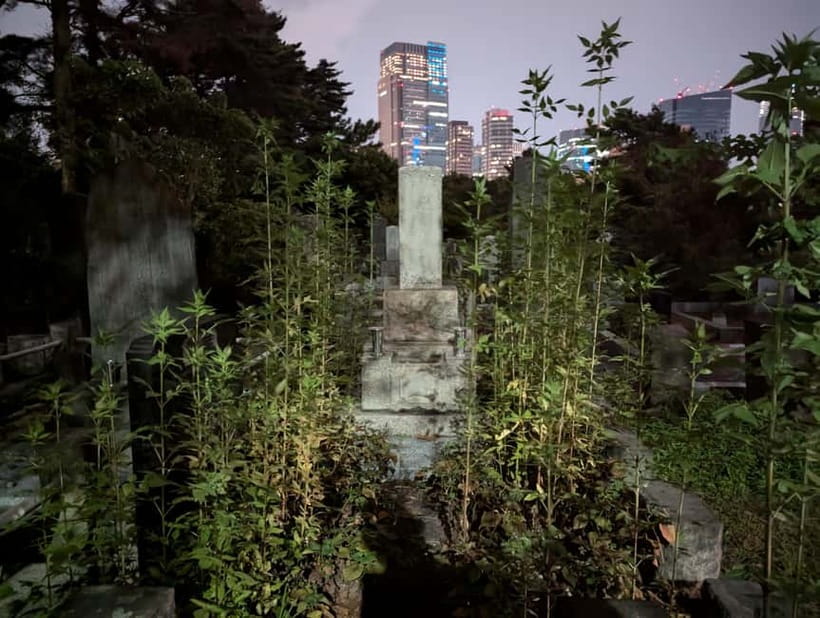
The final major setting is Aoyama Cemetery, Tokyo’s largest cemetery. By this point, the tour has moved from real crimes to folklore and ghost stories, and the cemetery provides the setting the subject needs.
Timing will affect this section. Many departures appear to finish in the evening, and one practical suggestion is to begin early enough to see the cemetery before full darkness. That gives you a clearer sense of the place itself before John shifts into supernatural tales. A later start may create a spookier mood, but you will have less daylight to see the cemetery’s layout.
John tells Japanese ghost stories in an expressive style, sometimes making himself sound more frightening than the ghosts. His acting is repeatedly praised as part of the fun, and this is likely where that skill matters most. Expect the stories to be theatrical rather than a series of jump scares. The experience relies on voice, setting, local folklore, and the imagination you bring with you.
Aoyama Cemetery is also a place of respect, so follow John’s lead about where to stand and how to behave. The tour’s irreverent tone should not be confused with permission to treat graves as props. The setting is valuable because it lets you hear traditional ghost stories in a real cemetery, not because it turns the cemetery into an amusement park.
The route includes Hachiko’s grave, adding a gentler note to the final stop. Hachiko is remembered in Japan as the country’s most loyal dog, and his grave offers a striking contrast to the violent crimes and unsettling legends discussed earlier. I like that detail because it keeps the ending from being one long march into gloom.
The tour finishes at Aoyama-Itchome Station. That is useful after a three-hour walk, though you should still allow time to orient yourself before heading back to your hotel. John has helped some groups find the correct trains home, but that should be treated as a kind gesture rather than a promised part of the tour.
John’s storytelling is the real value
At $35 per person, this is fairly priced for a three-hour guided experience with no attraction fees. You are paying for the route, research, explanation, and presentation. The 200 yen transport charge is extra, and dinner is not part of the evening, so plan a meal separately.
The tour’s strongest feature is John’s delivery. He is described as an enthusiastic guide, an entertaining actor, and a passionate storyteller. That combination matters because the material covers several different subjects. A basic crime walk could become repetitive, while a serious wartime lecture could feel heavy after an hour. John moves between murder cases, Yakuza history, adult nightlife, war crimes, and ghosts, using jokes and performance to hold your attention.
I also value the chance to ask questions. Japan’s dark history can be difficult to understand through headlines or internet stories alone. John’s willingness to discuss wider Japanese history helps place individual cases in a larger setting. The tour seems especially useful if you want a different view of Tokyo but do not want a dry classroom talk.
Still, the style is personal and quirky. Some people will love an introverted scholar with odd side stories and a taste for day drinking with his cat. Others may prefer a restrained guide with a more formal tone. You should choose this experience for personality-led storytelling, not for a polished sightseeing production.


Walking conditions and who should join
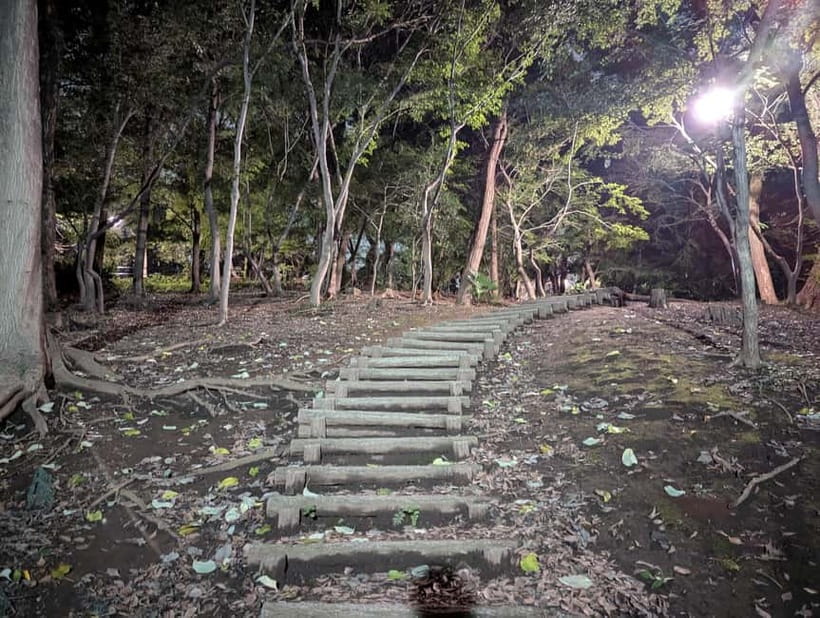
Three hours on foot can feel long in Tokyo, especially in hot and humid weather. One attendee had already walked about 20,000 steps before joining and still found the time passed quickly, but that does not make the route easy for everyone. Wear comfortable shoes, bring water, and avoid scheduling it after an exhausting full day if you tire easily.
The tour is not suitable for children under 14, wheelchair users, people with a low level of fitness, or anyone over 300 pounds, or 136 kilograms. Stairs are part of the route, including the shrine meeting point, and the walk is substantial.
I would recommend it most strongly to:
- Adults who enjoy true crime documentaries and paranormal stories
- People interested in Yakuza history and Tokyo’s adult entertainment districts
- History fans who want to discuss wartime Japan honestly
- Repeat visitors looking beyond temples, shopping, and major viewpoints
- Couples or friends who enjoy dark humor and theatrical storytelling
I would not choose it for a first activity after a long flight. I would also avoid it for young teenagers, anyone seeking a quiet or reverent tour, and people who want every claim presented in a formal academic format.
Weather, timing, and group format
The tour runs for three hours, with starting times dependent on availability. An evening departure fits the ghost-story section well, but an earlier start may help you see Aoyama Cemetery before it becomes fully dark. In summer, heat and humidity can make the walking harder. In rain, the cemetery atmosphere may become memorable, but you will need suitable clothing and shoes.
English is the tour language. A private group option is available, which could be worthwhile if your party wants to ask many questions or prefers a more relaxed pace. The standard experience may also feel intimate because the guide’s storytelling works best when people can hear clearly and stay engaged.
There are no entry fees along the route. Your only listed extra cost is about 200 yen for transportation. Since the walk finishes at Aoyama-Itchome Station, you should have a transit card or small amount of cash ready.
Should you book the Tokyo True Crime and Ghost Stories Tour?
Book it if you want Tokyo explained through its crimes, uncomfortable wartime record, nightlife, and folklore rather than through its famous attractions. John’s acting and humor give the tour energy, while the route adds places you might not visit on your own.
Skip it if graphic material, sexual subjects, adult jokes, or wartime atrocities are not for you. Also skip it if you want a short, easy walk or a strictly solemn history lesson.
For the right audience, $35 buys more than spooky entertainment. You get a pointed look at the city’s underbelly, a serious discussion of Unit 731, Japanese ghost stories in Aoyama Cemetery, and a guide who can keep the conversation moving. I would book it as an evening change of pace, preferably on a day when you still have enough energy to walk and listen closely.
FAQ
How long does the Tokyo True Crime and Ghost Stories Tour last?
The tour lasts three hours. Starting times vary, so check availability when booking.
Where does the tour meet?
Meet at Hanazono Shrine in Shinjuku, just in front of the stairs leading to the main shrine building. The meeting point is inside the shrine grounds near Golden Gai.
Where does the tour finish?
The tour finishes at Aoyama-Itchome Station.
What language is the tour conducted in?
The live tour is conducted in English.
Is the tour suitable for children?
No. Children under 14 are not permitted, and the tour includes adult language, sexual subjects, murder, graphic material, and war crimes.
Are transportation and meals included?
Transportation is not included. Allow about 200 yen for transport. There are no entry fees along the route, and dinner is not included.
More tours in Tokyo we've reviewed












Tours, compared.
 ★ 5.0Mt Fuji and Hakone 1-Day Bus Tour Return by Bullet TrainFrom $163
 ★ 5.01-Day Tokyo Bus TourFrom $129
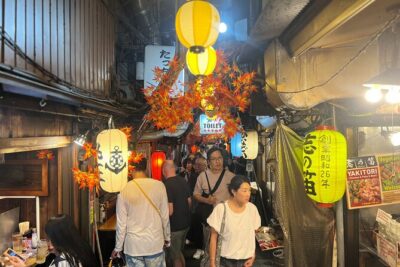 ★ 5.0Tokyo: Shinjuku Food Tour (13 Dishes at 4 Local Eateries)From $86
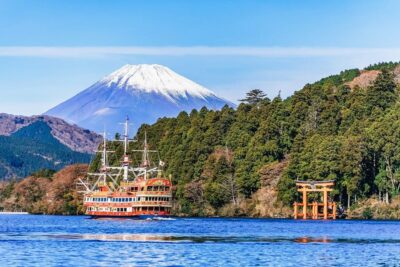 ★ 4.4Tokyo Mt Fuji 5th St & Hakone Cruise Bus Tour w/Bullet TrainFrom $15410 hours
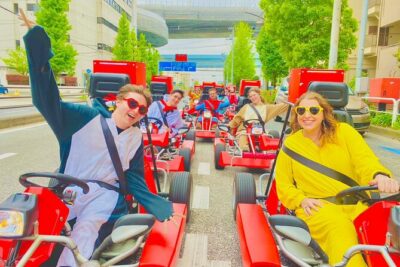 ★ 5.0Flagship 2-Hours Official Street Go-Kart Tour – Tokyo Bay ShopFrom $642 hours to 2 hours 30 minutes (approx.)
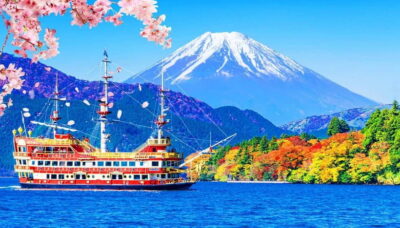 ★ 4.7Tokyo: Mt. Fuji Tour, Hakone Ropeway, Owakudani, Lake AshiFrom $5410 hours