Reviewed · MORNING
Tokyo: Private Morning Run with Sento Bath Experience
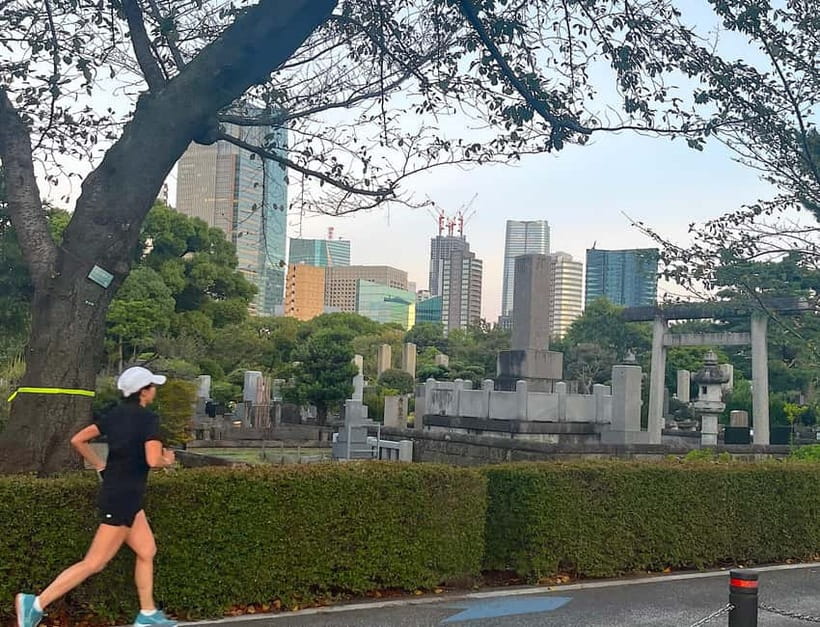
Tokyo before breakfast is a different city. On this private morning run, Aki leads you for 10 kilometers through quiet Harajuku and Aoyama, with Yoyogi Park, local streets, a shrine stop, viewpoints, and lesser-known corners along the way. The run ends with an optional soak in a traditional sento, making this part workout and part local ritual.
In This Article
- Key points before you book
- Why this early Tokyo run feels different
- Meeting Aki at Harakado
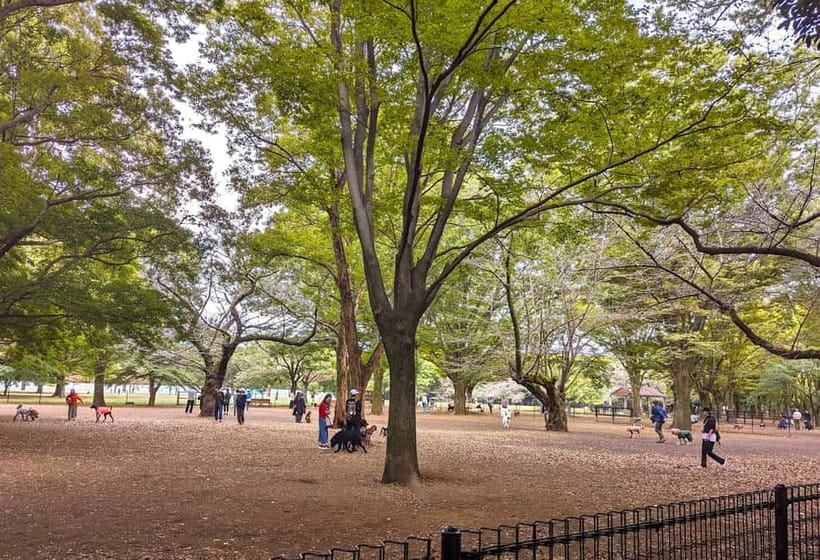
- Yoyogi Park: the green start to the route
- Harajuku before the shops open
- A small shrine and Tokyo customs
- The secret stop, viewpoint, and lesser-known corners
- Running with a flexible pace
- The sento finish: a useful cultural lesson
- What the $48 price really covers
- Who should book this experience
- Practical booking advice for your morning
- Should you book the Harajuku morning run?
- FAQ
- How long is the Tokyo morning run and sento experience?
- Where does the activity start?
- Where does the experience finish?
- What pace does the group run?
- Is the sento bath included every day?
- What should I bring?
- Who is not suited to this activity?
I like the flexible pace, which can include walking or a shorter route, and I like the bath experience, since it gives you a practical look at Japanese daily life. A possible drawback is that the 10K is too gentle for serious runners seeking speed work, and the sento visit is not available on Thursdays.
Key points before you book
- A private 10K with Aki: You get one guide and a route adjusted to your pace, rather than a large running group.
- Tokyo before the crowds: The early start lets you see Harajuku and Aoyama when the streets are calm.
- Yoyogi Park and local landmarks: The route mixes green space, city streets, viewpoints, and a small shrine experience.
- A relaxed 6 to 8 km/h pace: Walking sections and a shorter course are possible if needed.
- A traditional sento finish: On eligible days, your fee covers the bath, towel, and coin locker.
- A good value at $48: The price covers a private guide, water, a 10K route, local commentary, and bath admission.
Why this early Tokyo run feels different
Most sightseeing in Tokyo begins after the city has switched on. This experience starts earlier, giving you a look at Harajuku and Aoyama before shopping crowds and commuters take over. You run through streets that feel more spacious, then return to the city as the morning gathers speed.
That timing matters. A 10K can pass through several sides of Tokyo without asking you to spend the whole day on your feet. You get green space at Yoyogi Park, stylish Harajuku and Aoyama, quieter side streets, and stops selected by a local runner who knows the area well.
Aki is a Tokyo-based leisure runner and occasional half-marathoner. She leads in English or Japanese and keeps the tone friendly rather than competitive. One useful detail from the experience is the advertised pace of 6 to 8 kilometers per hour. That makes this a sightseeing run first, not a race.
You should still be comfortable moving for two hours. The route can be shortened or include walking, but the activity is not designed for people with mobility impairments, heart problems, or children under 16.
Other private tours in Tokyo

Meeting Aki at Harakado
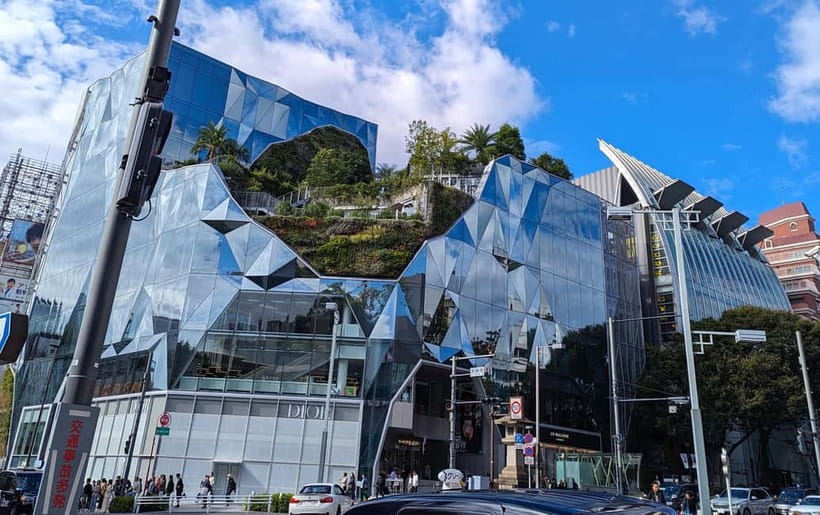
The starting point is in front of Dior at the Tokyu Plaza Harajuku Harakado building. Aki wears a white cap, which gives you a simple way to spot her in the early morning.
The tour returns to the same building after the run and bath visit. That is helpful if you are staying nearby or want a fixed point for the rest of your day. You do not need to work out a complicated meeting arrangement across central Tokyo.
Bring comfortable running shoes, water-friendly clothing for the bath, and a change of clothes. Water is included, but food is not, so plan breakfast for after the experience. Smoking is not allowed.
Yoyogi Park: the green start to the route
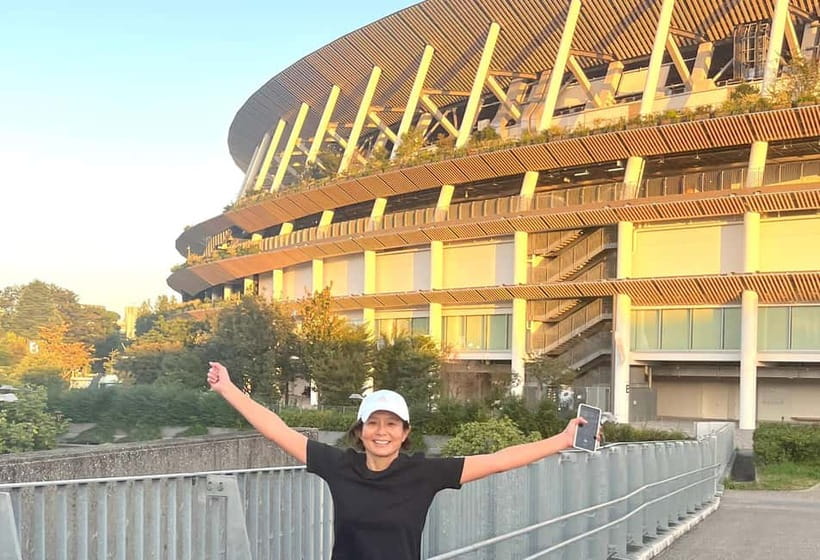
Yoyogi Park gives the run some breathing room early on. Instead of beginning with a long stretch of traffic-heavy city streets, you move into one of Tokyo’s best-known green areas and get a calmer introduction to the morning.
Aki provides stories and trivia during the route, so the park is not simply a place to pass through. The value here is the contrast. Tokyo is famous for dense streets and tall buildings, but this part of the run shows how quickly the city can shift into open public space.
Your pace matters more than your running record. Stop briefly if you need to listen, take in the surroundings, or adjust your breathing. The guide can shape the route around your comfort, though you should not expect a formal athletic training plan.
Harajuku before the shops open
Harajuku is best known for youth fashion, shopping, and busy pedestrian areas. In the early morning, you see a quieter side of the district. Running through it lets you notice the mix of polished storefronts, older streets, and local spaces without spending hours walking from one attraction to another.
This is also where the activity differs from a standard city tour. You are not simply stopping for photographs at a major landmark. You are moving through the area while Aki points out local details and explains what you are seeing.
The tradeoff is that running limits how much time you spend at each stop. If you want long photo sessions or detailed architectural explanations, a walking tour would suit you better. If you like covering ground and hearing short stories along the way, this format makes good use of two hours.
A small shrine and Tokyo customs
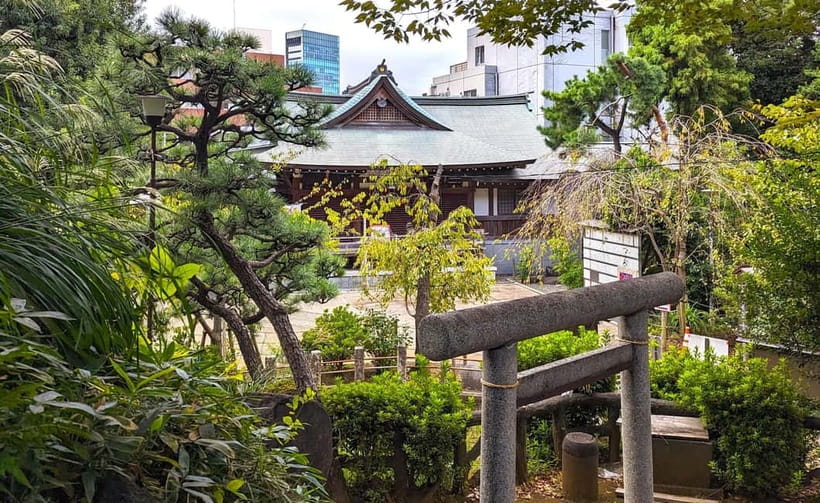
One especially appealing part of the route is the chance to visit a small local shrine. Aki can walk you through the traditional process of paying respect, which gives the stop more meaning than a quick look at a gate or prayer hall.
This is the sort of detail that makes the experience useful for a first morning in Tokyo. You are given enough guidance to approach the place respectfully, without needing to know every custom in advance. The shrine stop also breaks up the run and gives you a moment to slow down.
The exact shrine is not specified, so you should not book this expecting a famous named landmark. Its appeal is the local setting and the explanation, not a major sightseeing checklist item.
A few more Tokyo tours and experiences worth a look
The secret stop, viewpoint, and lesser-known corners
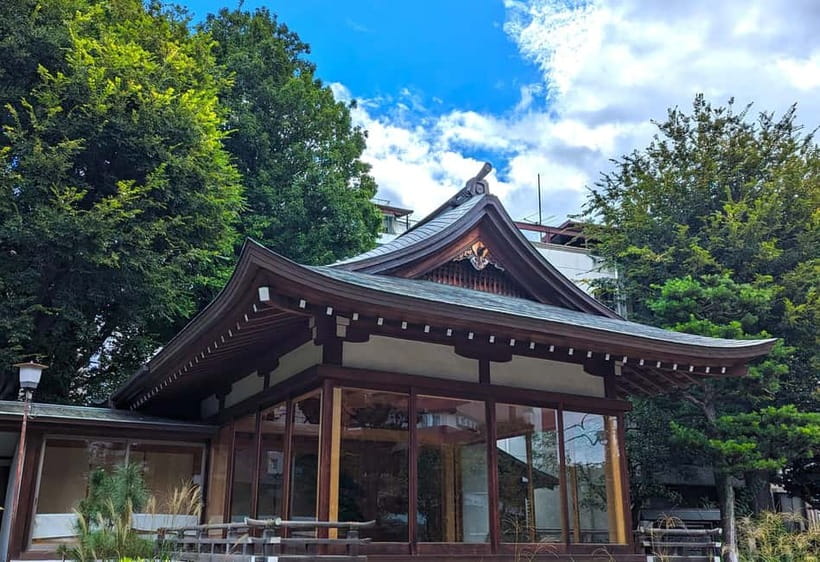
The route includes a secret stop, a viewpoint, and another lesser-known stop. These names describe the character of the outing more than fixed attractions. You get a guided route through Harajuku and Aoyama, but the focus is on discovering places away from the usual Tokyo circuit.
The viewpoint adds a pause and a change in perspective. You might find it useful for photos, but the available information does not identify the exact view or guarantee a particular skyline. That uncertainty is worth noting if you want a tour built around named landmarks.
I like the way these stops keep the run from becoming a straight 10K loop. The route has room for stories, short breaks, and local context. At the same time, your experience will depend partly on your pace and the route Aki chooses for the morning.
Running with a flexible pace
The 6 to 8 km/h range is friendly for casual joggers and many regular runners. It allows you to talk with Aki and take in the surroundings instead of focusing only on speed. You can ask for walking sections or a shorter course, which is useful if jet lag, heat, rain, or a long flight has affected your energy.
Aki has also adjusted the run to match an individual pace. One participant specifically appreciated that flexibility, and another said the activity became a memorable way to begin a Tokyo trip. The practical lesson is simple: tell Aki your preferred pace early, rather than trying to keep up silently.
Serious athletes may find the pace too slow and the stops too frequent for a focused workout. This is not a coached interval session, race preparation run, or personal-best challenge. It is a private introduction to several parts of the city with exercise built into it.
You should also think about the weather and time of year. The activity takes place outdoors, and no indoor alternative is described. Comfortable shoes are essential, even if you expect to walk part of the course.
The sento finish: a useful cultural lesson
After the run, the experience moves to a Japanese public bath, known as a sento. The bath is optional and is not offered on Thursday sessions. On other eligible days, admission is included, along with towels and a coin locker.
For many visitors, this is the most distinctive part of the morning. A sento is not simply a place to wash after exercise. It is a public bathing tradition with its own customs, and Aki explains how to enjoy the experience. The facilities are separate for men and women.
You should bring a change of clothes and be ready to follow the guidance given at the bath. The supplied information does not describe the exact facilities or bathing sequence, so avoid expecting a spa with a long list of treatments. Think of it as a straightforward local bath and a chance to learn how this everyday custom works.
The Thursday restriction is important. If soaking afterward is central to your plans, choose another day. You can still ask about the running portion, but the bath is not available on Thursday sessions.
What the $48 price really covers
At $48 per person, this is reasonably priced for a private two-hour experience, especially because the fee includes more than a guide leading a jog. You receive a private running tour, the 10K route, water, stories and trivia, sento admission on eligible days, towels, and a coin locker.
A private format is the main value. You do not have to match a large group, and Aki can adjust the route to your pace. If two people book together, the experience may feel especially personal, though the price is listed per person.
The price is less compelling if you only want a hard workout. You could run through Tokyo independently for free, and the activity does not promise athletic coaching. You are paying for route planning, local explanation, flexibility, and the bath experience.
Food is not included. That is easy to handle, since the activity finishes back at Harakado and you can arrange breakfast afterward. Just remember that your two-hour schedule includes both running and the bath visit, so the actual running time will not necessarily be two continuous hours.
Who should book this experience
I would recommend this to a casual jogger who wants a fresh way to see Tokyo. It also suits a regular runner who prefers conversation and local stops over speed. Solo visitors may appreciate the private format, while couples or friends can use the run as an active start to the day.
It is a good choice for a first visit because it combines several useful introductions: Tokyo neighborhoods, a small shrine, local customs, and a public bath. The activity can also fit someone who has already seen the major sights and wants a less standard morning.
You should choose another activity if you need wheelchair access, have a heart condition, or are traveling with a child under 16. The experience is also not a strong match for a serious athlete looking for structured training or a fast 10K.
The sento adds a cultural element, but only if you are comfortable using a public bath. Aki provides guidance, yet you should still expect to follow the bath’s normal rules and use the separate men’s or women’s facilities.
Practical booking advice for your morning
Check the available starting times before you book, since the activity lasts two hours and the exact start time can vary. An early start is the point of the tour, so do not plan a late night immediately beforehand if you want to enjoy the run.
You can cancel up to 24 hours in advance for a full refund, and a reserve-now, pay-later option is available. Those terms help if your Tokyo plans are still shifting, but you should still confirm the bath day before choosing your date.
Wear running clothes under layers that are easy to remove. Pack a complete change of clothes, especially if you plan to use the sento. Since the guide provides water, you do not need to arrive with a large bottle, though you should bring anything you normally need for a morning run.
The guide speaks English and Japanese. At the meeting point, look for the white cap in front of Dior at Harakado. That is clearer than meeting at a broad station entrance.
Should you book the Harajuku morning run?
Book it if you want a private, easygoing 10K with a local guide, a small shrine visit, and a sento lesson afterward. The strongest parts are Aki’s friendly approach, the ability to adjust the pace, and the mix of green space, city streets, and everyday customs.
Skip it if you want a fast training run, a long list of famous landmarks, or a fully indoor activity. Also skip Thursday if the bath is your main reason for booking.
For $48, you get a practical two-hour introduction to Tokyo that goes beyond sightseeing from a train window. Start early, bring dry clothes, and treat the run as a way to get your bearings before the city wakes up.
FAQ
How long is the Tokyo morning run and sento experience?
The experience lasts two hours and includes a 10K running route through Harajuku and Aoyama, followed by the sento visit when available.
Where does the activity start?
Meet in front of Dior at the Tokyu Plaza Harajuku Harakado building. The guide wears a white cap.
Where does the experience finish?
The activity returns to Tokyu Plaza Harajuku Harakado after the route and bath visit.
What pace does the group run?
The advertised pace is 6 to 8 kilometers per hour. Walking sections and a shorter route can be arranged to suit your pace.
Is the sento bath included every day?
The sento admission, towel, and coin locker are included on eligible days, but the bath is not available on Thursday sessions.
What should I bring?
Bring comfortable shoes and a change of clothes. Water is provided, but food is not included.
Who is not suited to this activity?
The experience is not suitable for children under 16, people with mobility impairments, or people with heart problems. It is also not aimed at serious athletes seeking a high-performance workout.
More Morning in Tokyo
More Private Tours in Tokyo
More tours in Tokyo we've reviewed
Morning, compared.
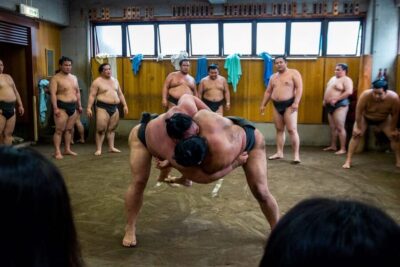 ★ 4.8Tokyo: Sumo Morning Practice Viewing TourFrom $8190 minutes - 2 hours
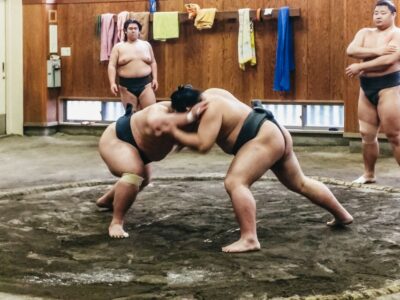 ★ 4.4Tokyo: Sumo Morning Training VisitFrom $771 hour
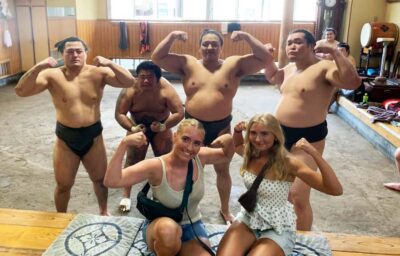 ★ 4.7Tokyo: Visit Sumo Morning Practice with English GuideFrom $962 hours
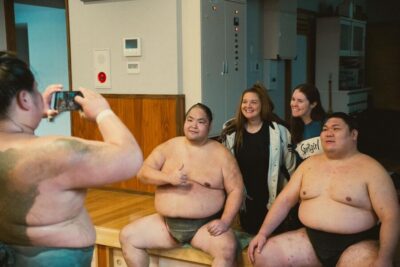 ★ 4.8Tokyo: Sumo Morning Practice Tour at Sumida CityFrom $1162 hours
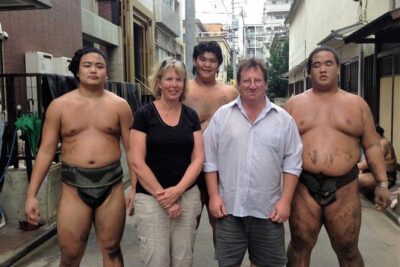 ★ 5.0Tokyo Sumo Morning Practice Tour at StableFrom $83
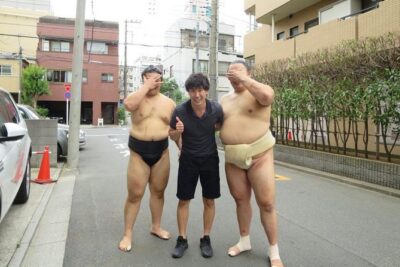 ★ 4.5Tokyo Ryogoku Sumo Morning Practice + Photo Shoot with WrestlersFrom $98