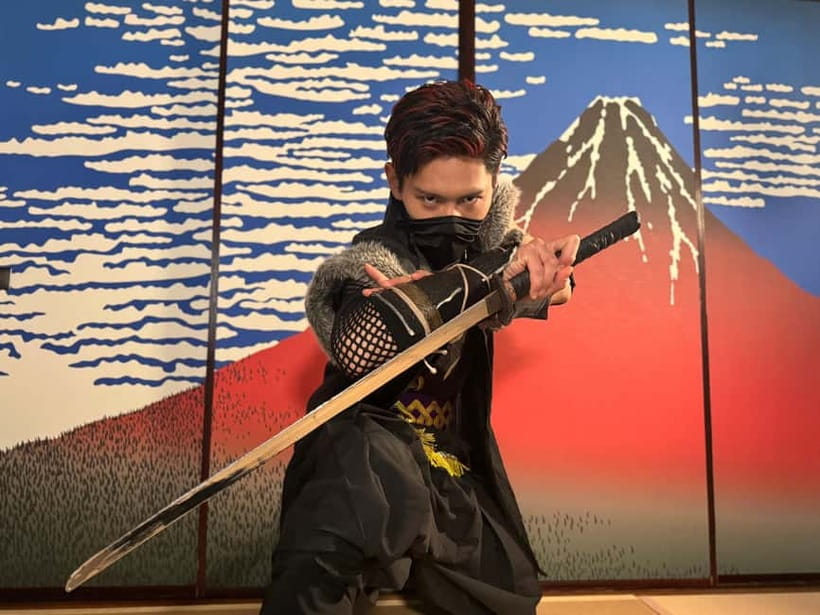
Reviewed · SAMURAI & NINJA EXPERIENCES
Tokyo: Ninja Sword Fighting Experience
Tokyo’s ninja workshop is less about secret espionage and more about learning action choreography with a real ninja instructor. You watch a training session, practice basic movements, handle a practice sword, and work with a partner in a short battle scene.
In This Article
- Key points to know before booking
- What this Tokyo ninja class is really like
- Warm-up and the first ninja movements
- Handling the practice sword
- Partner training with a professional ninja
- The live demonstration and action scene
- Photos with the ninjas at the end
- Location near Ginza, Tsukiji, and Tokyo Station
- Is $22 a good value?
- Who will enjoy this most?
- Booking flexibility and practical details
- Should you book the Tokyo ninja workshop?
- FAQ
- How long does the Tokyo ninja sword fighting experience last?
- What is included in the price?
- Is a ninja costume included?
- What language is the workshop taught in?
- Where is the meeting point?
- Who should not take this activity?
I like the small six-person limit, which gives you room to ask questions and follow each move. I also like the friendly teaching style, especially the step-by-step approach praised by Brad and Tia, plus the chance to take photos with the ninjas afterward. The main catch is that one hour goes quickly, and the session is physical, so it is not suitable for pregnant women or people with mobility impairments.
Key points to know before booking
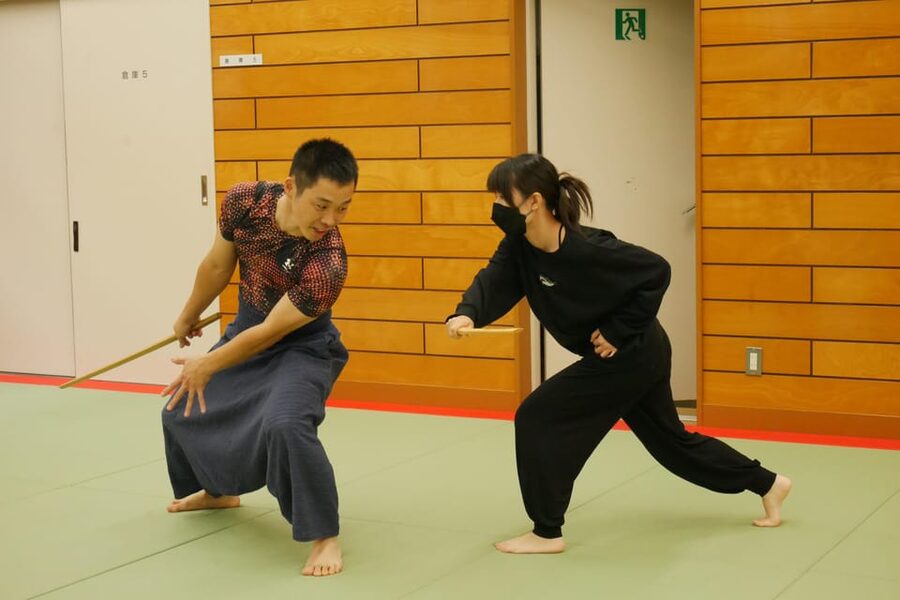
- Master Dai may lead the class: His class includes sword basics, action practice, and a memorable final sequence.
- Small groups keep the lesson personal: A maximum of six participants makes it easier to see demonstrations and get corrections.
- You train, not just watch: Expect warm-up exercises, ninja movements, sword poses, strikes, and paired practice.
- The final battle feels like a mini movie: You work with a professional ninja to create a short action scene.
- Photos are part of the experience: Bring a camera-ready attitude, since the session ends with pictures beside the ninjas.
- The central Tokyo location is convenient: Search Google Maps for Samurai Experience Photo Studio ICHI, near Tokyo Station, Ginza, and Tsukiji.
What this Tokyo ninja class is really like
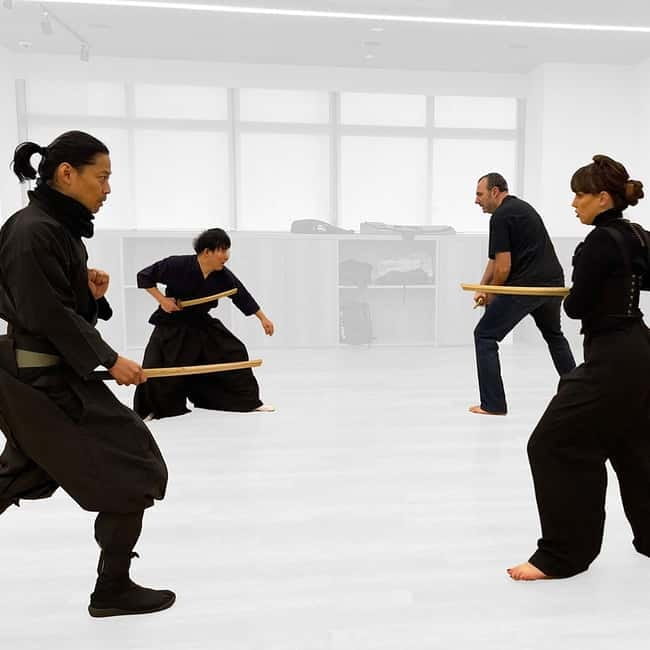
This is a compact, hands-on activity designed to give you a taste of ninja training without requiring prior skill. You do not need to arrive knowing sword forms or martial arts. The instructors begin with the basics and guide you through each movement.
The workshop also welcomes people who prefer watching to doing every exercise. Still, the best value comes from taking part. If you are comfortable moving, posing, and practicing controlled strikes, you will get far more from the hour than if you remain on the sidelines.
The tone is friendly and approachable. Tia specifically praised the instructors for helping step by step, which matters here because the movements may look simple when demonstrated but feel less natural when you try them yourself.
The session is taught in English and Japanese. That makes this a practical choice for international visitors, though the exact balance of languages may depend on the group and the instructor leading the class.
A few more Tokyo tours and experiences worth a look

Warm-up and the first ninja movements
After you arrive, the instructors introduce the history and culture of ninjas before the physical work begins. This opening gives the activity some context, rather than treating the sword as a simple movie prop.
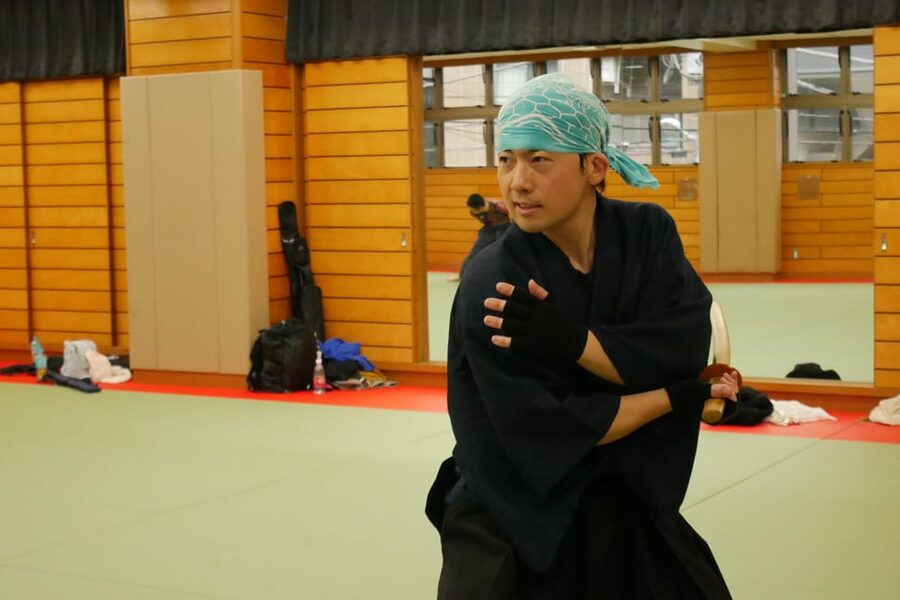
The warm-up follows. You then learn fundamental ninja movements, including how to stand, pose, and move with purpose. These early exercises are important because the workshop is built around performance as much as technique. A strong pose and clear body position help you look convincing in photographs and in the final action sequence.
I appreciate this gradual start. You are not thrown straight into a staged fight. Instead, you get time to watch the instructor and copy the basic form. For families and first-time participants, that makes the class much less intimidating.
Wear comfortable clothes that let you move freely. Comfortable shoes are also required. Avoid treating this like a sightseeing stop where you can remain in stiff clothing or slippery footwear. You should be ready for light physical activity from the start.
Handling the practice sword
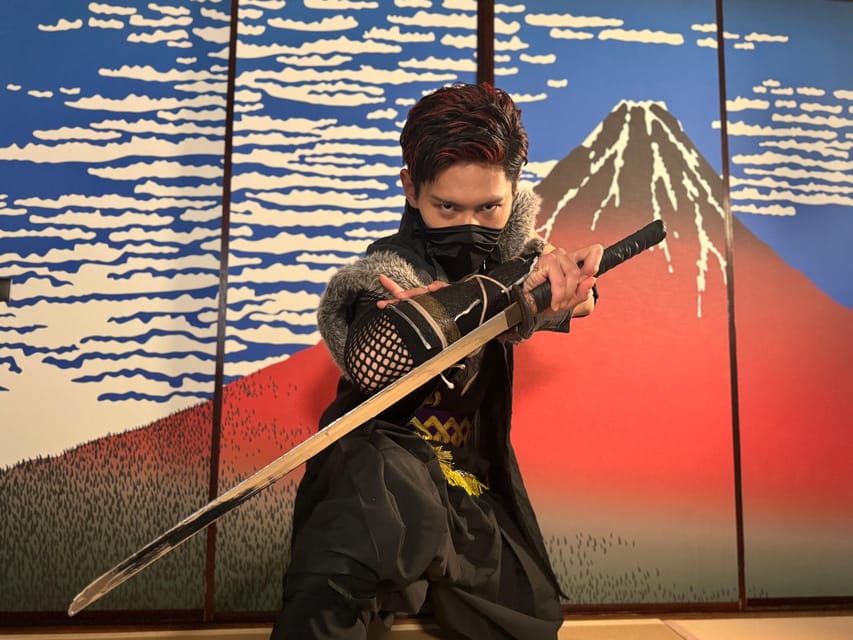
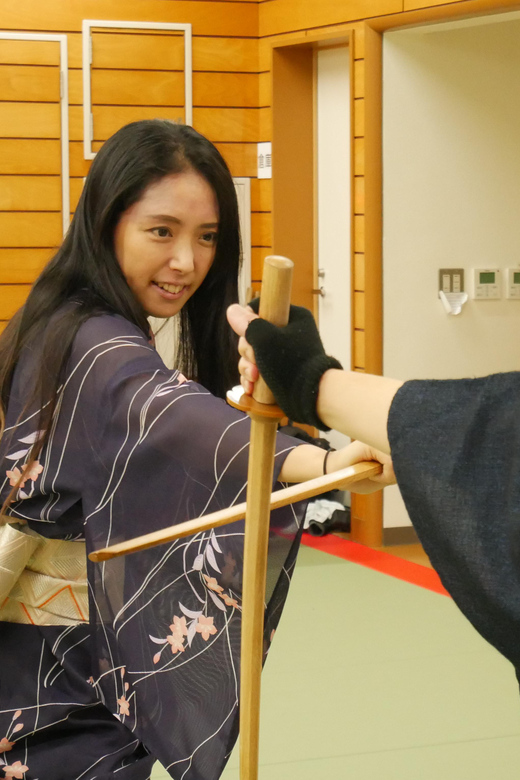
The sword portion is the central skill lesson. You learn the proper way to hold, pose, and strike with a practice ninja sword. The focus is on basic technique and controlled movement, not advanced martial arts training.
This is also the point where the class begins to feel like an action workshop. The instructors show you how to position your body and sword so the movement looks clear and dramatic. You then repeat the technique yourself under guidance.
The supplied information does not specify the exact type of practice sword, so do not book this expecting a particular weapon or a full sword-fighting course. Think of it as an introductory session with simple movements suitable for beginners.
The one-hour format is both a strength and a limitation. At $22 per person, the price is low for a guided activity in central Tokyo, especially with a small group and a photo opportunity included. But you will learn only a handful of basic movements. This is a fun introduction, not a serious martial arts lesson.
Partner training with a professional ninja
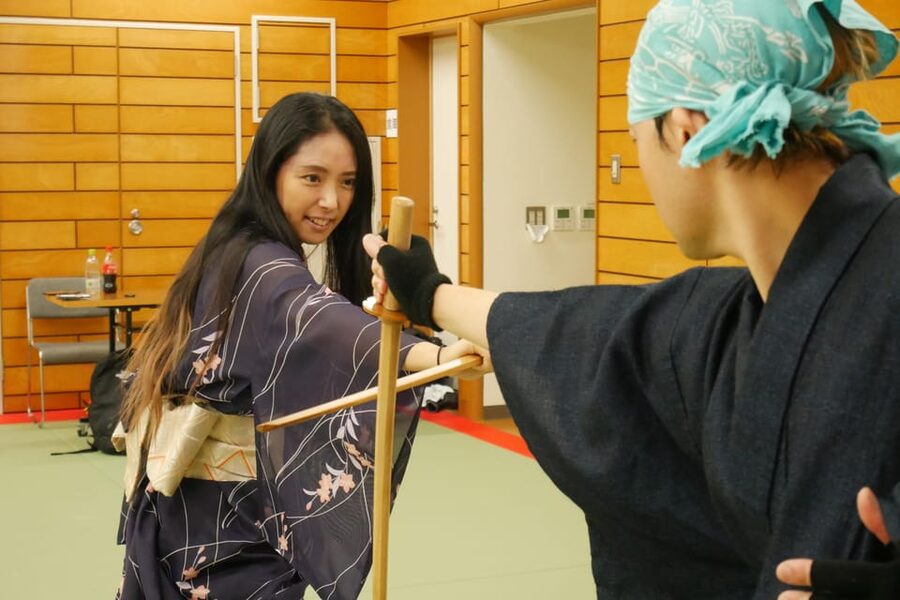
Once you have learned the basic positions and strikes, you pair up with a professional ninja for a short training battle. This is the most theatrical part of the workshop.
The paired practice lets you use what you have just learned. Instead of repeating a move in isolation, you respond to another person and create the shape of a fight. The instructor controls the pace and shows you how to make the sequence look exciting while keeping it suitable for beginners.
This part should appeal to anyone who enjoys action films, cosplay, photography, or playful physical activities. It also gives children and adults a shared task, though each participant must be able to move safely and follow instructions.
Dominic described training with Master Dai and his students as welcoming and fun. That detail matters because the atmosphere is a major part of the experience. You are not being judged on athletic skill. You are being guided through a short performance with people who want you to succeed.
If you are shy, the small group helps. You have fewer people watching than you would in a large class, and the instructor can break down the sequence before you perform it.
The live demonstration and action scene
After the basic training, a skilled ninja gives a live demonstration. This is your chance to watch refined technique at close range rather than trying to copy every motion yourself.
The demonstration adds useful contrast. Your movements will be simple, while the professional’s are more polished and controlled. Seeing the difference helps you understand that ninja performance involves timing, posture, precision, and presentation, not just swinging a sword.
The class then builds toward a short action scene. Brad described learning basic sword moves and creating a little ninja movie at the end. That final production is one reason this workshop feels different from a standard cultural talk or photo stop.
You should not expect a professionally edited film or a long performance. The appeal is the process of creating a quick scene with guidance. You learn a few moves, work with a partner, and then turn them into something you can remember through pictures or video.
This is where the activity earns its playful character. You are not simply looking at a costumed performer. You become part of the scene for a few minutes.






Photos with the ninjas at the end
The workshop finishes with a photo opportunity alongside the ninjas. These pictures give you a clear souvenir of the experience and help preserve the action poses you practiced.
Dominic also appreciated photos and videos taken during the class. The confirmed inclusion is a photo opportunity, so you should not assume that a professionally recorded video is guaranteed for every booking. Still, it is worth having your phone ready if the instructor allows personal photos during the session.
The photos are especially useful for families, couples, and friends who want something more distinctive than another shrine or city-view picture. You can pose with the instructors after you have learned enough to make the images feel connected to the workshop.
A practical tip: arrive ready rather than spending the first few minutes organizing belongings. The session lasts only an hour, and you are asked to arrive 15 minutes early. That extra time helps you find the studio and settle in before the class begins.
Location near Ginza, Tsukiji, and Tokyo Station
The meeting place is registered on Google Maps as Samurai Experience Photo Studio ICHI. Search that exact name rather than relying only on the phrase ninja workshop. The coordinates are 35.6658949, 139.7852608.
The venue is in central Tokyo, with access from Tokyo Station, Ginza, and Tsukiji. Transportation to and from the venue is not included, so you need to plan your own route and budget for any train, subway, or taxi fare.
Arriving 15 minutes early is sensible. Central Tokyo addresses can take longer to locate than expected, especially when you are moving between large stations, busy streets, and smaller studio entrances. The activity provider does not supply transportation after the class, though Brad’s experience included an instructor walking the group to a train stop afterward. Treat that as a kind gesture that may happen, not as a promised transfer.
The location works well as part of a day in the nearby central districts. You could schedule the workshop around time in Ginza, Tsukiji, or the Tokyo Station area. Keep the timing realistic, since the meeting point, early arrival, and class may take more of your morning or afternoon than the listed one hour alone.
Is $22 a good value?
At $22, this is an easy activity to add to a Tokyo itinerary. The price includes the ninja training session, hands-on practice, use of a practice sword, and a photo opportunity. For a small group limited to six people, that is a fair price.
The value is strongest if you want an entertaining cultural activity rather than a long instructional course. You receive personal guidance, a live demonstration, and a chance to create a short action scene. The format also avoids the cost and time commitment of a full-day martial arts program.
There are clear exclusions. Meals and drinks are not included. Transportation is your responsibility, and a ninja costume is not provided. If dressing as a ninja is important to you, you will need to ask the provider whether costumes are available or simply attend in comfortable clothing, since the supplied details do not confirm a costume option.
The workshop’s short length keeps the price accessible, but it also limits depth. You will not cover a large range of techniques in 60 minutes. I would book it for the fun, the guidance, and the photos, not as a substitute for formal sword training.
Who will enjoy this most?
This experience suits first-time visitors who want an activity with more participation than a museum visit. It is also a good choice for families, couples, friends, and anyone interested in Japanese action traditions.
You do not need previous martial arts experience. The instructors teach basic movements and provide step-by-step help. English and Japanese instruction makes the class workable for many international visitors.
The activity is less suitable if you want a quiet historical lecture or a long, serious study of ninja culture. The cultural introduction is part of the workshop, but the main focus is movement, sword practice, paired action, and performance.
It also requires enough mobility for a warm-up, basic ninja movements, poses, and controlled strikes. Pregnant women and people with mobility impairments should not book this activity. Comfortable shoes and clothing are required, and smoking is not allowed.
Booking flexibility and practical details
You can cancel up to 24 hours before the session for a full refund. A reserve-now, pay-later option is also available, which can help if your Tokyo schedule is still changing.
Starting times vary, so check availability for the date you want. Since the group limit is six, I would not leave this until the last day if the activity is important to your plans.
The instructors speak English and Japanese. The provider is ICHIMILE Co., Ltd. The published rating is 5 out of 5 from six verified bookings, with especially strong praise for the friendly instructors, patient guidance, Master Dai’s class, and the memorable photos and videos connected with the session.
Those comments point to the real strength of the experience: the people leading it. Tia and Brad both highlighted the helpful instruction, while Dominic singled out Master Dai and his students for their warm welcome. Léa also described a very friendly reception. You are paying for the activity, but the quality of the welcome and instruction will shape how much fun you have.
Should you book the Tokyo ninja workshop?
Book it if you want an affordable, lively hour in central Tokyo that combines a little cultural background with sword practice and a short action scene. The small group, English instruction, friendly teaching style, and final photos make it a strong pick for first-time participants.
Skip it if you want advanced sword skills, a full ninja costume, included transportation, or a longer historical presentation. Those are not part of the confirmed package.
For $22, I think the workshop is a good-value choice, especially for families and friends who want an activity they can do together. Arrive early, wear clothes and shoes suited to movement, search for Samurai Experience Photo Studio ICHI on Google Maps, and expect a playful introduction rather than a rigorous martial arts course.
FAQ
How long does the Tokyo ninja sword fighting experience last?
The workshop lasts one hour. You should arrive 15 minutes before the scheduled start time.
What is included in the price?
The price includes the ninja training session, hands-on activities, use of a practice ninja sword, and a photo opportunity with ninjas.
Is a ninja costume included?
No. A ninja costume is not included.
What language is the workshop taught in?
Instruction is available in English and Japanese.
Where is the meeting point?
The meeting point is registered on Google Maps as Samurai Experience Photo Studio ICHI. The coordinates are 35.6658949, 139.7852608. The location is in central Tokyo, with access from Tokyo Station, Ginza, and Tsukiji.
Who should not take this activity?
The workshop is not suitable for pregnant women or people with mobility impairments. Participants should wear comfortable clothes and shoes suitable for physical activity. Smoking is not allowed.
More Samurai & Ninja Experiences in Tokyo


More tours in Tokyo we've reviewed












Samurai & Ninja Experiences, compared.
 ★ 4.5Tokyo: Samurai Restaurant Show Ticket with 2 DrinksFrom $551h 30m
 ★ 4.6Tokyo: Samurai Ninja Museum Guided tour and ExperienceFrom $27
 ★ 5.0Skip the lines Basic Ticket at SAMURAI NINJA MUSEUM TOKYOFrom $28
 ★ 5.0Tokyo: Authentic Samurai Training at a DojoFrom $211
 ★ 5.0Best Samurai Experience in TokyoFrom $65
 ★ 4.6Tokyo: Legend Samurai Entertainment Night in Kanda ShrineFrom $44