Reviewed · KAMAKURA & ENOSHIMA DAY TRIPS
From Tokyo: Kamakura, Great Buddha, and Enoshima Bus Tour
Kamakura’s 13.5-meter Great Buddha is the star here, but the day gives you much more than a statue. You’ll move from a former samurai capital to a seaside shrine, then return to Tokyo for old Asakusa and modern Shibuya. I like the mix of history, ocean views, local food, and city scenes.
In This Article
- Key points at a glance
- Why this day works for first-time visitors
- Meeting in Shinjuku before 7:40
- Meeting the Great Buddha of Kamakura
- Enoshima, Nakamise-dori, and the sea
- The Enoden ride beside the coast
- Tsurugaoka Hachimangu and Kamakura’s samurai story
- Asakusa brings old Tokyo back into view
- The final choice: Asakusa or Shibuya
- Walking, lunch, and language
- Is $75 a fair price?
- Who should book this tour?
- FAQ
- Where does the tour meet in Shinjuku?
- How tall is the Great Buddha of Kamakura?
- Can I enter the Great Buddha?
- Is lunch included?
- Is the Enoden train ticket included?
- Where does the tour finish?
- My recommendation
I also like the Enoden train ride, a short but memorable run beside the coast, and the generous free time at several stops. The main catch is pace: with so many places packed into one day, you may wish for more time at the Great Buddha and Enoshima, especially if you want the observation lighthouse.
Key points at a glance
- The Great Buddha is a national treasure: See the weathered copper statue, which measures 13.5 meters and is about 750 years old.
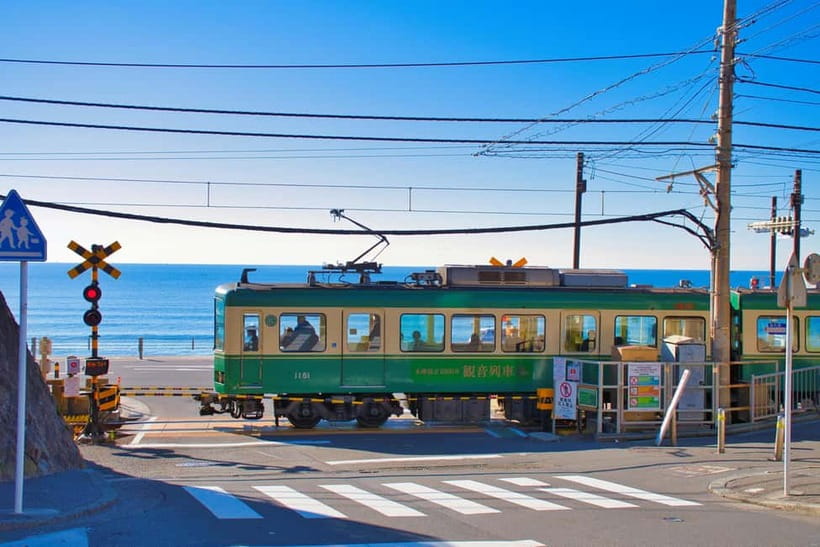
- The Enoden adds real local flavor: Ride the one-car Enoshima Electric Railway beside the sea, with a chance of spotting Mt. Fuji or the famous Slam Dunk crossing.
- Kamakura’s samurai past comes alive: Visit Tsurugaoka Hachimangu, an 800-year-old shrine linked to the city’s warrior rulers.
- You get several kinds of free time: Browse Komachi-dori, Nakamise-dori, and Enoshima at your own pace instead of staying with the guide every minute.
- The day covers four distinct areas: Kamakura, Enoshima, Asakusa, and Shibuya make this a broad introduction to old and new Japan.
- The price includes useful transport: At $75 per person, the package includes the bus, Enoden ticket, Great Buddha visit, and Tokyo Metro fare from Asakusa to Shibuya.
Why this day works for first-time visitors
This is an ambitious day out, but it solves a common Tokyo problem: how to see Kamakura without spending time figuring out several train connections. You leave central Tokyo with a guide and air-conditioned transport, then get a taste of temples, shrines, coastal scenery, shopping streets, and major city districts.
I like the contrast. Kamakura was the center of Japan’s military government during the Kamakura Period, while Asakusa preserves an older Tokyo atmosphere inside the modern capital. Shibuya then brings you back to the present with one of the city’s most famous crossings.
The price is reasonable if you value convenience. You are not only paying for a ride to Kamakura. The $75 also covers the Enoden ticket, admission and access to the Great Buddha, and the Tokyo Metro ticket from Asakusa to Shibuya. Lunch is included only if you choose that option, so check the price difference before booking.
The tradeoff is time. This is not a slow, single-city walking tour. It is a sampler of several places, and the distance between them means you will spend part of the day in transit. If you want long temple visits, a full coastal afternoon, or time at Enoshima’s lighthouse, you may find the schedule tight.
A few more Fujisawa tours and experiences worth a look
Meeting in Shinjuku before 7:40
The tour begins near the Shinjuku Center Building, about a seven-minute walk from JR Shinjuku Station. The meeting point is at the red brick entrance in front of a taller white building. Look for LIMON staff in a yellow jacket, vest, or shirt.
The meeting time is 7:30, and the bus leaves strictly at 7:40. That ten-minute gap is not much room for getting lost, so I would arrive at Shinjuku early. The station is large and can take longer to navigate than expected, especially if you are unfamiliar with its many exits.
Hotel pickup is not included. You must reach the meeting point yourself, which keeps the price lower but adds one small planning task at the start of the day.
The vehicle depends on the number of participants. It may be a bus or another air-conditioned vehicle suited to the group size. The tour has sometimes operated with very few people, which can make the day feel more personal, though group size can vary.
Meeting the Great Buddha of Kamakura
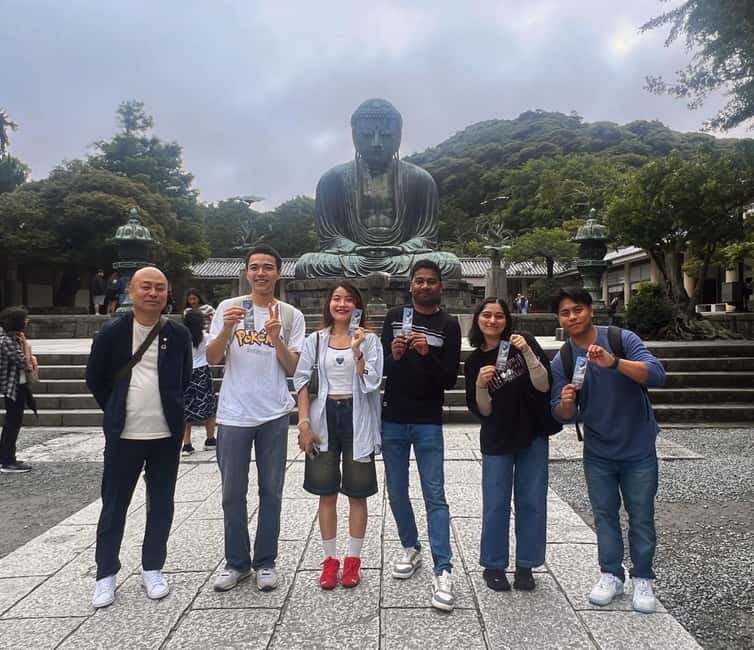
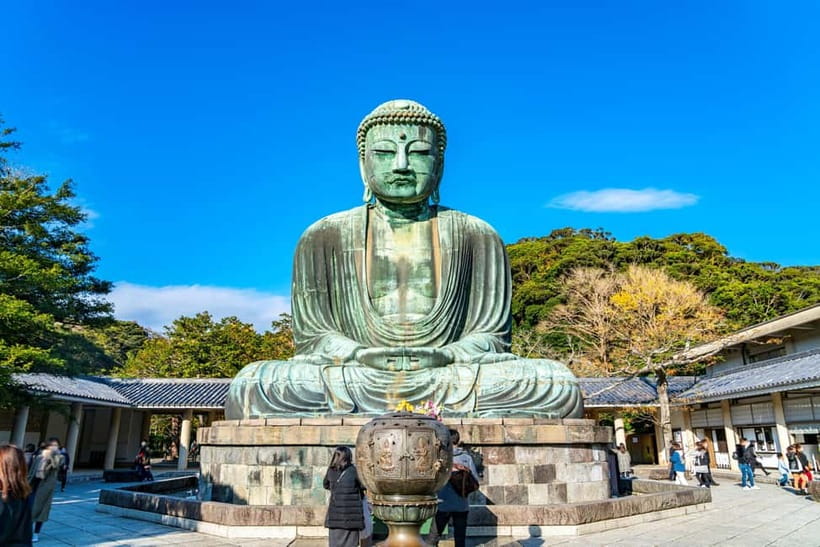
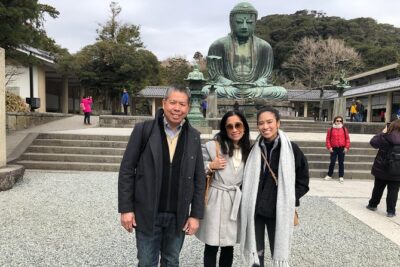
The first major stop is the Great Buddha of Kamakura, a 13.5-meter bronze statue at Kotoku-in Temple. Four stories tall in appearance, it is one of the most recognizable sights in the region.
The statue was originally covered in gold leaf. Over roughly 750 years, earthquakes, typhoons, and exposure have left the bronze with its familiar greenish copper patina. That weathering is part of its appeal. You are looking at a work that has survived the forces that destroyed much of the surrounding architecture.
You can also enter the statue for an extra 50 yen, paid on site. The interior explains how the figure was made. It is a small add-on, but worth considering if you enjoy construction details and want more than the standard exterior view.
Allow time for photographs, but do not assume you can linger as long as you wish. The tour includes several later stops, and some people may want more time here to study the temple grounds or enter the statue. I would make the Great Buddha your first priority once you arrive.
The guide provides the basic structure of the visit, but the amount of historical explanation can vary. English communication has been easy for some groups and more limited for others. If a detail matters to you, ask directly and keep the question simple.
Enoshima, Nakamise-dori, and the sea
After Kamakura, the route moves to Enoshima. The approach to Enoshima Shrine leads through Nakamise-dori, a lively shopping street lined with souvenir shops and places selling local treats.
This is a good stop for a quick taste of the island rather than a full exploration. You can browse, sample food, and follow the street toward the shrine. The shrine is associated with three sister goddesses connected with the sea, water, good luck, finance, and the arts.
That range of associations gives the shrine a different feel from the samurai-linked sites in Kamakura. Here, the focus is more closely tied to the sea and practical hopes for prosperity and protection.
The weakness is time. The route allows you to see Enoshima, but it may not leave enough room to walk out to the observation lighthouse or enjoy the best views from it. One of the strongest practical tips I can give is to decide early what matters most. If you want food and shopping, stay around Nakamise-dori. If you want scenery, move quickly and make the view your goal.
The sea is an important part of Enoshima’s appeal, so do not spend every minute indoors in the shops. Even a short pause to look across the water helps explain why this island has long drawn visitors.
The Enoden ride beside the coast
The Enoshima Electric Railway, usually called the Enoden, is one of the day’s nicest details. You ride a retro one-car train along the seaside, trading the enclosed feel of a tour vehicle for a short glimpse of local rail travel.
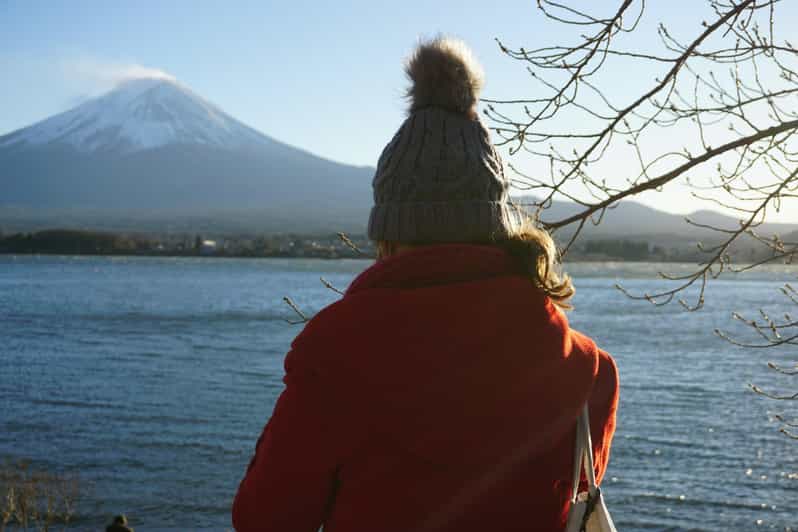
The ride is not a long railway excursion, but it changes the rhythm of the day. You get ocean views, neighborhood scenery, and the possibility of seeing Mt. Fuji across the water when conditions are clear. The route also passes the famous railroad crossing associated with the anime Slam Dunk.
The train can be crowded, and the ride is shared public transport rather than a private charter. That is part of the point. You are using a real local line, not a staged sightseeing vehicle. Keep your belongings close and be ready to board promptly when the guide gives instructions.
The Enoden ticket is included, which adds value and removes one more small purchase from your day. Still, do not expect a long scenic cruise. Think of it as a memorable connection between parts of the itinerary, with scenery as a bonus.
Tsurugaoka Hachimangu and Kamakura’s samurai story
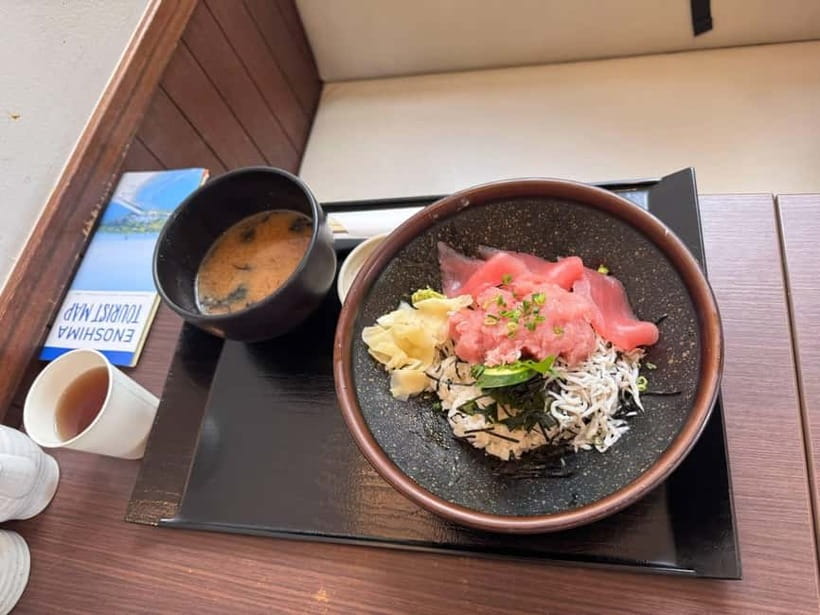
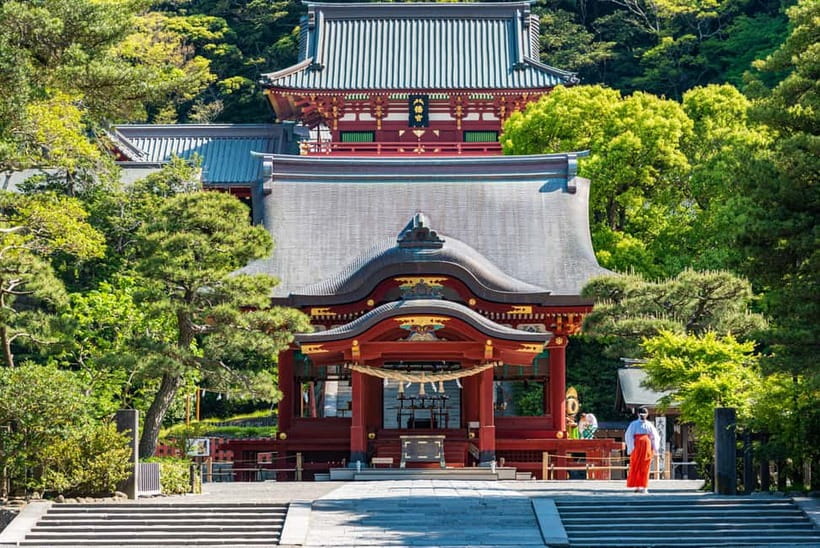
The next major Kamakura stop is Tsurugaoka Hachimangu Shrine. Built more than 800 years ago, it was tied to the samurai government that made Kamakura a center of power.
The shrine gives the day historical weight. At the Great Buddha, you see a famous religious image. At Tsurugaoka Hachimangu, you get a clearer sense of the political and military world that shaped medieval Japan.
Take time to notice the pond and garden as well as the main shrine buildings. The calm water and open paths provide a welcome pause after the shopping street and train ride. This is also a place to respect local customs: keep voices low near worship areas, follow signs, and observe how people approach the shrine.
The annual Yabusame ritual, a horseback archery ceremony, continues the site’s connection with samurai traditions. You will not necessarily see the event during this tour, but knowing about it gives the shrine more meaning.
Free time here is useful because a shrine is best visited at your own pace. You can look closely at architectural details, watch worshippers, or simply enjoy the setting. The guide’s historical background is helpful, though the amount of narration may depend on the guide and the group’s English or Japanese needs.
Asakusa brings old Tokyo back into view
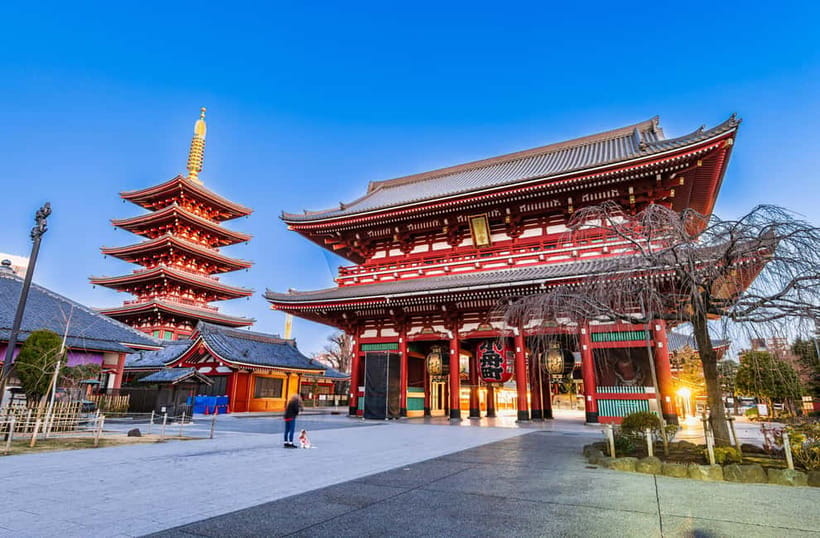
From Kamakura, the tour heads back toward Tokyo and Asakusa. The district is one of the city’s best places for traditional temple architecture, souvenir shopping, and an older street atmosphere.
Start at Kaminari-mon, the famous Thunder Gate, then continue toward Senso-ji. Nakamise-dori runs between the gate and temple, filled with small shops selling snacks, crafts, and traditional souvenirs. It is a natural place to browse, but keep an eye on the clock because the street can easily absorb your remaining free time.
Senso-ji gives you a strong visual contrast to the broad spaces of Kamakura. The temple’s traditional buildings are set against the modern Tokyo Skytree in the distance, creating one of the city’s most recognizable combinations of old and new.
I like having Asakusa later in the day because it provides a final major sightseeing area rather than sending you straight back to the starting point. You can choose to stay in Asakusa, which is useful if you want more temple time, shopping, or an easier evening in this district.
The final choice: Asakusa or Shibuya
The published route offers a choice at the end. You can remain in Asakusa or join the group toward Shibuya Crossing. The Tokyo Metro ticket from Asakusa to Shibuya is included.
Shibuya gives you a sharp change of mood. After shrines, temple lanes, and seaside rail tracks, you finish among tall buildings, bright signs, and the famous crossing. It is a fitting end if you want a quick look at modern Tokyo and plan to continue your evening there.
Asakusa is the better choice if you prefer a quieter finish or want more time with traditional Tokyo. Shibuya is better if you want energy, major city views, and easy access to one of Tokyo’s best-known districts.
There is one practical point to clarify before booking. The route description says the group disbands in Shibuya, while the meeting information says the activity ends back at the original meeting point. Ask LIMON Tours to confirm the exact ending arrangement for your date. Do not assume you will return to Shinjuku after choosing Shibuya.
Walking, lunch, and language
Bring comfortable shoes. This is a walking-heavy day, with temple and shrine grounds, shopping streets, station platforms, and transfers between sights. Water is also important, since the schedule keeps you moving and the tour operates in rain unless severe weather stops it.
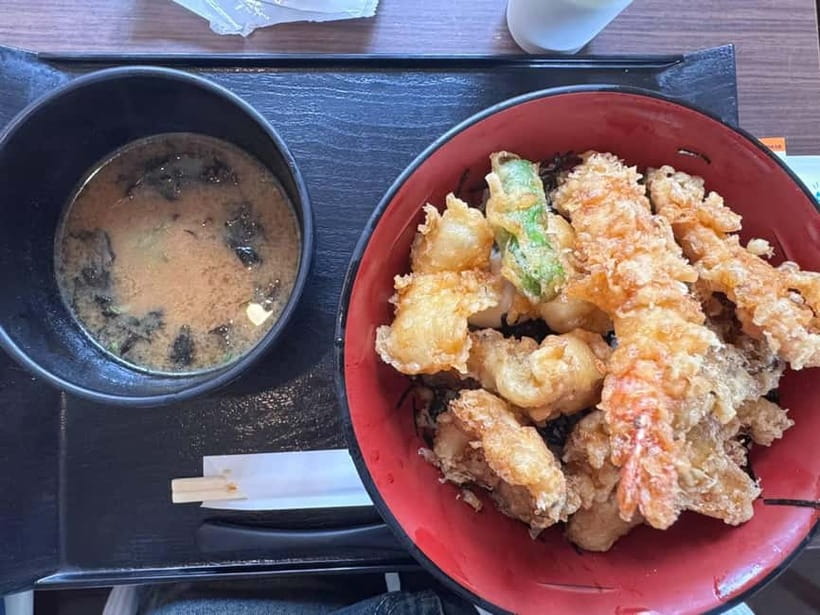
Lunch is optional rather than automatically included. If you select the lunch option, it is included in the package. One detailed account described the meal as delicious and filling, but you should choose based on how much freedom you want. The lunch option reduces the need to find food during a busy schedule, while skipping it may give you more control over what and when you eat.
The tour is offered in English and Japanese. Guide quality can vary in how much historical detail is explained and how easy conversation feels. Some groups have found their guides easy to understand and helpful, while others have had to manage limited English and misunderstandings.
That does not make the tour unusable, but it affects expectations. If you want deep historical instruction at every site, this may not be the right format. If you mainly want transport, orientation, key facts, and time to explore on your own, the structure works well.
Infants aged zero to two can participate free, but they do not receive a lunch or a bus seat. That point matters for families planning the day.
Is $75 a fair price?
At $75 per person, this is good value for a visitor who wants a broad day without arranging the transport independently. You receive air-conditioned transportation, a guided Kamakura visit, the Great Buddha admission, the Enoden ticket, and the Tokyo Metro fare from Asakusa to Shibuya.
The value is strongest if you plan to visit both Kamakura and Tokyo districts in one day. Buying each ticket and managing the route alone may cost less in some cases, but it would require more planning and leave you responsible for timing every connection.
The price is less attractive if you want a relaxed day. You are paying for access to many places, not long stays at each one. Lunch costs extra depending on the option you choose, and the 50-yen statue interior fee is also paid separately.
The overall rating is 4.5 from six reviews, with especially strong praise for the clean, safe transport, helpful guides, free time, and broad range of sights. The repeated suggestion is simple: add more narration and allow more time at the Great Buddha and Enoshima. Those are fair limits to keep in mind.
Who should book this tour?
I would choose this tour if you are based in Tokyo and want one efficient day outside the city, especially if Kamakura is high on your list but you do not want to manage the route alone. It suits first-time visitors who like a mix of guided sightseeing and independent wandering.
It also works for couples, families with older children, and anyone who values variety. You will see a famous statue, a historic shrine, a seaside island, a local train, an old temple district, and a modern crossing in one outing.
I would hesitate if your main goal is detailed historical study, photography at a slow pace, or a full Enoshima visit. A private tour or an independent Kamakura day would give you more control.
FAQ
Where does the tour meet in Shinjuku?
Meet in front of the Shinjuku Center Building at the red brick entrance in front of a taller white building. The location is about a seven-minute walk from JR Shinjuku Station. Meet at 7:30, and the vehicle departs strictly at 7:40.
How tall is the Great Buddha of Kamakura?
The Great Buddha measures 13.5 meters tall. It is a bronze national treasure, originally covered in gold leaf, and has weathered roughly 750 years of earthquakes and typhoons.
Can I enter the Great Buddha?
Yes. Entry costs an additional 50 yen, paid on site. Inside, you can read about how the statue was made.
Is lunch included?
Lunch is included only if you select the lunch option when booking. It is not part of the standard package automatically.
Is the Enoden train ticket included?
Yes. The Enoshima Electric Railway ticket is included in the tour price.
Where does the tour finish?
The route description says you can stay in Asakusa or continue to Shibuya, where the group disbands. The meeting information also says the activity ends back at the original meeting point, so confirm the exact ending location with LIMON Tours before departure.
My recommendation
Book this tour if you want a wide-ranging introduction to Kamakura and Tokyo with transport handled for you. The Great Buddha, Enoden ride, Tsurugaoka Hachimangu, Asakusa, and Shibuya create a memorable day, and the free time keeps the experience from feeling like one long guided lecture.
Go in knowing that the schedule is full. Wear good shoes, arrive early, protect time for the Great Buddha and Enoshima, and confirm the final drop-off point. If you accept the brisk pace, $75 buys a useful and enjoyable look at Japan far beyond central Tokyo.
More Kamakura & Enoshima Day Trips in Fujisawa
More tours in Fujisawa we've reviewed
Kamakura & Enoshima Day Trips, compared.
 ★ 4.5Tokyo: Kamakura & Enoshima Day Trip including Temple TicketsFrom $589 hours - 570 minutes
 ★ 5.0Mount Fuji, Kamakura, Big Buddha, & Lake Ashi Day TripFrom $109
 ★ 4.7Tokyo: Mt Fuji, Kamakura, Lake Ashi & Big Buddha Guided TourFrom $50
 ★ 4.5From Tokyo: Kamakura & Enoshima 1-Day Bus TourFrom $66
 ★ 4.9Tokyo:Sea of Mount Fuji, Hakone Ropeway, Ōwakudani, EnoshimaFrom $5010 hours
 ★ 5.0Kamakura 8 hr Private Walking Tour with Licensed Guide from TokyoFrom $201