Reviewed · KAMAKURA & ENOSHIMA DAY TRIPS
Tokyo Yokohama Night View Tour With Kamakura And Enoshima
The most memorable moment here may be a simple one: stepping off at Kamakura Koko-Mae and seeing the railroad crossing made famous by Slam Dunk. Add Enoshima’s sea legends, an old local train, and Yokohama’s harbor lights, and you get a full day of Japan’s coastal side.
In This Article
- Key points to know before you book
- Why this Tokyo day trip works
- Enoshima in 100 minutes: shrines, dragons, and sea air
- The Enoden train and the Slam Dunk crossing
- Tsurugaoka Hachimangu and the heart of Kamakura
- Komachi Street for snacks and small purchases
- Yokohama after sunset: good options, limited hours
- Transport, group size, and guide expectations
- Who will get the most from this tour?
- Should you book this coastal Japan day trip?
- FAQ
- Where does the tour meet?
- How long does the tour last?
- Which languages are available?
- Is the Enoden train included?
- Are meals included?
- Are the Yokohama Air Cabin and Ferris wheel included?
I like the Enoden train ride, which links old neighborhoods, the coast, and Kamakura in a short, nostalgic trip. I also like the mix of places: Enoshima gives you myth and sea air, while Tsurugaoka Hachimangu and Komachi Street provide a stronger sense of Kamakura’s past and daily life.
The catch is the pace. This is a 10-hour outing with long bus transfers, and Yokohama can feel short at 2.5 hours. If you want deep sightseeing in every stop, this tour will feel rushed.
Key points to know before you book
- The Slam Dunk crossing is a quick photo stop: You visit the real crossing near Kamakura Koko-Mae Station, but the schedule does not promise a long anime-focused visit.
- Enoshima combines shrines, legends, and ocean views: You get about 100 minutes on the island, enough for a taste rather than every corner.
- The Enoden ticket is included: This charming local line is one of the tour’s best connections between Enoshima and Kamakura.
- Kamakura’s shrine and shopping lane balance each other: Tsurugaoka Hachimangu brings history, while Komachi Street offers snacks and small shops.
- Yokohama time is flexible but limited: Air Cabin and Ferris wheel tickets cost extra, and traffic can reduce your free time.
- Guide quality and commentary may vary: English, Japanese, and Chinese are offered, but on smaller departures the guide may also drive and provide only basic explanations.
Why this Tokyo day trip works
At $82 per person, this tour is built around convenience. You meet at Tokyo MODE GAKUEN in Shinjuku at 11:00 am, travel by shared vehicle, use the Enoden train with admission covered, and return to the same general starting point after a long day.
That price can make sense if you want to see three separate destinations without planning several train connections yourself. Enoshima, Kamakura, and Yokohama are easy enough to visit independently, but fitting them into one day requires careful timing. Here, someone else handles the route.
You are paying for transport, a driver, a guide, and the train ride. Meals, snacks, personal purchases, the Yokohama Air Cabin, and the Ferris wheel are not included. Those extras can add up, so the value is strongest if you mainly want transportation and a broad introduction rather than a fully ticketed sightseeing package.
The day begins late enough for a relaxed Tokyo morning, but the return can be late. Traffic, holidays, or bad weather may change the timing and reduce time at some stops. Leave your evening open rather than booking a restaurant reservation or show soon after the planned return.
A few more Fujisawa tours and experiences worth a look
Enoshima in 100 minutes: shrines, dragons, and sea air
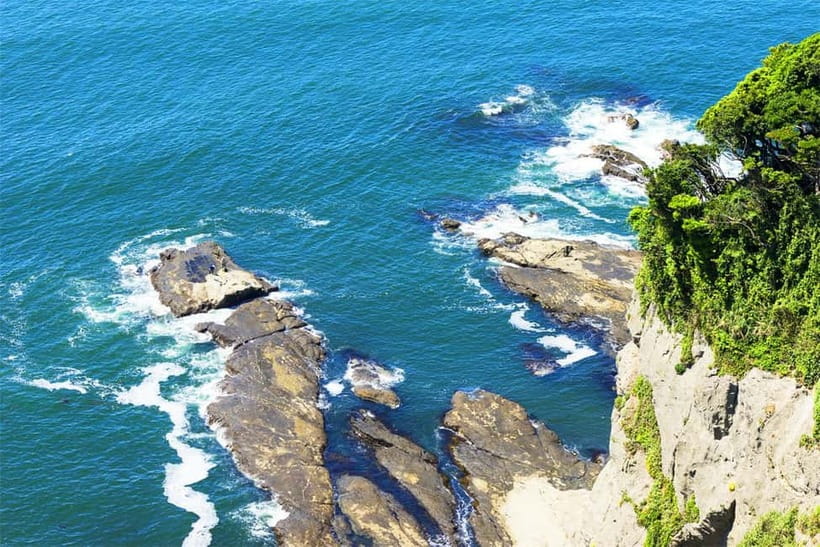
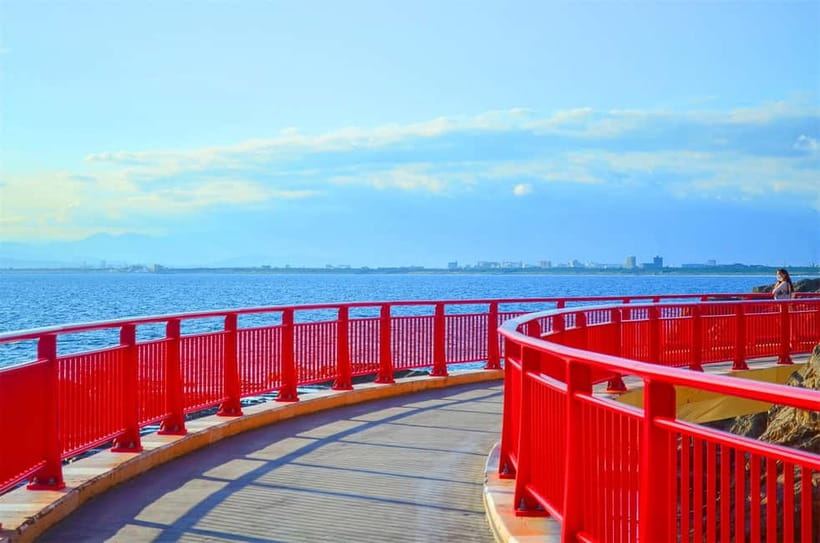
After about 90 minutes by bus from Shinjuku, you reach Enoshima. The island is connected to the mainland by a bridge, and the tour allows about 100 minutes for sightseeing.
Enoshima is best understood as a place where scenery and religious tradition meet. The island’s shrines are linked to a local story about a five-headed dragon that once caused trouble in the area. A goddess appeared, formed Enoshima, and inspired the dragon to change its ways.
The tour includes time to visit Enoshima Shrine, traditionally founded in 552 AD. The shrine complex is associated with good fortune, creativity, and wealth. One of the more unusual stops is the Money-Washing Water Dragon Shrine, where people rinse coins in the belief that prosperity will follow.
You should keep your expectations in check. One hundred minutes is enough to walk across, see key shrine areas, take photographs, and enjoy the island atmosphere. It is not enough for a slow visit to every religious site, shop, viewpoint, and path.
Wear shoes with good support. The tour information specifically warns that there is a fair amount of walking, and Enoshima is not a place where you simply step off a bus and look around from one flat platform. Sunscreen and water are sensible, especially on a bright day.
The island provides the day’s first strong change of mood. Tokyo’s dense streets give way to open water, bridges, shrine buildings, and the sound of the coast. If you like places with a clear sense of local legend, Enoshima is likely to be your favorite stop.
The Enoden train and the Slam Dunk crossing
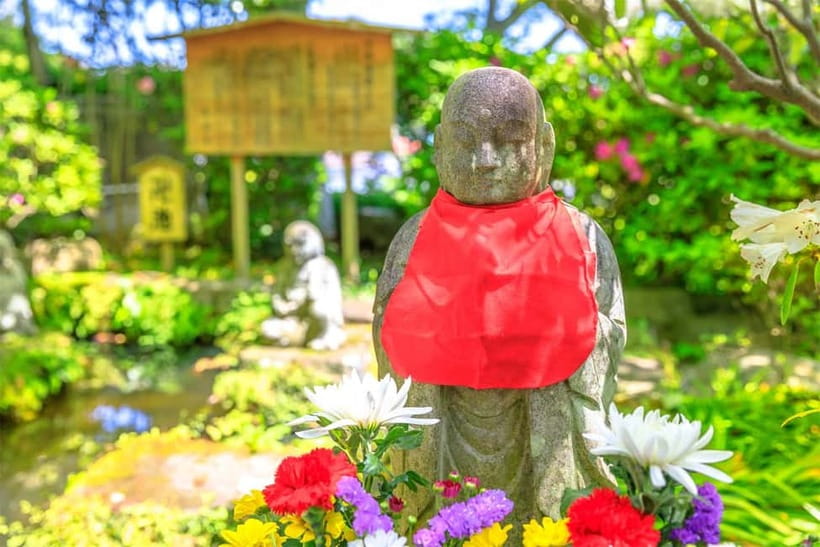
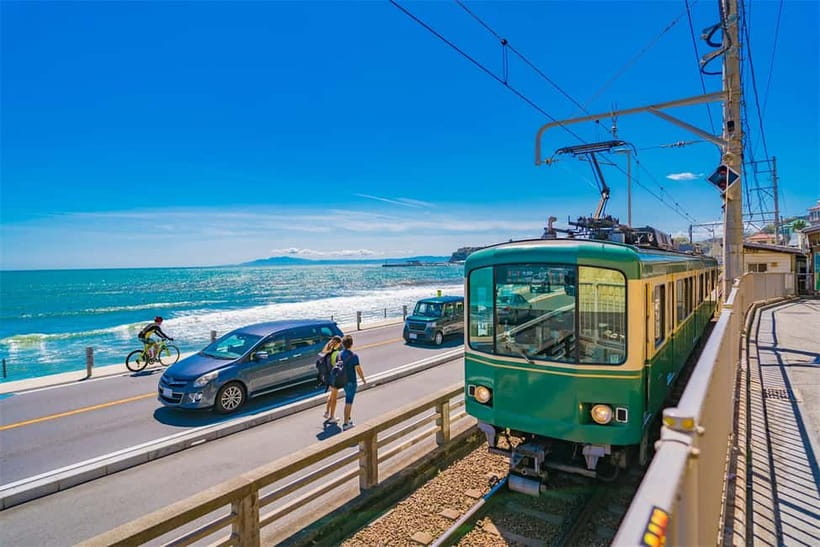
The Enoden ride is included in the tour, and it gives the day a welcome break from the bus. The route takes roughly 20 minutes in the schedule, with a panoramic portion of about 15 minutes listed around Kamakura Koko-Mae.
This is not a high-speed sightseeing train. That is the point. The Enoden has an old-fashioned feel as it passes through residential streets and along the Shonan Coast. You see a more ordinary side of Japan: homes, narrow streets, utility poles, and brief openings toward the sea.
At Kamakura Koko-Mae Station, you get free time for the famous railroad crossing. Anime fans know it from Slam Dunk, especially the scene associated with Hanamichi Sakuragi and Haruko. Even if you do not follow the series, the crossing is an easy and photogenic stop with a strong pop-culture connection.
The nearby Kamakura High School is listed as a separate 20-minute stop for photographs and free time. This part of the visit is likely to appeal most to people who recognize the anime setting. You should not expect a long guided explanation or access beyond public areas.
There is a practical point here: a railway crossing is an active public place, not a private attraction. Pay attention to signs, keep clear of the tracks, and do not block the road while taking pictures. The stop is about seeing a real location, not recreating a scene at any cost.
Tsurugaoka Hachimangu and the heart of Kamakura
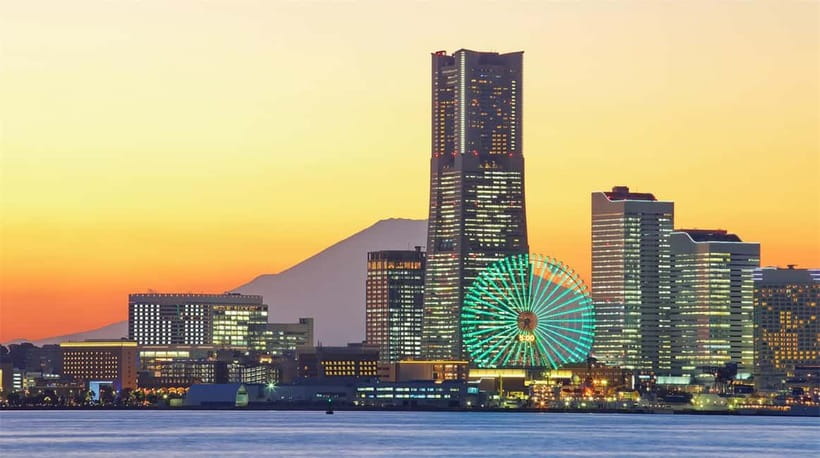
After the Enoden segment and the nearby photo stops, the vehicle takes about 40 minutes to reach Tsurugaoka Hachimangu Shrine. The visit lasts around 80 minutes, including a guided portion.
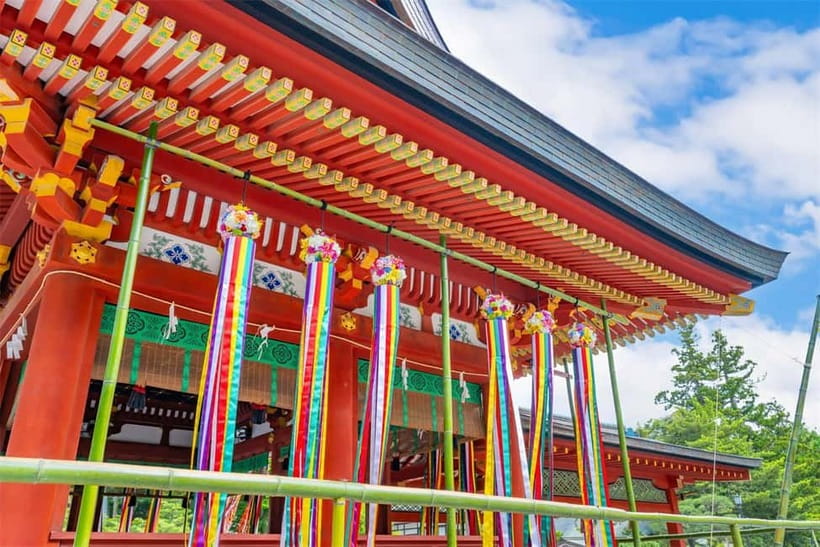
This is Kamakura’s major historical anchor. Tsurugaoka Hachimangu is closely tied to the samurai era and is counted among Japan’s Three Great Hachiman Shrines. Its broad approach and formal shrine grounds give you a much larger sense of ceremony than the smaller shrine areas on Enoshima.
I would use the guided time to understand the basic role of the shrine rather than trying to rush through every corner. The value here is context. Enoshima gives you legend and faith tied to the sea, while Tsurugaoka Hachimangu connects Kamakura to warriors, political power, and the city’s older identity.
The time allowance is fairly useful, though it can pass quickly if the grounds are crowded or you stop often for photographs. Comfortable shoes matter again. The tour is not suitable for wheelchair users, and the overall day includes repeated walking between transport points and sights.
The guide’s performance can affect this stop more than the others. The tour is offered in English, Japanese, and Chinese. On departures with fewer than 13 participants, the guide also drives, and commentary may be basic. That arrangement may work well for a simple introduction, but it is not the same as having a dedicated historian beside you all day.
Komachi Street for snacks and small purchases
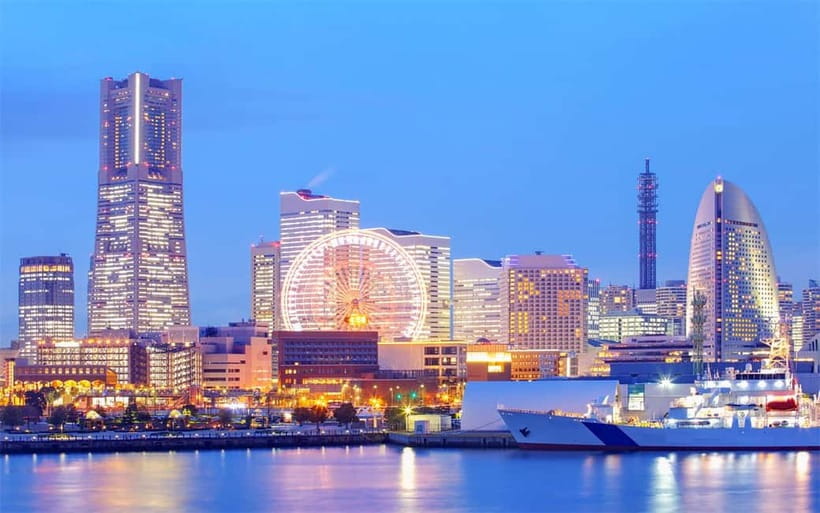
Komachi Street is the natural companion to Tsurugaoka Hachimangu. It is a lively shopping lane with souvenir shops, local snacks, and places to pause between major sights.
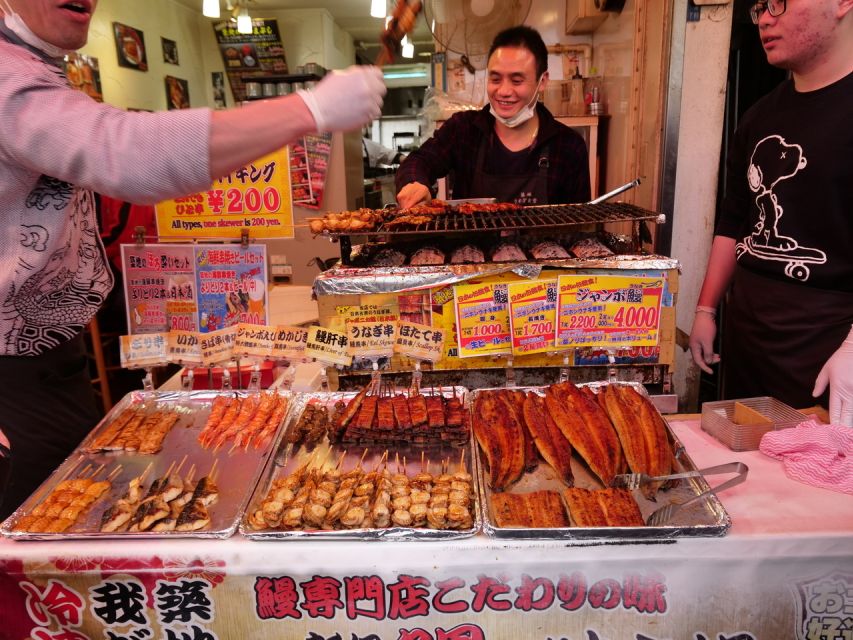
This is where you can loosen the schedule a little. Try a small treat, browse shop windows, or pick up a souvenir without needing to commit to a formal meal. Since meals are not included, you should budget separately for food and drinks.
Bring some cash. The tour information warns that cards may not be accepted at certain locations, and small food stalls or shops are the sort of places where cash can still be useful.
The exact amount of time on Komachi Street is not specified separately, so treat it as flexible free time within the Kamakura visit rather than a long shopping session. If you want to eat a full meal, ask the guide how much time you have before wandering too far.
The street also helps keep the day from becoming a string of monuments. You get a taste of modern Kamakura, where visitors shop, snack, and move through the same older city center that surrounds the shrine.
Yokohama after sunset: good options, limited hours
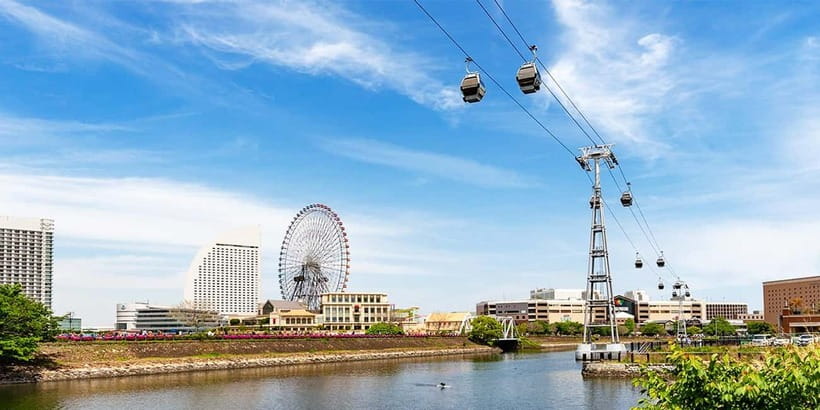
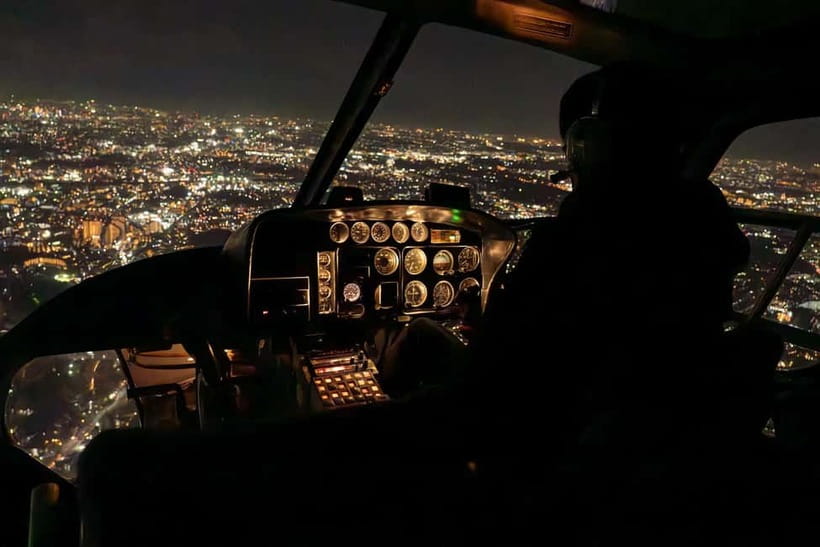
A bus ride of about 75 minutes brings you to Yokohama. The scheduled visit lasts 2.5 hours, followed by a return drive of about one hour to Tokyo. Depending on traffic and the season, you may arrive around sunset or after dark, but the exact light conditions are not guaranteed.
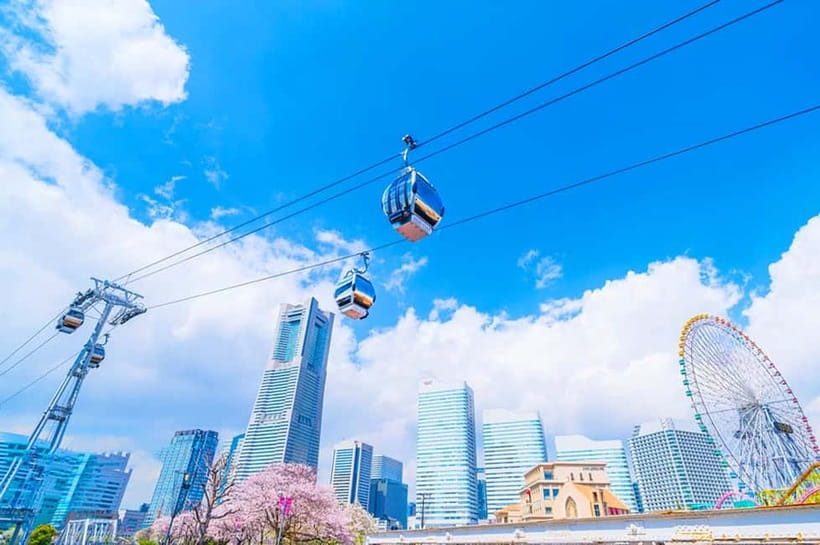
Yokohama gives you free time rather than one fixed attraction. That flexibility is useful, but you need to choose your priority quickly. The options named for the visit include the Yokohama Air Cabin, the large Ferris wheel, and the Red Brick Warehouse.
The Air Cabin runs between Sakuragicho Station and the Red Brick Warehouse area. It offers a short elevated view over the modern harbor district. The Ferris wheel provides a higher panoramic view, especially after dark. Both require separate payment, so check your budget before deciding.
The Red Brick Warehouse is a European-style cultural and shopping complex with cafés, shops, and seasonal events. It is a good choice if you prefer to stay at ground level and browse rather than pay for another ride. It also provides a useful photo stop and a clear link between Yokohama’s port setting and its newer entertainment areas.
The main weakness of this portion is time. One published assessment called the day enjoyable but too rushed, with too little time in Yokohama. That is a fair warning. After Enoshima, Kamakura, the train, the shrine, and the bus ride from Kamakura, you may have enough energy for one Yokohama activity, not all three.
I would decide in advance:
- Choose the Air Cabin if you want a short ride with views between two useful points.
- Choose the Ferris wheel if the night panorama is your top goal.
- Choose Red Brick Warehouse if you want cafés, shops, and a slower walk.
- Choose simple harbor sightseeing if you do not want to spend more on tickets.
The Yokohama section is most satisfying when you treat it as a final taste of the city, not a full city tour.
Transport, group size, and guide expectations
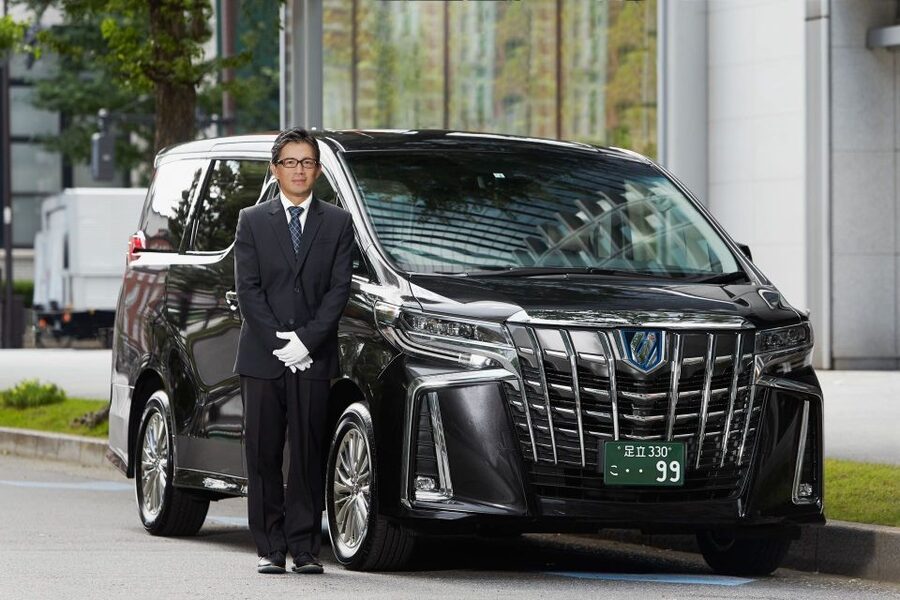
The shared vehicle is arranged according to group size, so you cannot choose the exact vehicle in advance. The tour description does not promise a private car, and you should expect to share the day with people from several countries.
That international setup explains the multiple-language commentary, but it can also mean less depth in each language. Smaller groups have one practical tradeoff: with fewer than 13 participants, the guide may also be the driver. In that case, you should expect basic commentary rather than continuous narration while the vehicle is moving.
The guide can still make a real difference. KO has been praised for being informative, caring, and helpful, so if KO is assigned to your departure, you may receive a more personal experience. Do not assume a particular guide is guaranteed, however. The guide and vehicle details are sent by email before 9:00 pm Japan time on the evening before the tour.
Food is not allowed in the vehicle, which matters on a 10-hour day. Eat before departure or use the stops to buy snacks, and keep water with you. A camera, sunscreen, and sturdy shoes belong in your day bag.
The meeting point is Tokyo MODE GAKUEN, at 1-7-3 Nishi-shinjuku, Shinjuku-ku, Tokyo. Arrive with enough time to identify the guide and vehicle, since the pickup information is confirmed shortly before departure.
Who will get the most from this tour?
I would recommend this outing to you if you want a broad coastal day without managing several separate train routes. It suits first-time visitors who want anime culture, shrines, shopping, and Yokohama night views in one package.
It is also a good fit if the Enoden train and Slam Dunk crossing are high on your list. Those two details give the day a distinct identity that a standard Kamakura shrine tour may not provide.
Families and mixed-interest groups may appreciate the variety. One person can enjoy the island legends, another can focus on anime locations, and someone else can use Yokohama for shopping or a Ferris wheel ride.
I would be cautious if you dislike long bus rides or need a slow pace. The schedule includes roughly 1.5 hours from Tokyo to Enoshima, 75 minutes from Kamakura to Yokohama, and another hour back to Tokyo, before counting shorter transfers. Traffic may make those stretches longer.
This is also not the best choice for a serious Yokohama visit. You will get a short evening window, not enough time to explore the city in detail. Consider a separate Yokohama day if its museums, harbor district, or dining scene are your main goals.
Should you book this coastal Japan day trip?
Book it if you want maximum variety with minimum planning and accept that each stop will be an introduction. At $82, the included transport and Enoden ride offer reasonable value for a full day from Tokyo, especially if you would otherwise need to arrange the route yourself.
Skip it if you want long visits, detailed guiding, or complete control over your schedule. The strongest parts are Enoshima, the train, the Slam Dunk crossing, and Tsurugaoka Hachimangu. Yokohama is attractive but compressed, and the guide’s level of commentary may depend on group size and assignment.
For the best experience, wear comfortable shoes, carry water and cash, decide which Yokohama extra you might pay for, and keep your evening free in case traffic delays the return. You can cancel up to 24 hours ahead for a full refund, and reserve now while paying later, which helps if your Tokyo plans are still shifting.
FAQ
Where does the tour meet?
You meet at Tokyo MODE GAKUEN, 1-7-3 Nishi-shinjuku, Shinjuku-ku, Tokyo, 160-0023, Japan. Departure is scheduled for 11:00 am.
How long does the tour last?
The advertised duration is 10 hours. Traffic, bad weather, and holiday congestion can make the return later than planned.
Which languages are available?
Live guiding is offered in English, Japanese, and Chinese. On groups of fewer than 13 people, the guide may also drive and provide only basic commentary.
Is the Enoden train included?
Yes. Admission for the Enoden train ride is included in the tour price.
Are meals included?
No. Meals, drinks, snacks, and personal purchases are not included. Food is also not allowed inside the vehicle.
Are the Yokohama Air Cabin and Ferris wheel included?
No. Tickets for the Yokohama Air Cabin and Ferris wheel must be paid for separately.
More Kamakura & Enoshima Day Trips in Fujisawa
More tours in Fujisawa we've reviewed
Kamakura & Enoshima Day Trips, compared.
 ★ 4.5Tokyo: Kamakura & Enoshima Day Trip including Temple TicketsFrom $589 hours - 570 minutes
 ★ 5.0Mount Fuji, Kamakura, Big Buddha, & Lake Ashi Day TripFrom $109
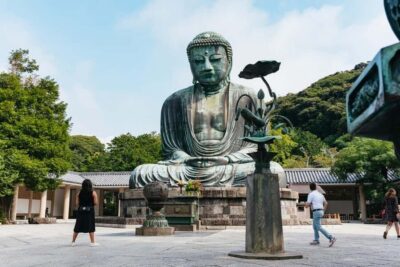 ★ 4.7Tokyo: Mt Fuji, Kamakura, Lake Ashi & Big Buddha Guided TourFrom $50
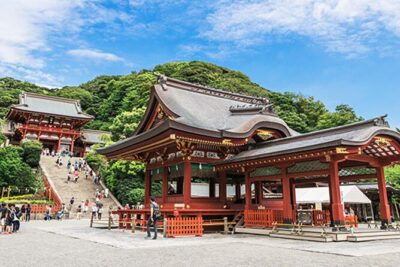 ★ 4.5From Tokyo: Kamakura & Enoshima 1-Day Bus TourFrom $66
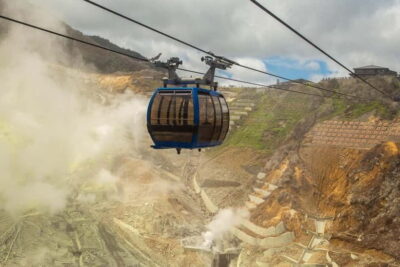 ★ 4.9Tokyo:Sea of Mount Fuji, Hakone Ropeway, Ōwakudani, EnoshimaFrom $5010 hours
 ★ 5.0Kamakura 8 hr Private Walking Tour with Licensed Guide from TokyoFrom $201