Reviewed · SAMURAI & NINJA EXPERIENCES
Samurai experience: art and soul of the sword
The heart of this Tokyo experience is not costume play or theatrical sword swinging. You learn why a samurai treated the sword with care, why courtesy mattered, and why drawing it was considered a last resort. Iaido begins with discipline and etiquette, then moves into controlled sword work.
In This Article
- Key points before you book
- Samurai values come before sword technique
- Arriving at the Kuramae dojo at 9:00 am
- Changing into samurai attire and handling the sword
- Cutting cardboard gives you a first taste of Iaido
- Real tatami cutting is an adult-only choice
- The master’s solo demonstration changes the perspective
- What the $216.86 price includes in practical terms
- Who will get the most from this experience
- Practical planning for the morning
- Should you book this Tokyo samurai experience?
- FAQ
- Where does the samurai experience begin?
- What time does the activity start?
- How long does the experience last?
- Is the real sword tatami-cutting option available to everyone?
- Can children participate?
- What happens at the end of the activity?
I like the small group size of up to 10, which should give you a closer view of the master and more room to follow instructions. I also like the choice between cutting a man-shaped cardboard target and trying real tatami cutting, though the latter is limited to participants age 18 or older who sign a waiver and follow every dojo rule. The main drawback is the price, $216.86 per person, for only about 90 minutes.
Key points before you book
- The lesson starts with samurai etiquette and Bushido, not a flashy fight scene.
- You change into samurai attire and handle a sword during the Iaido lesson.
- Cardboard cutting is part of the standard experience, while real rolled tatami cutting has extra age and safety restrictions.
- A master demonstrates solo sword work up close, giving you a better sense of the precision involved.
- The group is capped at 10 people, making this more personal than a large stage show.
- The experience begins at 9:00 am near Kuramae Station and ends back at the meeting point.
Samurai values come before sword technique
Many visitors arrive with an image of the samurai as a fearless fighter who solves every problem with a blade. This experience takes a more measured view. In the opening part of the lesson, the master explains proper etiquette toward the sword and the principles of Bushido, often translated as the way of the samurai.
That opening matters. It gives the activity a clear purpose before you put on the attire or attempt a cut. You learn that the sword was not simply a weapon for showing strength. Drawing it was a serious choice, and a samurai’s self-control and ability to settle a dispute through discussion were part of the ideal.
I like this approach because it gives the physical practice some meaning. You are not just trying to look impressive in a photograph. You are being asked to pay attention to posture, courtesy, restraint, and discipline.
The lesson also helps correct a common misunderstanding. A skilled samurai was not necessarily the person most eager to fight. The stronger figure was the one who could avoid conflict when possible and still possess the training to defend himself if there was no other choice.
A few more Tokyo tours and experiences worth a look


Arriving at the Kuramae dojo at 9:00 am
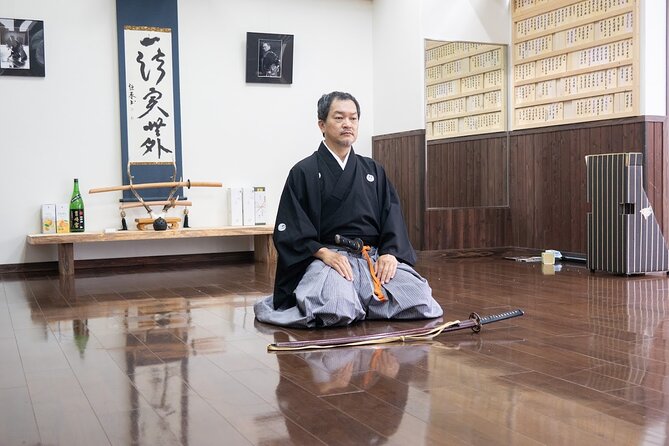
You meet at Kuramae Station, at 2-chōme-3-1 Kuramae in Taito City. The start time is 9:00 am, so plan your Tokyo morning carefully and allow enough time to reach the station without rushing.
The meeting point is near public transportation, which makes this easier to fit into a Tokyo sightseeing day. The activity finishes at the same location, so you will not need to arrange a separate pickup or find your way to a distant ending point.
A mobile ticket is accepted. Booking confirmation is sent within 48 hours, subject to availability, so do not assume that a last-minute reservation is final until you receive confirmation.
The early start can be a plus. You get the experience done before a full day of sightseeing, and the fixed morning schedule gives your Tokyo plans some structure. It can also be inconvenient if you are staying far from Kuramae or have spent the previous evening in another part of the city.
Changing into samurai attire and handling the sword
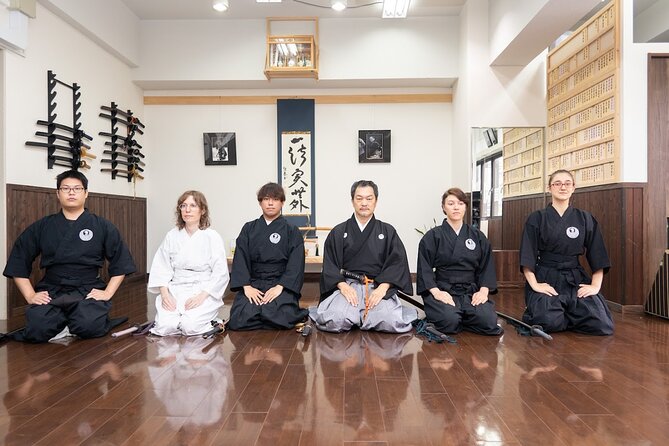
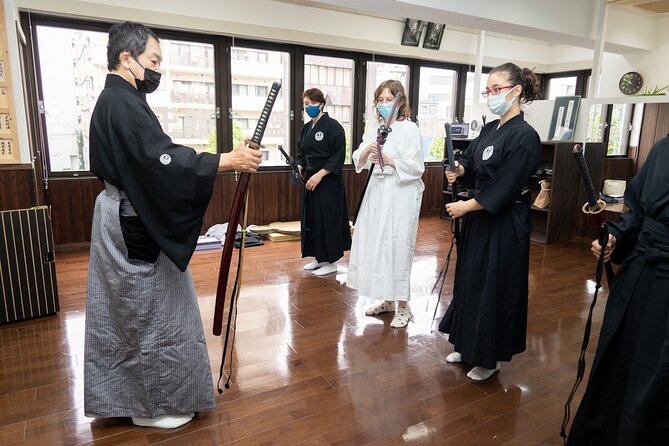
After arriving at the Iaido dojo, you change into samurai attire and are given a sword for the lesson. This is the point when the experience becomes physical, but the focus remains controlled rather than theatrical.
The clothing helps you understand the formality of the practice. It is not simply a costume for pictures. The attire, the way you treat the sword, and the instructions from the master all reinforce the idea that every movement has a proper order.
You then receive an explanation of Iaido and the flow of the session. Iaido is a Japanese art of swordsmanship centered on drawing and using the sword with swift, deliberate movement. The activity gives you a basic introduction rather than a full martial arts course, so expect guided practice, not mastery in one morning.
A moderate level of physical fitness is recommended. The provided information does not describe a long workout, but you will be standing, changing position, handling a sword, and following precise instructions. Wear clothing that will not make the morning difficult, even though you will change into the dojo attire.
Cutting cardboard gives you a first taste of Iaido
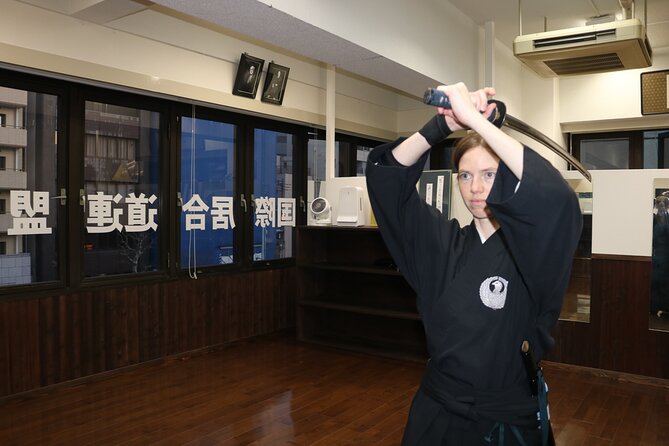
One of the practical parts of the lesson is cutting a man-shaped cardboard target with a sword. This is a useful middle ground between discussion and the master’s demonstration.
Cardboard gives you something tangible to work toward without immediately moving to the adult-only real sword option. You must listen closely to the master’s directions and control the movement. The point is not to hack wildly at the target. It is to connect the lesson’s ideas about discipline with a physical action.
This portion may be especially appealing if you want to do something rather than watch a demonstration. It also makes the experience more memorable for families and younger participants, since the general activity accepts people from age 5, provided they can follow the instructions.
Parents should note the important distinction between the standard sword practice and the real sword option. The minimum age for the experience is 5 if you do not choose real sword cutting. Anyone taking part in the real sword option must be at least 18 on the date of the activity.
Real tatami cutting is an adult-only choice
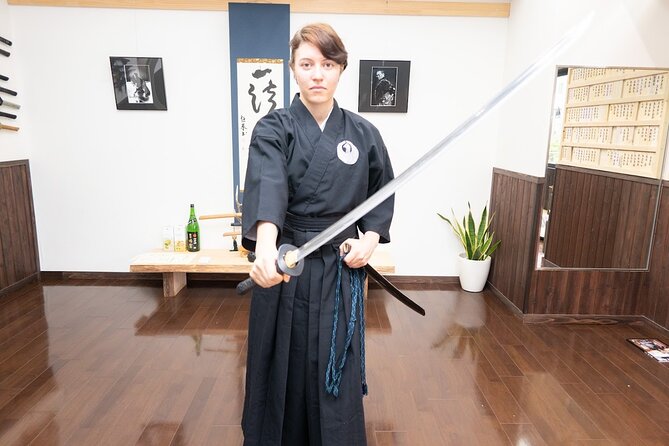
Participants who sign up for the real sword option can try cutting a rolled tatami mat. This is the part most likely to attract serious interest from people who want a hands-on sword activity, but it comes with clear conditions.
You must be 18 or older, sign a waiver, and obey the master’s instructions. These are not casual requirements. A real sword demands attention, and the conditions tell you that the dojo takes the activity seriously.
The available details do not specify whether the real sword option costs extra, so check the booking terms before you pay. Do not assume that selecting the adult option is automatic. If you want to try tatami cutting, confirm that it is available for your date and that you meet the requirements.
I would choose this option only if the physical activity is a main reason for booking. If you mainly want the history, etiquette, attire, and demonstration, the standard experience may be enough. The adult option adds a more demanding element, but it should not be treated as a casual photo opportunity.






The master’s solo demonstration changes the perspective
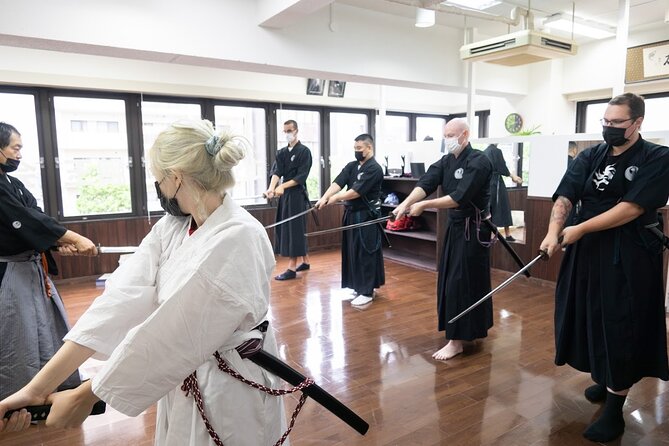
The final demonstration is likely to be the clearest display of what the training can produce. The master performs solo sword work at close range, allowing you to see the speed and precision more clearly than from the back of a large theater.
This part benefits from coming after your own practice. Before trying the cardboard target, it is easy to see sword cutting as a simple matter of strength. After holding the sword and attempting the basic movements, you have a better sense of the control required.
The demonstration also gives the session a strong finish. You start with values and etiquette, make your own attempt, and then watch an expert show the art at a far higher level. That order helps keep the activity grounded. The master’s performance is impressive, but it does not replace the lesson.
A teaching assistant also takes part in the demonstrations and training, according to the available experience details. Since the group is limited to 10 people, you should have a reasonably close view of the instruction and the solo performance.
What the $216.86 price includes in practical terms
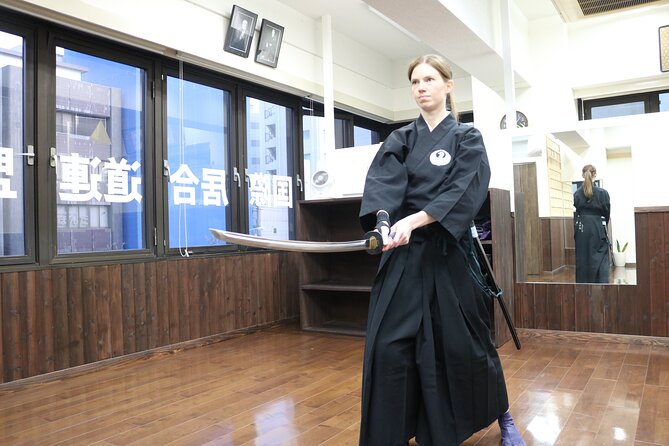
At $216.86 per person, this is not a budget activity. The short duration makes the price feel high if you measure it only by minutes. Ninety minutes is enough for an introduction, but it is not a full-day martial arts course or a long cultural workshop.
The value depends on what you want. You are paying for access to a dojo setting, samurai attire, instruction in etiquette and Iaido, sword handling, cardboard cutting, a master’s demonstration, and a completion certificate. The small maximum group of 10 also matters because close instruction is more useful for a precise physical activity than a large crowd would be.
I see the price as easier to justify for someone with a strong interest in samurai culture or Japanese martial arts. It is also a good fit if you want one distinctive activity in Tokyo rather than another general sightseeing stop.
For a family or couple on a tight budget, the cost may be harder to defend. You should also compare it with other cultural activities in Tokyo, especially if your main goal is simply to wear traditional clothing and take photos. This experience offers more substance than a costume session, but it asks you to pay for that instruction.
The 5/5 score from 13 published ratings and a 100 percent recommendation are encouraging, but the sample is small. I would use those figures as a positive sign, not as a guarantee that the format will suit everyone.
Who will get the most from this experience
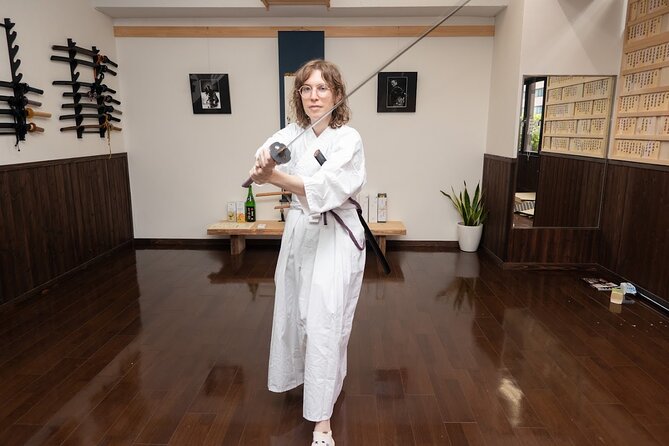
I would recommend this to you if you want context as well as action. The lesson explains the values behind the sword before asking you to use one, which suits people who enjoy cultural activities with a clear educational side.
It is also a good match for:
- Adults who want the option of real tatami cutting
- Families with children age 5 or older who can follow instructions
- Visitors interested in Japanese martial arts
- People who prefer a small dojo session to a large staged performance
- Anyone looking for a memorable morning activity near public transportation
You may want to skip it if you want a free-form activity, a long lesson, or a combat class with repeated sparring. This is not described as a fight simulation, and you should not expect to battle another participant.
The experience is also less suitable if you dislike strict instruction or feel uncomfortable handling a sword. Courtesy and discipline are central to the session, and the master’s directions are not optional.
Practical planning for the morning
Set aside about 90 minutes for the activity itself. The meeting point and ending point are the same, but you still need to account for your journey to Kuramae Station and any time needed to find the exact location.
Because the session starts at 9:00 am, arriving early is wise. The provided details do not give a recommended arrival time, so leave enough margin to navigate the station and reach 2-chōme-3-1 Kuramae without stress.
Keep the group limit in mind when choosing your date. With a maximum of 10 people, the session can feel personal, but popular dates may fill before your plans are settled. The activity is booked on average 23 days ahead, which suggests that planning several weeks out is sensible.
Free cancellation is available if you cancel at least 24 hours before the local start time. Cancellations made less than 24 hours before the start, along with late changes, are not refunded. That policy is fair for a small scheduled session, but it means you should not wait until the last morning if your plans are uncertain.
Should you book this Tokyo samurai experience?
Book it if you want to understand the attitude behind samurai swordsmanship, not just pose in armor. The combination of Bushido, sword etiquette, guided Iaido practice, cardboard cutting, and a close master demonstration gives the 90 minutes a clear arc.
The best reason to choose it is the balance between ideas and action. You learn that restraint and diplomacy mattered, then feel how much control is required to make even a basic sword movement correctly.
Think carefully about the price and the real sword conditions. At $216.86, it is a premium short activity, and the tatami option is restricted to adults who sign a waiver and follow the master’s instructions. If those points work for you, this is a focused and unusual Tokyo experience with more substance than a standard samurai photo stop.
FAQ
Where does the samurai experience begin?
It begins near Kuramae Station at 2-chōme-3-1 Kuramae, Taito City, Tokyo 111-0051, Japan.
What time does the activity start?
The activity starts at 9:00 am.
How long does the experience last?
The experience lasts approximately 1 hour and 30 minutes.
Is the real sword tatami-cutting option available to everyone?
No. You must be at least 18 years old on the date of the experience, sign a waiver, and follow the dojo master’s instructions.
Can children participate?
Yes. The minimum age is 5 if you do not choose the real sword option.
What happens at the end of the activity?
The experience ends back at the meeting point, and you receive a certificate of completion.
More Samurai & Ninja Experiences in Tokyo


More tours in Tokyo we've reviewed











Samurai & Ninja Experiences, compared.
 ★ 4.5Tokyo: Samurai Restaurant Show Ticket with 2 DrinksFrom $551h 30m
 ★ 4.6Tokyo: Samurai Ninja Museum Guided tour and ExperienceFrom $27
 ★ 5.0Skip the lines Basic Ticket at SAMURAI NINJA MUSEUM TOKYOFrom $28
 ★ 5.0Tokyo: Authentic Samurai Training at a DojoFrom $211
 ★ 5.0Best Samurai Experience in TokyoFrom $65
 ★ 4.6Tokyo: Legend Samurai Entertainment Night in Kanda ShrineFrom $44