Reviewed · SHINJUKU TOURS
Bon Dance IZAKAYA in Shinjuku, Tokyo
At Bon Dance IZAKAYA, dinner comes with a burst of Japanese summer-festival culture. You sit down to Edo-style dishes in Shinjuku, then watch and join a 30-minute Bon Odori performance led by dancers who teach the simple movements. I like the mix of food and culture, and I like that the evening feels participatory rather than just a staged show.
In This Article
- Key points to know before booking
- Why the Bon Odori matters here
- Arriving at HANAMICHI TOKYO KABUKICHO
- The 19:00 dinner course, plate by plate
- Drinks and the value of the 11,000 yen price
- What happens during the Bon Odori performance
- Staff, atmosphere, and the small-group format
- Who should book this Shinjuku evening
- Booking tips that will make the evening easier
- Should you book Bon Dance IZAKAYA?
- FAQ
- Where is Bon Dance IZAKAYA located?
- How long does the experience last?
- What food is included?
- Is a drink included?
- Can I choose an all-you-can-drink option?
- Can the restaurant accommodate allergies or dietary restrictions?
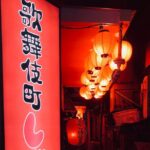
The main catch is the short program. The full dinner lasts 90 minutes, but the dancing takes only 30 minutes, and you may be invited to join instead of simply watching. The entrance can also be hard to spot: look for the elevator to the third floor at HANAMICHI TOKYO KABUKICHO, directly behind Shinjuku City Hall.
Key points to know before booking
- A 30-minute Bon Odori segment: The traditional dance is the heart of the evening, with time to learn the movements and take part.
- An Edo-style dinner course: Expect edamame, tofu, soba noodle salad, skewers, tempura, five pieces of sushi, and red miso soup.
- One drink included: Choose from beer, sake, whiskey, shochu, glass wine, or a soft drink.
- An all-you-can-drink choice: Select it during booking instead of the crispy soba noodle salad. Everyone in your group must choose the same option.
- A central Shinjuku setting: The venue is five minutes from Shinjuku Station, at the entrance to Kabukicho.
- A short, friendly format: The dinner and performance fit neatly into a 90-minute evening, with reservations limited to six participants.
Why the Bon Odori matters here
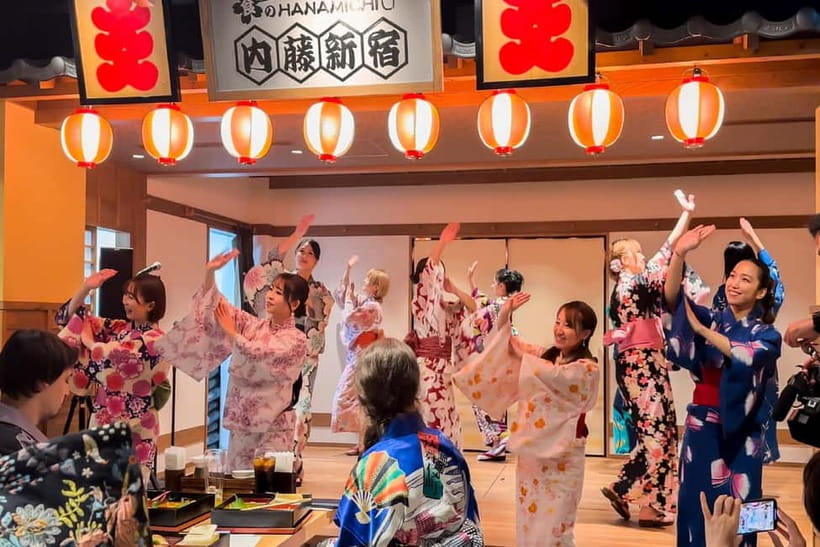
Bon Odori is not simply a dance routine added to dinner. It comes from the Obon season, a traditional Japanese summer observance connected with honoring ancestors. The dance has existed in Japan for centuries, and its easy repeated movements allow a whole community to join.
That background gives the evening more meaning than a standard restaurant performance. You are not just watching costumed dancers from a distance. The format encourages you to follow along, which helps explain why the atmosphere can feel playful and communal even if you have never tried a Japanese festival dance before.
The performance runs from 19:30 to 20:00, inside the 19:00 to 20:30 dinner period. That schedule matters. You do not need to spend a whole night at the venue, and the fixed timing makes it easy to pair with other plans in Shinjuku.
Still, set your expectations correctly. This is a short cultural program, not a full evening of repeated dances. One 2025 booking described the show as very entertaining but shorter than expected, while another found the activity more interactive than anticipated. If you want to sit quietly and watch, the staff may encourage you to participate.
A few more Tokyo tours and experiences worth a look
Arriving at HANAMICHI TOKYO KABUKICHO
The meeting point is HANAMICHI TOKYO KABUKICHO, a commercial building about five minutes on foot from Shinjuku Station. It sits directly behind Shinjuku City Hall, at the entrance to the Kabukicho district.
The address is central, but the building entrance can be confusing. You may see only an elevator at street level, and the dining space is on the third floor. Arrive at least 10 minutes early so you have time to locate the elevator and get upstairs without cutting into your dinner.
This is one place where a little preparation pays off. Save the venue name in your phone and allow extra time if you are unfamiliar with Shinjuku. The area has many signs, buildings, and entrances packed close together, so do not assume the first restaurant doorway you see is the right one.
The experience is listed as wheelchair accessible. The booking allows one person to reserve, and the small-group limit is six participants. That smaller scale should make it easier to hear the presenters and follow the dance instructions than at a large theater-style cultural show.
The 19:00 dinner course, plate by plate
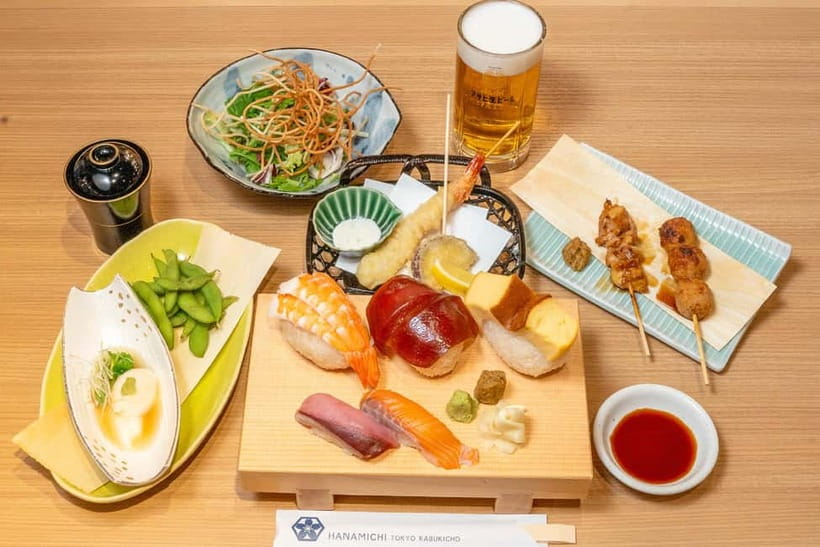
The meal begins with edamame and tofu with savory sauce. These are familiar Japanese izakaya-style starters, useful for easing into the meal while you settle in. The course is designed as a progression of small dishes rather than one large entrée.
Next comes a crispy soba noodle salad. The texture gives the meal a little crunch, and the dish helps break up the softer foods that follow. If drinking is a bigger priority for your group, you can replace this salad with the all-you-can-drink option, but that choice must be made at booking and must be selected by everyone in the group.
The skewer course includes tsukune, a Japanese chicken meatball, and grilled chicken thigh. These are straightforward izakaya favorites, served in a form that is easy to share and eat between the other courses. The menu can change, so treat the published dishes as the planned outline rather than an absolute guarantee.
The tempura course features shrimp and sweet potato. The combination gives you one seafood item and one sweet, starchy vegetable, with the crisp coating that makes tempura such a popular Japanese dish. If you have a shellfish allergy, tell the restaurant in advance. A suitable substitute may be possible, but same-day requests are not guaranteed.
The sushi course is the meal’s biggest nod to classic Japanese dining. You receive five pieces, including rice ball sushi with marinated tuna and egg, plus nigiri sushi with salmon, yellowtail, and sea bream. That variety gives you several different textures and flavors instead of five similar pieces.
The meal ends with red miso soup. It is a sensible finish after sushi, skewers, and tempura, and it gives the course a traditional Japanese touch. The menu is substantial for a 90-minute cultural dinner, though you should think of it as a set tasting-style meal rather than a free-choice restaurant order.
The food has been one of the strongest parts of the experience. A shellfish-free alternative of chicken and pork was prepared for one diner, and the meal still felt carefully handled. Vegetarian arrangements have also been made. Contact the restaurant before arrival with allergies or dietary needs, and remember that Halal options are not available.
Drinks and the value of the 11,000 yen price
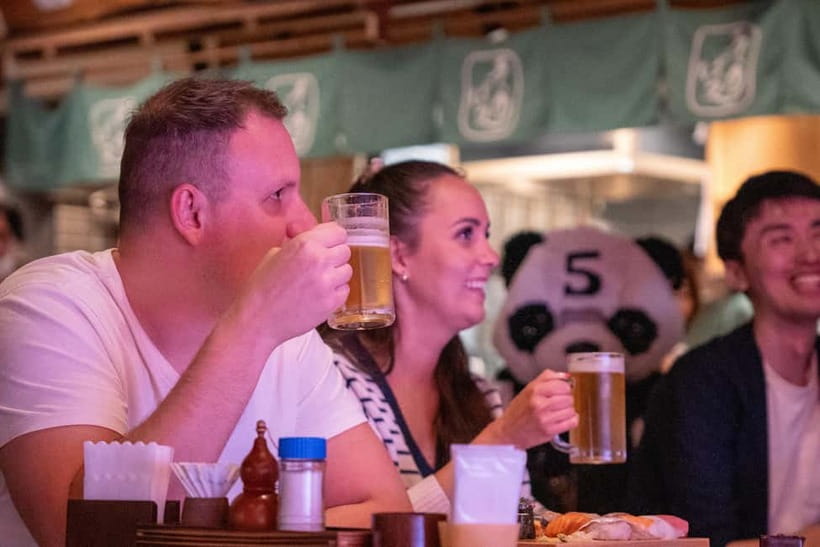
The listed dinner price is 11,000 yen per person, roughly $70. That includes the full izakaya course, one drink, and the Bon Odori program. You can choose beer, sake, whiskey, shochu, glass wine, or a soft drink.
The single drink is enough if you want a cultural activity with dinner and do not plan to drink heavily. The all-you-can-drink choice changes the value calculation. It includes beer, shochu, whiskey, sake, soft drinks, and glass wine, but you give up the crispy soba noodle salad. Everyone at the table must make the same selection.
I would compare this with the cost of paying separately for a Japanese meal, a drink, and a cultural performance in central Shinjuku. The bundled format is convenient, particularly if you want a planned evening without moving between venues. It is less compelling if you are mainly seeking a long dinner, custom menu choices, or a full stage production.
The course also saves you from having to decide what to order in a busy izakaya. You get a broad sample of Japanese foods, including sushi, tempura, grilled chicken, tofu, and miso soup. That makes the price easier to justify for first-time visitors who want variety and a little cultural context in one sitting.
What happens during the Bon Odori performance
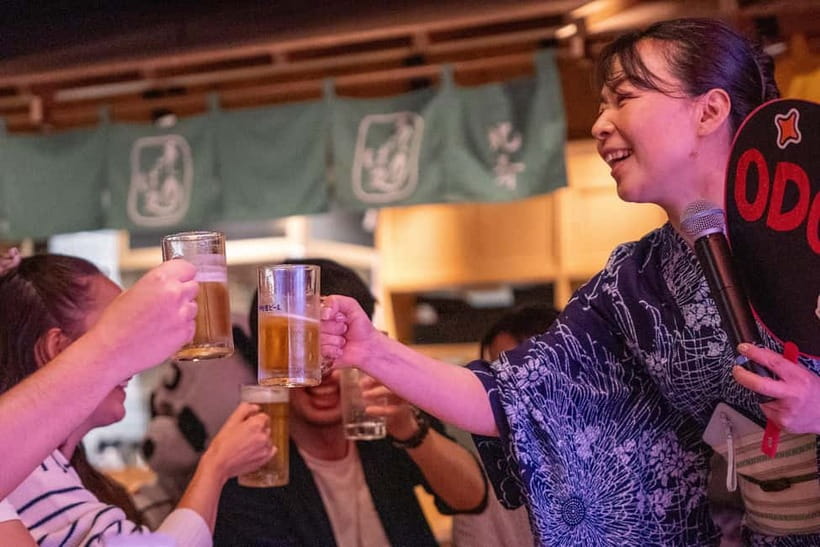
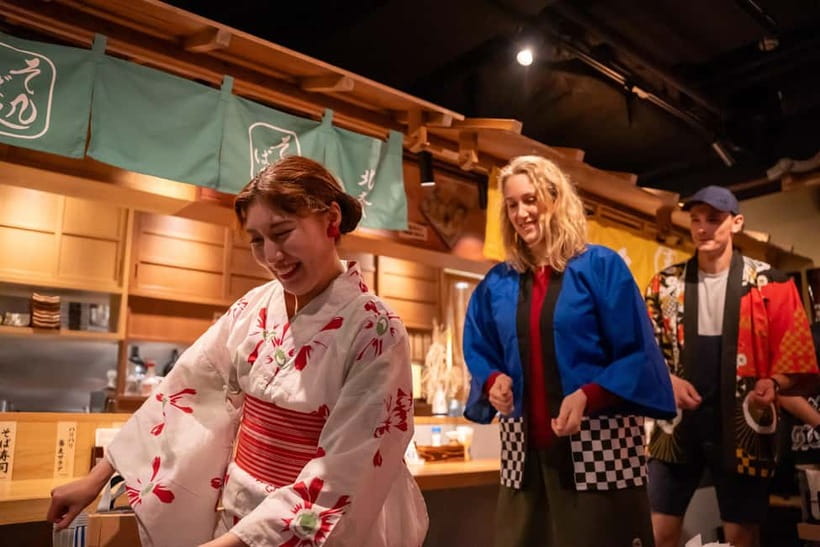
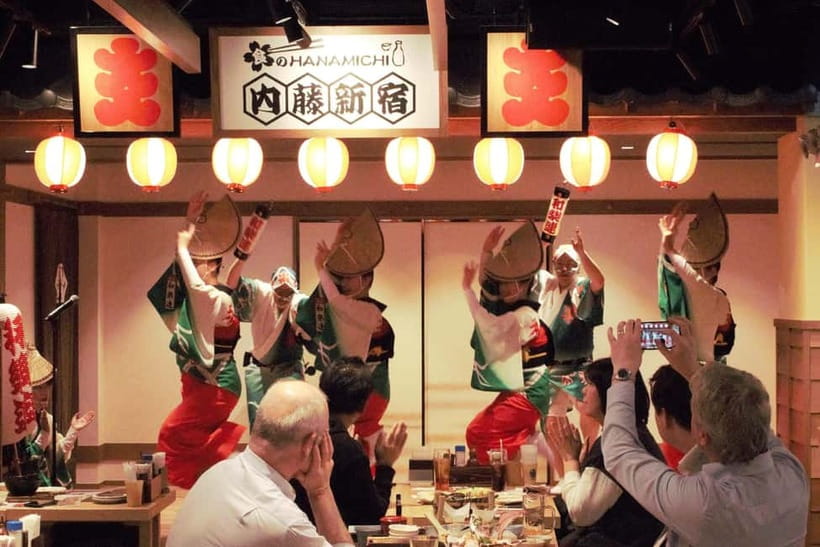
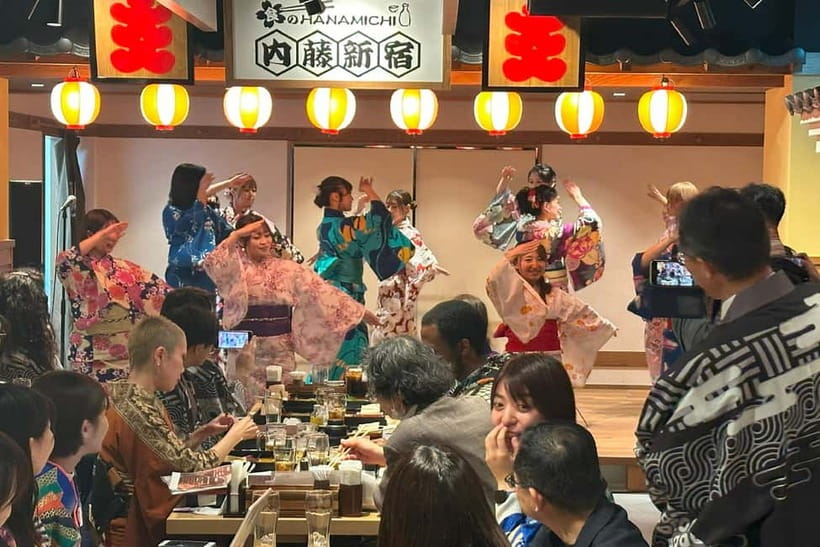
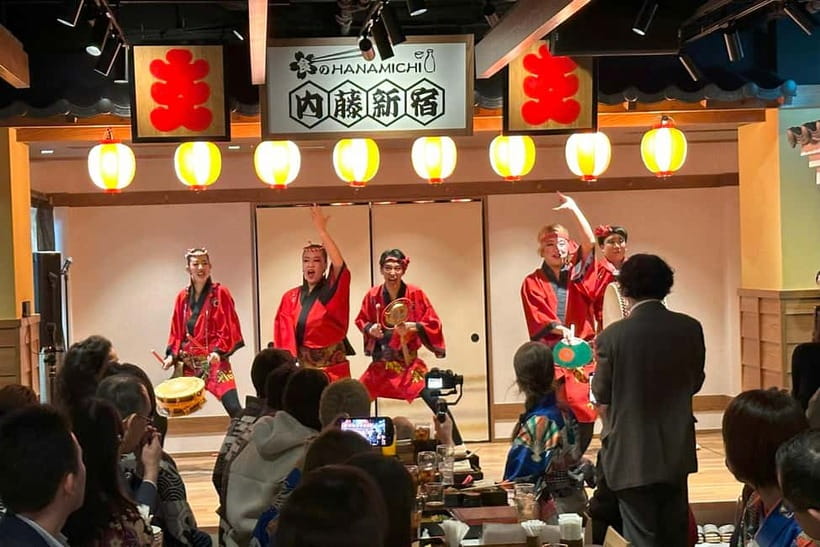
At 19:30, the room shifts from dinner service toward the dance program. The organizers explain the Bon Odori tradition, and the dancers demonstrate the movements. The aim is not technical perfection. You are there to copy the gestures, enjoy the rhythm, and take part in a Japanese festival custom.
The teaching element is important. The presenters have made the dance accessible to people who may know nothing about it, and the format leaves room for questions about Japanese culture and history. One particularly positive account described the organizer as open and enthusiastic while keeping the explanation fun rather than turning it into a lecture.
You should expect participation to be part of the deal. Several people found this a pleasant surprise, since the room quickly became more social once everyone joined in. If you prefer to watch, say so early and make your wishes clear, but the activity is designed around shared participation.
The short length is both a strength and a weakness. Thirty minutes is enough to learn the basic pattern without exhausting you or taking over the meal. It also means you will not receive a long sequence of different dances or an extended professional show.
That distinction is worth keeping in mind when you book. This is a dinner with an interactive Bon Odori feature, not a dedicated dance theater. If you want a relaxed introduction to the tradition, the timing works well. If you want an elaborate performance with many numbers, you may find it too brief.
A few more Tokyo tours and experiences worth a look


Staff, atmosphere, and the small-group format
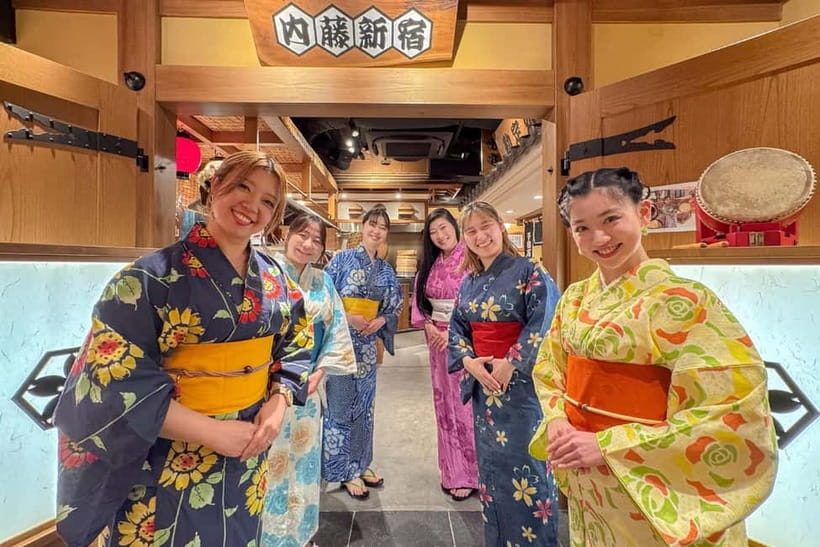
The staff play a major role in making the evening work. Friendly service and willingness to adjust dishes can matter as much as the food when an activity combines dining with a live presentation. The restaurant has handled allergy substitutions, and staff members have also helped with lost property after the event, a reassuring sign of attentive service.
The booking is limited to six participants, which keeps the activity personal. You should have a better chance of hearing cultural explanations, asking questions, and following the movements than you would in a large tour group.
There is no guide accompanying you from Shinjuku Station or leading you around the district. You make your own way to the restaurant, then take part in the hosted dinner and dance once inside. That arrangement is simple, but it also explains why the meeting point instructions matter so much.
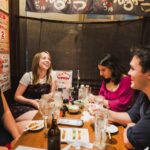
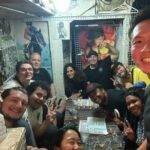
The atmosphere is meant to be fun rather than formal. You can expect a meal that moves at a set pace, then a dance session where the boundary between audience and performer becomes fairly thin. That works especially well for couples, families, and friends who enjoy trying something together.
A surprise extra has also appeared for at least one participant: a choice of haori that could be taken home. This is not listed as a guaranteed inclusion, so do not book solely for that possibility. If it is offered during your visit, consider it a pleasant bonus rather than part of the advertised value.
Who should book this Shinjuku evening
I would recommend Bon Dance IZAKAYA to you if you want three things in one compact plan: a Japanese meal, a drink, and a cultural activity that you can join. It suits a first visit to Tokyo, especially if you want a gentle introduction to Japanese food and festival customs without committing to a full-day excursion.
It also fits well into a Shinjuku evening. The venue is close to Shinjuku Station and the Kabukicho entrance, so you can continue exploring the area afterward. The 19:00 start and 20:30 finish give you a clear window for dinner without taking your entire night.
Couples and friends are likely to enjoy the shared humor of learning the dance together. Families may also appreciate the short format and the chance to ask questions. Solo diners can book from one person, and the six-person limit keeps the setting from feeling too impersonal.
I would be more cautious if you have strict dietary requirements. Allergies and some vegetarian arrangements can be accommodated with advance notice, but Halal food is not available, and the menu can change. Contact the venue before booking if your meal needs are central to the decision.
I would also steer you elsewhere if your main goal is a long, leisurely dinner or a major dance spectacle. The 90-minute schedule is efficient and well organized, but it can feel rushed if you want long pauses between courses. The Bon Odori section is entertaining and hands-on, yet it lasts only 30 minutes.
Booking tips that will make the evening easier
Reserve the all-you-can-drink option before arrival if you want it. You cannot assume it can be added on the night, and the same choice must be made by everyone in your party.
Send allergy and dietary information at booking. The restaurant has provided chicken and pork alternatives for shellfish concerns and has made vegetarian adjustments, but last-minute changes may not be possible. Halal options are not offered.
Arrive 10 minutes early. The building is easy to miss because the elevator entrance may be all you see from the street. Once inside, go to the third floor.
Keep your expectations focused on a compact cultural dinner. You will receive a broad Japanese meal, one included drink, and a chance to learn and perform Bon Odori. You will not receive a full-length dance production or a guide-led walking tour of Kabukicho.
Free cancellation is available up to 24 hours before the activity for a full refund, and you can reserve now and pay later. The booking is valid for one day, with starting times dependent on availability.
Should you book Bon Dance IZAKAYA?
Book it if you want a friendly, convenient taste of Japanese culture with real participation. The best parts are the variety of the Edo-style dinner, the helpful staff, the central Shinjuku location, and the chance to learn Bon Odori instead of only watching it.
Skip it if you need a Halal menu, dislike group participation, or expect more than 30 minutes of dancing. Also be ready to navigate the building carefully. For the right audience, the 11,000 yen price buys more than dinner: it gives you a shared activity and a small window into a long-running Japanese festival tradition.
FAQ
Where is Bon Dance IZAKAYA located?
It is at HANAMICHI TOKYO KABUKICHO, a commercial building about five minutes on foot from Shinjuku Station. The building is directly behind Shinjuku City Hall, at the entrance to the Kabukicho district.
How long does the experience last?
The dinner runs from 19:00 to 20:30, for a total of 90 minutes. The Bon Odori portion takes place from 19:30 to 20:00 and lasts 30 minutes.
What food is included?
The planned course includes edamame and tofu with savory sauce, crispy soba noodle salad, chicken skewers, grilled chicken thigh, shrimp and sweet potato tempura, five pieces of Edo-style sushi, and red miso soup. The menu may change.
Is a drink included?
Yes. One drink is included, with a choice of beer, sake, whiskey, shochu, glass wine, or a soft drink.
Can I choose an all-you-can-drink option?
Yes. You can replace the crispy soba noodle salad with an all-you-can-drink option when making the reservation. Beer, shochu, whiskey, sake, soft drinks, and glass wine are available, and everyone in the group must choose the same option.
Can the restaurant accommodate allergies or dietary restrictions?
You must inform the restaurant in advance about allergies or dietary restrictions. Efforts can be made to accommodate requests, but same-day changes may not be possible. Halal options are not available.
More Bar Hopping & Izakaya Tours in Tokyo
More Shinjuku Tours in Tokyo
More tours in Tokyo we've reviewed












Shinjuku Tours, compared.
 ★ 5.0Tokyo: Shinjuku Food Tour (13 Dishes at 4 Local Eateries)From $86
 ★ 5.0Tokyo Bar Hopping Tour in Shinjuku (All-You-Can-Drink + Dinner)From $106
 ★ 4.9Tokyo: Shinjuku Local Bar and Izakaya Guided Walking TourFrom $343 hours
 ★ 4.9Tokyo: Shinjuku Food Tour (13 Dishes and 4 Eateries)From $97
 ★ 5.0Tokyo Night Foodie Tour in Shinjuku – Seasonal Sushi, Wagyu BeefFrom $111
 ★ 5.0Tokyo: Shinjuku Local Bar & Izakaya Crawl TourFrom $39