Reviewed · SAMURAI & NINJA EXPERIENCES
Tokyo: Ninja Experience Cafe Asakusa
The first surprise is how quickly an ordinary cafe visit turns into a ninja training session. You put on a ninja uniform, then work through three traditional-style activities: throwing shuriken, firing a blowgun, and practicing with a replica sword. The setting is playful rather than solemn, which makes it a good fit for families and friends.
In This Article
- Key points to know before you book
- Turning an Asakusa cafe into a ninja dojo
- What happens during the three-part training
- Shuriken: the classic ninja photo
- Blowgun: a quieter test of control
- Replica sword: the most theatrical segment
- Why the costume and photo time matter
- Who will enjoy the 60 to 90 minutes most
- Is $45 per person a fair price?
- Language, access, and the small practical details
- How to get the best photos and memories
- Should you book the Ninja Experience Cafe Asakusa?
- FAQ
- Where does the Ninja Experience Cafe Asakusa meet?
- How long does the ninja experience last?
- What activities are included?
- Is a drink included?
- What languages are available?
- Can people who do not train come along?
- Is the experience wheelchair accessible?
I like the way the experience gives you something active to do in Asakusa, instead of another stop where you only look and take pictures. I also like that nonparticipants can watch, take photos, and enjoy a drink. The main caution is time: at $45 per person for 60 to 90 minutes, this is a themed activity, not a low-cost cafe stop.
Key points to know before you book

- Three different ninja activities: Practice with shuriken, a blowgun, and a replica sword.
- A full ninja outfit is part of the fun: Dressing up gives the session its strongest photo appeal.
- English and Japanese instruction: You can take part with an instructor speaking either language.
- Good for wet weather: The indoor format keeps the activity useful on a rainy Tokyo day.
- Observers can join the atmosphere: Friends and family who skip the training may watch, photograph, and have a drink.
- The price includes one drink: The $45 fee covers the three training activities and one beverage.
Turning an Asakusa cafe into a ninja dojo

Asakusa is known for temples, old-style streets, and classic Tokyo sightseeing. This activity offers a different way to spend part of your time there. You enter through the red torii gate at the storefront, then trade ordinary sightseeing clothes for a ninja uniform.
That costume change matters more than it may sound. Children get a clear role to play, and adults who are willing to act a little silly get better photos and a more memorable hour. You are not simply watching a demonstration. You are asked to take part in the training, so the experience has a sense of progression.
The mood is designed to be friendly and theatrical. You can create your own movie-star moment, pose for pictures, and share photos or video afterward. The staff can suggest good moments for photography, which is useful when you are trying to capture an action such as a shuriken throw or sword pose.
The cafe setting also makes this easier for mixed groups. If one person wants to train while another prefers to sit out, the nonparticipant can observe and enjoy a drink. That flexibility is valuable for families with different ages, friends with different energy levels, or anyone who is curious but not ready to dress up.
A few more Tokyo tours and experiences worth a look


What happens during the three-part training
The course includes three ninja experiences, and each one has a different feel. The exact order may depend on the instructor and the session, but you can expect guidance through all three activities during the one-hour to 90-minute visit.
Shuriken: the classic ninja photo
Shuriken are the star-shaped weapons most people picture when they hear the word ninja. This part gives you the clearest connection to manga, films, and childhood ninja fantasies.
You receive instruction before taking your turn. The appeal is not only the attempt to hit a target. It is also the pose, the costume, and the ritual of handling a famous ninja prop. Younger children can enjoy the drama of the activity, while adults may find the accuracy harder than expected.
This is likely to be one of the best moments for photos. Ask the instructor when to have someone take a picture, rather than trying to manage the activity and the camera at once. The staff specifically encourages photos and videos, so you should feel free to record the fun within the cafe’s guidance.
Blowgun: a quieter test of control
The blowgun offers a different challenge. Unlike the quick visual drama of throwing a star, it asks you to focus on aim and breath. That change keeps the course from feeling like the same game repeated three times.
For children, the blowgun may be especially appealing because it feels unusual. Many people have tried a toy sword or seen a throwing star in a film, but a ninja blowgun is less familiar. Adults may enjoy the small surprise of discovering that a simple-looking activity still requires care.
The instructor leads you through the exercise, so you do not need prior experience. Since the session is offered in Japanese and English, you can book it even if you do not speak Japanese.
Replica sword: the most theatrical segment
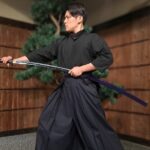
The replica sword brings the biggest movie moment. You are not handling a real weapon, but the activity lets you practice sword-fighting movements in a controlled, playful format.
This part should suit people who enjoy performance and posing. It is less about testing strength than about following the instructor, moving with care, and looking the part. The sword segment can also produce some of the most dramatic family or group photos.
You should listen closely to the instructions and treat the replica with respect. The point is to enjoy a guided activity, not to turn it into free play. That balance helps keep the session suitable for young children and adults alike.
A few more Tokyo tours and experiences worth a look

Why the costume and photo time matter

The ninja uniform is not a minor extra. It changes the character of the whole visit. Without it, the course would be a short lesson in three themed activities. In costume, you get a small story: you arrive as a visitor and leave with photos of your temporary ninja identity.
I would plan to take photos throughout the session rather than saving everything for the end. The staff can advise you on suitable moments, and friends who are not training can act as photographers while enjoying their drink.
This is also an easy way to make the experience personal. You can pose seriously, play up the comedy, or let children create their own ninja character. The activity invites that kind of freedom. You do not need to be an expert or a martial arts enthusiast to get something from it.
Keep your expectations in the right place, though. This is a short entertainment experience, not a formal study of Japanese history, martial arts, or ninja culture. If you want a detailed cultural lecture, this will not be the best match. If you want a light, active memory from Tokyo, the format makes sense.
Who will enjoy the 60 to 90 minutes most

Families are the clearest match. The experience is built for young children through adults, and the three activities offer enough variety to hold attention during the session. The slightly challenging nature gives children something to try without requiring a full day of concentration.
Friends can also make good use of it, especially if everyone is happy to take pictures and play along. The photo element works better when you have someone in your group who enjoys capturing action and costumes.
It can suit a mixed group too. Someone who does not want to train can sit nearby, have a drink, watch, and take pictures. That means the whole group does not have to pay for an activity that every person may not want to do, although the stated price is per participating person.
The session is also useful for a rainy Tokyo day. You do not need to cancel your Asakusa plans simply because the weather turns wet. An indoor activity gives you a break from walking and sightseeing while keeping the day entertaining.
Children under 2 are not suitable for the experience. The activity is also not suitable for people with gluten intolerance, an important point to consider because the venue is a cafe.
Is $45 per person a fair price?

At $45 per person, this is not a bargain if you measure it as one hour in a cafe. The value comes from the combination of costume rental, instruction, three hands-on activities, and one drink. You are paying for a small staged experience, not just refreshments.
I think the price works best when you treat the visit as a family or group activity. Three people can share the fun of dressing up and photographing one another, and the session gives you a clear memory to take home. For one adult who is only mildly interested in the ninja theme, the cost may feel harder to justify.
The included drink adds a little practical value, but it should not be the reason you book. The main draw is participation. If you only want to look around or have a cafe drink, there are cheaper ways to spend your time in Tokyo.
The duration helps the value. At 60 to 90 minutes, the experience is long enough to include all three activities but short enough to fit around other Asakusa plans. Check the available start times when you book, since the duration and schedule can affect how easily you place it in your day.
Language, access, and the small practical details

Instruction is available in Japanese and English. That removes a major barrier for international visitors, since you need to understand safety and technique guidance before using the props. The course is led by an instructor rather than left for you to figure out alone.
The activity is wheelchair accessible. That is useful information for anyone planning a mixed-access day in Tokyo. You should still consider your own comfort with costume changes and the physical actions involved, but the venue itself is listed as accessible.
The meeting point is easy to identify: look for the red torii gate at the storefront. You do not need to search for a separate office or outdoor meeting area.
The provider is Tom Inc. You can reserve now and pay later, which helps if you are building a Tokyo schedule that may change. Free cancellation is available up to 24 hours before the activity for a full refund. Those terms are useful for a weather-sensitive day, especially since rain is one of the reasons you might choose an indoor activity.
How to get the best photos and memories

Tell your group ahead of time that photos are part of the experience. One person can focus on pictures while the others train, then switch roles if the format allows. This works better than having everyone hold a phone during every activity.
Use the costume to create variety. Take a full-group portrait, then get individual action shots with the shuriken, blowgun, and sword. The staff can recommend good moments, so do not hesitate to ask before a training segment begins.
You can share the results on Instagram, YouTube, or a blog. The experience openly encourages this kind of recording and sharing. Still, keep your attention on the instructor during the training itself. A good photo is worth less than understanding how to handle the activity properly.
The strongest memories may come from the people who are not training. A friend sitting with a drink can capture reactions, missed throws, and funny poses. This makes the cafe format more social than a simple class.
Should you book the Ninja Experience Cafe Asakusa?

Book it if you want a playful, photo-friendly indoor activity that works for children, adults, and mixed groups. It is especially sensible on a rainy day, or when your Asakusa schedule needs a break from temples and walking.
Think twice if you want serious martial arts training, a low-cost cafe visit, or a detailed lesson on ninja history. The $45 price makes the most sense when you take part in all three activities and enjoy the costume and photography as much as the training.
For a family or group that is happy to be a little theatrical, I would book it. The shuriken, blowgun, and replica sword give the hour enough variety, while the English-speaking option, drink, indoor setting, and observer access make the plan easy to fit into a Tokyo day.
FAQ

Where does the Ninja Experience Cafe Asakusa meet?
Meet at the red torii gate at the storefront.
How long does the ninja experience last?
The activity lasts between 1 hour and 90 minutes. Available starting times vary, so check the schedule when booking.
What activities are included?
You receive training with three ninja weapons or replicas: shuriken, a blowgun, and a replica sword.
Is a drink included?
Yes. The price includes one drink.
What languages are available?
Instruction is available in Japanese and English.
Can people who do not train come along?
Yes. Nonparticipants may observe, take pictures, and enjoy a drink at the cafe.
Is the experience wheelchair accessible?
Yes, the activity is listed as wheelchair accessible. Children under 2 and people with gluten intolerance are not considered suitable for the experience.
More Samurai & Ninja Experiences in Tokyo
More Asakusa Tours in Tokyo
More tours in Tokyo we've reviewed












Samurai & Ninja Experiences, compared.
 ★ 4.5Tokyo: Samurai Restaurant Show Ticket with 2 DrinksFrom $551h 30m
 ★ 4.6Tokyo: Samurai Ninja Museum Guided tour and ExperienceFrom $27
 ★ 5.0Skip the lines Basic Ticket at SAMURAI NINJA MUSEUM TOKYOFrom $28
 ★ 5.0Tokyo: Authentic Samurai Training at a DojoFrom $211
 ★ 5.0Best Samurai Experience in TokyoFrom $65
 ★ 4.6Tokyo: Legend Samurai Entertainment Night in Kanda ShrineFrom $44