Reviewed · MT FUJI DAY TRIPS
Tokyo: Instagram-Worthy Mt Fuji & Lake Kawaguchiko Day Trip
The best part of this day is the chance to see Mt Fuji from several different angles without piecing together a complicated train and bus plan. You climb to Chureito Pagoda, visit the clear springs of Oshino Hakkai, pose by the famous Lawson store, and finish around Lake Kawaguchiko.
In This Article
- Key points before you book
- Why this route works for a Fuji day trip
- Chureito Pagoda and the 400-step climb
- Hikawa Clock Shop and the local street view
- Oshino Hakkai and its eight clear springs
- Lawson Kawaguchiko Station and the famous convenience-store shot
- Lake Kawaguchiko and Oishi Park’s changing colors
- Maple Corridor during the autumn season
- Guides, language, and the pace of the day
- The real value of $161
- Timing, traffic, and practical planning
- Who will enjoy this Fuji tour most?
- Should you book it?
- FAQ
- Where does the tour start and finish?
- How long does the tour last?
- How many people can join the tour?
- Which Mt Fuji sights are included?
- Does the tour visit Oishi Park all year?
- Are meals included?
- Are admission tickets included?
- Can I cancel for a full refund?
I like the photo-first route, which gives you repeated chances for a clear Fuji view, and I like the easy 8 a.m. pickup at Tokyo Station. Guides such as Hikari and Sakura have earned praise for keeping the day cheerful, useful, and moving.
The trade-off is a tight schedule. Some guides offer plenty of explanation, but others keep commentary brief, and traffic can stretch the day beyond 10 hours. This is mainly a scenic transportation tour with guided help, not a slow cultural study.
Key points before you book

- Four strong Fuji photo settings: Chureito Pagoda, Oshino Hakkai, Lawson Kawaguchiko Station, and Lake Kawaguchiko give you very different backdrops.
- About 10 hours from Tokyo: The day includes long road time, with the tour beginning and ending at Tokyo Station.
- The 400-step climb matters: Arakurayama Sengen Park requires a short but demanding walk up to the pagoda viewpoint.
- Seasonal stops change: Oishi Park is generally used for flower displays, while the Maple Corridor replaces it during the autumn color period.
- Guide quality can shape the day: Hikari and Sakura receive especially warm praise, while one experience felt rushed and light on explanation.
- Small-group format: The vehicle can carry up to 21 people, so expect a shared coach rather than a private outing.
Why this route works for a Fuji day trip
Mt Fuji is an elusive subject. Clouds can cover the summit for most of a day, then part for five minutes at the right stop. This tour handles that risk sensibly by taking you to several viewing points instead of betting the whole day on one overlook.
You are not simply driven to a single lakefront and sent home. The backgrounds change from red shrine architecture and mountain views to spring water, village streets, convenience-store photography, flower fields, and autumn maples. If your main goal is to return to Tokyo with strong photographs, that variety gives you a fair chance.
The tour starts at 8 a.m. at Tokyo Station, at 1 Chome-9 Marunouchi. That central meeting point is practical if you are staying in Tokyo and can reach the station easily. The stated duration is about 10 hours, including travel, but traffic can push the day closer to 11 hours. I would not book a fixed dinner reservation immediately after the scheduled return.
The vehicle and driver remove the need to navigate several separate regional buses. That is the main value of the $161 price. You pay for transport, parking, and a guide, while saving the planning time needed to connect Tokyo with the Fuji Five Lakes area and then arrange local sightseeing.
A few more Tokyo tours and experiences worth a look
Chureito Pagoda and the 400-step climb

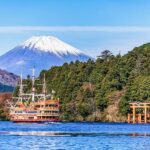
Arakurayama Sengen Park is the visual star of the day. The classic view places the five-story Chureito Pagoda in the foreground, with Mt Fuji behind it. During cherry blossom season, usually around mid-April, the scene adds pale flowers. In November, autumn leaves bring a warmer frame.
The climb is short but not effortless. You should expect roughly 400 steps to reach the upper viewpoint. One hour is allowed here, which is enough for the walk, photographs, and a quick look around if you keep a steady pace.
I like this stop because it gives you one of Japan’s most recognizable compositions in a single frame. The drawback is that the best view requires effort and the time limit may feel sharp, especially during busy blossom periods. Wear shoes that handle stairs well, and do not spend the first few minutes taking photos at the lower shrine area if the pagoda is your priority.
Traffic rules can alter the route during the spring blossom season. From April 1 to 18 in 2025, the tour planned to skip the Hikawa Clock Shop and give you more time at Arakurayama Park. The reason is simple: road restrictions and a longer walk from the parking area can make the clock shop an inefficient stop during peak bloom.
Hikawa Clock Shop and the local street view
When included, the Hikawa Clock Shop stop lasts about 20 minutes. It is known for the street view leading toward Mt Fuji, with the mountain rising at the end of the road when conditions cooperate.
This is a quick photo stop, not a full shopping visit or a long neighborhood walk. It works best for people who want a different urban Fuji composition, with local buildings and a straight street adding scale.
Do not count on this stop during the April 1 to 18, 2025 traffic-control period. The seasonal change is designed to protect your time at the pagoda park, which is the more substantial stop.
Oshino Hakkai and its eight clear springs

Oshino Hakkai gives the day a change of pace. This natural monument consists of eight springs formed by snowmelt from Mt Fuji. The water is famously clear, and on a good day you can see reflections of the mountain in the pools.
You get about 1 hour and 20 minutes here, making it one of the longer stops. That matters because Oshino Hakkai is more than a quick viewpoint. You can walk around the spring area, look at the traditional village setting, and take photographs that do not depend on the pagoda and mountain arrangement.
I find this stop valuable even when clouds hide Fuji. The springs and village atmosphere still provide something to see. One well-reported frustration is the cost of food in the area. A simple meal can feel expensive, so keep your expectations in check and budget for personal purchases. Dinner is not included, and neither are other personal expenses.
The tour description calls the place an eight-spring village, though one account referred to it as an eight oceans village. The useful point is that you are visiting a spring area tied to Mt Fuji’s snowmelt, not a lake or oceanfront site.
Lawson Kawaguchiko Station and the famous convenience-store shot

The Lawson Kawaguchiko Station stop lasts about 20 minutes. This ordinary convenience store has become a very popular Fuji photo location because the mountain can appear directly beyond the street and shop frontage.
It is an amusing stop, and it shows how modern Japan can become part of a travel photograph. You get a familiar convenience-store scene with an enormous mountain behind it, rather than another formal shrine or park.
The short time is enough for photos, but not for a relaxed snack break and extended shopping. Follow the guide’s instructions carefully, since this is a roadside urban setting rather than a wide-open park. If Fuji is hidden at this point, do not assume the day is lost. The mountain may appear later at the lake.
A few more Tokyo tours and experiences worth a look



Lake Kawaguchiko and Oishi Park’s changing colors

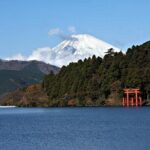
Lake Kawaguchiko provides the broadest scenery of the day. The tour includes a stop around the Lake Kawaguchi Ohashi Bridge area, with about 50 minutes for views and photographs.
For much of the year, the route finishes at Oishi Park. The park is known for flower displays that can include lavender, begonia, cosmos, and Japanese blood grass. These plantings add foreground color, so the photographs look different from the stark pagoda view or the convenience-store scene.
The lake stop is especially useful on a summer day when Mt Fuji has little or no snow. The mountain may not look like the familiar winter postcard, but the lake setting can still be attractive. Cloud cover is always a real possibility. A good guide may help you find the best angle and wait for brief openings, but no day trip can guarantee a clear summit.
You have about 50 minutes here. That is enough to walk, take pictures, and enjoy the setting, but not enough for a long lakeside outing. Treat this as a focused scenic stop, not free time for a full exploration of Kawaguchiko.
Maple Corridor during the autumn season

During the late October to November 20 period, the tour changes the final stop from Oishi Park to the Maple Corridor. The exact seasonal wording gives an approximate window around October 20 or 30 through November 20, so check the current departure details if autumn color is your main reason for booking.
The Maple Corridor is chosen for the contrast of red autumn leaves and snow-capped Mt Fuji. It is a seasonal choice with a clear purpose: show you the strongest fall color rather than the usual flower displays.
The timing can be excellent, but autumn weather remains uncertain. Fuji may be covered while the maples look superb, or the mountain may appear briefly between clouds. You should view the corridor as a beautiful seasonal stop in its own right, with the mountain as a welcome bonus.
Guides, language, and the pace of the day

Guide performance appears to make a large difference. Hikari is repeatedly praised for being funny, attentive, helpful, and clear. He is also credited with showing the best angles for Fuji photographs and explaining the places along the route. Sakura receives similar praise for humor, useful guidance, and good English.
That does not mean every departure will feel the same. One guide, Bruce, was described as rushing the group and offering little explanation. The result felt more like transport between photo stops than a guided day. Another account described a mixed Chinese and English group where the English commentary felt much shorter than the Chinese commentary.
This is important if you want detailed discussion of Japanese culture, shrine customs, or regional history. You might get a lively and informative guide, but you should not book this tour assuming a full lecture at every stop. The core service is transport, timing, photo advice, and basic guidance.
The group can reach 21 people. That is small enough to manage compared with a large sightseeing bus, but it is still a shared group. You will need to return to the vehicle on time, listen for instructions, and accept that the group’s pace affects your own.
The real value of $161
At $161, this is not the cheapest way to see Mt Fuji. A self-planned trip can cost less in transport, especially if you are comfortable using regional trains and buses. But self-planning takes time, and the Fuji area has several separate sights spread around the lakes and mountain foothills.
The tour fee includes parking, the driver, and guide service. Children under three can join free if they do not occupy a seat. Admission is generally not listed as part of the price, although Arakurayama Sengen Park is shown with admission included and the other named stops are free. You should still plan to pay for food and personal purchases.
I see the value in this tour if you have only one day and want a high number of scenic stops without managing transfers. The value drops if you prefer slow meals, long walks, or detailed cultural interpretation. The tight schedule is the price of fitting so many photo locations into one day.
Timing, traffic, and practical planning
The stated return is to the Tokyo Station meeting point, but the actual arrival can change with traffic. One day ended around 4:30 p.m., while another ran to roughly 11 hours and caused a 7 p.m. dinner reservation to be canceled.
That range does not mean the tour is unreliable every day. It shows how strongly road conditions affect a Tokyo to Fuji outing. Leave your evening flexible, especially during cherry blossom and autumn leaf periods.
The mobile ticket is convenient, and confirmation normally arrives at booking unless you reserve within one day of departure. In that case, confirmation follows as soon as possible and depends on availability. Free cancellation is available up to 24 hours before the start time. Inside that window, the payment is not refunded and changes are not accepted.
Most people can take part, and the route is near public transportation at the meeting point. The 400-step climb is the main physical test mentioned in the schedule. The tour is not recommended for people who require constant mental health supervision.
Who will enjoy this Fuji tour most?
I would choose this trip for a first visit to the Mt Fuji area, especially if you want photographs more than an in-depth class on local culture. It suits couples, friends, and families who value convenience and want several chances to see the mountain.
It is also a good fit if you are nervous about planning the regional transport yourself. A guide can point out photo angles, keep the group moving, and handle the road logistics while you focus on the scenery.
I would hesitate if you dislike fixed schedules or crowded seasonal sights. The stops are short, the coach ride takes a large part of the day, and the quality of spoken guidance can vary. If you want a private pace, a long lake walk, or a detailed shrine tour, another format may suit you better.
Should you book it?
Book this Mt Fuji day trip if you want efficient sightseeing and varied photographs from Tokyo, and you accept that weather and traffic control the final result. The best days combine a clear mountain, a warm guide such as Hikari or Sakura, and smooth roads.
Skip it if your top priority is a slow, deeply explained cultural experience. Before booking, check the seasonal stop, keep dinner plans loose, and prepare for the pagoda stairs. For a one-day Fuji sampler with transport included, $161 is a fair convenience price, but not a bargain for anyone who wants lots of free time.
FAQ
Where does the tour start and finish?
The tour starts at 8 a.m. at Tokyo Station, at 1 Chome-9 Marunouchi, Chiyoda City, Tokyo 100-0005. It ends back at the same meeting point.
How long does the tour last?
The stated duration is approximately 10 hours, including travel time. Traffic may make the day longer, with one reported outing taking about 11 hours.
How many people can join the tour?
The maximum group size is 21 people.
Which Mt Fuji sights are included?
The route includes Arakurayama Sengen Park, Hikawa Clock Shop when operating, Oshino Hakkai, Lawson Kawaguchiko Station, the Lake Kawaguchi Ohashi Bridge area, and either Oishi Park or the Maple Corridor depending on the season.
Does the tour visit Oishi Park all year?
No. Oishi Park is used for most of the year, while the Maple Corridor replaces it during the autumn season, approximately from late October through November 20.
Are meals included?
No. Dinner and personal consumption expenses are not included.
Are admission tickets included?
The tour information lists Arakurayama Sengen Park with admission included and the other named stops as free admission. It also states that admission tickets are generally not included, so you should check the current booking details for any paid entry.
Can I cancel for a full refund?
Yes. You can cancel at least 24 hours before the experience start time for a full refund. Cancellations or changes made within 24 hours are not accepted for a refund.
More 1-Day Tours in Tokyo
More Mt Fuji Day Trips in Tokyo

More tours in Tokyo we've reviewed












Mt Fuji Day Trips, compared.
 ★ 5.0Mt Fuji and Hakone 1-Day Bus Tour Return by Bullet TrainFrom $163
 ★ 4.0Mt Fuji & Hakone Cruise, Drum Show Bullet Train 1 Day from TokyoFrom $149
 ★ 4.4Tokyo Mt Fuji 5th St & Hakone Cruise Bus Tour w/Bullet TrainFrom $15410 hours
 ★ 4.5From Tokyo: Mount Fuji Full-Day Sightseeing TripFrom $6810 hours
 ★ 4.7Tokyo: Mt. Fuji Tour, Hakone Ropeway, Owakudani, Lake AshiFrom $5410 hours
 ★ 4.4Tokyo:Mt.Fuji,Kawaguchiko Oishi Park,Arakurayama Sengen ParkFrom $5410 hours