Reviewed · SHOW
Tokyo: Authentic Japanese Dance Show ticket by professionals
Japanese dance is best understood up close, where a small turn of the wrist or shift of the eyes can carry as much weight as a large stage movement. This Shinjuku performance brings you close to award-winning Japanese dancers, their carefully arranged kimonos, and an art form shaped over four centuries.
In This Article
- Key points at a glance
- Why this Shinjuku dance show feels different
- What the performance teaches you about Japanese culture
- The opening welcome in the heart of Shinjuku
- Watching the dancers from close range
- The kimono and decoration are part of the story
- The rhythm of the show and the value of quiet attention
- How much value do you get for $54?
- Who should book this experience
- Practical advice for getting the most from the show
- Should you book the Japanese dance show?
- FAQ
- Where does the Japanese dance show take place?
- How much does the ticket cost?
- Who performs in the show?
- What is included in the ticket?
- Are food and drinks included?
- Is hotel pickup provided?
- What language is listed for the experience?
- Can I take photographs during the performance?
- Can I take photographs after the performance?
- Is childcare available?
I like the easy central location and the intimate seating, where there is no bad seat in the house. I also like the cultural explanations between performances, which help you follow an art form that can seem mysterious at first. The main drawback is that the listed language is Japanese, so English support may not be consistent for every part of the experience.
Key points at a glance
- Close-up viewing: See the dancers’ expressions, hand movements, costume details, and decorations from nearby seats.
- Four hundred years of tradition: The performance connects Japanese dance with the country’s history, customs, and ideas of beauty.
- Professional performers: The dancers have received awards at Japanese dance competitions.
- Shinjuku setting: The central Tokyo location makes this a practical evening or daytime cultural stop.
- Photos at the end: Photography is prohibited during the performance, but a picture-taking period follows the show.
Why this Shinjuku dance show feels different
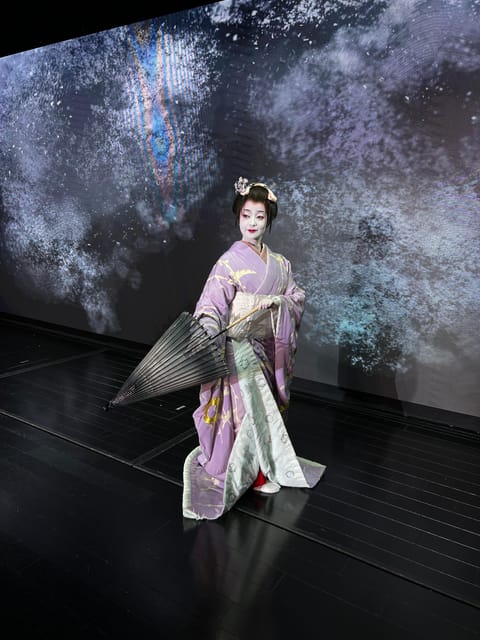
Tokyo gives you plenty of chances to see modern entertainment, from giant screens to polished stage productions. This show offers something quieter and more exacting. Japanese dance depends on controlled gestures, posture, timing, facial expression, music, and costume rather than large scenery or noisy effects.
That restraint is part of the appeal. A dancer may move slowly, but the performance is not passive. You are watching a language built from small details. A lowered gaze can suggest modesty or sorrow. A turn of the sleeve can change the mood. The position of a fan, the angle of a head, and the careful placement of the feet all matter.
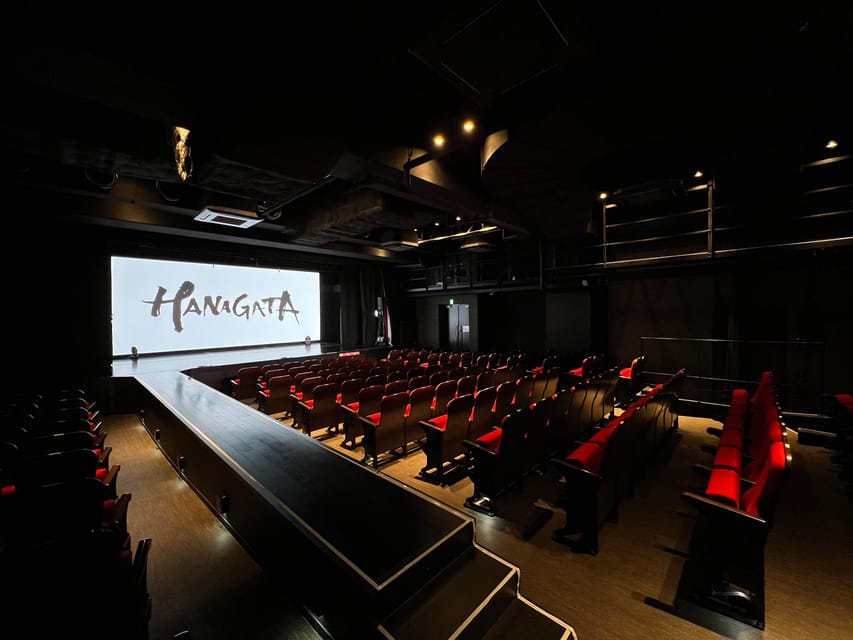
The Shinjuku venue is arranged so you can watch these details at close range. That is important because Japanese dance can lose some of its force in a large theater. Here, you have a better chance to see the performers’ expressions and the fine work in their kimono decorations.
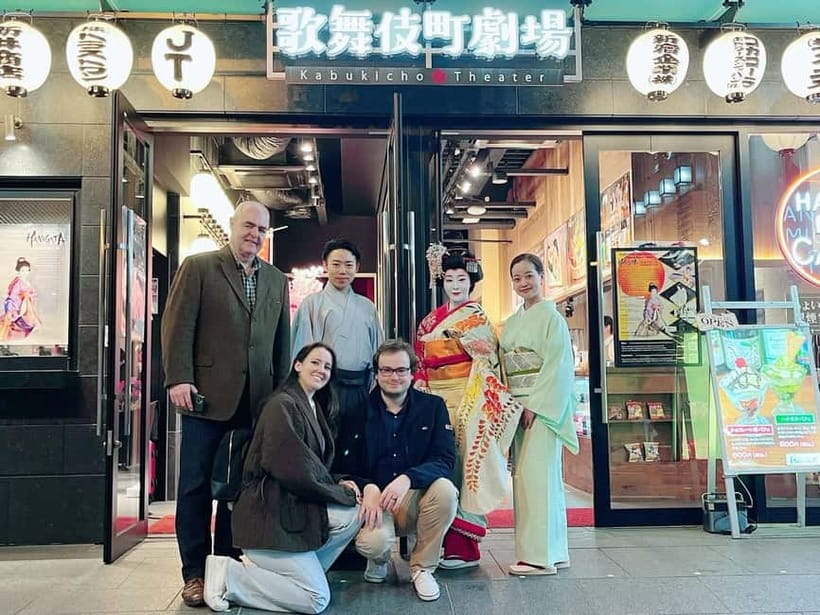
The show is presented by YUKI YOSHIDA, with professional Japanese dancers who have earned awards in competitions. The focus is not on a famous celebrity performer. It is on the skill, discipline, and traditions of Japanese dance.
A few more Tokyo tours and experiences worth a look



What the performance teaches you about Japanese culture
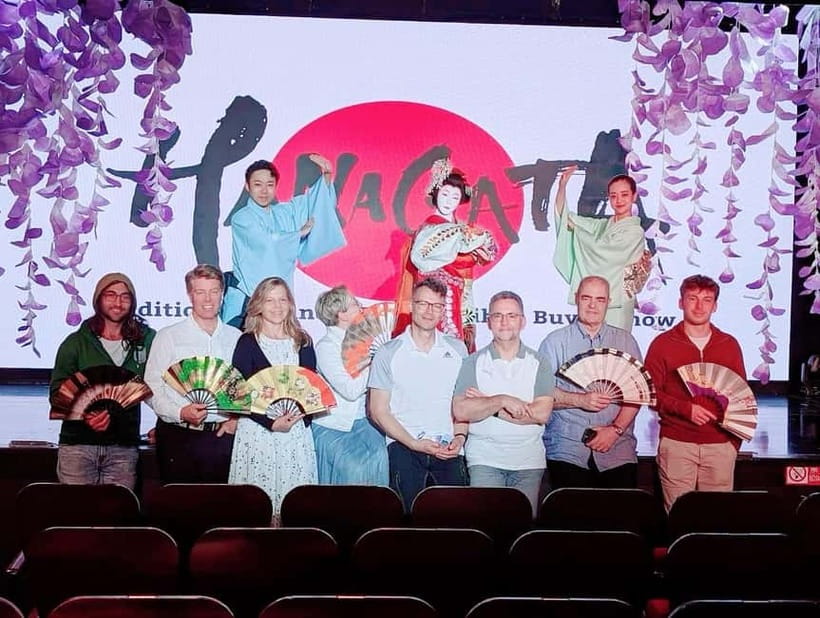
Japanese dance has been passed down for more than 400 years. That does not mean every gesture has one simple translation, but it does mean you are seeing an art form shaped by long-standing Japanese customs and stage traditions.
The performance gives you a way to notice how Japanese artists use the body. Movements are often measured and deliberate. The dancers do not need to rush to hold your attention. Their control asks you to slow down and watch carefully.
This is also why the explanations between performances matter. If you have never seen Japanese dance before, you may not know what to look for. A short explanation can point out the role of the music, the meaning behind a movement, or the reason a costume is arranged in a particular way.
English information has been offered between performances, and staff and dancers have been described as friendly and willing to talk. Still, the official language is Japanese, so you should not assume that every spoken explanation will be available in fluent English. If you want to understand more, listen closely, ask polite questions, and read any translated material provided on the day.
I find this kind of cultural context useful because it turns a pretty show into a more rewarding one. Without it, you might notice the kimono and graceful movement. With it, you can begin to understand the rules and choices behind what you see.
The opening welcome in the heart of Shinjuku
Your visit begins in Shinjuku, one of Tokyo’s most convenient central districts. The activity is designed as a ticketed performance rather than a full-day tour, so it can fit neatly into a larger Tokyo plan.
There is no hotel pickup, and the ticket covers entrance only. You will need to arrange your own way to the venue and plan separately for food and drinks. That is not a serious weakness for an urban show, but it is worth remembering if you are comparing this with an all-inclusive cultural excursion.
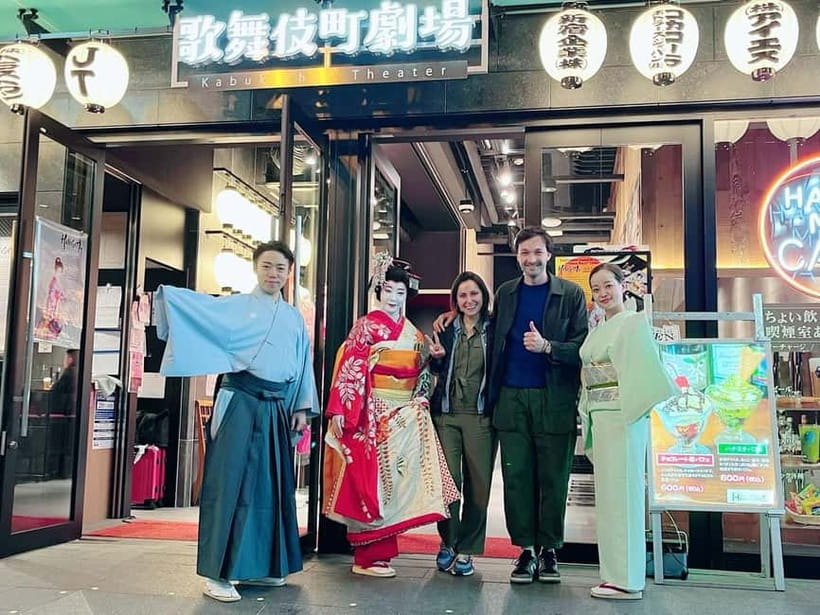
The welcome appears to be part of the experience. Friendly staff greet the audience, and welcome gifts have been provided on some occasions. These details are small, but they help the event feel personal rather than like a quick theater transaction.
The setting also works well for mixed-interest groups. Someone who wants traditional culture can make the show a main event, while another person can treat it as a compact stop before dinner or another Shinjuku activity.
Watching the dancers from close range
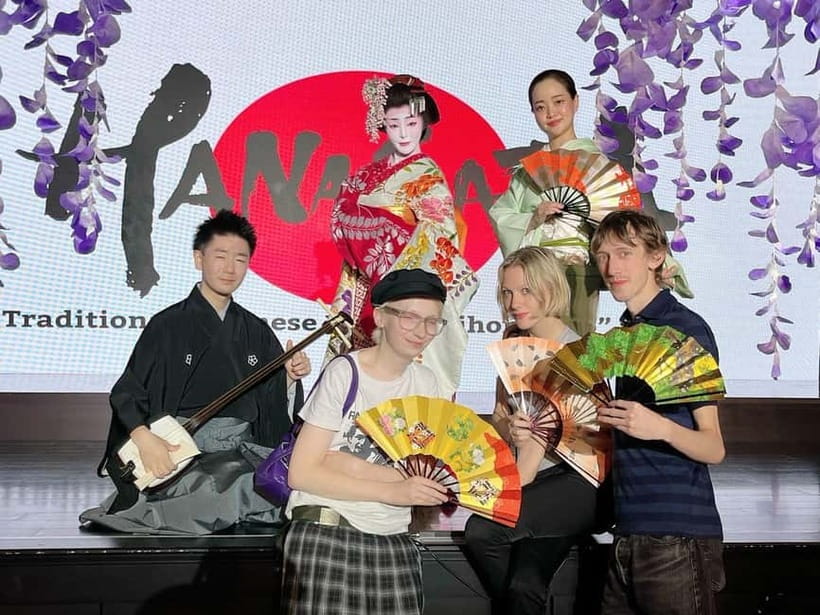
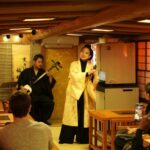
The strongest part of the experience is the distance between you and the performers. Close seating lets you see details that are easy to miss from the back of a large theater.
Pay attention to the face first. The dancers’ expressions are not exaggerated in the way they might be in a Western musical. Small changes can be meaningful, and the controlled expression matches the careful movement of the body.
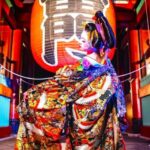
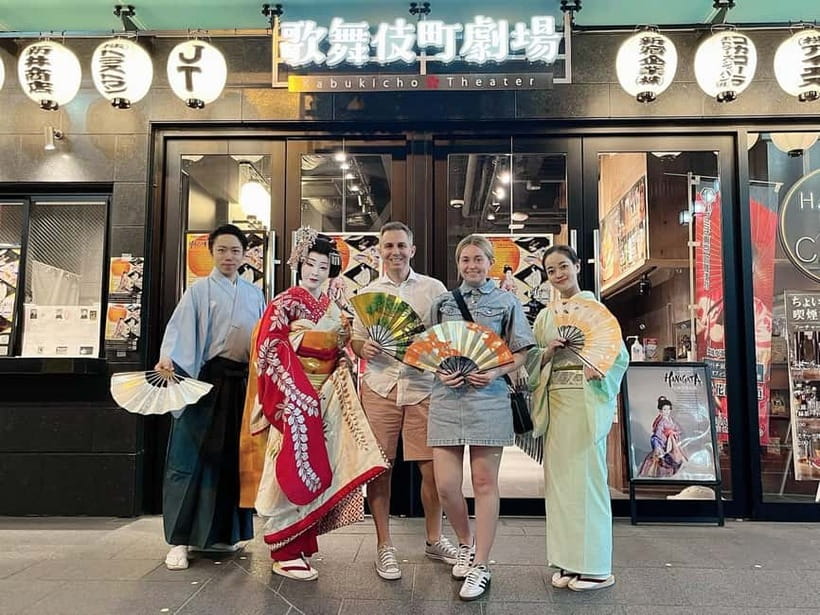
Then watch the hands and sleeves. The kimono changes how the dancer moves, giving every gesture a particular shape. The fabric, decorations, and accessories are not just costume pieces. They help create the visual character of each performance.
The dancers’ training is also visible in the control of their balance and timing. Award recognition does not automatically make a show perfect for every audience, but it does tell you that the performers have reached a high level within their field. You are not watching an informal demonstration.
One particularly useful feature is that there is reportedly no bad seat in the house. Since the show depends on small movements, this matters more than it would at a large-scale stage production. You do not need to spend your time worrying about finding the perfect section.
The show is not designed for photography during the performance. That rule may disappoint anyone hoping to document the kimonos or create social media clips, but it also protects the atmosphere. You can watch without phones rising into your view or camera sounds interrupting the music.
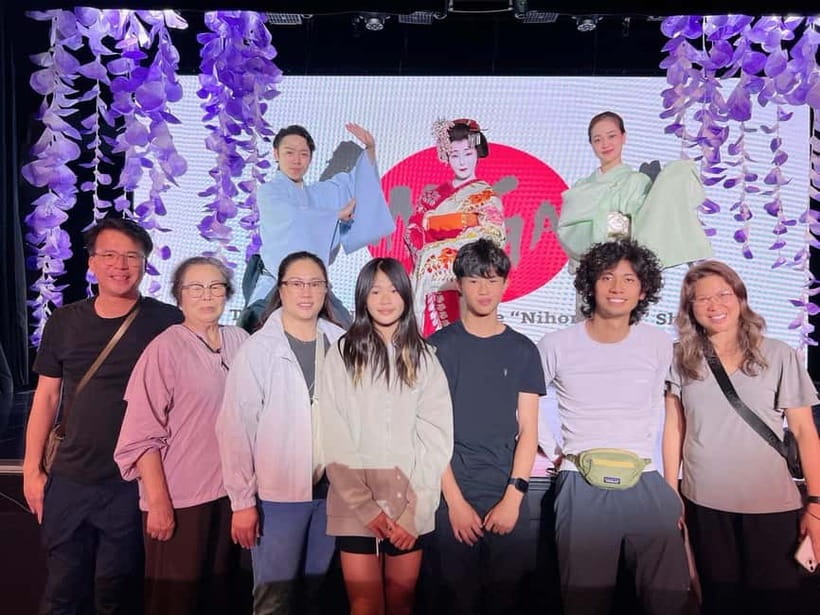
At the end, there is time for taking pictures. Use that period for costume details and a souvenir image. During the performance, keep your phone away and let your eyes adjust to the slower pace of the art.
The kimono and decoration are part of the story
For many visitors, the kimono may be the first thing that catches the eye. The colors, fabric, patterns, and decorative details give the dancers an immediate visual presence.
Look beyond the broad impression of beautiful clothing. Notice how the garments influence the performance. A sleeve can extend a gesture. A layered fabric arrangement can make a turn appear more formal. A decoration can reinforce the mood of a character or scene.
The visual richness also helps you appreciate how much preparation sits behind a short performance. You are seeing costume arrangement, makeup, movement training, music, and stage etiquette working together.
That makes the show a good choice if you want more than a photo opportunity in a kimono. The costume is not offered as a separate dress-up activity. It is part of a professional presentation of Japanese dance.
You should also keep your expectations realistic. This is not a museum lecture, a full survey of all Japanese performing arts, or a chance to learn every technical term in one sitting. The explanations provide an introduction. The performance itself does most of the teaching.
A few more Tokyo tours and experiences worth a look


The rhythm of the show and the value of quiet attention
Japanese dance rewards patience. If you are used to fast editing, loud music, or constant action, the first few minutes may feel restrained. Give yourself time to adjust.
The pauses are useful. They let you notice posture, breath, and the relationship between movement and music. You may find that the show becomes more involving once you stop waiting for a large dramatic gesture.
The close setting helps here. You can sense the effort behind the calm surface. The dancers’ expressions and movements carry feeling without needing a long spoken explanation.
This is also an experience where your mood matters. If you are tired after a long day of sightseeing, the quiet pace may be soothing, or it may be difficult to follow. I would avoid treating the performance as background entertainment. Give it your full attention for the time it lasts.
Families should make a thoughtful choice. Childcare can be arranged through the provider’s children’s program, and experiences for children may also be organized through the supplied reservation page. Since the show asks for quiet attention and prohibits photography during the performance, parents should consider the age and patience of their children before booking.
How much value do you get for $54?
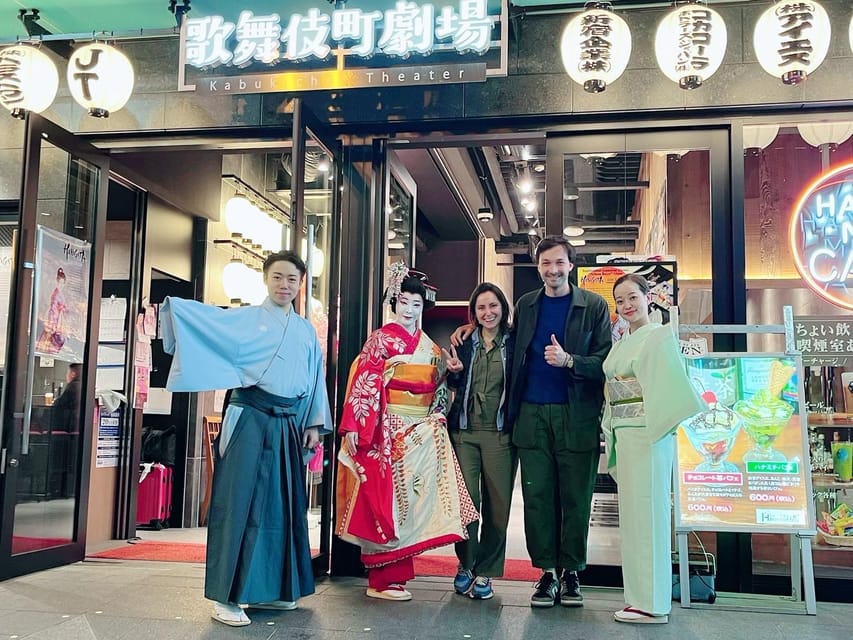
At $54 per person, this is not a bargain-basement Tokyo activity. It is also not an unreasonable price for a professional live performance in central Tokyo, especially when the ticket places you close to award-winning dancers and includes cultural explanation.
The value depends on what you want from your evening. If you only want a quick glimpse of traditional clothing, the price may feel high. You can see Japanese cultural images in many places around Tokyo for little or no cost.
If you want a focused introduction to Japanese dance, the calculation is better. You receive a dedicated performance, close viewing, access to professional dancers, and a chance to learn about an art form that is difficult to understand from photographs alone.
The show is particularly good value for first-time visitors who want a cultural experience without committing to a full evening of theater. It is also practical for people staying in or near central Tokyo because the Shinjuku setting reduces the need for a separate day trip.
Food and drinks are not included, but that gives you flexibility. You can choose your own meal before or after the performance in Shinjuku instead of paying for a set package you may not want.
The reserve-now, pay-later option can help if your plans are still changing. Cancellation is allowed up to 24 hours before the activity for a full refund, which gives you some protection when building a busy Tokyo schedule.
Who should book this experience
I would recommend this show to you if you have any of the following interests:
- You want to see a traditional Japanese art form rather than a modern stage attraction.
- You enjoy costumes, music, gesture, and visual detail.
- You prefer an intimate performance to a large theater production.
- You want cultural explanations to help you understand what you are seeing.
- You are staying in Tokyo and need a convenient Shinjuku activity.
- You want a shorter cultural stop that can fit around meals and sightseeing.
It is also a strong choice for repeat visitors to Japan. Once you have seen temples, gardens, and busy shopping districts, a dance performance gives you another way to think about Japanese culture.
I would hesitate if you need constant English narration, dislike quiet performances, or mainly want photographs during the show. The photography rule is firm, and the official language is Japanese. The final photo period helps, but it does not turn the event into a photography session.
Practical advice for getting the most from the show
Arrive ready to watch rather than record. Keep your phone silent and put it away before the performance begins. You will see more when you are not trying to frame every movement on a screen.
Read about the basic idea of Japanese dance before you go if you have time, but do not worry about mastering the subject. A little background can make the gestures easier to follow, while the explanations at the venue provide further help.
Watch the dancers’ faces, hands, sleeves, and feet in that order. This gives you a simple way to stay focused during slower sections.
Use the interval or post-show period to ask questions. Staff and dancers have been willing to speak with audience members, and some have communicated well in English. You may also have the chance to practice a little Japanese, as one visitor did while speaking with the performers.
Plan dinner separately. Since no food or beverage is included, the show works well before or after a meal in Shinjuku. You will not be locked into a package timetable.
If you are traveling with children, arrange childcare or a children’s program in advance through the provider’s stated service. Do not count on the performance itself to entertain very young children.
Should you book the Japanese dance show?
Book it if you want a close, polished introduction to one of Japan’s oldest performing traditions. The best parts are the nearby seating, the expressive dancers, the detail in the kimono, and the explanations that help you make sense of the art.
Skip it if your priority is a large-scale spectacle, extensive English narration, or unrestricted photography. For everyone else, the $54 price is reasonable for a professional cultural performance in Shinjuku, especially when you value direct contact with the performers and a deeper look at Japanese beauty.
The final photo time gives you a souvenir, but the real reward is what you notice while the cameras are away: a lifted sleeve, a controlled expression, and centuries of tradition communicated through movement.
FAQ
Where does the Japanese dance show take place?
The show takes place in Shinjuku, in the heart of Tokyo.
How much does the ticket cost?
The listed price is $54 per person.
Who performs in the show?
Professional Japanese dancers perform the show. They have received awards at Japanese dance competitions.
What is included in the ticket?
The ticket includes entrance to the performance.
Are food and drinks included?
No. Food and beverages are not included.
Is hotel pickup provided?
No. Hotel pickup is not included.
What language is listed for the experience?
The listed language is Japanese. English information has been provided between performances, and staff and dancers have been able to communicate in English on some occasions.
Can I take photographs during the performance?
No. Photography is prohibited during the performance.
Can I take photographs after the performance?
Yes. A photography period takes place at the end of the performance.
Is childcare available?
Yes. Childcare and experiences for children can be arranged through the provider’s children’s program at https://biz.simplee.jp/kids-program/en. A separate reservation is required.
More Tickets in Tokyo


More Shows & Performances in Tokyo
More Tickets & Passes in Tokyo


More tours in Tokyo we've reviewed












Show, compared.
 ★ 4.0Mt Fuji & Hakone Cruise, Drum Show Bullet Train 1 Day from TokyoFrom $149
 ★ 4.8Tokyo: Sumo Show Experience with Chicken Hot Pot and a PhotoFrom $1032 hours
 ★ 4.8Tokyo: Sumo Show and Dining ExperienceFrom $7990 minutes - 2 hours
 ★ 5.0the SUMO showFrom $89
 ★ 4.5Tokyo: Samurai Restaurant Show Ticket with 2 DrinksFrom $551h 30m
 ★ 4.0Mt Fuji & Hakone Cruise, Drum Show Bus 1 Day from TokyoFrom $122