Reviewed · GUIDED
Tokyo 8hr Private Tour with Government-Licensed Guide
Tokyo becomes much easier to read when someone shows you how its pieces fit together. This private eight-hour tour lets you choose four to six sights, from Senso-ji and the Imperial Palace area to Shibuya Crossing, gardens, markets, and old neighborhoods. Your licensed English-speaking guide meets you at your hotel, then you travel on foot and by public transport.
In This Article
- Key points for planning your Tokyo day
- Why a private Tokyo tour can save your first day
- How the eight-hour format really works
- Asakusa, Senso-ji, and Tokyo’s old streets
- Imperial Palace grounds without an inside visit
- Shinjuku Gyoen, Koishikawa Korakuen, and Tokyo’s gardens
- Shibuya, Harajuku, and the modern city
- Tsukiji, Akihabara, and Shinjuku Golden Gai
- Tokyo National Museum, Nezu, Yanaka, and Shibamata
- Odaiba and Tokyo Tower
- The real cost and value of the experience
- Walking, weather, and family planning
- Booking, pickup, and cancellation details
- Should you book this Tokyo tour?
- FAQ
- How long is the Tokyo private tour?
- How many sights can I choose?
- Is hotel pickup included?
- Are transportation costs included?
- Does the tour enter the Imperial Palace?
- Is Tokyo Tower admission included?
- Is lunch included?
- Can I cancel for a full refund?
I like two things right away: you can build the day around your interests, and you get practical help with Tokyo’s famously complex train system. Guides such as Koba, Taka, An, Yuri, and Kenji have adjusted routes for weather, children, food stops, photography, and mobility needs.
The main caution is simple: this is a walking tour, not a private car tour. A full day can mean many train rides, stairs, and well over 20,000 steps, so choose fewer stops if anyone in your group has sore knees or limited stamina.
Key points for planning your Tokyo day
- Choose four to six sights: Mix temples, gardens, markets, museums, shopping streets, and modern districts.
- Meet your guide at your hotel: Pickup is on foot within the designated Tokyo area, with no private vehicle included.
- Learn the subway as you go: Guides can help you understand stations, trains, transit cards, and transfers.
- See old and new Tokyo together: Pair Senso-ji or Nezu with Shibuya, Harajuku, Akihabara, or Odaiba.
- Expect a highly active day: Past routes have included long walks, public transport, and roughly 22,000 steps.
- Plan for extra costs: Transportation, lunch, admission fees, and personal purchases are not included.
Why a private Tokyo tour can save your first day
Tokyo is not hard because the sights are obscure. It is hard because the city is enormous, neighborhoods are spread across several train lines, and each district has its own mood and customs. A guide can turn that maze into a workable day.
This is especially useful if you are visiting Tokyo for the first time. Instead of spending the morning trying to decide between Asakusa and Shibuya, you can explain your priorities before or at the start of the tour. Your guide can then shape a route around temples, gardens, food, shopping, museums, or modern city life.
I like the fact that the tour is private. Your group is the only group participating, so you are not tied to a fixed pace or a guide’s standard speech. One guide adjusted a route after learning that a family wanted the Pokémon Center. Another changed plans when hot weather made a longer outdoor route unreasonable. Rain also led to itinerary changes on another day.
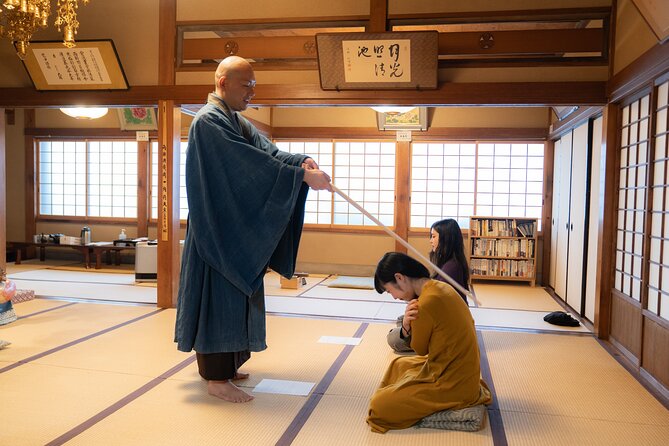
The guide’s role is more than pointing at buildings. An explained shrine purification customs, helped with restaurant and shopping questions, and showed how to use vending machines and a Suica transit card. Another guide helped a family use Tokyo’s train stations with greater confidence for the rest of their trip.
Other guided tours in Tokyo
How the eight-hour format really works
The advertised duration is about eight hours, with hotel pickup and a customizable route. You select four to six sights from a long menu of possible stops. That number matters. Tokyo is too large for a meaningful visit to all 19 listed areas in one day.
Some suggested stop times are only five minutes, while others run 30 to 60 minutes. Those short entries are best understood as flexible visit options, photo stops, or neighborhood passes rather than full visits. In practice, guides have combined several nearby places, used public transport between districts, and changed the plan as the day developed.
You should decide what matters most before the morning begins. A history-focused route might link Meiji Jingu, the Imperial Palace East Gardens, Nezu, Yanaka, and Asakusa. A first-glimpse route could combine Tsukiji, Shibuya Crossing, Harajuku, Meiji Jingu, and Senso-ji. Gardens, museums, and shopping require a different rhythm.
The tour description also notes that three to four spots may be possible in six hours. That is a useful reality check. The remaining time can disappear into train transfers, meals, photographs, restroom breaks, and walking between stations and sights.
Asakusa, Senso-ji, and Tokyo’s old streets
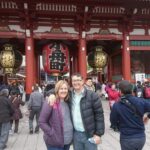
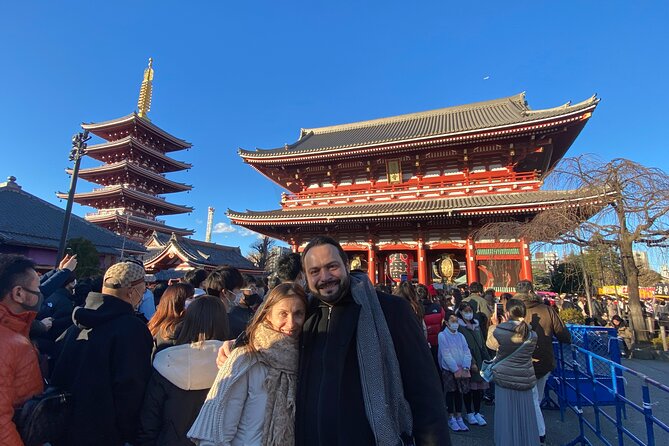
Asakusa is one of the strongest choices for a first Tokyo tour. Senso-ji, also called Asakusa Kannon Temple, is one of the city’s most famous Buddhist temples, with a colorful entrance and a long connection to local religious life. The nearby streets give you a good first look at traditional souvenirs, snacks, and the older side of Tokyo.
The suggested stop time for Senso-ji is brief, but you should ask for more time if this is a priority. Five minutes is enough for a quick look, not for careful attention to the temple grounds, customs, and surrounding shopping streets.
Asakusa also works well as part of a broader route. One guide paired it with Tokyo Tower, the Pokémon Center, Shibuya Crossing, and Takeshita Street. Another ended an eight-hour day in Asakusa after visiting Tsukiji, Shinjuku Gyoen, the Imperial Palace East Gardens, Harajuku, Meiji Jingu, and Shibuya.
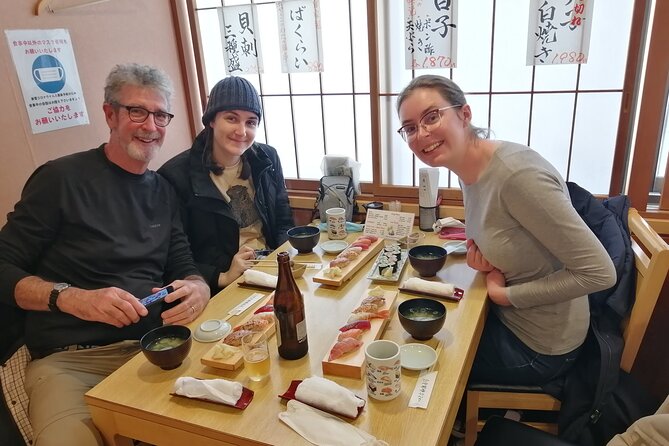
If you want food during the tour, Asakusa has been used for sushi and a small local restaurant lunch. Lunch is not included, so tell the guide what kind of meal you want and remember that the stop will use part of your sightseeing time.
Imperial Palace grounds without an inside visit
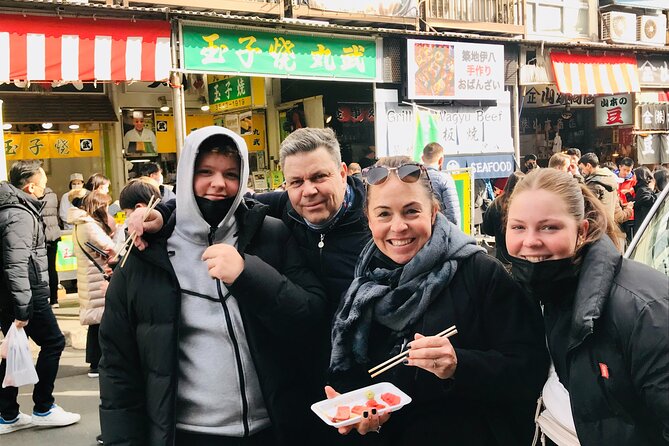
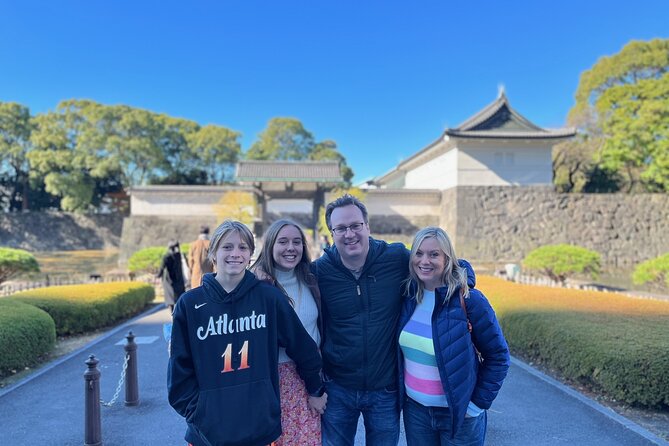
The Imperial Palace occupies the former site of Edo Castle, with moats, broad parkland, and large stone walls. It is a useful stop for understanding Tokyo’s connection to the Tokugawa shoguns and the modern imperial household.
The important limitation is that inside access to the Imperial Palace is not included. The tour focuses on the surrounding area and, when selected, the East Gardens. The gardens can provide a calmer break from city streets, with seasonal plants and the remains of the old castle setting.
One guide used the Imperial Palace East Gardens with Meiji Jingu, Nezu, Yanaka, Ueno Toshogu, Senso-ji, and Ameyoko for a history-centered day. Another route included winter cherry blossoms at the gardens and Shinjuku Gyoen.
The suggested 30-minute visit is enough for a compact introduction. If you want a slow garden walk, you may need to reduce the number of other stops.
Shinjuku Gyoen, Koishikawa Korakuen, and Tokyo’s gardens
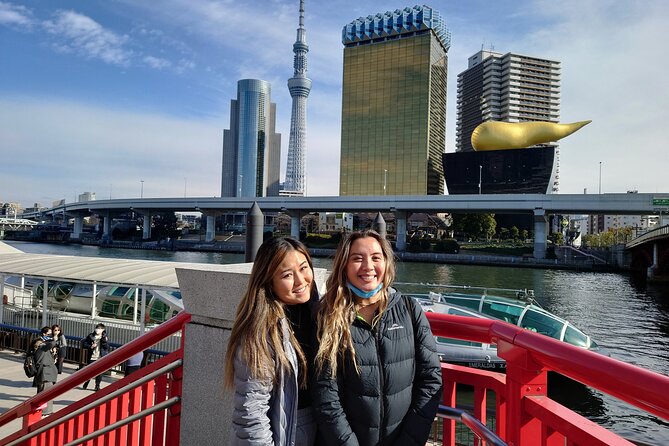
Tokyo’s gardens provide welcome quiet, and this tour gives you several choices. Shinjuku Gyoen has broad lawns, winding paths, and a peaceful setting close to Shinjuku Station. Its admission fee is not included, and the suggested visit is about 35 minutes.
Koishikawa Korakuen is one of Tokyo’s oldest Japanese gardens. It was created during the early Edo period for the Mito branch of the Tokugawa family. Rikugien, another excellent choice, was built around 1700 for the fifth Tokugawa shogun and takes its name from the six classical Chinese and Japanese poems that inspired its design.
Hama Rikyu offers a different setting beside Tokyo Bay. Its seawater ponds change with the tides, and the garden includes a teahouse. The suggested time is about 35 minutes, with admission extra.
I would choose one garden, not three, unless gardens are your main interest. A guide can explain how each garden differs, but Tokyo’s size means every additional garden makes another district harder to fit in.
Other private tours in Tokyo

Shibuya, Harajuku, and the modern city
Shibuya Crossing is the visual shorthand for modern Tokyo. From ground level, you can watch several streams of pedestrians cross at once. A guide can also take you to a higher viewpoint, depending on the chosen route and available access.
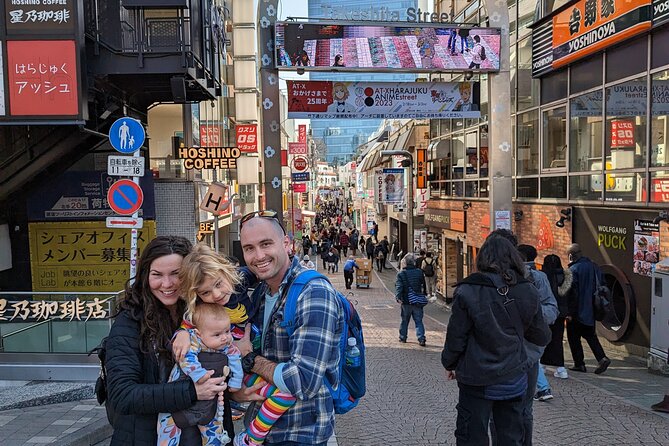
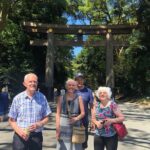
Harajuku adds a different kind of energy. Takeshita Street is known for youth fashion, specialty shops, and unusual cafes. Meiji Jingu, beside Harajuku Station, provides a sharp contrast: it is a Shinto shrine dedicated to Emperor Meiji and Empress Shoken, set among trees away from the street noise.
Yoyogi Park is another possible stop near Harajuku. It has broad lawns, ponds, and wooded sections, making it useful if you want outdoor space without paying an admission fee. It is also a sensible place to slow the pace after crowded shopping streets.
The suggested times for Meiji Jingu and some other stops are very short. Five minutes will not allow much more than a quick visit and explanation, so ask your guide to protect time for the shrine if it matters to you.
Tsukiji, Akihabara, and Shinjuku Golden Gai
Tsukiji Fish Market is a practical choice for visitors interested in food. The old market area provides a chance to browse shops and consider sushi or other seafood, but lunch and purchases cost extra. A guide may help you choose a place or communicate with shopkeepers, but no meal is part of the tour price.
Akihabara is the city’s center for electronics shops and, in recent years, anime, manga, games, and related pop culture. The suggested stop is short, so name your specific interests before the tour. If you want to browse shops, five minutes will not be enough.
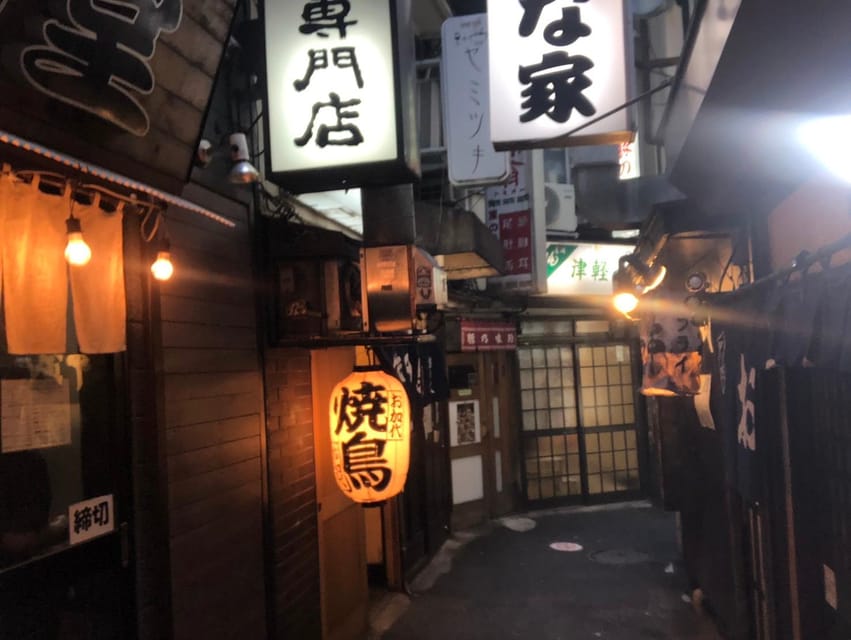
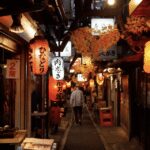
Shinjuku Golden Gai has a very different feel. Its small eating and drinking establishments grew from the postwar black-market era around Shinjuku Station. The tour can introduce the area, but a five-minute stop is more of an orientation than a night out. Alcohol, food, and personal spending are your responsibility.
These three districts are not close enough to treat as quick neighboring stops. Pick one or two, then build nearby attractions around them.
Tokyo National Museum, Nezu, Yanaka, and Shibamata
The Tokyo National Museum is Japan’s oldest and largest national museum. It is a strong choice if you want art, archaeology, and Japanese cultural objects explained by a guide rather than simply viewed on your own.
The suggested visit lasts about 35 minutes, with admission extra. That is enough for a targeted introduction, not a complete museum visit. Tell your guide what period or type of art interests you so the time is used well.
Nezu and nearby Yanaka preserve an older downtown character. These districts avoided major damage from wars and natural disasters, and they offer a slower alternative to the major tourist centers. A guide can connect local streets, shrines, temples, and daily life in a way a quick photo stop cannot.
Shibamata, on Tokyo’s eastern edge near the Edogawa River, retains an old-fashioned town feel. It is a poor match for a packed central Tokyo route, but a good choice if you have already seen the standard highlights or want a less familiar neighborhood.
Odaiba and Tokyo Tower
Odaiba sits on a man-made island in Tokyo Bay and combines shopping and entertainment. The suggested stop is only five minutes, so treat it as a quick look unless you specifically request more time.
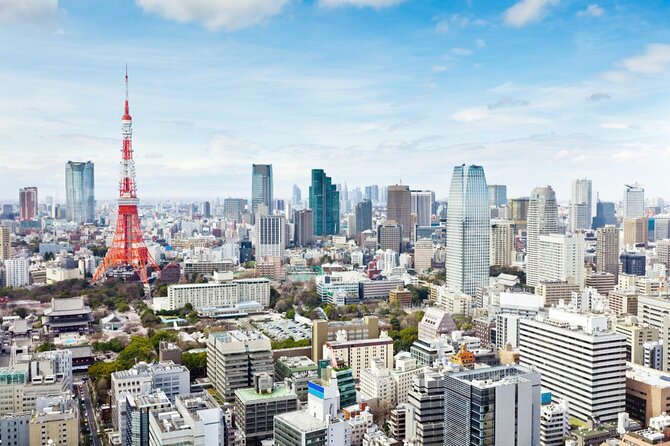
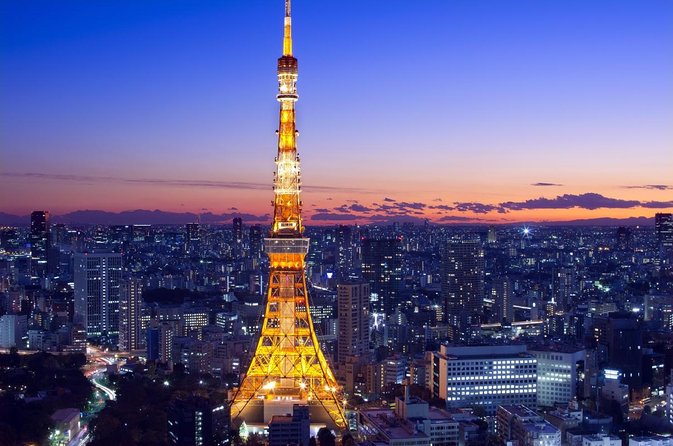
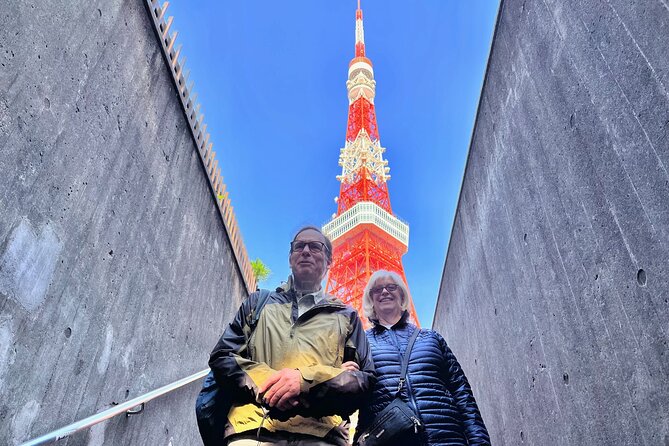
Tokyo Tower remains one of the city’s recognizable symbols. This tour includes access only up to the main deck, not the top deck, and admission is not included. The listed visit time is one minute, which clearly suits a photo or skyline stop rather than a long observation visit.
If you want to go up Tokyo Tower, say so when planning the route. The admission fee and the time spent inside must fit your budget and schedule. Do not assume the tour price covers either.
The real cost and value of the experience
The listed price is $201.51 per person. That is not cheap for a walking day, especially because transportation, admission fees, lunch, and personal expenses are separate.
The value comes from the private format and the time you save. A guide can make the train system less intimidating, arrange a sensible sequence, explain customs at shrines and temples, help with local shopping, and adjust plans when weather or family needs change. Guides have also helped with photographs, restaurant choices, bullet train tickets, and airport or cruise-terminal transitions in individual cases.
For a couple or small family, the price can make sense if you want a strong orientation on your first day. For a larger group, ask about group discounts. You cannot combine multiple tour groups, so this is designed for your own party rather than a shared excursion.
The biggest value comes when you prepare. Choose four to six priorities, tell the guide your walking limits, and decide if food, shopping, gardens, history, or modern Tokyo matters most. A vague plan can lead to too many train rides and rushed stops.
Walking, weather, and family planning
You need comfortable shoes. One full day reached about 22,000 steps, and other outings involved substantial walking even when guides used trains and buses. Tokyo stations can also require long walks and transfers.
Be honest about physical limits. One family found the walking difficult for an older person with bad knees, while another guide checked regularly on a guest with an injured foot. That kind of adjustment is possible, but only if you explain the problem early.
Weather matters. A guide changed plans during heavy rain, and another guest found the cool winter weather ideal for a full day. Summer heat may make two half-day tours more comfortable than one long outing. Rain gear, water, and a willingness to cut stops will improve the day.
Families can also benefit from the flexible format. Guides have added child-friendly destinations and answered difficult questions from children. If your group includes young children, ask for fewer major stops and leave room for food and rest.
Booking, pickup, and cancellation details
Confirmation is provided when you book. Your guide meets you at your hotel on foot within the designated Tokyo area, so pickup does not mean a private car waiting outside. The tour is conducted on foot and by public transport, with no private vehicle included.
Most people can participate, and service animals are allowed. Dates can be changed up to two days before the tour, though a change may mean a different guide or no availability. You can cancel for a full refund up to 24 hours before the local start time. Cancellations or changes inside that window are not accepted for a refund.
Should you book this Tokyo tour?
I would book it for a first full day in Tokyo if you want personal guidance, practical train help, and a route built around your own interests. It is also a good choice for families, repeat visitors who want older neighborhoods, and anyone who prefers a local guide to a fixed bus itinerary.
I would not choose it if you dislike walking, want a private vehicle, or expect admission fees and lunch to be included. The tour works best when you limit your ambitions to four or six meaningful stops rather than trying to collect every famous district.
Ask for a guide who fits your goals when possible, then communicate clearly before the day begins. Koba has handled history-heavy routes and family sightseeing, Taka has been attentive with mobility concerns and photography, An has adjusted routes and explained customs, and Yuri has combined historical background with a demanding but rewarding day. With a sensible plan, this can give you something more useful than a checklist: a working sense of how Tokyo connects.
FAQ
How long is the Tokyo private tour?
The tour lasts approximately eight hours.
How many sights can I choose?
You can choose four to six sites from the available options. The route should be planned carefully because Tokyo is spread across a large area.
Is hotel pickup included?
Yes, but pickup is on foot within the designated area of Tokyo. The experience does not include a private vehicle.
Are transportation costs included?
No. Public transportation is used when needed, but transportation fees are not included in the price.
Does the tour enter the Imperial Palace?
No. Access to the inside of the Imperial Palace is not included. The route may visit the surrounding area or the East Gardens.
Is Tokyo Tower admission included?
No. The tour includes access only up to the main deck when Tokyo Tower is selected. The top deck is not included.
Is lunch included?
No. Lunch and personal expenses are separate. Guides can help with restaurant choices during the day.
Can I cancel for a full refund?
Yes. You must cancel at least 24 hours before the experience start time for a full refund. Changes or cancellations made less than 24 hours before the start are not accepted for a refund.
More Private Tours in Tokyo
More Guided Tours in Tokyo


More tours in Tokyo we've reviewed












Guided, compared.
 ★ 5.0Tokyo 6hr Private Tour with Government-Licensed GuideFrom $155
 ★ 4.9Tokyo: Shinjuku Local Bar and Izakaya Guided Walking TourFrom $343 hours
 ★ 4.8Tokyo: Private City Highlights Tour with Local GuideFrom $1064 - 8 hours
 ★ 4.9Tokyo: Tsukiji Fish Market Guided Walking TourFrom $222 hours
 ★ 5.0Tokyo 4hr Private Tour with Government-Licensed GuideFrom $109
 ★ 5.0Tokyo Guided Small-Group Biking TourFrom $106