Reviewed · SAMURAI & NINJA EXPERIENCES
Samurai Training in Tokyo: Swords, Bushido & Mental Discipline
The most interesting part of this Tokyo activity is that you do not just hear about samurai history. You bow, practice breathing and meditation, handle a wooden sword, learn a formal combat kata, and finish with controlled sparring at a dojo in Kojimachi, once part of Edo Castle’s inner grounds. Bushido and mental discipline matter as much here as sword movement.
In This Article
- Key points at a glance
- A samurai class in Tokyo, not a staged sword show
- Starting with etiquette, breathing, and Bushido
- Wooden swords, heavy sticks, and silent walking
- Learning one authentic combat kata
- Controlled one-on-one sparring with the instructor
- Matcha, sweets, and a quieter cultural pause
- Traditional clothing and the certificate
- What the private price of $85.66 covers
- Who will get the most from this Kojimachi experience
- Practical details before you book
- Should you book Samurai Training in Tokyo?
- FAQ
- Where does the samurai training take place?
- How long does the experience last?
- Is the activity private?
- Is the class taught in English?
- What does the training include?
- Are traditional clothes and refreshments included?
- Is there a minimum number of participants?
I like the private format, since you can ask questions without holding back the group. I also like the certificate, matcha, traditional sweets, and photograph in samurai dress, which give the two-hour class a pleasant cultural shape. The main consideration is that the experience requires at least two participants, so it is not designed for a solo booking.
Key points at a glance
- A real training sequence: etiquette, Bushido, breathing, meditation, walking, strength work, sword drills, kata, and sparring.
- Private instruction: only your group takes part, with time to ask questions about swords, history, and technique.
- English support: the experience is conducted in English, with instructors and translation support available.
- Traditional setting and clothing: train at Samurai Sword Tokyo in Kojimachi while wearing rented samurai attire.
- A calm cultural break: matcha green tea and Japanese sweets interrupt the physical work.
- A useful souvenir: you receive a personalized scroll-style certificate naming the techniques you learned.
A samurai class in Tokyo, not a staged sword show

Many Tokyo cultural activities place you on the sidelines. This one puts you in the training line. You begin with the conduct expected of a samurai, then move into physical work. The sword is important, but the class treats it as one part of a larger practice built around control, respect, posture, and attention.
That distinction matters. If you want a quick photo while holding a polished blade, this may feel more serious than necessary. If you want to understand why martial arts training begins with composure and ritual, the format gives you much more to work with.
The venue is Samurai Sword Tokyo at 4-chome-2-1 Kojimachi, in Chiyoda City. The area is near public transportation, and the activity begins and ends at the same place. There is no private vehicle or hotel transfer, so you need to make your own way there, but the central location keeps the logistics fairly simple.
The activity lasts about two hours. That is long enough to build a sequence of skills, but short enough to fit into a busy Tokyo day. I would allow extra time before the start so you are not rushing into a class that depends on calm attention.
A few more Tokyo tours and experiences worth a look

Starting with etiquette, breathing, and Bushido

The class opens with samurai etiquette and the spirit of Bushido. You learn that training is not simply about speed or force. Bowing, respect for the instructor, and proper conduct establish the tone before anyone picks up a sword.
The Bushido discussion gives the physical work a purpose. The supplied material identifies values such as honor, discipline, and respect, and those ideas continue through the exercises. You are not asked to memorize a long academic lecture. Instead, the philosophy is tied to how you stand, breathe, move, and respond to instruction.
Next come breathing techniques and meditation. This is a useful choice for beginners, since a sword drill becomes harder when you are tense or distracted. The quiet exercises also keep the class from feeling like a costume-only attraction.
I especially like this beginning because it gives you a way to judge the instructors. Clear explanations at this stage usually make the later movements easier to follow. The experience is offered in English, and translation support is available, so you can ask about the meaning behind the formal actions rather than simply copying them.
Wooden swords, heavy sticks, and silent walking
After the opening work, the pace becomes more physical. You practice with a wooden sword, learning basic movements before moving toward a formal combat sequence. The use of a wooden sword is important for a beginner class. It lets you focus on grip, direction, balance, and timing without the risk or pressure of using a sharp weapon.
The class also includes strength training with a heavy stick. This adds a practical element that many short cultural activities skip. You get a sense that sword handling depends on the whole body, not just the wrist or arm.
Silent walking exercises test posture and focus. The description compares this work to ninja-style movement, but the useful lesson is simple: quiet steps demand control. You may find that this exercise is harder than it sounds, since small shifts in balance become obvious when you are trying to move without noise.
These drills are also where the private format earns its price. An instructor can watch your stance and correct you without the class having to stop for everyone. Since the group consists only of your party, you can ask for a movement to be shown again or ask why a particular posture matters.
Learning one authentic combat kata
The class then introduces real combat sword techniques and one authentic samurai combat kata. A kata is a set form, so you are not simply swinging a wooden sword at random. You learn a pattern with a beginning, a sequence of movements, and a controlled finish.
For a two-hour session, focusing on one kata makes sense. Trying to cover several complex forms would likely leave you with a blur of gestures. One form gives you something specific to remember and practice later.
The instructor also provides a live sword demonstration. This is likely to be one of the clearest moments in the session because you can see the difference between an explanation and a practiced movement. Watch the feet, shoulders, pauses, and direction of the blade, not just the speed.
The experience describes the techniques as authentic, but you should keep your expectations realistic. You are receiving an introduction, not a full martial arts qualification. The certificate records the techniques you learned, and it makes a good souvenir, but it does not replace years of training.
Controlled one-on-one sparring with the instructor

The final physical section applies the earlier lessons in one-on-one sparring with an instructor. This is not presented as a free-for-all or competitive fight. It is a controlled exercise that lets you see how etiquette, posture, timing, and the kata work together.
For many people, this will be the most memorable part. A drill can feel abstract until another person responds to your movement. Sparring also reveals why calm breathing and careful footwork matter. If you rush, lose balance, or forget the sequence, the problem becomes clear at once.
You should listen closely to safety instructions and follow the instructor’s pace. The class is beginner-friendly, and most people can participate, but beginner-friendly does not mean effortless. You will be asked to concentrate, move your body, and remember a sequence of actions.
This activity suits families and mixed-age groups especially well, since the format allows the instructor to give direct guidance. One review specifically describes it as suitable for all ages. Still, anyone with concerns about physical movement should consider the sword drills, strength work, walking practice, and sparring before booking.





Matcha, sweets, and a quieter cultural pause

A break with matcha green tea and traditional Japanese sweets gives the class a welcome change of pace. After the concentration and movement, sitting down helps you process what you have learned.
This pause also adds cultural context without turning the class into a lecture. Matcha is not just a drink placed beside the activity for decoration. It creates a small moment of Japanese hospitality and gives you another chance to ask questions.
The break may appeal most to people who want more than a martial arts lesson. The tea and sweets connect the training with everyday cultural details, while the traditional setting keeps the experience from feeling like a modern gym session.
Do not expect a full meal. The food is described as traditional snacks and Japanese sweets, so eat beforehand if you need something substantial. The class is only about two hours, but the physical work can make a light snack feel welcome rather than decorative.
Traditional clothing and the certificate

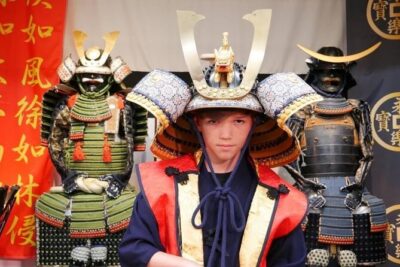
You receive a samurai uniform rental as part of the price. Dressing for the class helps mark a clear change from sightseeing mode to training mode. It also makes the final photograph more memorable.
The instructor will take a commemorative photo with you in traditional dress. This is a practical benefit for anyone who wants a picture but does not want to interrupt the lesson by managing a phone or asking strangers for help.
At the end, you receive a personalized scroll-style certificate with your name and the techniques you learned. I like this better than a generic participation card because it records the actual focus of your class. It is light, easy to pack, and more personal than many standard tour souvenirs.
The certificate should be viewed as a keepsake, not proof of advanced sword ability. Its value is tied to the memory of the training and the specific form you practiced.
What the private price of $85.66 covers

At $85.66 per person, this is not the cheapest cultural activity in Tokyo. The value comes from the amount packed into two hours and the private setup. Your fee includes the uniform, English instruction on sword skills and Bushido, a live demonstration, wooden sword training, matcha, sweets, the certificate, and the photograph.
A private class also changes the comparison. You are not paying only for admission to a performance. You are paying for direct instruction and the chance to ask as many questions as you like. If your group has a strong interest in samurai culture, that access can justify the cost.
The price makes less sense if you mainly want a quick costume photo or a short demonstration. In that case, a show or museum visit may give you more for less money. I would book this when you want participation, not just observation.
The activity is commonly booked about 37 days ahead, so it is sensible to plan early, especially if you have fixed Tokyo dates. Confirmation arrives at booking, and free cancellation is available until 24 hours before the start time. Changes or cancellations inside that 24-hour window are not refunded.
Who will get the most from this Kojimachi experience

I would choose this class for you if you enjoy hands-on cultural activities, martial arts, Japanese history, or learning a skill through repetition. It works well for couples, families, and small private groups who want a shared activity with a clear beginning and end.
It is also a good choice for people who want to ask questions. The private structure means you are not limited to the instructor’s prepared talk. You can ask about Bushido, the sword techniques, the reason for a particular bow, or how the kata fits into training.
The activity may be less suitable if you dislike physical participation, have no interest in samurai culture, or want a completely relaxed sightseeing stop. Meditation and tea provide quiet moments, but much of the session involves standing, moving, strength work, and focused practice.
The experience requires at least two participants. Solo visitors should arrange to join with another participant or choose a different activity. The information provided says most people can participate, but it does not give detailed medical, mobility, or age restrictions, so ask the operator if your group has specific needs.
Practical details before you book
Wear something that allows comfortable movement beneath the rented uniform. The class supplies traditional clothing, but the supplied information does not specify changing-room arrangements or recommended footwear, so it is wise to ask the operator if those details matter to you.
Plan to arrive at the Kojimachi meeting point rather than expecting transportation. Toilets are available in the building, and the experience returns to the same location when it ends.
The class is in English, with translation support mentioned in the feedback. The instructors are described as warm and welcoming, and the names Oedo and Yukiji are associated with the teaching team. The term Sensei is also used for the instructor, reflecting the respectful martial arts setting.
The overall rating is five out of five from 25 reviews, with 100 percent recommending the activity. The most consistent praise centers on the quality of instruction, the welcoming instructors and translators, the focus on respect, and the chance to learn a real first form rather than merely pose with a sword.
Should you book Samurai Training in Tokyo?
Book it if you want to practice, ask questions, and leave with a clearer feel for samurai discipline. The strongest parts are the private instruction, the thoughtful progression from meditation to movement, and the chance to learn one complete combat kata.
The $85.66 price is fair for a two-hour private activity that includes clothing, tea, sweets, a demonstration, a certificate, and a photograph. It is not the right value for someone seeking only a quick cultural photo or a passive history talk.
For most interested beginners, I would make this a strong candidate. Just remember the two-person minimum, arrange your own transport to Kojimachi, and keep your expectations focused on a serious introduction rather than mastery. You will leave with a souvenir, but the more lasting benefit is understanding why samurai training begins with the mind.
FAQ
Where does the samurai training take place?
The activity begins and ends at Samurai Sword Tokyo, located at 4-chome-2-1 Kojimachi, Chiyoda City, Tokyo 102-0083, Japan.
How long does the experience last?
The training lasts approximately two hours.
Is the activity private?
Yes. Only your group participates, and you can ask the instructor questions throughout the experience.
Is the class taught in English?
Yes. The experience is conducted in English, and translation support is available.
What does the training include?
You learn samurai etiquette, Bushido philosophy, breathing and meditation exercises, wooden sword movements, heavy-stick strength work, silent walking, one combat kata, and controlled one-on-one sparring with an instructor.
Are traditional clothes and refreshments included?
Yes. Samurai uniform rental, matcha green tea, and traditional Japanese sweets are included.
Is there a minimum number of participants?
Yes. A minimum of two participants is required.
More Samurai & Ninja Experiences in Tokyo


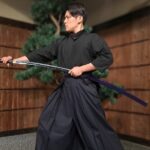
More tours in Tokyo we've reviewed












Samurai & Ninja Experiences, compared.
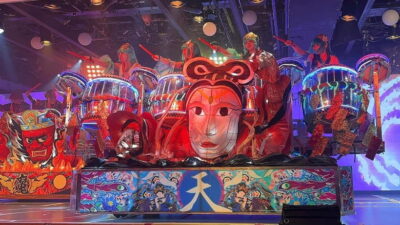 ★ 4.5Tokyo: Samurai Restaurant Show Ticket with 2 DrinksFrom $551h 30m
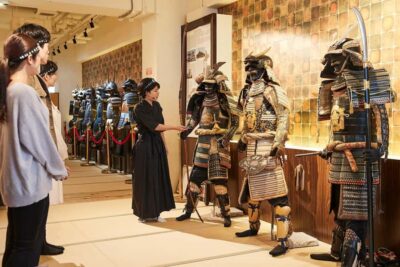 ★ 4.6Tokyo: Samurai Ninja Museum Guided tour and ExperienceFrom $27
 ★ 5.0Skip the lines Basic Ticket at SAMURAI NINJA MUSEUM TOKYOFrom $28
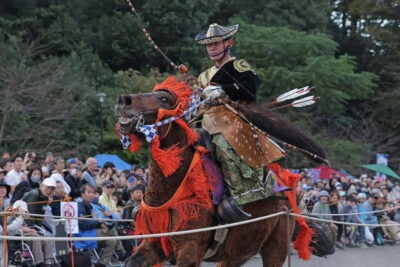 ★ 5.0Tokyo: Authentic Samurai Training at a DojoFrom $211
 ★ 5.0Best Samurai Experience in TokyoFrom $65
 ★ 4.6Tokyo: Legend Samurai Entertainment Night in Kanda ShrineFrom $44