Reviewed · SAMURAI & NINJA EXPERIENCES
Samurai Experience in Tokyo / SAMURAI’ve
The best part of this Tokyo class is that you do not just pose beside a sword. You put on a samurai costume, learn basic etiquette, draw a metal practice katana, and finish with a short staged fight sequence. I like the clear one-hour format and the patient teaching style, especially for families and first-time participants.
In This Article
- Key points to know before booking
- Putting on the costume in Shibuya
- Samurai etiquette before sword practice
- Learning the basic katana movements
- Tachimawari, the staged fight sequence
- Photos that give the class a lasting finish
- The optional samurai performance
- What the $71.85 price delivers
- Who will enjoy SAMURAI’ve most
- Practical details that matter
- Should you book this samurai class?
- FAQ
- Where does the samurai experience take place?
- How long does the class last?
- What start times are available?
- Is the sword real and sharp?
- What does the experience include?
- Can I add a samurai performance?
- What is the cancellation policy?
I also like that the instructors are professional samurai performers, so the lesson has some show-business energy without losing its cultural focus. The main drawback is simple but important: the start time needs checking, since one booking calendar reportedly defaulted to noon even though the available sessions are 10:30 to 11:30 a.m. and 3 to 4 p.m.
Key points to know before booking
- You wear a full samurai-style costume: The session begins with kitsuke, or learning how to put on the kimono and costume.
- The sword is metal but not sharp: It has real weight, which makes the basic movements feel physical without being a live-blade lesson.
- Etiquette comes before action: You learn samurai manners and respect before handling the sword.
- Professional performers lead the class: Master Shin is praised for mixing humor with safe, clear instruction.
- The finale is a staged sequence: You combine the moves into a short performance rather than engaging in unscripted combat.
- An optional show costs extra: The instructors can add a samurai performance if you want more spectacle.
Putting on the costume in Shibuya
SAMURAI’ve operates at 3-chome Sendagaya in Shibuya, in the basement level of the Shibata Building. The meeting point is also the end point, and the location is near public transportation, which helps when you are fitting this class between sightseeing stops.
The activity lasts about one hour. Current session times are 10:30 to 11:30 a.m. and 3 to 4 p.m. Check the confirmed time carefully rather than trusting an automatic calendar entry. A time mix-up caused one participant to miss the class, so this is the one practical detail I would treat as essential.
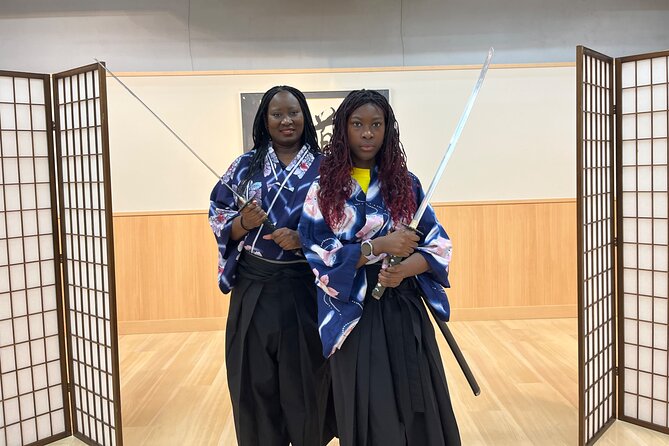
The first step is kitsuke, the process of putting on the samurai costume. You learn how the kimono is worn instead of simply throwing on a costume for a quick photograph. That small lesson gives the outfit more meaning and helps you move properly during the sword work.
The costume is one of the strongest parts of the activity for families and couples. You get a proper visual change, not just a plastic helmet or a quick prop. The session also leaves time for photographs, and an assistant takes many pictures during the class, according to the experience details provided.
The space is described as clean and neat, which matters when you are changing clothes and handling equipment. Since the class can include up to 19 people, you should expect a group lesson rather than a private coaching session. That group setting can make the activity lively, though it may mean less individual attention than a one-to-one lesson.
A few more Tokyo tours and experiences worth a look

Samurai etiquette before sword practice
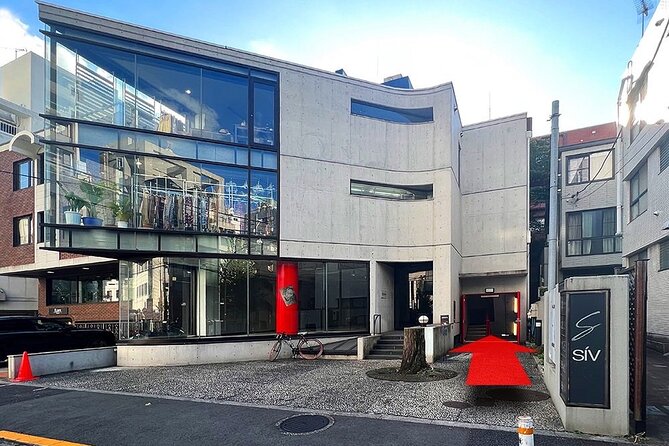
The second stage is reigi sahou, the basic manners and etiquette associated with samurai conduct. This is more useful than rushing straight to sword swings. It gives the class a sense of order and shows that swordsmanship was tied to behavior, discipline, and respect.
You will learn how to approach the sword and how to carry yourself before working through the movements. The class is designed as an introduction, not as a historical lecture or a full martial arts course. Still, these opening rituals help distinguish it from a costume photo session.
I like this structure because it gives the activity a cultural frame. You are not being asked to pretend that you are in a battlefield. You are being shown a stylized version of samurai practice, then guided through a safe performance routine.
The instructors are professional samurai performers who work in shows and events. That background helps explain the class format. Expect instruction that leads toward clean, readable movements and a dramatic finish. The teaching also appears suited to beginners, with patience and humor used to keep the atmosphere relaxed.
Master Shin receives particular praise for working well with young teenagers and making the action feel safe. The available comments also describe the instructors as friendly and patient. That combination is useful if you are booking for children or adults who have never held a sword before.
Learning the basic katana movements
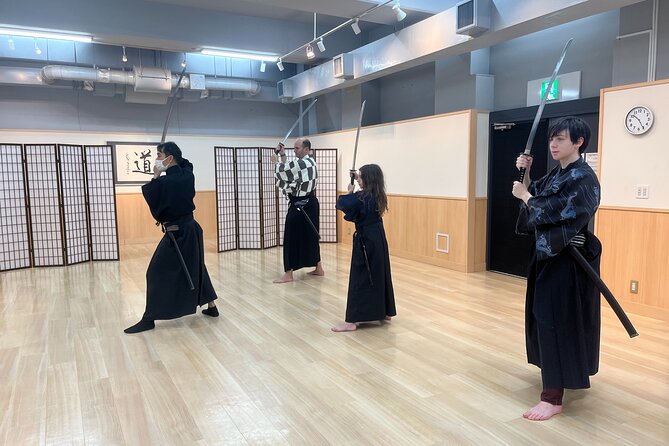
The class then moves into a basic sword lesson. The included weapon is a katana, described as a metal fake sword. It is not sharp along the edge, but it has enough weight to make the activity feel more substantial than waving a lightweight prop.
That detail changes what you should expect. This is not a dangerous live-blade demonstration, but it is also not a soft toy activity. You need to listen to the instructor, control the sword, and leave enough room for the people around you.
The lesson covers basic moves of samurai sword fighting and includes drawing the sword. Drawing a sword is a memorable skill because it requires more care than simply picking up a prop. You will work through the movement slowly, then repeat it as part of the larger sequence.
The instructors explain the technique and invite questions. The teaching style is aimed at people with no prior background, so you do not need martial arts experience to take part. If you already practice a sword art, you may find the material introductory, but the costume, group format, and performance element still give it a different appeal.
A one-hour class requires sensible limits. You will not master samurai swordsmanship in 60 minutes, and the experience should not be sold to yourself as a complete martial arts lesson. Its value is in giving you a safe introduction, a little cultural context, and a clear sense of how staged sword movement works.
Tachimawari, the staged fight sequence
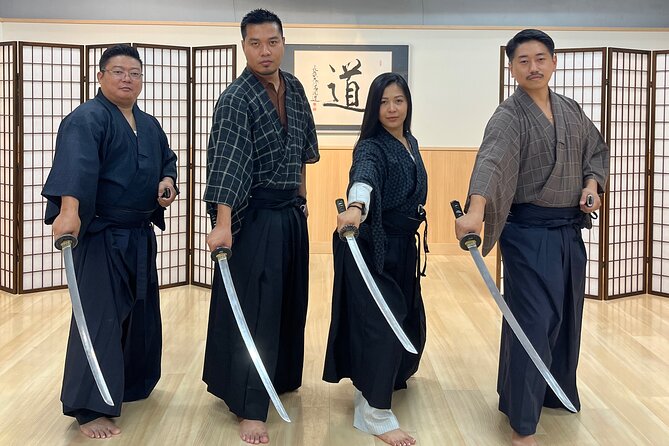
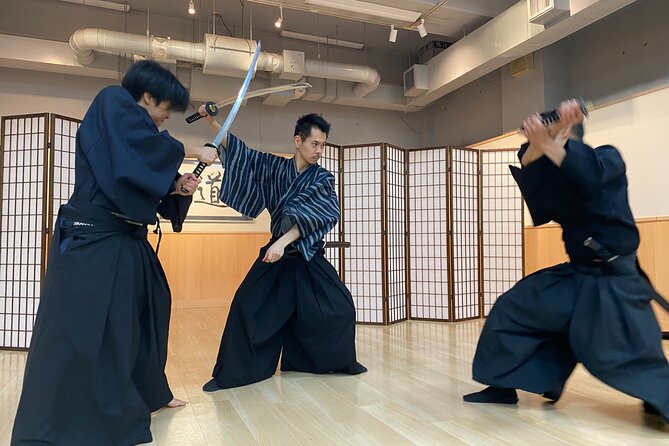
The most active section is tachimawari, where you experience samurai sword fighting first-hand. The class builds toward a sequence that combines what you learned earlier. This is the moment when etiquette, costume, drawing the sword, and basic cuts come together.
The final routine is described as especially fun because you put the individual movements into a complete sequence. That gives the session a satisfying shape. Instead of ending after a few practice swings, it finishes with something you can perform and photograph.
Keep the word staged in mind. This is choreographed sword action led by performers, not competitive fighting. You should follow the instructor’s timing and directions rather than improvise. The metal sword has no sharp edge, but careless movement would still be inappropriate in a group room.
I think this format works particularly well for families. A 10-year-old and a 14-year-old were able to take part with their family, and the teaching was described as both informative and fun. Young participants get a physical activity and a memorable costume, while adults receive enough explanation to make the class feel more than a novelty photograph.
The group limit of 19 is worth considering. A larger group can create a fun shared atmosphere, especially if you are traveling with friends. If your priority is close correction of every movement, ask about the group size before booking or choose a smaller class if that option is available.
Photos that give the class a lasting finish
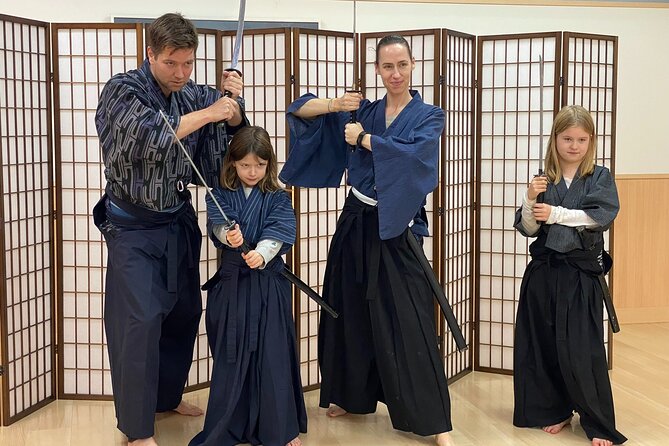
The photoshoot comes at the end, when you are already dressed and have practiced the basic sequence. This is good timing. You do not need to rush into costume for a single picture, and you have a few movements to use when posing.
The photographs are one reason the class works well as a Tokyo holiday activity. You leave with something more personal than a souvenir from a shop. The images can show the costume, the sword, and the final samurai expression, which explains the appeal of the playful title get your samurai face on.
An assistant helps take many pictures during the experience. That is useful if you are a family or couple and want everyone included. You should still treat this as a group class with a photoshoot, not as a professional portrait appointment.
The costume itself is included, as is the metal practice katana. There is no need to rent or bring either item. Wear something comfortable underneath, since the session includes changing, movement, and repeated sword practice. The supplied details do not specify footwear or changing-room arrangements, so avoid planning around assumptions about those points.






The optional samurai performance
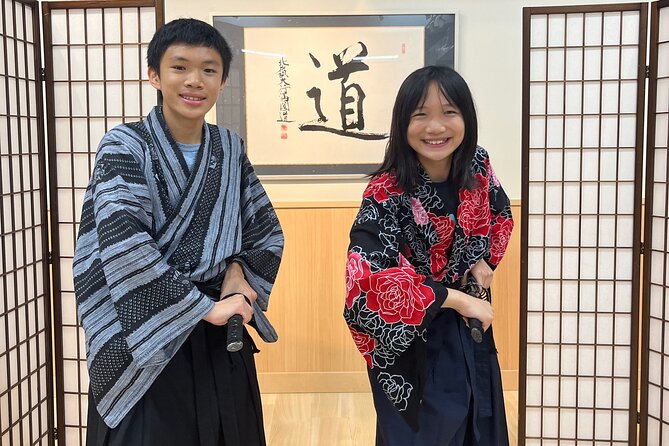
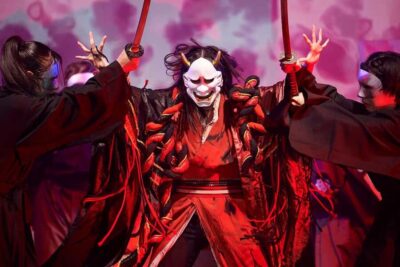
If you want more theater, the instructors can arrange a samurai performance during your session. This costs extra and is not part of the standard $71.85 price.
The optional show makes sense for people who want to watch professional performers rather than only practice beginner movements. It may also suit a family member who prefers observing part of the activity. Ask about the additional fee and the exact performance arrangement before adding it.
For most people, the one-hour class should be enough. You already receive costume dressing, etiquette, sword instruction, a staged fight sequence, and photographs. The extra performance is best viewed as an add-on for those who want a stronger show element, not as something required to make the basic booking worthwhile.
What the $71.85 price delivers
At $71.85 per person, this is not the cheapest short activity in Tokyo. The class lasts only about an hour, so you are paying for a compact, organized cultural experience rather than a half-day tour.
The price includes the costume and metal fake katana. It also covers instruction from professional performers, the staged sword sequence, and the photoshoot. That package gives the activity more substance than a simple costume rental, though the value depends on how much you enjoy hands-on participation.
I would consider the price fair if you want three things at once: a cultural introduction, a playful physical activity, and photographs. It is less compelling if you only want to see a samurai performance, since the show costs extra and the standard session focuses on participation.
The class can be booked with group discounts, which may improve the value for families or friends. With an average booking lead time of about 70 days, it is sensible to reserve early if your Tokyo dates are fixed. That lead time also suggests you should not assume a preferred morning or afternoon slot will remain available.
The published score is 4.7 out of 5, with 92 percent recommending the activity. The strongest praise focuses on patient instruction, friendly performers, cultural insight, clean costumes, and the fun of assembling the final sequence. One serious complaint concerns the incorrect start-time calendar entry, so the high score does not remove the need to check your confirmation.
Who will enjoy SAMURAI’ve most
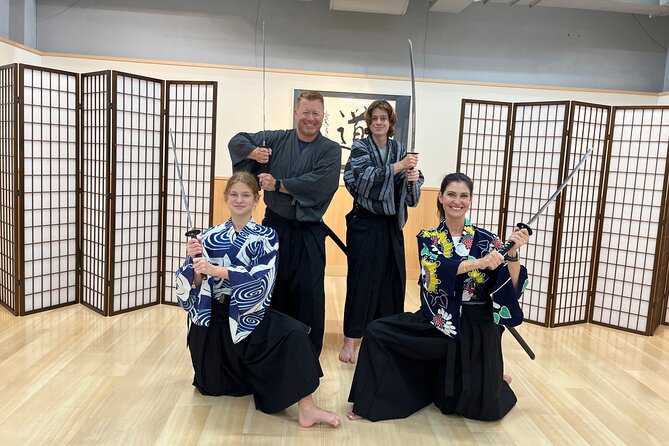
I would recommend this to families with children old enough to follow sword-safety instructions, couples seeking an unusual Tokyo activity, and adults who enjoy trying rather than simply watching. It also suits anyone who wants a structured cultural activity that fits neatly into a morning or afternoon.
The class is particularly good for first-time visitors to samurai-related activities. You receive an introduction to etiquette, costume, sword handling, and staged combat in one sitting. You do not need to know Japanese sword terminology or have martial arts experience.
It may not suit you if you dislike dressing up, group activities, or short demonstrations with a theatrical finish. Serious martial artists may find the movements basic, while anyone looking for a long historical talk will probably want a museum or specialist tour instead.
The experience is also not a replacement for a live performance. The optional show is separate and costs more. Book it because you want to participate in a carefully guided samurai routine, with the performance element as a bonus.
Practical details that matter
The meeting point is SAMURAI EXPERIENCE in Tokyo, at 3-chome Sendagaya, Shibuya, Tokyo 151-0051, in the B2 level of the Shibata Building. The activity returns to this same location.
A mobile ticket is accepted, and confirmation is received at booking. Public transportation is nearby. The maximum group size is 19, and most people can participate, according to the supplied activity details.
Free cancellation is available up to 24 hours before the start time for a full refund. Cancellations or changes made less than 24 hours before the start time are not accepted for a refund, and the cut-off follows Tokyo local time.
Before leaving for the venue, check three things: your exact session time, the Sendagaya address, and the cancellation deadline. Those quick checks prevent the most avoidable problems with this booking.
Should you book this samurai class?
Book it if you want an active, photo-friendly Tokyo experience led by professional samurai performers. The patient instruction, clean costumes, heavy but blunt metal swords, and final staged sequence give the hour a clear purpose.
I would especially choose it for a family or small group that wants a shared memory rather than another sightseeing stop. Just confirm the start time directly from your booking details, and remember that the performance show costs extra. If that format suits you, SAMURAI’ve offers a lively introduction to samurai manners and sword movement at a reasonable price for a specialized Tokyo activity.
FAQ
Where does the samurai experience take place?
It takes place at SAMURAI EXPERIENCE in Tokyo, at 3-chome Sendagaya, Shibuya, Tokyo 151-0051, in the B2 level of the Shibata Building.
How long does the class last?
The experience lasts approximately one hour.
What start times are available?
The listed sessions run from 10:30 to 11:30 a.m. and from 3 to 4 p.m.
Is the sword real and sharp?
The included katana is a metal fake sword. It is not sharp along the edge, but it does have weight.
What does the experience include?
It includes samurai costumes and a metal fake katana. The program covers costume dressing, samurai etiquette, basic sword movements, staged sword fighting, and a photoshoot.
Can I add a samurai performance?
Yes. The instructors can arrange a samurai performance during the session, but an additional fee is required.
What is the cancellation policy?
You can cancel at least 24 hours before the local start time for a full refund. Cancellations or changes made less than 24 hours before the start time are not accepted for a refund.
More Samurai & Ninja Experiences in Tokyo


More tours in Tokyo we've reviewed








Samurai & Ninja Experiences, compared.
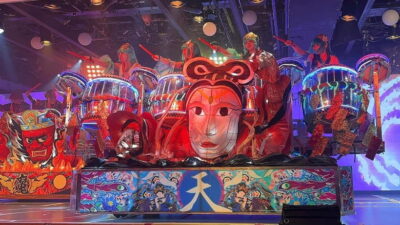 ★ 4.5Tokyo: Samurai Restaurant Show Ticket with 2 DrinksFrom $551h 30m
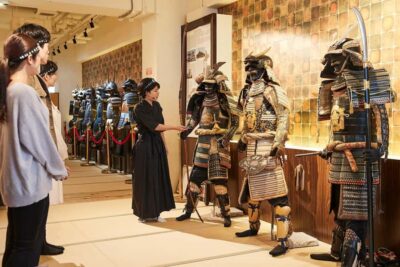 ★ 4.6Tokyo: Samurai Ninja Museum Guided tour and ExperienceFrom $27
 ★ 5.0Skip the lines Basic Ticket at SAMURAI NINJA MUSEUM TOKYOFrom $28
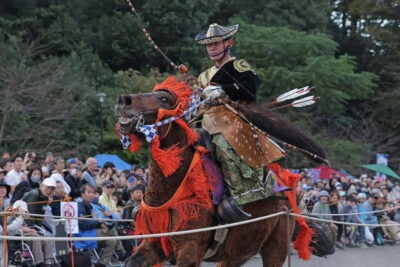 ★ 5.0Tokyo: Authentic Samurai Training at a DojoFrom $211
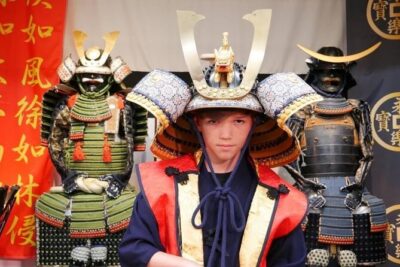 ★ 5.0Best Samurai Experience in TokyoFrom $65
 ★ 4.6Tokyo: Legend Samurai Entertainment Night in Kanda ShrineFrom $44