Reviewed · MT FUJI DAY TRIPS
Tokyo:Fuji-Kawagu Cable Car (Ticket Inc.) Shinkurayama&Panos
Mount Fuji gives this outing its big moment, but the Kawaguchiko Panoramic Cable Car makes the view easy to reach. You ride above Lake Kawaguchi, then pair Fuji with a pagoda at Niikurayama Asama Park and clear spring ponds at Oshino Hakkai. I like the mix of famous sights and small cultural stops.
In This Article
- Key points to know before booking
- A full Fuji day from Tokyo Station
- Riding the Kawaguchiko Panoramic Cable Car
- Niikurayama Asama Park and the famous pagoda view
- Oshino Hakkai’s eight clear spring ponds
- The Lawson convenience store photo stop
- What the $44 price really covers
- Traffic, weather, and the limits of a Fuji day
- What to bring and how to prepare
- Who will enjoy this outing most
- Should you book this Mount Fuji tour?
- FAQ
- Where does the tour start?
- Does the price include the cable car?
- Are meals and drinks included?
- Can the itinerary change?
- What happens if the cable car closes?
- Is English guiding available?
- Is the tour suitable for wheelchair users or people with mobility impairments?
I also like that the cable car ticket is included, and that guides such as Lee and Vivi have earned praise for keeping the day smooth and explaining each stop well. The main caution is traffic. Weekends and holidays can bring long delays, queues, and shorter visits, so do not book this if you have a same-day flight, Shinkansen, or dinner reservation you cannot miss.
Key points to know before booking
- The cable car is the visual highlight: Ride to the top of Tenjoyama Park for broad views of Mount Fuji and Lake Kawaguchi.
- You see the famous pagoda view: Niikurayama Asama Park gives you the classic Fuji, red pagoda, and traditional Japan photograph.
- Oshino Hakkai adds local flavor: Eight clear spring ponds, small shops, and local snacks make this more than a photo tour.
- The Lawson stop is brief and modern: You can take the well-known blue-and-white Fuji photograph and buy regional snacks.
- English service may be limited: Small groups can use multilingual support, and the driver may also act as guide.
- The $44 price is fair for convenience: Transport, driver, guide, and the cable car are covered, but food and personal costs are not.
A full Fuji day from Tokyo Station
This trip is built for you if you want to see several Fuji-area sights without sorting out local buses, train connections, and cable car tickets yourself. You meet the guide at Tokyo Station, board an air-conditioned vehicle, and head west toward the Fuji area.
The countryside views are part of the appeal. Tokyo disappears, and the day shifts from city streets to open views around Lake Kawaguchi and the villages near Mount Fuji. The trip is not a quiet private outing, though. Small daily groups help keep things manageable, but the vehicle may carry people using different languages.
The guide and driver setup also varies. On some departures, the driver doubles as the guide. English commentary is limited, and there is no commentary while the vehicle is moving. Multilingual service is available for international groups, but you should not expect a long, continuous English lecture about every site.
That is not necessarily a bad thing. You get the practical help that matters most on a busy day: where to go, when to return, and how to reach the photo spots. Guides Lee and Vivi are specifically praised for clear explanations, smooth driving, and making sure the group stays together.
A few more Tokyo tours and experiences worth a look
Riding the Kawaguchiko Panoramic Cable Car
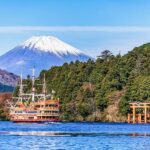
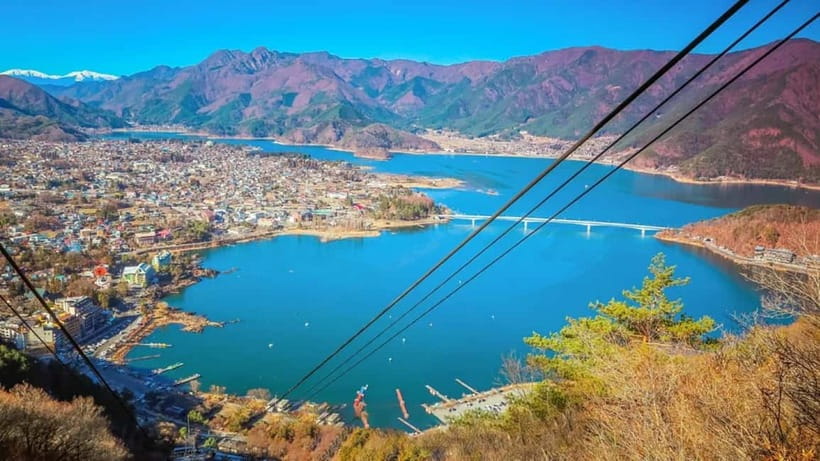
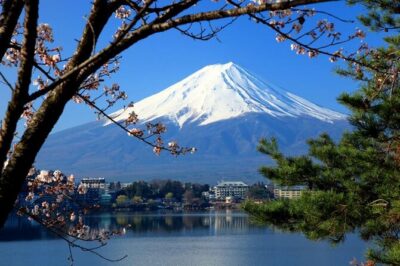
The cable car at Kawaguchiko Tenjoyama Park is the centerpiece of the outing. Your included ticket takes you uphill to a summit with wide views over Lake Kawaguchi and toward Mount Fuji.
The ride is short enough to stay exciting and long enough for you to take in the scene. The cabins are described as clean, spacious, and steady, which helps if you are uneasy about cable cars. You still need to be comfortable with height, since this is an aerial ride and the tour is not suitable for people afraid of heights.
At the top, the reward is not just one Fuji photograph. You can look across the lake, see the surrounding hills, and frame the mountain from different points. Clear weather is essential, of course. Mount Fuji often hides behind cloud, and no tour can promise the perfect peak.
The setting changes with the season. Cherry blossoms add soft color in spring, maple leaves bring autumn reds and golds, and snow gives the mountain a sharper winter outline. Flower and foliage timing depends on weather, so the operator does not change the tour or offer refunds if the seasonal display is early or late.
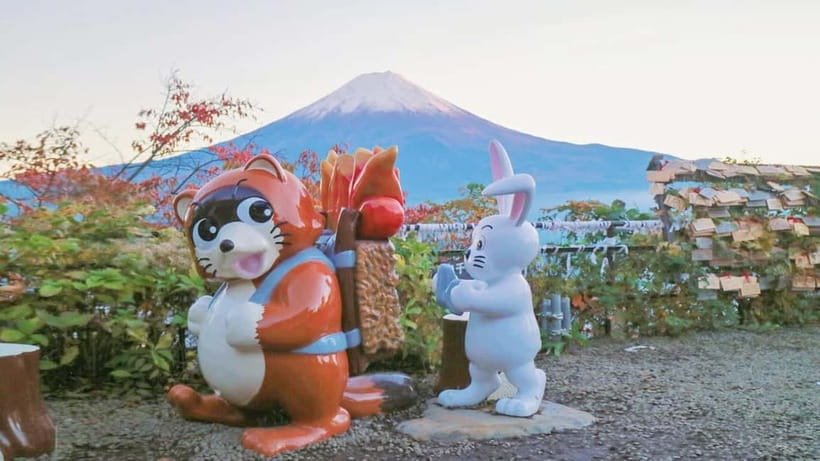
Look for the small rabbit statue near the cable car area. It is linked with happiness and good luck, giving you a playful detail among the larger views. The cable car stop is a strong choice for anyone who wants Fuji scenery without a strenuous climb.
There is one practical issue: queuing. Cable cars can draw large crowds, and early closures or heavy demand may shorten your time. If the cable car is closed because of weather or operating conditions, the guide will shift time to other stops. That keeps the day moving, but it means the central attraction is not guaranteed.
Niikurayama Asama Park and the famous pagoda view
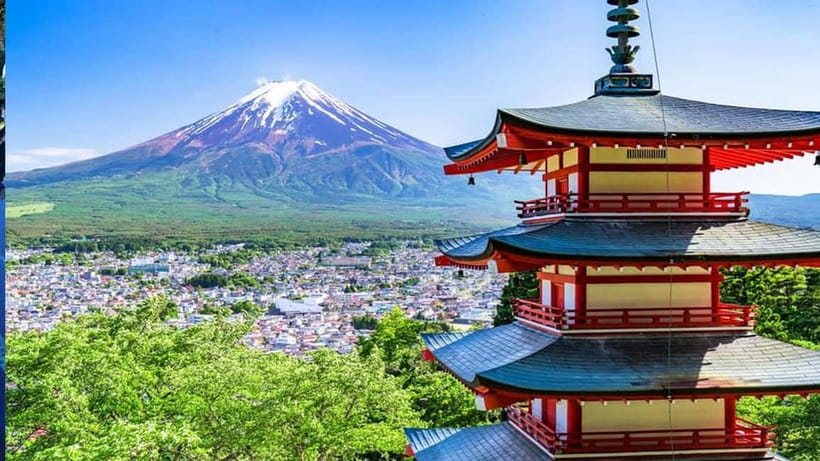
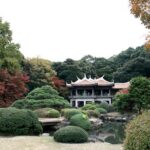
Niikurayama Asama Park provides the image many people have in mind when they picture Japan and Mount Fuji together. From the park, you can frame Fuji with traditional Japanese architecture, including the well-known red pagoda.
This stop matters because it gives you a cultural counterpoint to the open lake view. At the cable car, Fuji feels broad and natural. Here, the mountain rises behind a carefully composed scene of pagoda, trees, and hillside.
You should bring comfortable shoes. The viewpoint involves park paths and an uphill approach, and the tour is not suitable for people with mobility impairments or wheelchair users. The physical effort is not described in exact terms, so expect a walk rather than a vehicle drop-off directly at the best photo point.
Crowds can gather around the main viewing area, especially when the mountain is clear. Your guide may adjust the order of the stops to handle traffic and visitor numbers. That flexibility is useful, but it also means you may visit the park earlier or later than expected.
This is a place where patience pays off. Fuji photographs depend on clouds, light, and the number of people near the viewpoint. Even if the perfect full-mountain image does not appear, the pagoda and hillside setting still give the stop a distinctly Japanese feel.
Oshino Hakkai’s eight clear spring ponds
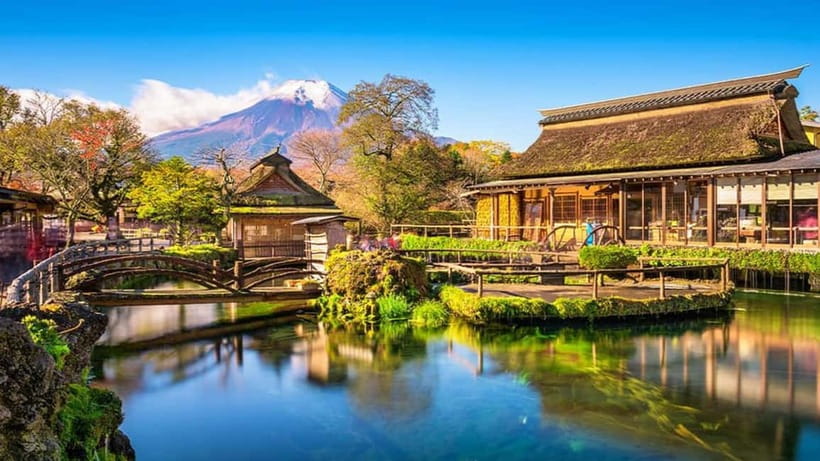
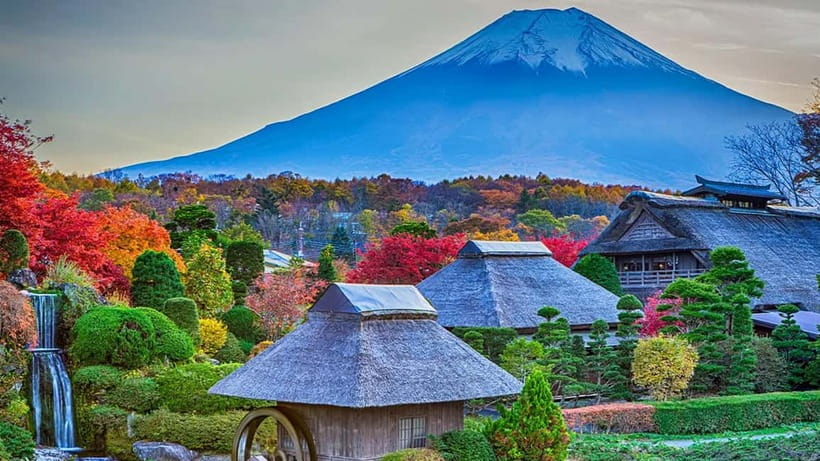
Oshino Hakkai is the most grounded and local-feeling stop on the route. The area is known for eight clear spring ponds, with Mount Fuji visible in the distance. It is often called Japan’s Little Switzerland because of its water, mountain setting, and traditional village atmosphere.
The ponds are the main reason to visit. Their clear water gives you a close look at the springs, while Fuji adds scale behind the village. This is not a grand mountain viewpoint in the same way as Tenjoyama Park. Instead, you get a slower look at water, old-style buildings, and daily local commerce.
Nearby shops sell snacks and regional food. Meals and drinks are not included, so bring cash if you want to try something. This is one of the best places on the route to sample a local specialty rather than eating only from familiar chain stores.
You should not expect a long, private village visit. Oshino Hakkai can be busy, and your time depends on traffic and the day’s schedule. The guide may point out the key ponds, shops, and viewing spots, then ask you to return to the vehicle at a set time.
The stop works especially well for you if photos are not your only goal. You can taste something, see how the spring water shapes the village, and take a break from the more staged postcard views. Just keep your belongings close and watch the clock, since it is easy to spend too long browsing the food stalls.
The Lawson convenience store photo stop
The final stop is a sharp change of mood. The Lawson convenience store near Mount Fuji has become famous for photographs showing its blue-and-white sign with Fuji rising behind it.
This is a quick, modern Japan moment. The store is ordinary in function but unusual in setting, and the contrast makes the photograph work. You can also buy Fuji-limited snacks and drinks, adding a simple souvenir to the stop.
Do not expect this to be a scenic park or a long cultural visit. It is an Instagram-friendly roadside pause, and the appeal depends on the mountain being visible. Traffic, crowds, and local conditions may affect how long you stay.
The stop also gives you a chance to buy refreshments before the ride back, though you cannot eat or drink inside the vehicle. Food and drinks are not included in the tour price.
A few more Tokyo tours and experiences worth a look

What the $44 price really covers
At $44 per person, this is a sensible price for a day trip that combines transportation, a guide, a driver, and the panoramic cable car ticket. The value comes from reducing the number of separate decisions you need to make.
You do not have to work out how to reach Kawaguchiko, buy the cable car ticket on site, or connect the Fuji-area stops by local transport. That convenience matters most if you are staying in Tokyo and want a broad sample of the area in one day.
The price does not cover meals, drinks, personal purchases, or travel and accident insurance. You should carry cash for snacks and small purchases at Oshino Hakkai and Lawson. If you want insurance, buy it separately before the trip.
The value is less clear if you want a private guide, detailed English commentary, or complete control over your schedule. This is a shared small-group outing, and the itinerary can change with traffic, weather, cable car queues, and early closures.
The cost is also easier to justify if you want all the main stops. A self-planned day may offer more freedom, but transport around Fuji can take time and careful planning. This tour trades some independence for a straightforward route and a fixed set of major sights.
Traffic, weather, and the limits of a Fuji day
You need to treat the schedule as flexible. The order of the attractions and the length of each stop can change because of road conditions, crowds, weather, or cable car operations.
Weekends and public holidays are the toughest dates. Roads may be slow, popular photo areas may be crowded, and queues can cut into sightseeing time. Avoid scheduling a same-day flight, Shinkansen, or fixed dinner after the tour. Delays caused by traffic or weather do not qualify for compensation.
Clear skies are never guaranteed. If Fuji is hidden, the cable car and the other sites still operate as planned when conditions allow, but the famous mountain photographs may not happen. If the cable car closes, the guide will use that time at other locations instead.
Seasonal expectations need the same caution. Cherry blossoms, autumn leaves, and snow are possible highlights, not fixed features. Weather decides the timing.
What to bring and how to prepare
Wear comfortable clothes and shoes. You will move between a vehicle, park paths, viewpoints, shops, and the cable car area. Bring a jacket, even if Tokyo feels mild, since conditions around Mount Fuji can be cooler.
Cash is useful for food, drinks, and personal purchases. The tour does not include meals, so you should plan to buy food during a stop.
Food and drinks are not allowed in the vehicle. Stains can lead to cleaning charges, so finish your snacks before boarding.
Give advance notice if you need to bring luggage. Extra fees may apply, and the vehicle has not been described as a luggage service. Children under two who need their own seat require an adult ticket, and you should note that when booking.
The fixed meeting point is confirmed on the departure day. Changes need three days’ notice, so check your instructions carefully before leaving your accommodation.
Who will enjoy this outing most
I would choose this tour if you have one open day from Tokyo and want Fuji’s major photo locations without handling the transport yourself. It suits first-time visitors who value a full route over a slow, unplanned day.
It is also a good match if you want variety. The cable car gives you lake and mountain views, Niikurayama gives you the pagoda composition, Oshino Hakkai offers ponds and snacks, and Lawson supplies a modern Japan photo.
You may want a different option if you dislike crowds, heights, or fixed schedules. The cable car is not suitable for people afraid of heights, and the tour is not suitable for pregnant women, wheelchair users, people with mobility impairments, or people over 70.
The limited English commentary is another factor. If you need detailed guiding at every stop, confirm the language arrangement before paying. If you are comfortable with short explanations and practical directions, the format should be easier to manage.
Should you book this Mount Fuji tour?
Book it if you want a good-value sampler of the Fuji area with transport and the cable car handled for you. The combination of Tenjoyama Park, Niikurayama Asama Park, Oshino Hakkai, and Lawson gives you a wider day than a single viewpoint visit.
I would be cautious if your main goal is one perfect Fuji photograph. Cloud, crowds, traffic, and queues are all real factors. I would also avoid it before a time-sensitive evening departure.
For the best chance of a smooth day, wear practical shoes, carry cash and a jacket, keep your schedule open, and accept that the guide may change the order of stops. If that trade-off suits you, $44 buys a useful introduction to Mount Fuji with several memorable views and a few distinctly local touches.
FAQ
Where does the tour start?
You meet your guide at Tokyo Station. The exact meeting point may vary based on the option you book, and the fixed meeting point is set on the departure day.
Does the price include the cable car?
Yes. The panoramic cable car ticket is included in the tour price.
Are meals and drinks included?
No. Meals and drinks are not included. You can buy local snacks at Oshino Hakkai and Fuji-limited snacks or drinks at the Lawson stop.
Can the itinerary change?
Yes. Traffic, crowds, weather, queues, and cable car operating conditions can change the order of the stops and the time spent at each one.
What happens if the cable car closes?
If the cable car closes, the guide will shift time to other stops. Cable car queues, early closures, and crowd levels may also shorten the visit.
Is English guiding available?
English and Chinese services are offered. On small-group departures, the driver may also act as the guide. English commentary can be limited, and there is no commentary while driving.
Is the tour suitable for wheelchair users or people with mobility impairments?
No. The tour is not suitable for wheelchair users or people with mobility impairments. It is also not suitable for pregnant women, people afraid of heights, or people over 70.
More Tickets in Tokyo

More Tickets & Passes in Tokyo
More Mt Fuji Day Trips in Tokyo

More tours in Tokyo we've reviewed
Mt Fuji Day Trips, compared.
 ★ 5.0Mt Fuji and Hakone 1-Day Bus Tour Return by Bullet TrainFrom $163
 ★ 4.0Mt Fuji & Hakone Cruise, Drum Show Bullet Train 1 Day from TokyoFrom $149
 ★ 4.4Tokyo Mt Fuji 5th St & Hakone Cruise Bus Tour w/Bullet TrainFrom $15410 hours
 ★ 4.5From Tokyo: Mount Fuji Full-Day Sightseeing TripFrom $6810 hours
 ★ 4.7Tokyo: Mt. Fuji Tour, Hakone Ropeway, Owakudani, Lake AshiFrom $5410 hours
 ★ 4.4Tokyo:Mt.Fuji,Kawaguchiko Oishi Park,Arakurayama Sengen ParkFrom $5410 hours