Reviewed · SUSHI MAKING CLASSES
Tokyo Sushi Tour: Explore Sushi Tradition and Dining Etiquette
The clever part of this private sushi tour is that the meal comes after a short etiquette lesson. At Hotel Gajoen Tokyo, guide Ryoko helps you understand how to use chopsticks, handle plates, and greet a meal before you sit at the counter for omakase sushi.
In This Article
- Key points at a glance
- Why this Tokyo sushi experience works
- Starting at Hotel Gajoen Tokyo
- The etiquette lesson that makes lunch easier
- Omakase at Sushi Tsukiuda
- What the meal includes, and what it does not
- Is $520.29 per person good value?
- Private transport and the three-hour schedule
- Who will get the most from this tour?
- Photos and the human side of the meal
- Should you book the Tokyo Sushi Tour?
- FAQ
- How long does the sushi tour last?
- Where does the tour begin?
- Where does the tour end?
- Is transportation included?
- What food and drinks are included?
- Can children or younger participants drink alcohol?
I like the setting and the useful preparation. Hotel Gajoen gives you coffee, a waterfall, and a dose of Japanese design, while Sushi Tsukiuda offers direct contact with the owner-chef through Ryoko’s interpretation. The main drawback is the price: at $520.29 per person, this is a serious splurge for a three-hour experience, and the cancellation policy gives you no refund if plans change.
Key points at a glance
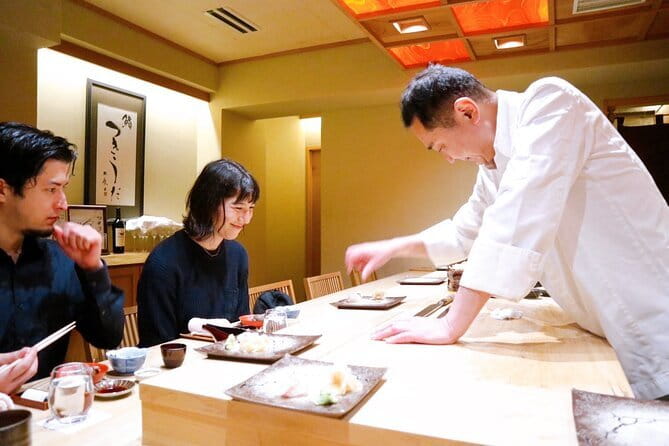
- Etiquette before lunch: Learn itadakimasu, gochiso-sama, chopstick use, and plate handling before entering the sushi restaurant.
- Hotel Gajoen Tokyo setting: Start with coffee and a look at the hotel’s striking interior waterfall.
- Omakase at the counter: Enjoy a course with appetizers, sashimi, eight sushi pieces, and miso soup prepared by the owner-chef.
- Conversation made easier: Ryoko interprets your questions so you can ask about the food and preparation.
- Private format: Only your group takes part, with private transportation between the two locations.
- A high price for focused attention: The cost includes the meal, drinks, transport, and photos, but not additional drinks.
Why this Tokyo sushi experience works
Many visitors hesitate at a high-end sushi counter for a simple reason: they do not know the rules. Do you pick up the sushi with your fingers? Should you dip the rice or the fish in soy sauce? What do you say before eating? This experience deals with those questions before they become awkward.
That preparation is the heart of the tour. You are not simply shown to a restaurant and handed a meal. Ryoko, an instructor in Japanese table manners, gives you a brief lesson first. The aim is not to turn you into a sushi professional. It is to help you feel at ease and show respect in a setting where small habits matter.
I find that especially useful if you have eaten at expensive sushi restaurants before but still felt unsure. A formal meal can be less enjoyable when you are concentrating on every movement. Here, you get a chance to ask basic questions in a relaxed setting.
The experience lasts about three hours and is private. That means the pace and conversation are shaped around your group rather than a large party. It also means the cost is easier to justify for a couple, family, or small group that values personal attention, though it remains a costly choice.
A few more Tokyo tours and experiences worth a look
Starting at Hotel Gajoen Tokyo
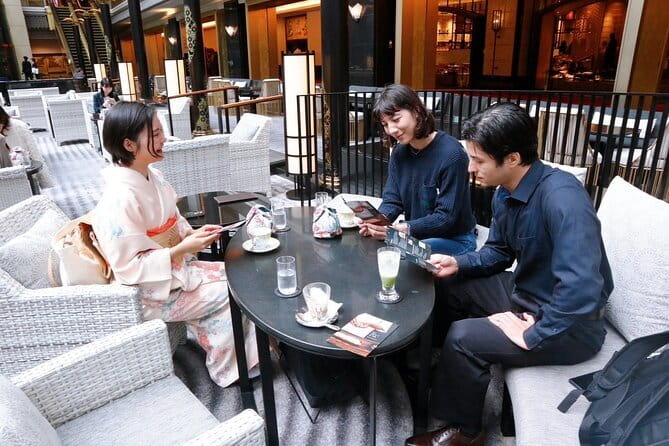
Meet at Hotel Gajoen Tokyo at 10:00 a.m. in Meguro. The hotel is more than a simple meeting point. Your guide introduces its background, then takes you to a lounge for one coffee or tea included in the price.
You will also see the waterfall located in the middle of the hotel. This gives the opening hour a calm, visual quality before the meal begins. Hotel Gajoen is known for its elaborate Japanese decorative style, so this stop provides a little cultural context without turning the morning into a long museum visit.
I like this arrangement because it gives you time to settle in. Tokyo can be a fast-moving city, and going straight from a train station into an expensive meal can feel abrupt. Coffee and a short introduction let you get acquainted with Ryoko and raise any etiquette questions before lunch.
The stop is listed as about one hour. The admission itself is free, but your coffee or tea is included in the course price. If you do not care about hotel interiors or prefer to spend every minute on food, this portion may feel longer than necessary. For most people, though, it is a pleasant lead-in.
The etiquette lesson that makes lunch easier
The table-manners instruction covers several practical points. You learn words used before and after a meal, including itadakimasu and gochiso-sama. You also learn the proper way to use chopsticks and handle plates.
These are small details, but they change how you approach the meal. Japanese dining etiquette is not a set of traps waiting for you to make a mistake. It is a way of showing care toward the chef, the ingredients, and the people sharing the meal. Knowing a few basics helps you take part rather than sit back nervously.
You can also use this lesson beyond the tour. The advice should help at other sushi counters, casual restaurants, and formal meals during your time in Japan. It is one reason I see this as more than a single lunch, especially for a first visit.
The instruction is brief, not an academic class. If you want a long lecture on sushi history, regional fish, knife technique, or the economics of the restaurant trade, this tour may not go far enough. Its focus is practical manners and confidence at the table.
Omakase at Sushi Tsukiuda

From Hotel Gajoen, private transportation takes you to Sushi Tsukiuda in Higashiyama, near Nakameguro. The tour ends at the restaurant, in front of Don Quijote, so you can continue exploring the area afterward.
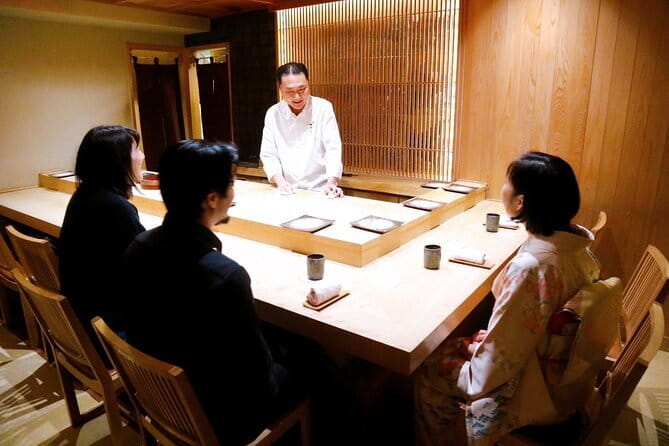
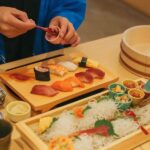
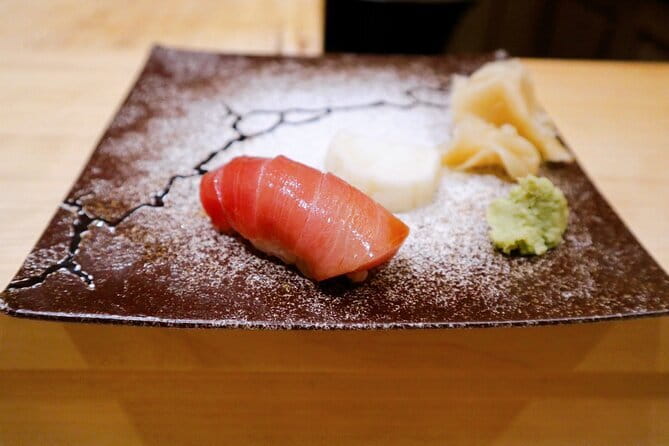
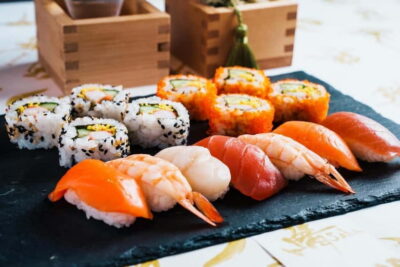
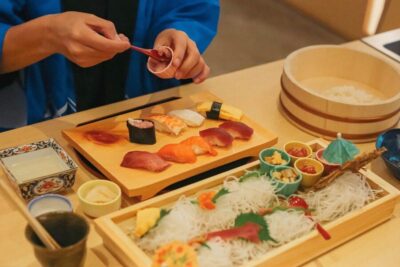
At Sushi Tsukiuda, the owner-chef prepares an omakase course over the counter. The meal includes a few small dishes, appetizers, sashimi, eight pieces of sushi, and miso soup. One drink at the restaurant is included, with alcoholic drinks available only to people aged 20 or older. Anyone under 19 receives a non-alcoholic drink.
Omakase means the chef chooses the sequence and selection for you. That makes the experience more personal than ordering a standard sushi set, but it also means you do not choose every item in advance. The supplied information does not specify the fish served on the day, so anyone with strict preferences should ask Ryoko about dietary needs before booking.
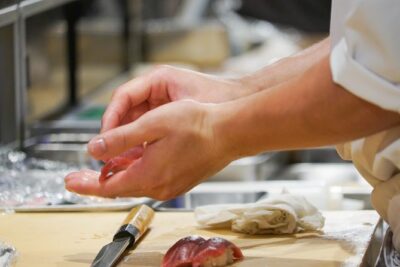
The counter format is important. You watch the owner-chef prepare the food in front of you rather than receiving a tray assembled out of sight. You can ask questions about the dishes, ingredients, and preparation, while Ryoko interprets as needed. That language support gives the meal a conversational quality that an ordinary restaurant booking may not provide.
The meal portion is listed as about one hour. That is enough time for a carefully paced course, though the exact rhythm will depend on the chef and your group. Take your time. Notice how each piece is presented, listen to the explanations, and use the etiquette you learned earlier.
What the meal includes, and what it does not
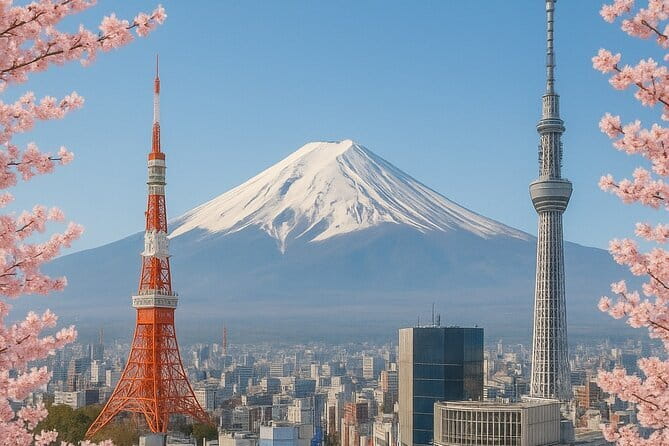
The included food is substantial for a lunch tasting: several prepared dishes, sashimi, eight sushi pieces, and miso soup. You also receive one drink at the restaurant and coffee or tea at Hotel Gajoen.
Additional drinks cost extra. This matters because the headline price includes only one restaurant drink, not an open beverage package. Alcohol is also age-restricted, so younger members of a private group will receive non-alcoholic drinks.
There is no vegan menu. If you follow a vegan diet, this is not the right booking. The provided details also do not promise a vegetarian, allergy-friendly, or substitution menu, so you should not assume that changes are possible.
The food is clearly central to the price, but you are paying for more than ingredients. The package includes a private guide, interpretation, transportation, etiquette instruction, two drinks, and photos. The value depends on how much you want those services alongside the meal.
A few more Tokyo tours and experiences worth a look
Is $520.29 per person good value?
At $520.29 per person, this belongs in the special-occasion category. You could spend far less on a good sushi lunch in Tokyo. The price makes sense only if you specifically want a high-end omakase meal combined with private cultural guidance.
I would consider it worthwhile for someone who feels intimidated by formal sushi dining, has a strong interest in Japanese manners, or wants a polished experience for a celebration. It is also useful if language concerns would otherwise prevent you from asking the chef questions.
For a confident sushi diner who only wants to eat, the value is weaker. You are paying for the teaching, transport, interpretation, and personal attention, not just the plate in front of you. If those extras do not matter, booking a restaurant independently is likely the better use of your budget.
Group discounts may improve the cost for larger private parties. The experience remains private, so you do not share the guide or restaurant conversation with unrelated people. Before booking, compare the final group price carefully and confirm what the discount covers.
Private transport and the three-hour schedule
The tour begins at Hotel Gajoen Tokyo and ends at Sushi Tsukiuda. Private transportation is included, which removes the need to work out the transfer between Meguro and Higashiyama during a tightly timed morning.
The listed stops account for about two hours, while the full experience lasts approximately three hours. The remaining time allows for the transfer and the movement between activities. Keep the schedule in mind if you have a flight, museum reservation, or other fixed appointment immediately afterward.
The tour is near public transportation, but the meeting and ending points are specific. Start at Hotel Gajoen Tokyo at 10:00 a.m. The finish is at Sushi Tsukiuda, in front of Don Quijote. This is useful because you can continue around Nakameguro rather than returning to the starting point.
You will take off your shoes at the sushi restaurant. Wear shoes that are easy to remove and put back on, especially if you are managing children or carrying several layers. It is a small practical detail, but knowing in advance avoids fuss at the entrance.
Who will get the most from this tour?
I would recommend this experience to a first-time visitor who wants a gentle introduction to formal sushi dining. It suits people who care about manners but do not want to study them from a guidebook before arriving.
It is also a good match for couples, families with eligible participants, and small groups celebrating a special occasion. The private format allows your party to ask questions without worrying about strangers at the table.
The tour can help experienced diners, too. Several people who had already eaten at expensive sushi restaurants still found themselves unsure about etiquette. That is a useful warning: familiarity with sushi does not always mean familiarity with Japanese dining customs.
I would skip it if you need vegan food, dislike the idea of a chef-selected course, or want a low-cost meal. I would also think twice if your plans are uncertain, since the experience is non-refundable and cannot be changed for any reason.
Photos and the human side of the meal
Ryoko can take photos for you at no extra charge if you would like them. That is a thoughtful inclusion, especially for a private occasion when nobody wants to spend the meal taking pictures.
The more important service is her role between you and the chef. She does not simply lead you from one stop to the next. She explains customs, interprets questions, and helps the exchange feel natural.
The personal accounts connected with this experience place strong emphasis on Ryoko’s care and preparation. The repeated theme is not only delicious food, but the relief of knowing how to behave at the counter. One useful detail is that the guide helps guests learn from earlier dining mistakes, including the kind of uncertainty that can arise when eating high-end sushi with business associates.
That is where this tour earns its identity. It is not just a meal with a guide attached. It is a short lesson in how to participate in the meal properly.
Should you book the Tokyo Sushi Tour?
Book it if you want a carefully guided introduction to sushi culture and are willing to pay for private attention. The combination of Hotel Gajoen, a manners lesson, chef interaction, interpretation, and omakase makes it more useful than a basic restaurant reservation.
Skip it if your main goal is simply to find excellent sushi at the lowest possible price. The $520.29 cost is high, and the lack of a vegan menu limits its appeal.
For the right person, this is a confidence-building experience. You leave with a full sushi lunch, a few Japanese dining phrases, and a better sense of how to sit at the counter without second-guessing every move.
FAQ
How long does the sushi tour last?
The experience lasts approximately three hours. The Hotel Gajoen Tokyo visit is listed as about one hour, and the sushi meal at Sushi Tsukiuda is also listed as about one hour, with time allowed for transportation and transfers.
Where does the tour begin?
The tour begins at Hotel Gajoen Tokyo, at 1-chōme-8-1 Shimomeguro, Meguro City, Tokyo. The start time is 10:00 a.m.
Where does the tour end?
The tour ends at Sushi Tsukiuda in Higashiyama, near Nakameguro. The meeting information specifies that the day ends at the restaurant, in front of Don Quijote.
Is transportation included?
Yes. Private transportation between the tour locations is included in the price.
What food and drinks are included?
The package includes coffee or tea at Hotel Gajoen Tokyo, one drink at the sushi restaurant, and a lunch sushi course with several dishes, sashimi, eight sushi pieces, and miso soup. Additional drinks are not included.
Can children or younger participants drink alcohol?
Alcohol is available only to people aged 20 or older. Participants under 19 are served non-alcoholic drinks. No vegan menu is available, and you will need to remove your shoes at the sushi restaurant.
More Dinner Experiences in Tokyo
More Dining Experiences in Tokyo
More Sushi Making Classes in Tokyo
More tours in Tokyo we've reviewed












Sushi Making Classes, compared.
 ★ 5.0Sushi Making Tokyo Roll and Authentic Japanese Sushi ClassFrom $59
 ★ 4.9Tokyo: Roll and Authentic Sushi Making Class in AsakusaFrom $581h 40m
 ★ 4.9Tokyo: Sushi Making Class in a Happi Coat near a Famous SpotFrom $421h 30m
 ★ 5.0Sushi Making Tokyo! Popular Maki Sushi & Japanese Sushi(+Recipe!)From $63
 ★ 5.0Tokyo Sushi Making Class in Tsukiji with Professional ChefFrom $49
 ★ 5.0Tokyo Night Foodie Tour in Shinjuku – Seasonal Sushi, Wagyu BeefFrom $111