Reviewed · MT FUJI DAY TRIPS
Tokyo: Mount Fuji & Hakone Private Customizable Day Tour
Mount Fuji is the star here, but the real appeal is choosing how you see it. You can pair Lake Kawaguchi and Oshino Hakkai with sacred shrines, or trade some Fuji viewpoints for Hakone’s ropeway, Lake Ashi, and volcanic Owakudani.
In This Article
- Key points to know before booking
- Why this private Fuji trip can work well
- The long ride from Tokyo to Mount Fuji
- Oshino Hakkai, clear ponds and traditional houses
- Kitaguchi-hongu Fuji Sengen Shrine and the spiritual side of Fuji
- Mount Fuji viewpoints and the ¥2,100 entrance fee
- Lake Kawaguchi and Oishi Park
- Arakura Fuji Sengen Shrine and Chureito Pagoda
- Where Hakone fits into the day
- Lunch, shopping, and the cost of flexibility
- What the guides and timing are really like
- Practical limits and what to bring
- Should you book this Mount Fuji private tour?
- FAQ
- How long is the private Mount Fuji and Hakone tour?
- How many people can join the private tour?
- Is hotel pickup included?
- Which languages are available?
- Are Mount Fuji and Hakone both guaranteed in one day?
- Is lunch included?
- Are ropeway and cruise tickets included?
- Is there an entrance fee for Mount Fuji?
- Can I cancel the booking?
I like the private car, hotel pickup, and the chance to shape the day around your group. I also like the mix of nature and culture: Kitaguchi-hongu Fuji Sengen Shrine gives the trip more depth than a string of photo stops. The catch is time. Tokyo traffic can eat into a 10-hour day, and combining Mount Fuji and Hakone may leave each area feeling rushed.
Key points to know before booking
- A private car for up to six people: The $372 group price becomes much better value when shared by a full group.
- Six hours at the sights: About four hours of the day is used for travel between Tokyo and the Fuji area.
- Lake Kawaguchi gets the most time: The planned two-hour stop lets you walk, eat, and look for clear Fuji views without racing.
- Hakone is optional, not guaranteed: You can request the Ropeway, Owakudani, Lake Ashi, or the Open-Air Museum, but the full combination may be too much for one day.
- Several guides are named: Abdul, Adi, and Umer have led this experience. Guide style and commentary may vary.
- Extra costs matter: Lunch, ropeway or cruise tickets, other activities, and the listed ¥2,100 Mount Fuji entrance fee are not included.
Why this private Fuji trip can work well
This is best understood as a private driving day from Tokyo, not a slow-paced guided walk. You are collected at your hotel or another location inside Tokyo’s 23 wards, then taken toward the Fuji Five Lakes area in an air-conditioned vehicle.
That setup removes several headaches. You do not need to work out train connections, bus schedules, or the best order for scattered viewpoints. If your group includes children, older family members, or people who simply prefer a car, that convenience has real value.
The advertised price is $372 per group of up to six. For six people, that works out to about $62 per person before optional tickets and food. For two people, it is a much more expensive day, but you are paying for a private vehicle, pickup and drop-off, and control over the route rather than a fixed coach schedule.
The guide speaks English, Japanese, or Hindi, depending on the assignment. Abdul is specifically praised for explaining the stops and adjusting to a family’s needs. Adi is also named as a friendly driver who helped fit in several good viewpoints. Umer led another outing, but the commentary was lighter, so you should not assume every guide will provide the same level of explanation.
A few more Tokyo tours and experiences worth a look
The long ride from Tokyo to Mount Fuji
A 10-hour booking sounds generous until you account for the road time. The tour information allows about four hours for transfers in total, leaving roughly six hours for stops.
That is not a flaw by itself. Mount Fuji is far enough from central Tokyo that a private car is often the simplest way to reach several sites in one day. But traffic on Tokyo highways can be serious, especially on weekends and public holidays. The driver may arrive late, and the return ride can take longer than planned.
You are asked to wait in your hotel lobby 10 minutes before pickup. The driver may wait up to 60 minutes after the scheduled time, but that does not mean you should treat the pickup window casually. Add your supplier on WhatsApp before the day, using the contact details supplied with your booking, so you can communicate if traffic or meeting arrangements change.
Pickup is included within Tokyo’s 23 wards, including Shibuya, Shinjuku, Chiyoda, Chuo, Minato, Taito, Meguro, and others. Pickup outside those wards costs extra, with the stated surcharge ranging from ¥5,000 to ¥20,000 depending on the area.
Oshino Hakkai, clear ponds and traditional houses
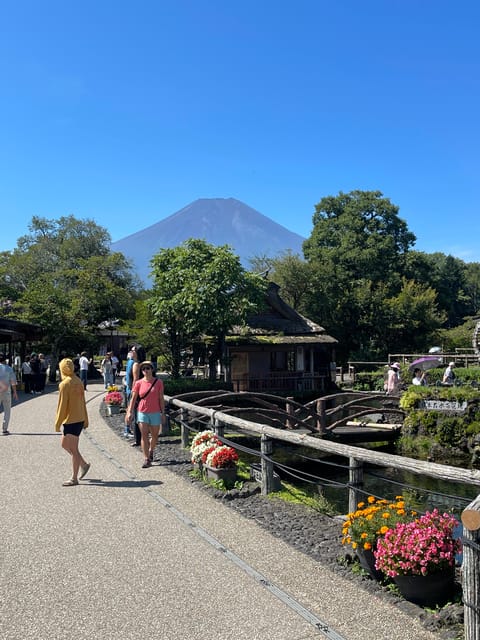
Oshino Hakkai is the first listed sightseeing stop, with about 40 minutes for a visit and guided walk. The village is known for clear ponds fed by Mount Fuji’s snowmelt and for traditional-style homes.
This is a good opening stop because it gives you water, old buildings, and a Fuji-area setting in one place. It is also a compact visit, so you can see the main features without spending half the day there.
Forty minutes is enough for a quick look and photographs, but not for a leisurely wander. If you like small details, local food stalls, or taking your time around the ponds, you may want to ask the guide whether the stop can be extended. The private format gives you that chance, though every extra minute has to come from somewhere else.
Kitaguchi-hongu Fuji Sengen Shrine and the spiritual side of Fuji
The Kitaguchi-hongu Fuji Sengen Shrine stop lasts about 40 minutes. This is one of the most worthwhile choices for anyone who wants more than mountain pictures.
Sengen shrines are connected with worship of Mount Fuji, and this forested sacred site offers a look at the religious traditions surrounding the mountain. You can walk through the shrine grounds, take in the architecture, and get a stronger sense of why Fuji is more than a scenic backdrop in Japanese culture.
The visit is listed as sightseeing and walking, so wear comfortable shoes. It is also a useful counterpoint to the busier lake viewpoints. Ask your guide for context here. A guide who explains the shrine’s role can make this short stop much more meaningful than simply photographing the gate and moving on.
Mount Fuji viewpoints and the ¥2,100 entrance fee
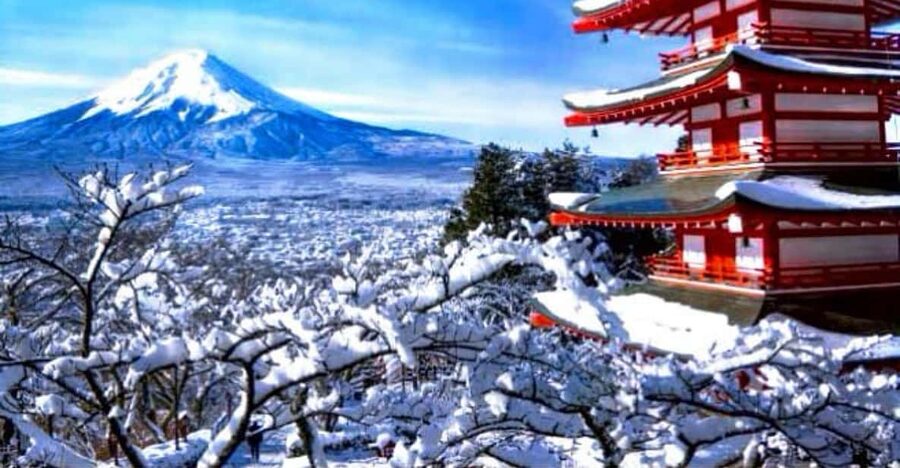
The itinerary allows about one hour at Mount Fuji, including a photo stop and guided visit. The main target is the Mount Fuji 5th Station, a high viewing point near the mountain with broad views over valleys and nearby peaks.
Conditions matter. Fuji can be hidden by cloud, even on a clear-looking day in Tokyo, so no private tour can promise the famous cone. The flexible route helps because your guide can use several viewpoints around the lakes, rather than relying on one single lookout.
The listed Mount Fuji entrance fee is ¥2,100 and is not included. Confirm exactly which access point and fee apply on your date, since mountain access can change with conditions and seasonal rules. The tour does not include entrance tickets for other paid activities either.
A few more Tokyo tours and experiences worth a look
Lake Kawaguchi and Oishi Park
Lake Kawaguchi receives the longest scheduled break, about two hours. That is sensible. The lake is one of the best places to combine a relaxed walk with the classic Fuji view, and the extra time gives you a chance to wait for clouds to shift.
You can stroll along the shore, take photographs, and stop for food during this break. The lake is also a better place than a brief roadside lookout to simply enjoy the setting. Fuji may appear behind the water, boats, trees, or town buildings depending on where you stop.
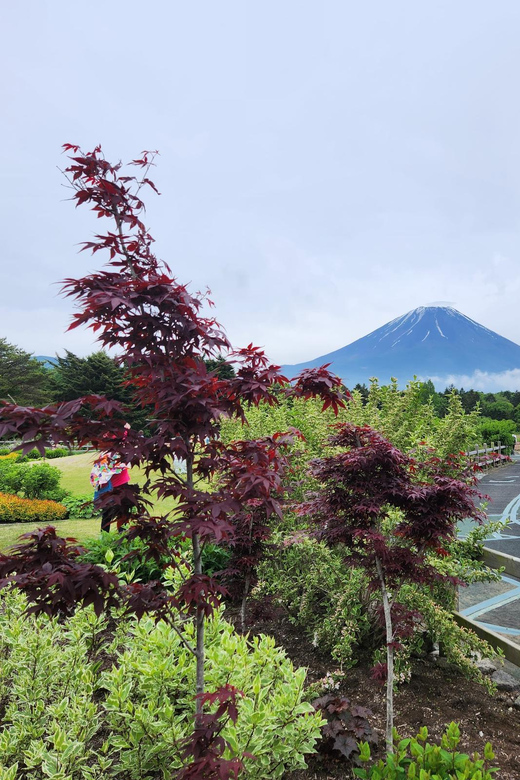
Oishi Park follows with about an hour for sightseeing and walking. The park is especially useful for photographs because it places open space and seasonal plantings between you and the mountain. Since both Lake Kawaguchi and Oishi Park offer Fuji views, there can be some repetition. That is not necessarily bad on a clear day, but if you prefer variety, ask to shorten one lake stop and add a shrine, cave, or Hakone activity.
Arakura Fuji Sengen Shrine and Chureito Pagoda
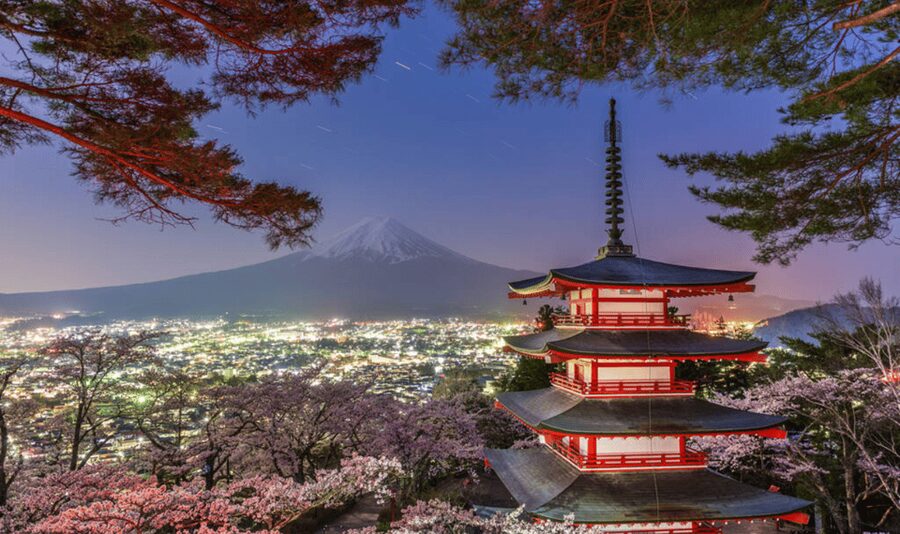
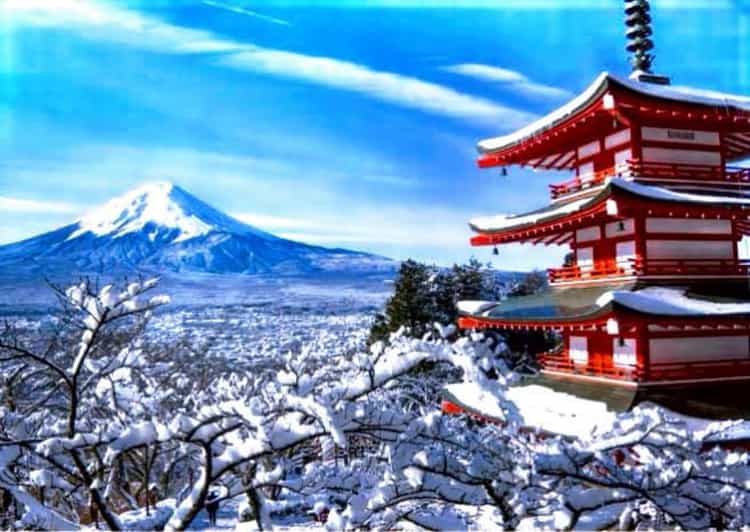
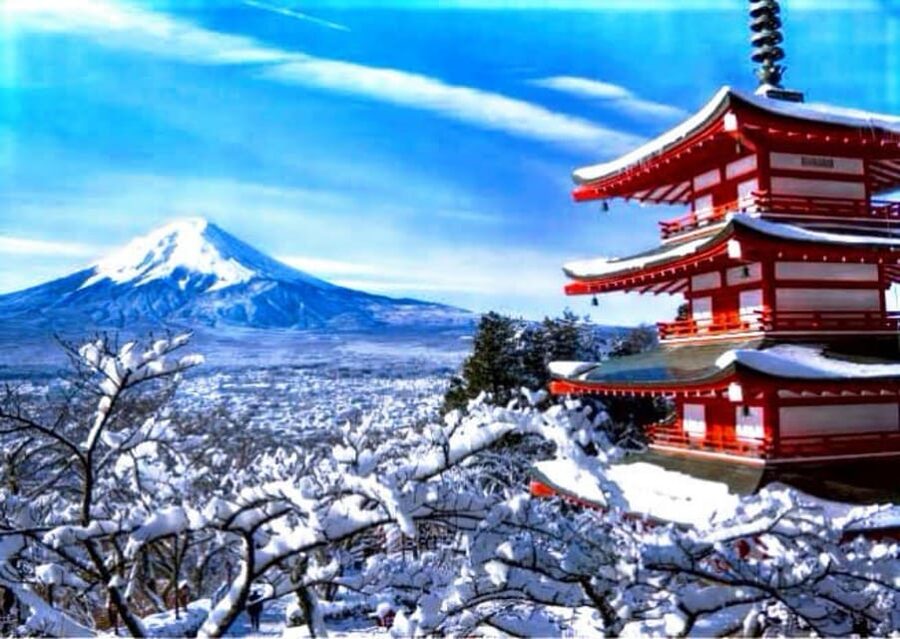
Arakura Fuji Sengen Shrine is listed for about an hour. This area is famous for the Chureito Pagoda viewpoint, where the five-story pagoda and Mount Fuji can appear together in one frame.
The view is particularly striking during cherry blossom season, though the exact appearance depends on the time of year and weather. Reaching the viewpoint involves walking and steps, so this stop may be less comfortable for anyone with limited mobility. The tour information does not provide a separate accessibility plan, so ask before booking if stairs are a concern.
This is one of the strongest photo stops on the route, but it is also another Fuji lookout. If your group has already spent a lot of time at Lake Kawaguchi, you may prefer to use this hour for a cultural stop or a paid Hakone activity.
Where Hakone fits into the day
The tour allows you to mix Fuji-area stops with Hakone, but the listed stop-by-stop schedule focuses mainly on the Fuji Five Lakes region. That distinction matters.
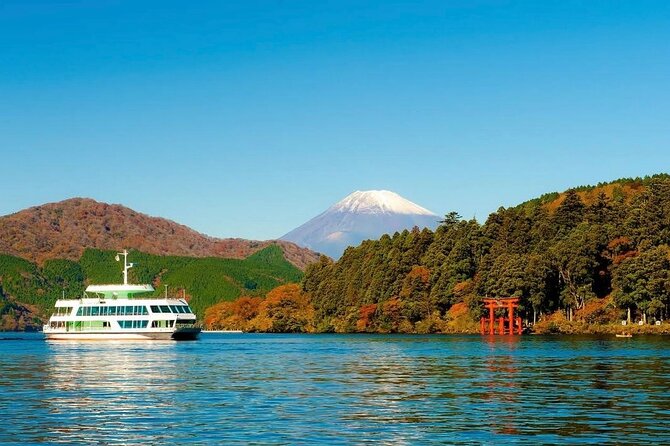
Hakone is not just another Fuji viewpoint. The Hakone Ropeway offers views over Owakudani, a volcanic valley with a stark, active-looking setting. You can also consider Lake Ashi, where a sightseeing cruise provides a different way to see the area, or the Hakone Open-Air Museum, which combines sculpture with outdoor surroundings.
You may also request Mount Kachi Kachi Ropeway, Narusawa Ice Cave, or Fugaku Wind Cave. Each adds a different type of experience, but each takes time. Ropeway and cruise tickets are extra, and queues or operating conditions can affect the schedule.
I would not try to include every listed attraction. A sensible plan is either a Fuji Five Lakes day with shrines and lake viewpoints, or a Fuji and Hakone sampler built around one or two major Hakone stops. If you insist on doing Mount Fuji, Lake Kawaguchi, Oshino Hakkai, Chureito Pagoda, the Ropeway, Owakudani, and Lake Ashi in one day, you will spend much of the time in the car.
Lunch, shopping, and the cost of flexibility
Lunch is not included, and you should ask how much time the group wants to spend eating before the day begins. One previous outing included a restaurant stop that took about an hour, leaving less time for later activities. That does not prove every group will have the same experience, but it is a useful warning: a private tour is flexible only if you and the guide agree on the schedule.
Gotemba Premium Outlets is another optional stop. It suits anyone who wants shopping rather than another shrine or viewpoint, but it can easily consume the time needed for Hakone. Decide what matters most to you before pickup.
The strongest value comes when your group has a shared plan. A family of six that wants hotel pickup, private transport, and a few selected stops gets a reasonable deal. A couple paying the full group rate should compare it with a small-group bus tour or a train and bus plan, especially if they do not need a private vehicle.
What the guides and timing are really like
The named guides include Abdul, Adi, and Umer. Abdul is praised for explaining the sites and accommodating a family. Adi is described as a good driver who recommended worthwhile stops. Those details suggest the best version of this tour comes when you speak clearly about what you want to see.
Guide involvement may vary. One account describes limited commentary during the drive and at some stops. Another issue was a request to leave an hour earlier than booked, followed by the advice that Mount Fuji and Hakone could not both fit comfortably. That advice may be practical on a traffic-heavy day, but it should be discussed before the itinerary changes.
Confirm these points by WhatsApp:
- Your exact pickup time and location
- Which Fuji stops are priorities
- Whether Hakone is included in your planned route
- How much time is reserved for lunch
- Which entrance fees you will pay
- The expected return time in Tokyo
The driver may be delayed by Tokyo highway traffic, and an earlier departure may be suggested. You can accept a change if it helps your day, but make sure the revised plan still matches your priorities.
Practical limits and what to bring
The supplied restrictions say that backpacks and bags are not allowed, along with alcohol and drugs. That is unusually strict wording for a day trip, so confirm what type of small personal item is permitted before leaving your hotel. You should not arrive with luggage or a large daypack without checking first.
The experience is not considered suitable for pregnant women, people with high blood pressure, people over 95, or people over 70 according to the supplied conditions. The two age limits conflict, so anyone over 70 should ask the provider for clarification before paying.
Wear shoes suitable for walking at the shrines, parks, and possible cave or pagoda stops. Bring layers, since the mountain area can feel different from Tokyo. Paid attractions, lunch, and the Mount Fuji fee require separate spending.
Free cancellation is available up to 24 hours in advance for a full refund, and you can reserve now and pay later. Check the final booking terms for your date, especially if your plans depend on weather or mountain access.
Should you book this Mount Fuji private tour?
Book it if you value door-to-door transport, want your own vehicle, and can agree on a short list of priorities. It is especially practical for a group of up to six people who want Fuji views without managing regional buses.
I would choose the Fuji Five Lakes route first: Oshino Hakkai, Kitaguchi-hongu Fuji Sengen Shrine, Lake Kawaguchi, Oishi Park, and either Mount Fuji 5th Station or Chureito Pagoda. Add Hakone only if you are willing to drop several Fuji stops.
Skip it if you want a slow, detailed cultural tour, guaranteed time at every attraction, or a fully fixed schedule. The day can be rewarding, but Tokyo traffic, weather, paid activities, and guide decisions all affect how much you actually see.
FAQ
How long is the private Mount Fuji and Hakone tour?
The tour lasts about 10 hours. Roughly four hours may be used for transfers to and from Tokyo, leaving around six hours for sightseeing.
How many people can join the private tour?
The private group price covers up to six people.
Is hotel pickup included?
Yes. Pickup and drop-off are included from a hotel or chosen location within Tokyo’s 23 wards. Pickup outside those wards costs an additional ¥5,000 to ¥20,000, depending on the area.
Which languages are available?
The listed guide languages are English, Japanese, and Hindi.
Are Mount Fuji and Hakone both guaranteed in one day?
No specific combination is guaranteed. The route is customizable, but the available time and traffic may make it necessary to choose between some Fuji and Hakone stops.
Is lunch included?
No. Lunch is not included in the tour price.
Are ropeway and cruise tickets included?
No. Tickets for activities such as the Hakone Ropeway, Mount Kachi Kachi Ropeway, and Lake Ashi cruise are extra.
Is there an entrance fee for Mount Fuji?
A Mount Fuji entrance fee of ¥2,100 is listed as not included. Check the current access and fee details for your travel date.
Can I cancel the booking?
You can cancel up to 24 hours in advance for a full refund. The tour also offers a reserve-now, pay-later option.
More Private Tours in Tokyo


More Hakone Day Trips in Tokyo
More Mt Fuji Day Trips in Tokyo

More tours in Tokyo we've reviewed












Mt Fuji Day Trips, compared.
 ★ 5.0Mt Fuji and Hakone 1-Day Bus Tour Return by Bullet TrainFrom $163
 ★ 4.0Mt Fuji & Hakone Cruise, Drum Show Bullet Train 1 Day from TokyoFrom $149
 ★ 4.4Tokyo Mt Fuji 5th St & Hakone Cruise Bus Tour w/Bullet TrainFrom $15410 hours
 ★ 4.5From Tokyo: Mount Fuji Full-Day Sightseeing TripFrom $6810 hours
 ★ 4.7Tokyo: Mt. Fuji Tour, Hakone Ropeway, Owakudani, Lake AshiFrom $5410 hours
 ★ 4.4Tokyo:Mt.Fuji,Kawaguchiko Oishi Park,Arakurayama Sengen ParkFrom $5410 hours