Reviewed · GUIDED
Tokyo Japanese Garden Lover’s Private Tour with Government-Licensed Guide
Tokyo’s garden tradition is best understood slowly, one stone, pond, bridge, and clipped pine at a time. This private tour lets you choose three or four sites from a long list, then explore them with a National Government licensed guide who can explain the spirits and symbols represented by rocks and plants.
In This Article
- Key points to know before booking
- Why a private garden tour works well in Tokyo
- Imperial Palace and Shinjuku Gyoen: two very different openings
- Meiji Jingu, Yoyogi Park, and Ueno Park
- Koishikawa Korakuen and Rikugien for classic Edo design
- Hama Rikyu and Former Shiba Rikyu beside the modern city
- Kiyosumi Teien and the art of stones
- Botanical gardens and smaller neighborhood retreats
- Nezu Museum and Happo-en
- What the guide adds to the day
- Price, walking, and the real value
- How I would choose the four stops
- Should you book this Tokyo garden tour?
- FAQ
- How long does the Tokyo Japanese Garden Lover’s tour last?
- How many places will I visit?
- Can I visit all the gardens listed?
- Is the tour private?
- Is hotel pickup included?
- Are transportation costs included?
- Are entrance fees included?
- Does the Imperial Palace visit include the inside?
- What kind of guide leads the tour?
- Can I cancel for a refund?
I like the personal format and the chance to shape the day around your interests. I also like the cultural detail: guides such as Yuki, Minoru, Steve, Koji, Shuji, Keiko, and Nobuko have explained garden design, shrine customs, seasonal changes, and Japanese life in clear English. The main catch is that transport, entrance fees, lunch, and personal costs are extra, and this is a walking tour rather than a private-vehicle outing.
Key points to know before booking

- Choose three or four places: The long list is a menu, not a promise that you will visit all 17 locations in six hours.
- Expect a walking day: Pickup is on foot within a designated area, with no private car included.
- See more than flowers: Your guide can explain rocks, plants, ponds, borrowed scenery, and traditional Japanese ideas.
- Pair major sights with quiet gardens: The Imperial Palace, Meiji Shrine, Yoyogi Park, and Ueno Park can be mixed with Rikugien or Kiyosumi Teien.
- Plan for extra costs: Admission fees and transportation are not included in the $154.84 per-person price.
- Best for curious garden fans: You will get more from this tour if you enjoy asking questions and comparing different styles.
Why a private garden tour works well in Tokyo

Tokyo can feel like a city built for speed. Trains run on time, roads fill with people, and modern buildings crowd the horizon. Then you pass through a gate and find a pond edged with stones, a tea pavilion, or a path designed to reveal a view only after a few steps.
The difficulty is knowing what you are looking at. A rock may suggest a mountain, an island, or a Buddhist figure. A pond can represent a famous scene from Japan or China. A clipped pine can signal age, endurance, or careful human control. A guide turns these details from decoration into a language you can read.
This is also a useful format for Tokyo because the choices are so different. You can focus on formal Edo gardens, shrine grounds, botanical collections, city parks, or small neighborhood retreats. The private setup means your group does not need to follow someone else’s pace or interests.
The six-hour length gives you a full half-day, but not enough time for every stop. The smart approach is to choose a clear theme. You might select Rikugien, Koishikawa Korakuen, and Kiyosumi Teien for classic garden design. Or you might combine the Imperial Palace, Meiji Jingu Shrine, and Yoyogi Park for a wider look at Tokyo’s public and sacred spaces.
Other guided tours in Tokyo
Imperial Palace and Shinjuku Gyoen: two very different openings
The Imperial Palace area offers a strong introduction to Tokyo’s past. The present palace occupies the former site of Edo Castle, and the surrounding area includes broad parkland, moats, and huge stone walls. The tour does not include entry inside the Imperial Palace, so think of this stop as an exterior visit and a chance to understand the setting.
The stated stop time is only 15 minutes, which makes it more of a quick orientation than a long garden walk. If you want time in the East Gardens, confirm your selected sites and schedule with the guide before the day begins.
Shinjuku Gyoen National Garden gives you a different mix of scenery. It is one of the city’s best-known green spaces and includes Japanese garden features alongside other garden styles. The listed visit is also short, and admission is not included.
That matters because Shinjuku Gyoen can reward a slower visit. If it is high on your list, ask whether it should receive more of your six hours instead of treating it as a quick photo stop.
Meiji Jingu, Yoyogi Park, and Ueno Park
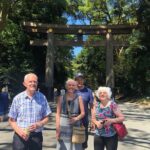
Meiji Jingu Shrine sits beside Harajuku Station, yet its wooded approach feels far removed from the nearby shopping streets. The shrine is dedicated to the deified spirits of Emperor Meiji and Empress Shoken. Your guide can help explain the setting and the customs that make a shrine visit different from a garden visit.
The shrine itself is free to enter, but its grounds are not the same as a formal stroll garden such as Rikugien. I would choose Meiji Jingu if you want cultural context and a quiet approach through trees. Choose it alongside a classic garden rather than expecting it to provide the same design experience.
Yoyogi Park is broad, open, and made for city life. Its lawns, ponds, and wooded areas give residents room to jog, picnic, and relax. It is also known for autumn color, especially the golden leaves of its ginkgo trees.
The itinerary includes Yoyogi Park twice, which appears to describe the same general park setting rather than two separate attractions. Clarify this when planning your choices. The park is free, but it can take valuable time to reach and cross on foot, so it works best if you already want to visit the Harajuku and Meiji Jingu area.
Ueno Park gives you a broader cultural district. Museums, a zoo, Toshogu Shrine, and Shinobazu Pond are all within the park area, and the site is especially famous for cherry blossom viewing. Like Yoyogi Park, it is a public space rather than a single formal garden.
Ueno makes sense for you if you want gardens mixed with museums and shrine architecture. It is less suitable if your main goal is to study carefully arranged ponds, bridges, and borrowed views.
Koishikawa Korakuen and Rikugien for classic Edo design

Koishikawa Korakuen is one of Tokyo’s oldest and most important Japanese gardens. It was created in the early Edo period for the Mito branch of the ruling Tokugawa family. The garden presents famous Japanese and Chinese scenery in miniature, using water, hills, paths, and planted areas to create changing views.
This is the kind of place where a guide adds real value. Instead of walking around a pond and simply admiring it, you can learn why a path bends, why a bridge appears where it does, and how a small scene can refer to a distant literary or geographic idea.
Rikugien is another major choice for anyone who cares about garden design. Built around 1700 for the fifth Tokugawa shogun, its name refers to the six categories of Chinese poetry. The garden is arranged around scenes connected with poems, giving it a more literary character than a simple park.
I would place Rikugien near the top of your list. One particularly successful private visit paired the elegant Imperial Palace East Garden with Rikugien, with lunch in the Kagurazaka neighborhood between them. Lunch is not included, but the pairing shows how well the tour can mix a grand public site with a more intimate garden.
Admission is not included at either Koishikawa Korakuen or Rikugien. Allow for that extra cost and remember that the six-hour clock includes movement between sites.
Hama Rikyu and Former Shiba Rikyu beside the modern city

Hama Rikyu is a large garden beside Tokyo Bay. Its seawater ponds change level with the tides, a feature that gives the garden a direct link to its waterfront setting. A teahouse adds another traditional element.
The contrast here is part of the appeal. You can look across a carefully arranged garden and then see central Tokyo’s tall buildings beyond it. Hama Rikyu is a good choice if you want a garden that connects old design with the city’s modern scale.
Former Shiba Rikyu Gardens offers a smaller traditional setting surrounded by high-rise buildings. Its pond and man-made hills once belonged to feudal lords and later became part of an imperial villa.
This garden is useful when you want a compact example of how Japanese designers create depth in a limited area. The surrounding towers also make the changing scale easy to appreciate. Neither Hama Rikyu nor Former Shiba Rikyu includes admission in the tour price.
Other private tours in Tokyo



Kiyosumi Teien and the art of stones

Kiyosumi Teien is built around a central pond, with walking trails and sections where stones are placed directly into the water. The stones are not minor decoration. Their shape, color, position, and relationship to the water help create the garden’s visual rhythm.
This is one of the strongest choices for learning how Japanese gardens use natural materials. A guide can point out why a particular stone catches your eye or how a crossing changes your view of the pond.
The experience can shift with the weather. On a rainy day, wet stones may show different colors, and the sound of koi moving or splashing in the pond can become part of the visit. That kind of seasonal and sensory detail is easy to miss if you hurry.
Kiyosumi Teien is also a good match for a private tour because you can stop to ask questions without holding up a larger group. Admission is extra, and you should expect a fair amount of walking on garden paths.
Botanical gardens and smaller neighborhood retreats

Koishikawa Botanical Garden is maintained by the University of Tokyo. It contains many types of trees and plants, along with a small Japanese garden. The setting is especially appealing during cherry blossom season.
This stop suits you if your interest leans toward plants rather than only garden composition. It also gives you a different point of comparison: a botanical collection is organized around plant life, while an Edo garden is arranged around scenes, movement, and mood.
Mejiro Garden is a smaller, peaceful traditional garden near Ikebukuro Station. Admission is free, making it a practical choice if you want a quiet stop without adding another entrance fee. Its size also makes it easier to fit into a day that includes other Tokyo sights.
The Tokyo National Museum Garden opens to the public only for a few weeks during spring cherry blossom season and during the November autumn-leaf period. This is an important planning detail. It is not a dependable year-round option, so confirm availability before making it one of your main choices.
Nezu Museum and Happo-en

The Nezu Museum garden is an urban retreat in the Omotesando area. The museum was formerly the private residence of Nezu Kaichiro, and the garden now forms part of the museum setting.
This choice is especially useful if you want to combine traditional garden scenery with an art-focused area of Tokyo. Admission is not included, and the museum connection means you should check whether you want time for the indoor collections as well.
Happo-en means Garden of Eight Views, a name tied to its appeal from different angles and in different seasons. The grounds are also used as a setting for photographs.
Happo-en may suit you if you want a polished garden with strong visual appeal. It is less focused on the public park experience than Ueno or Yoyogi, and the tour description does not include entrance fees.
What the guide adds to the day
The guide is the heart of this experience. You receive a multilingual National Government licensed local guide with interpreter certification, and the private format lets you ask for explanations at your own level.
Guide quality will naturally vary by assignment, but several names connected with this tour have been praised for clear communication and personal attention. Yuki explained garden details and Japanese culture in English. Minoru shaped a day around the Imperial Palace East Garden and Rikugien. Steve tailored the route closely to a guest’s requests and explained traditional gardens in depth.
Koji prepared carefully and communicated well before the visit. Shuji made the day both informative and fun, while Keiko helped with Tokyo’s complex transport system and brought attention to details such as wet stones and koi at Kiyosumi Teien and Happo-en. Nobuko supplied educational material and even included calligraphy in the cultural exchange.
You cannot select a particular guide based on the information provided, so treat these names as examples of the available guiding style, not a guarantee. Still, the repeated praise for communication, preparation, flexibility, and cultural explanation is a good sign for anyone who wants more than a sightseeing escort.
Price, walking, and the real value
At $154.84 per person, this is not a budget park visit. The price buys a private six-hour service with a licensed guide, but it does not cover transport, admission, lunch, or other personal spending.
The value improves when you have a focused wish list. If you want to compare three or four gardens and would otherwise spend time working out train routes, opening details, and garden symbolism, the guide can save effort and add meaning. The value is weaker if you only want a quick look at one free park.
Group discounts are offered, but separate tour groups cannot be combined. The activity is private, so only your own group participates. Pickup is offered on foot within a designated Tokyo area, not by vehicle, and the tour is explicitly a walking experience.
Most people can participate, and service animals are allowed. Since this is a full half-day on foot with public transportation costs added separately, choose your gardens with energy and travel time in mind.
Free cancellation is available up to 24 hours before the start time. Changes or cancellations inside that window are not accepted for a refund.
How I would choose the four stops
For a first visit focused on classic design, I would ask for Rikugien, Koishikawa Korakuen, Kiyosumi Teien, and Hama Rikyu. Together they show literary references, miniature scenery, stone work, ponds, and a waterfront setting.
For gardens plus major Tokyo landmarks, choose the Imperial Palace, Meiji Jingu Shrine, one formal garden such as Rikugien, and either Yoyogi Park or Ueno Park. This gives you a more varied day, though you will spend more time moving between different districts.
For a quieter route, consider Mejiro Garden, Kiyosumi Teien, Former Shiba Rikyu, and Happo-en. Check opening conditions and admission costs first, especially for seasonal sites such as the Tokyo National Museum Garden.
Ask the guide before the tour how much time you want to spend walking inside each garden. The supplied stop times range from 10 to 30 minutes, but a garden lover may prefer fewer places and longer visits.
Should you book this Tokyo garden tour?
Book it if you want Japanese gardens explained rather than simply photographed. It is a strong choice for couples, families, and small private groups who have specific interests and want a guide to adjust the day around them.
I would not book it expecting a chauffeured tour or a complete tour of every garden listed. You will pay extra for trains and admissions, and six hours goes quickly. But if you choose three or four places carefully, the private format, licensed guide, and attention to Japanese symbolism can turn a scattered day of sightseeing into a thoughtful look at how Tokyo uses nature, art, and space.
FAQ
How long does the Tokyo Japanese Garden Lover’s tour last?
The tour lasts approximately six hours.
How many places will I visit?
The tour includes a customizable walking route covering three or four sites from the available selection.
Can I visit all the gardens listed?
No. The long list presents possible sites, but the tour is designed around three or four chosen locations.
Is the tour private?
Yes. Only your own group participates, and multiple tour groups cannot be combined.
Is hotel pickup included?
Pickup is offered on foot within a designated area of Tokyo. No private vehicle is included.
Are transportation costs included?
No. Transportation fees are not included in the price.
Are entrance fees included?
No. Entrance fees are generally extra. Guide entry fees are covered only for sights listed under the tour’s included sites.
Does the Imperial Palace visit include the inside?
No. The tour does not include access to the inside of the Imperial Palace.
What kind of guide leads the tour?
A licensed local English-speaking guide leads the experience. Guides are multilingual National Government licensed professionals with interpreter certification.
Can I cancel for a refund?
Yes. You can cancel up to 24 hours before the start time for a full refund. Cancellations or changes made less than 24 hours before the start time are not refunded.
More Private Tours in Tokyo
More Guided Tours in Tokyo


More tours in Tokyo we've reviewed












Guided, compared.
 ★ 5.0Tokyo 6hr Private Tour with Government-Licensed GuideFrom $155
 ★ 4.9Tokyo: Shinjuku Local Bar and Izakaya Guided Walking TourFrom $343 hours
 ★ 4.8Tokyo: Private City Highlights Tour with Local GuideFrom $1064 - 8 hours
 ★ 4.9Tokyo: Tsukiji Fish Market Guided Walking TourFrom $222 hours
 ★ 5.0Tokyo 4hr Private Tour with Government-Licensed GuideFrom $109
 ★ 5.0Tokyo Guided Small-Group Biking TourFrom $106