Reviewed · SHOW
Japanese Traditional Music Show in Tokyo
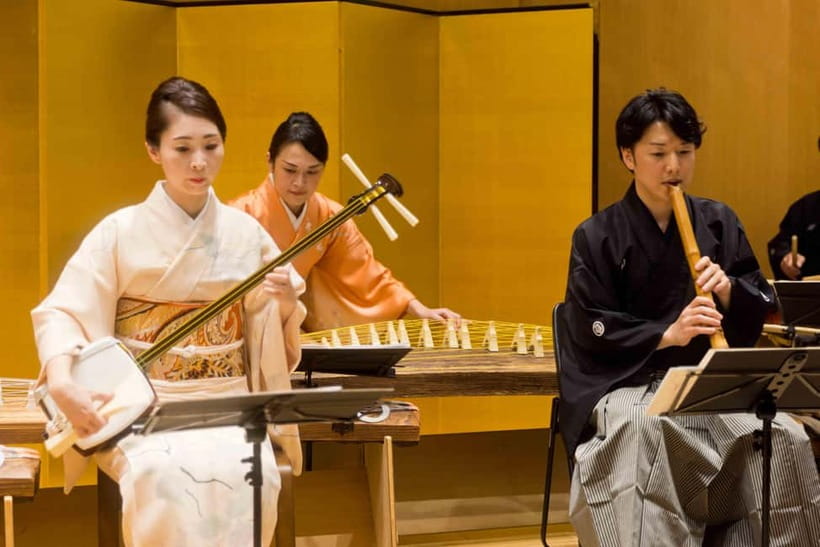
Japanese traditional music can feel distant if you only encounter it in a large theater or a formal cultural presentation. At the Zakuro Show, the musicians sit close to a small numbered audience, so you can see the hands, strings, breath, and drum technique up close. The one-hour program combines performance with clear explanations in English and Japanese.
In This Article
- Key points at a glance
- A close-up introduction to Japanese wagakki
- What happens during the one-hour program
- Koto, shamisen, shakuhachi, and taiko
- Why the small venue matters
- A bilingual show that works for first-time listeners
- Photos, video, and meeting the musicians
- Location near Harajuku
- Is $38 a fair price?
- Who will enjoy this most?
- Booking and cancellation details
- Should you book the Zakuro Show?
- FAQ
- Where does the Japanese Traditional Music Show take place?
- How long is the show?
- How much does the experience cost?
- Which instruments are performed?
- Is the show available in English?
- Can I take photos or videos during the performance?
- Is a reserved seat included?
- Is the venue wheelchair accessible?
- Can I cancel for a refund?
I especially like two things here: the mix of ancient and modern pieces, including a surprise Western pop cover, and the chance to photograph the musicians during and after the show. The main consideration is the short running time. You get a well-shaped introduction, not a full evening concert.
Key points at a glance
- Four very different instruments: Hear the koto, often described as a Japanese harp, alongside shamisen, shakuhachi flute, and taiko drums.
- Small numbered audience: The intimate seating keeps the musicians close and makes the demonstrations easier to follow.
- English and Japanese presentation: A host explains the instruments, pieces, construction, and background for an international audience.
- Old music meets new sounds: The program includes traditional compositions, modern Japanese music, and a Western hit arranged for wagakki.
- Photos are part of the experience: You can take pictures and videos during the performance, then pose with the musicians afterward.
- Easy Harajuku access: Hall 60 is one minute from Meiji-Jingumae Station Exit 7 and about five minutes from JR Harajuku Station’s Omotesando Exit.
A close-up introduction to Japanese wagakki
The word wagakki refers to traditional Japanese musical instruments. This show gives you a practical introduction to several of them without asking you to sit through a long lecture or a formal recital.
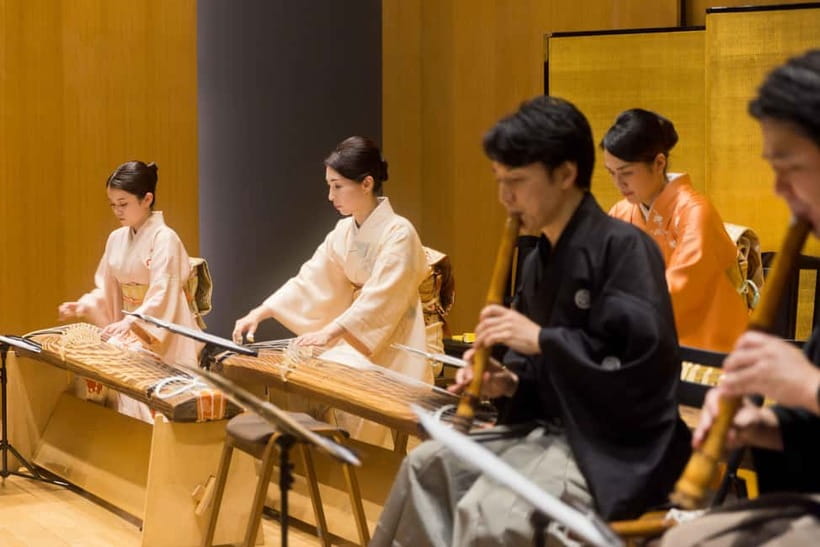
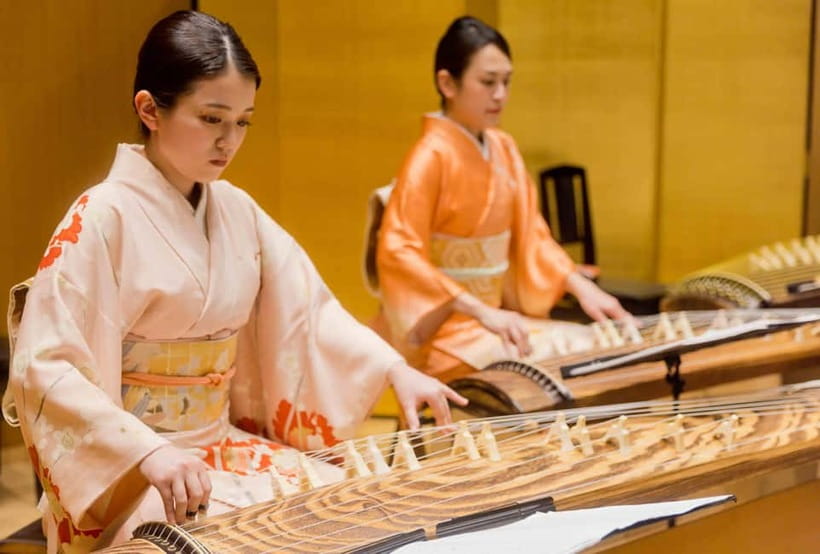
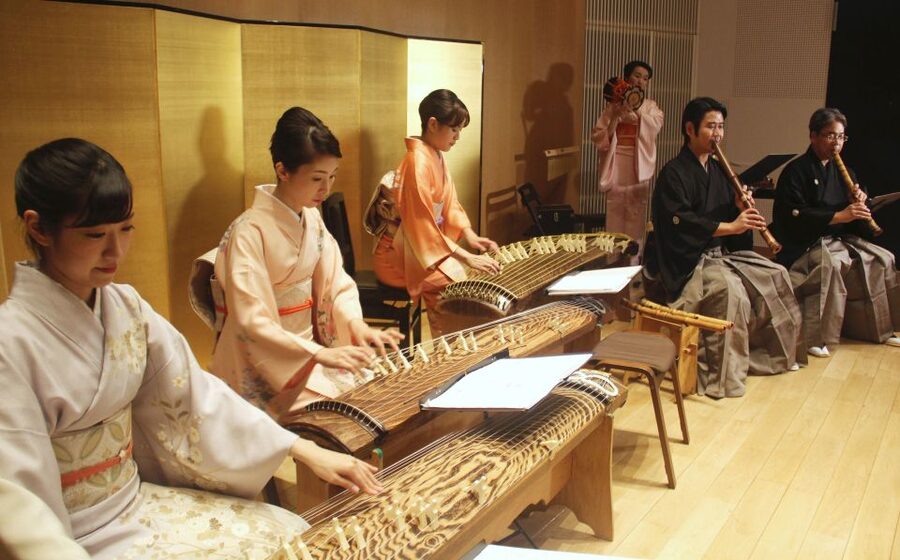
You see the musicians in kimono, with the instruments positioned directly in front of you. That matters. A koto may look simple from a distance, but its strings and playing technique are easier to appreciate when you can watch the performer work. The same is true of the shamisen, a three-stringed instrument with a distinctive tone, and the shakuhachi, whose breathy sound is unlike a standard concert flute.
The taiko drums change the mood again. Their deep, physical sound provides a strong contrast to the delicate tones of the koto and the sharp plucked sound of the shamisen. Because the program uses several instrument families, you are not hearing one narrow style for an hour. You are hearing how Japanese music can move from quiet and reflective to forceful and rhythmic.
The host also explains the instruments and the pieces. This makes the show suitable for someone who knows little about Japanese music. You do not need to arrive with background knowledge, and you will not be left to guess why a particular instrument sounds or looks the way it does.
A few more Tokyo tours and experiences worth a look

What happens during the one-hour program
The program is built around alternating explanations and musical performances. That is a smart format for a short cultural show. You hear an instrument, learn more about it, and then have a better idea of what to listen for when it returns.
The explanations cover the history of the instruments and the music. Based on the available details, they can also include how instruments work and how they are made. The host translates and guides the program in English and Japanese, helping international visitors follow along without turning the concert into a long classroom session.
You can expect to hear several types of music:
- Traditional Japanese compositions
- More recent Japanese traditional music
- Pieces selected to explain the character of particular instruments
- A Western popular song arranged for Japanese instruments
The Western cover is a small but effective touch. It gives your ear a familiar reference point. You may recognize the melody while hearing it through koto strings, shamisen, flute, or drums. That contrast helps you understand the sound of the instruments more quickly than a program made only of unfamiliar traditional pieces.
The ancient and modern selections serve a similar purpose. Traditional music gives you a link to Japan’s older artistic practices, while newer arrangements show that these instruments are not locked in the past. The show presents them as working musical tools with room for fresh arrangements.
Koto, shamisen, shakuhachi, and taiko
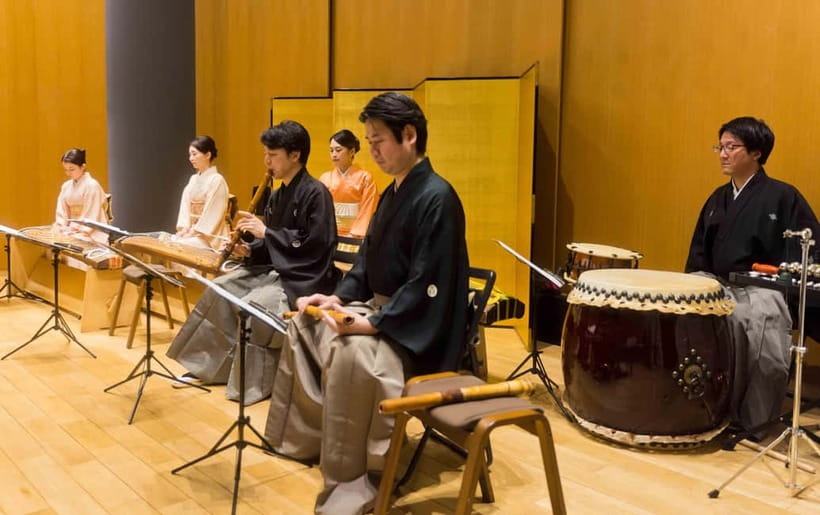
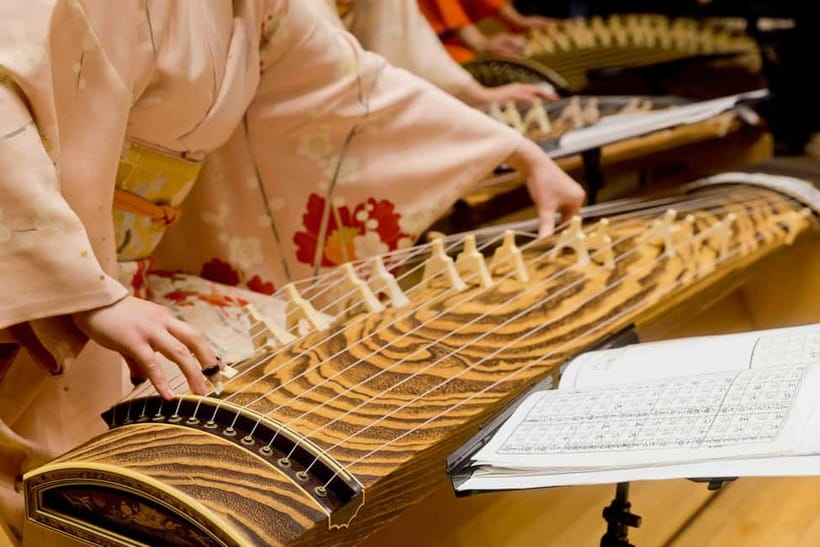
The koto is often introduced as a Japanese harp, although its playing position and construction differ from the Western harp. Its strings create a clear, ringing sound that can feel light and spacious. Watch the performer’s hands closely. The physical method of producing the notes is part of the appeal.
The shamisen has a more pointed sound. Its three strings and broad body give it a tone that can seem both spare and dramatic. In a group setting, it helps provide definition between the softer koto and the larger sound of the drums.
The shakuhachi flute brings a breath-centered sound to the program. Its tone can be airy and expressive, with a character that makes it easy to distinguish from other instruments. The explanation of the flute is useful because its design and playing method are not immediately obvious to someone seeing it for the first time.
Then come the taiko drums. Taiko performance has visual force as well as volume. Even in a one-hour program, the drums give the concert a strong change of pace. If you prefer very quiet music throughout, this is worth keeping in mind. The show includes a broad sound range, not only soft instrumental pieces.
The best part of hearing all four instruments in one sitting is the comparison. You can notice how plucked strings, breath, and percussion create different kinds of energy. The program is not simply a list of instruments. It shows how they can share a musical setting.
Why the small venue matters
The audience is limited to a small numbered seating area. That creates a more personal setting than a large concert hall, where you may hear the music clearly but lose sight of the technique.
Here, you can watch the musicians’ hands and posture. You can see the instruments rather than only hearing them. Explanations also carry more weight when the object being discussed is a short distance away.
The small format may not suit someone hoping for a grand stage production. There is no indication of a large orchestra, elaborate scenery, or a long theatrical presentation. This is a direct music and culture program. You go for the musicians, the instruments, and the chance to understand what you are hearing.
Reserved seating is included, which removes one common worry with compact venues. You do not need to compete for a good position after arriving. The experience is designed around a small audience, so booking ahead is sensible, especially if you want a particular starting time.
A bilingual show that works for first-time listeners
The presentation operates in English and Japanese. That is important because the educational part is central to the experience, not an extra handout on the side.
A strong host can make the difference between hearing attractive sounds and understanding a little about the music. Here, the presenter explains the instruments, translates the information, and leads the concert. The clear translation is especially helpful when discussing history, construction, and playing technique.
You should still think of this as a concert with explanations, not a full academic course. The one-hour format keeps the pace moving. You receive enough context to listen with greater attention, but not an exhaustive study of every tradition connected to the instruments.
That balance makes the show a good choice for families and mixed groups. A teenager who may not want a long museum visit can still enjoy the live sound and the unexpected cover song. An adult interested in Japanese culture can focus on the instrument background. One person in your group does not need to be a music expert for the experience to work.
A few more Tokyo tours and experiences worth a look




Photos, video, and meeting the musicians
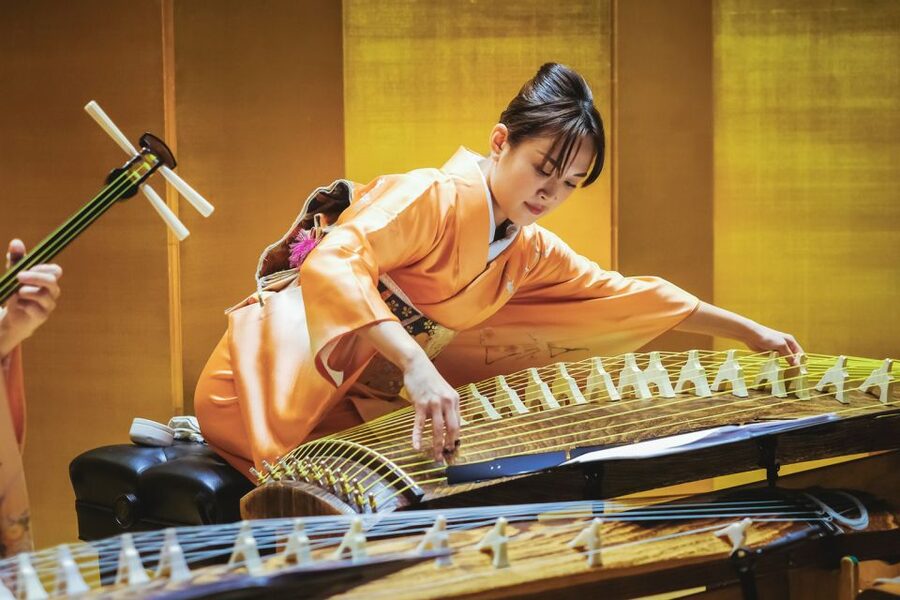
Photography and video are allowed during the show. That is unusual enough to be worth noting before you book. Many concerts ask you to keep your phone away, but this program invites you to record and photograph the musicians.
Use some judgment so you do not block another person’s view. A short recording can be a useful memory, especially when the sounds are so different from the music you normally hear. You may also want to watch most of the show without looking at your screen. The performers are close, and the live sound is the point.
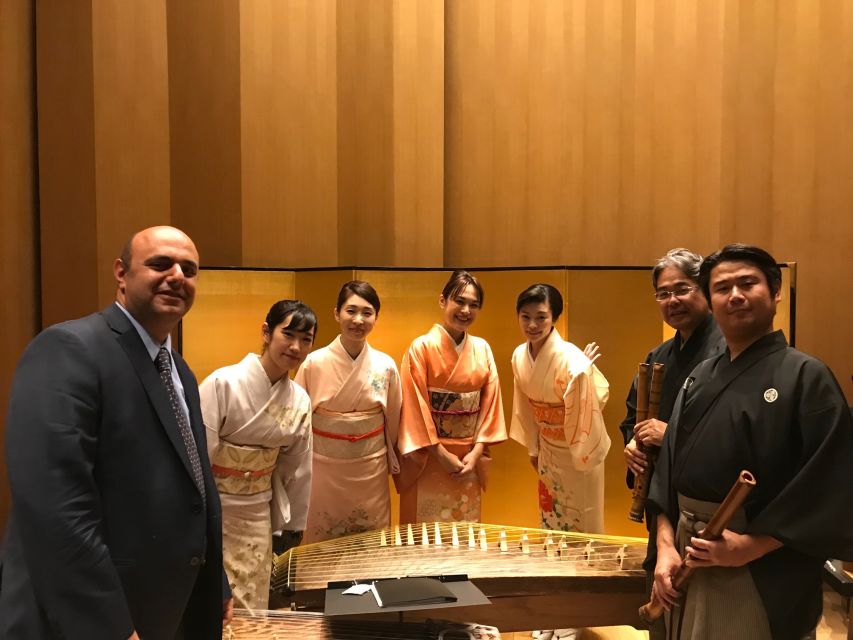
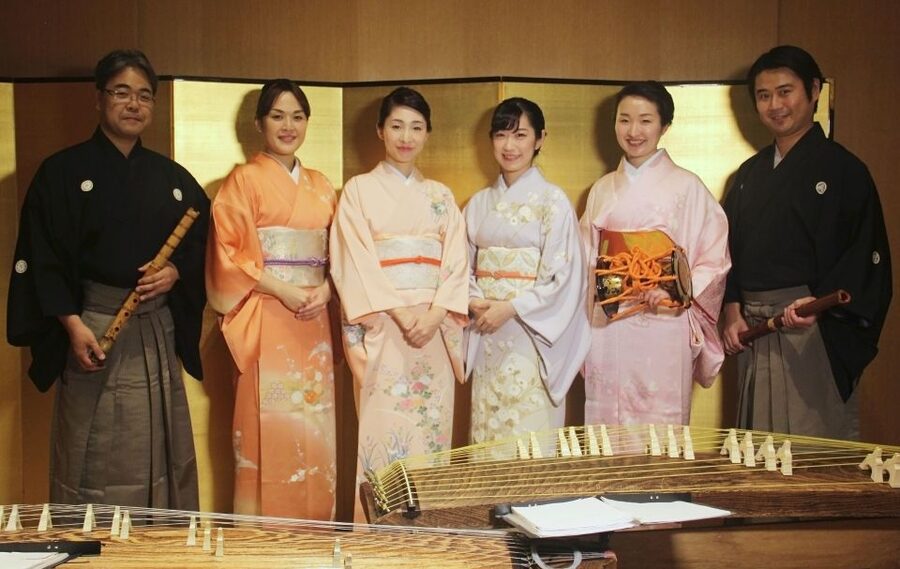
After the performance, you can take photos next to the musicians. This gives the program a friendly final moment and lets you see the performers and instruments at closer range. It is particularly useful for families, young people, or anyone who wants a personal record of the evening.
The photo opportunity does not turn the show into a meet-and-greet event lasting several hours. It is an added moment after the one-hour program. If this is important to you, keep your camera ready and follow the host’s instructions at the end.
Location near Harajuku
Hall 60 is easy to reach in central Tokyo. From Meiji-Jingumae Station, use Exit 7, then walk about one minute. From JR Harajuku Station, the Omotesando Exit is roughly a five-minute walk.
That location fits well into a day around Harajuku and Omotesando. You can place the concert before or after time in the area, though the exact schedule depends on the available starting times. Check the time when booking rather than assuming there is only one daily performance.
The meeting point is specific, so look for Hall 60 rather than simply heading toward Harajuku and expecting to find a theater by chance. The short walk from both stations makes this one of the easier cultural activities to add to a Tokyo itinerary.
No hotel pickup or drop-off is included. That is not a major drawback here because the venue is close to rail stations, but you need to make your own way there. Food, drinks, and merchandise are also separate.
Is $38 a fair price?
At $38 per person, the cost is reasonable if you want more than background music or a quick stage performance. Your ticket includes entry, a reserved seat, and a complete one-hour concert program.
The value comes from the combination of live music and explanation. You are not paying only for a seat. You receive an introduction to several traditional instruments, a bilingual host, a mix of old and new music, and the chance to take photos with the musicians afterward.
The price is less attractive if you want a long concert. One hour passes quickly, and the show is designed as an accessible introduction. Someone seeking a full-length formal recital may prefer a larger performance with a longer program.
For most first-time visitors, though, the short length is useful. Tokyo days can be tiring, and a one-hour activity is easy to fit between neighborhoods, meals, and evening plans. It gives you a focused cultural experience without taking half a day.
Who will enjoy this most?
I would recommend the show to you if you have an interest in Japanese culture but do not know much about traditional music. The explanations give you enough footing to listen actively rather than simply admire the costumes and instruments.
It also suits:
- Couples looking for an evening activity with a cultural focus
- Families with teenagers who enjoy live music and photography
- People curious about Japanese instruments but hesitant about a formal concert
- Music fans who want to compare Japanese sounds with a familiar Western melody
- Visitors with limited time who want a one-hour program near Harajuku
- Japanese residents or international visitors who can follow English and Japanese presentation
You may want to choose something else if you dislike explanatory sections between pieces, want a large-scale stage show, or prefer not to use a compact venue. The setting is intentionally intimate, and the program mixes education with performance.
The show is wheelchair accessible, but the provided information does not give further details about seating arrangements or restroom access. If you need a particular accommodation, confirm it when booking.
Booking and cancellation details
You can cancel up to 24 hours before the activity for a full refund. A reserve-now, pay-later option is available, which can help if your Tokyo schedule is still changing.
The activity lasts one hour, but starting times vary. Check availability for the date you want. Skip-the-ticket-line entry is included, and an English or Japanese host or greeter is available.
Because seating is numbered and the audience is small, I would not leave this until the last minute if the show is a priority. The compact format is part of its appeal, but it also limits capacity.
Should you book the Zakuro Show?
Book it if you want a clear, close-up introduction to Japanese traditional music rather than a long formal concert. The combination of koto, shamisen, shakuhachi, and taiko gives you plenty of variety, while the host’s English explanations make the program easy to follow.
The strongest reasons to go are the close seating, the talented musicians, the thoughtful mix of historical and modern music, and the unusual permission to take photos and videos. The Western cover adds a playful bridge between familiar and unfamiliar sounds.
Skip it only if you need a full evening of music or dislike learning segments during a performance. For everyone else, $38 buys a compact, well-focused cultural experience in a convenient Harajuku location. It is a practical way to hear Japanese instruments played live and leave with a better sense of what makes each one distinctive.
FAQ
Where does the Japanese Traditional Music Show take place?
The show takes place at Hall 60 in Tokyo. Meiji-Jingumae Station Exit 7 is about a one-minute walk away, and JR Harajuku Station’s Omotesando Exit is about five minutes away.
How long is the show?
The concert program lasts one hour.
How much does the experience cost?
The listed price is $38 per person.
Which instruments are performed?
The program features the koto, shamisen, shakuhachi flute, and taiko drums.
Is the show available in English?
Yes. The experience operates in English and Japanese, with a host or greeter available in both languages.
Can I take photos or videos during the performance?
Yes. Photos and videos are allowed during the show. You can also take photos with the musicians afterward.
Is a reserved seat included?
Yes. Your ticket includes a reserved seat and entry to the venue.
Is the venue wheelchair accessible?
Yes, the activity is listed as wheelchair accessible.
Can I cancel for a refund?
Yes. You can cancel up to 24 hours in advance for a full refund. A reserve-now, pay-later option is also available.
More Shows & Entertainment in Tokyo
More Shows & Performances in Tokyo
More tours in Tokyo we've reviewed





Show, compared.
 ★ 4.0Mt Fuji & Hakone Cruise, Drum Show Bullet Train 1 Day from TokyoFrom $149
 ★ 4.8Tokyo: Sumo Show Experience with Chicken Hot Pot and a PhotoFrom $1032 hours
 ★ 4.8Tokyo: Sumo Show and Dining ExperienceFrom $7990 minutes - 2 hours
 ★ 5.0the SUMO showFrom $89
 ★ 4.5Tokyo: Samurai Restaurant Show Ticket with 2 DrinksFrom $551h 30m
 ★ 4.0Mt Fuji & Hakone Cruise, Drum Show Bus 1 Day from TokyoFrom $122