Reviewed · SHINJUKU TOURS
Japanese Home Styled Cooking Class in or around Shinjuku, Tokyo
The best thing about this class is its focus on food Japanese families actually cook, not just restaurant showpieces. In about two and a half hours, you prepare 3 to 4 dishes with supplied ingredients and tools, then sit down to eat what you made. Chieko-san, Lulu, Erica, and their helpers create a friendly, hands-on lesson rather than a cooking demonstration.
In This Article
- Key points at a glance
- Why ordinary Japanese home cooking makes a better lesson
- Finding the class near Yoyogi and Shinjuku
- Choosing among the four menus
- What happens during the 2.5-hour class
- The teaching style: practical, warm, and interactive
- What you take home besides a full stomach
- Is $89.99 a fair price?
- Who should book this experience
- Timing, cancellation, and small practical details
- Should you book the Shinjuku-area cooking class?
- FAQ
- Where does the cooking class meet?
- Is the class in Shinjuku?
- How long does the experience last?
- How many dishes will I cook?
- Can I choose the menu?
- Are cooking tools and ingredients included?
- Is transportation included?
- What is the maximum group size?
- Can the class accommodate food allergies?
- What is the cancellation policy?
I like the practical recipes, which are meant to be repeated at home, and the cultural background that explains why the dishes matter. I also like the small maximum of 12 people, plus the recipe sheets that turn a pleasant afternoon into a useful souvenir. The main consideration is menu choice: you can request one of four menus only when your group is the sole booking that day. If another group joins, your first choice may not be available.
Key points at a glance
- Home cooking, not restaurant theater: Prepare familiar Japanese dishes that are realistic to make in your own kitchen.
- Three to four dishes in 2.5 hours: The schedule includes cooking time and a shared meal at the end.
- Four menu options: You can choose a menu in advance if your group is the only one attending that session.
- Friendly teaching team: Chieko-san speaks English well, while Lulu, Erica, and additional helpers may assist.
- Useful take-home material: Recipe sheets help you recreate the meal after returning home.
- Small-group setting: The class accepts a maximum of 12 people and includes ingredients, tools, fees, and taxes.
Why ordinary Japanese home cooking makes a better lesson
Tokyo offers plenty of food tours, but a cooking class gives you something a restaurant meal cannot: a way to repeat part of the trip at home. This experience keeps its sights set on basic, familiar Japanese cooking. That makes it especially useful if you want more than sushi photos and a quick introduction to Japanese food.
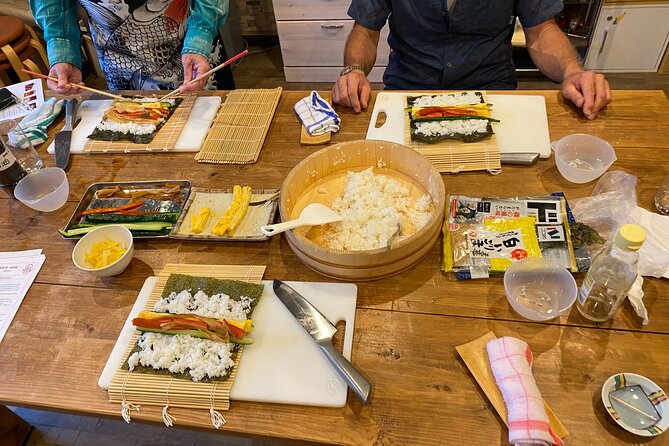
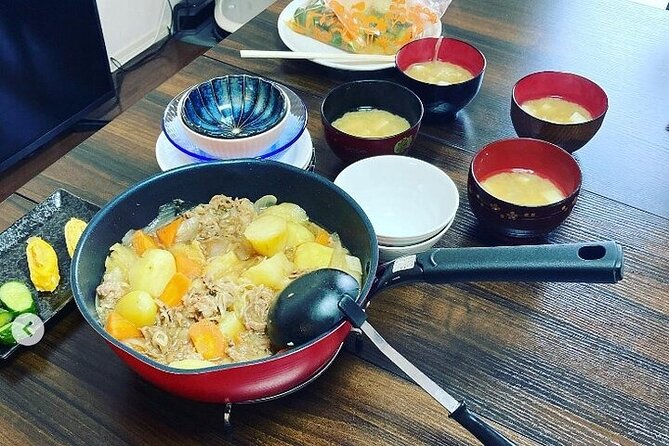
The dishes change by menu, but the class covers 3 to 4 well-known foods from Japan. One session included sushi and a green bean salad, showing the range of the lesson. You should expect accessible recipes rather than advanced chef training or elaborate plating.
That distinction matters. A spectacular dish can be fun to watch, yet difficult to reproduce in a normal kitchen. Here, the aim is to show you methods and ingredients that feel manageable once you get home. The recipe sheets reinforce that goal.
The class also connects food with culture and memory. You learn not only what to do with the ingredients, but also some of the background behind Japanese cuisine. That makes each dish easier to remember, especially when you cook it again for family or friends.
A few more Tokyo tours and experiences worth a look
Finding the class near Yoyogi and Shinjuku
The meeting point is 2-chōme-5-1 Yoyogi, Shibuya, Tokyo 151-0053, Japan. The experience is described as being in or around Shinjuku, but the stated address is in Yoyogi, close to the Shinjuku area. Check your route carefully before leaving your hotel, since Tokyo addresses can look close on a map and still take time to reach.
The location is near public transportation, which is important for a short activity in central Tokyo. You do not need to arrange private transportation, and none is included. The class begins and ends at the same meeting point, so you can plan another activity afterward without arranging a separate pickup.
I would allow extra time to find the exact building. The supplied information gives the street address, but not a detailed landmark or entrance description. A mobile ticket is provided, and confirmation arrives when you book, so keep both available as you make your way there.
Choosing among the four menus
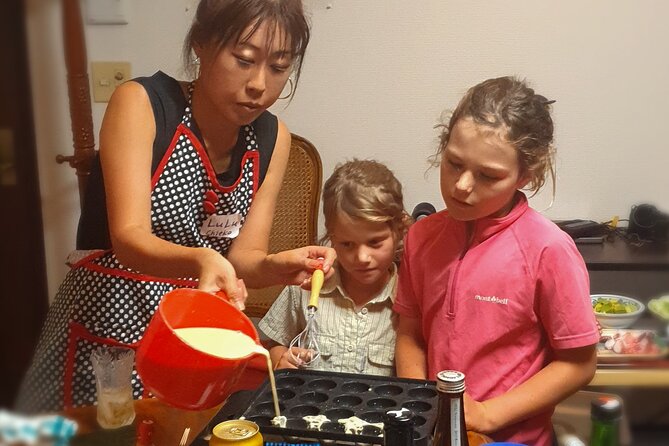
At booking, you can select one of four menu options. The host prepares the ingredients ahead of time, which leaves the class free for cooking and conversation rather than shopping or long preparation work.
There is an important condition. Your selected menu is available only if you or your group are the sole participants that day. If another group attends the same class, you may not receive the menu you requested. This is not a deal breaker, but it is worth knowing before you book, particularly if one dish is the main reason you want to attend.
All four choices are described as popular, well-known Japanese foods. The information does not give a full menu list, so do not book expecting a specific dish unless the provider confirms it in advance. You can send questions when making the reservation.
This flexible arrangement may actually help the class run well. The teacher can prepare ingredients properly and accommodate the group already scheduled. Still, if you have a strong preference, contact the provider before committing rather than assuming your first selection is guaranteed.
What happens during the 2.5-hour class
The class lasts about two hours and thirty minutes. The first part is hands-on preparation, with cooking tools and ingredients supplied for you. You should be ready to participate rather than simply watch a teacher work.
The group prepares 3 to 4 dishes, so the pace should feel active without turning into a rushed cooking contest. The number of dishes also gives you a useful comparison of Japanese techniques and flavors. You might be chopping, assembling, seasoning, or shaping food, depending on the menu selected for the session.
The host explains the dishes and the customs connected with them. This cultural context is one of the stronger reasons to choose a home-style class. You get a better sense of how food fits into daily life, rather than learning only how to copy a finished restaurant dish.
After cooking, everyone enjoys the meal together at the meeting point. This shared meal gives you time to taste the results, ask questions, and talk with the host and other people in the class. The experience is social, but the maximum group size of 12 keeps it from becoming a large demonstration.
The class may also include more than one helper. In one particularly well-organized session, several assistants helped people follow the steps and took photos during the activity. You should not assume a dedicated photographer, but the teaching team may help record the occasion.
The teaching style: practical, warm, and interactive
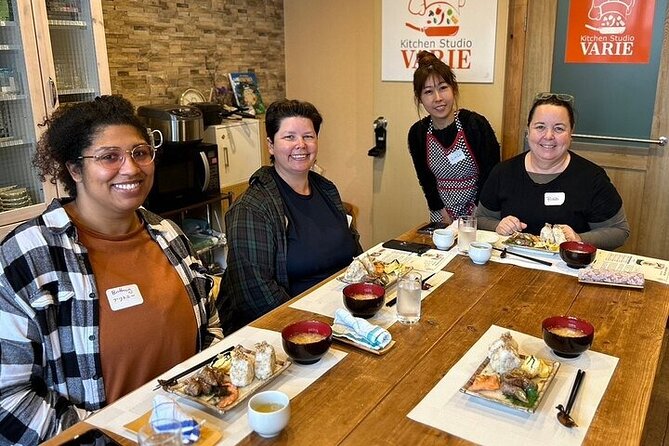
Chieko-san is described as speaking English well and answering questions clearly. That is useful if you want explanations rather than a silent series of gestures. Lulu and Erica are also part of the teaching team, and they bring a warm, welcoming manner to the activity.
The class seems designed for participation at different skill levels. You do not need to arrive as an experienced cook. The focus is on basic Japanese home food, and the recipes are intended to be achievable in your own kitchen later.
I would still treat the lesson as an introduction, not a professional culinary course. The two-and-a-half-hour schedule has to cover several dishes, cultural background, and the meal itself. You will gain useful methods and recipes, but not a full education in Japanese cooking.
The social side may be just as important as the food. You cook alongside other people, share the finished dishes, and have time for conversation. If you prefer a quiet, private lesson, note that the experience can include other groups and accepts up to 12 participants.
Other cooking classes in Tokyo

What you take home besides a full stomach
The recipe sheets are the most practical souvenir. Tokyo is full of edible memories, but many disappear once you leave because you cannot remember the ingredients or sequence. Written recipes give you a reasonable chance to recreate the meal.
The value is greater if you already enjoy cooking at home. You can use the class to learn a few dependable Japanese dishes, then adapt them for your own kitchen. The activity is not just about tasting something once. It gives you a small set of recipes connected to a specific place and time.
The supplied tools and ingredients also make the lesson easier for you. You do not need to bring cooking equipment or shop for unfamiliar items before class. Everything required for the session is included, along with fees and taxes.
The information does not specify whether specialty ingredients are supplied for every possible dietary need, so contact the provider in advance if you have allergies. The host asks you to discuss allergies before the class, allowing the menu and available alternatives to be considered ahead of time.
Is $89.99 a fair price?
At $89.99 per person, this is not the cheapest meal in Tokyo. The price makes more sense when you count the complete activity: about two and a half hours of instruction, ingredients, cooking tools, cultural explanation, and the meal you prepare.
You are also paying for a social experience in a central part of Tokyo. If you only want lunch, you can spend less elsewhere. If you want to learn several dishes and leave with recipes, the price is easier to justify.
Group discounts may improve the value for families or friends booking together. The maximum group size is 12, so the experience is not limited to couples or solo participants. Ask about the discount when comparing the final booking total.
I would compare this class with your own priorities. It is good value if you want a lasting skill, a meal, and conversation. It is weaker value if you have little interest in cooking or if you would rather spend your limited Tokyo time visiting several food stops.
The current score is 4.8 out of 5 from 18 ratings, with 94 percent recommending the experience. That points to a strong overall performance, while the low rating tied to a last-minute cancellation is a useful reminder to read the cancellation terms carefully.
Who should book this experience
This class suits first-time visitors who want an approachable introduction to Japanese cuisine. It also works well for repeat visitors who have already eaten plenty of sushi and ramen and want to understand everyday food more closely.
Families may appreciate the hands-on format, especially if children are interested in preparing food. The available information does not give a minimum age, so confirm that point before booking with young children.
Couples, friends, and solo participants can all fit the format. The class is social and may combine separate bookings, which can be a plus if you enjoy meeting people. It may not suit you if you want a private experience or need a fixed menu.
Food allergies require planning. Tell the host in advance so you can discuss the dishes and possible options. Do not wait until you arrive, since the ingredients are prepared beforehand.
The class is also a good choice for anyone who likes souvenirs with a practical use. A recipe sheet takes up no luggage space and can bring back a Tokyo meal long after the trip ends.
Timing, cancellation, and small practical details
Confirmation is received at the time of booking, and the activity offers a mobile ticket. The class starts and finishes at the stated Yoyogi meeting point, with no private transportation included.
Free cancellation is available up to 24 hours before the local start time for a full refund. Changes or cancellations made less than 24 hours before the start are not accepted for a refund, so avoid booking this on a schedule that may shift.
The provider also states that the activity requires good weather and a minimum number of participants. If poor weather cancels the class, you can receive a different date or a full refund. If the minimum number is not reached, you are offered another date or experience, or a full refund.
One practical warning deserves attention: do not assume a late change will be treated as a simple schedule adjustment. Confirm your plans before the 24-hour deadline, especially if you are coordinating several family members.
Should you book the Shinjuku-area cooking class?
Book it if you want to cook rather than simply eat, and if learning repeatable home recipes sounds more appealing than visiting another restaurant. The combination of 3 to 4 dishes, cultural explanation, a shared meal, and recipe sheets gives the experience lasting value.
I would especially recommend it to home cooks, families, and visitors who want a friendly activity near central Tokyo. Chieko-san, Lulu, Erica, and the wider teaching team add a personal touch, while the small group limit keeps the lesson manageable.
Think twice if you need a guaranteed menu, a private class, or a very flexible cancellation policy. The menu can change when another group joins, and last-minute alterations are not refundable.
For most people who want a useful and social food experience, $89.99 is reasonable. Just confirm the meeting location, disclose allergies early, and treat your menu request as a preference rather than a promise.
FAQ
Where does the cooking class meet?
The stated meeting point is 2-chōme-5-1 Yoyogi, Shibuya, Tokyo 151-0053, Japan.
Is the class in Shinjuku?
The activity takes place in or around Shinjuku, in central Tokyo. The listed meeting address is in Yoyogi, Shibuya.
How long does the experience last?
The class lasts approximately 2 hours and 30 minutes, including cooking and eating the meal you prepare.
How many dishes will I cook?
You will learn to cook 3 to 4 authentic Japanese home-style dishes.
Can I choose the menu?
You can select one of four menu options when booking. If another group attends the same class, your selected menu may not be available.
Are cooking tools and ingredients included?
Yes. Cooking tools and ingredients are included, along with all fees and taxes.
Is transportation included?
No. Private transportation is not included. The class is near public transportation, and it ends at the same meeting point where it begins.
What is the maximum group size?
The experience accepts a maximum of 12 participants.
Can the class accommodate food allergies?
You should inform the provider about allergies in advance. The menu and available options can then be discussed before the class.
What is the cancellation policy?
You can cancel at least 24 hours before the local start time for a full refund. Cancellations or changes made less than 24 hours before the start are not refunded or accepted. If the provider cancels because of poor weather or an insufficient number of participants, you are offered another date or experience, or a full refund.
More Cooking Classes in Tokyo
More Cooking Classes in Tokyo
More Shinjuku Tours in Tokyo
More tours in Tokyo we've reviewed












Shinjuku Tours, compared.
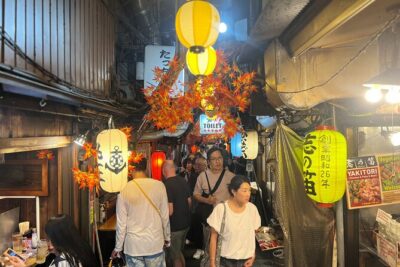 ★ 5.0Tokyo: Shinjuku Food Tour (13 Dishes at 4 Local Eateries)From $86
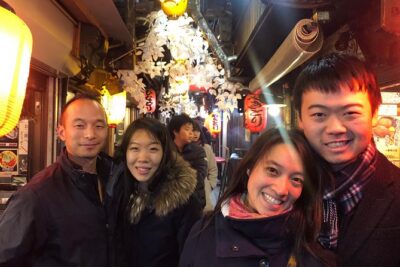 ★ 5.0Tokyo Bar Hopping Tour in Shinjuku (All-You-Can-Drink + Dinner)From $106
 ★ 4.9Tokyo: Shinjuku Local Bar and Izakaya Guided Walking TourFrom $343 hours
 ★ 4.9Tokyo: Shinjuku Food Tour (13 Dishes and 4 Eateries)From $97
 ★ 5.0Tokyo Night Foodie Tour in Shinjuku – Seasonal Sushi, Wagyu BeefFrom $111
 ★ 5.0Tokyo: Shinjuku Local Bar & Izakaya Crawl TourFrom $39