Reviewed · DINNER EXPERIENCES
Tsugaru shamisen performance over traditional dinner
Asakusa’s famous temple district changes character after sunset. This four-hour experience takes you from the rooftop view at the Asakusa Culture Tourist Information Center through Kaminarimon, Nakamise, and Senso-ji, then into a small restaurant for a 40-minute Tsugaru-shamisen concert and traditional dinner.
In This Article
- Key points to know before booking
- Why this Asakusa evening works
- Starting above Kaminarimon at 5:30 pm
- Kaminarimon and the approach to Senso-ji
- Hozomon and Tokyo’s oldest temple
- Walking roughly a mile to dinner
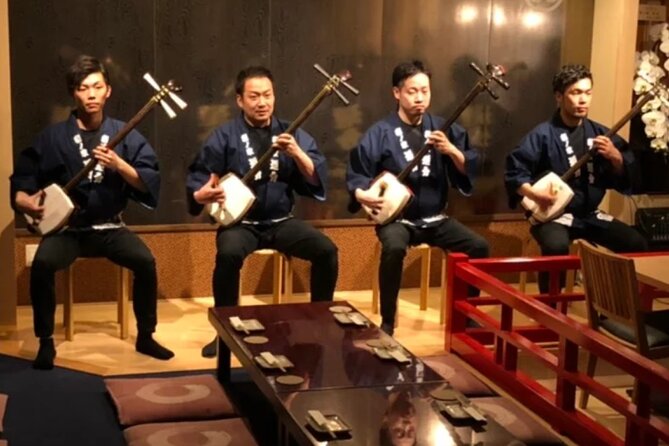
- A close-up Tsugaru-shamisen performance
- What dinner includes, and what it does not
- Is $218.91 a fair price?
- Practical details that affect your evening
- Who should book this Asakusa experience?
- Should you book it?
- FAQ
- Where does the tour begin?
- Where does the tour end?
- How long does the experience last?
- How large is the tour group?
- Is dinner included?
- How long is the music performance?
- Is hotel pickup included?
I like two things here. First, the walking tour gives the evening some context instead of dropping you straight into a performance. Second, the small group, capped at eight people, makes it easier to meet the musicians after the show and ask questions. The main consideration is price: at $218.91 per person, this is a substantial evening out, especially if you mainly want to see the temple.
Key points to know before booking
- A compact Asakusa introduction: You visit the Culture Tourist Information Center, Kaminarimon, Nakamise, Hozomon, and Senso-ji in one short walk.
- A rare live music setting: The concert features award-winning performers playing Tsugaru shamisen and other traditional Japanese instruments.
- Dinner is part of the plan: You receive a Japanese meal and one welcome drink, with extra drinks charged separately.
- The restaurant is intentionally small: The performance takes place close to the diners, creating an intimate setting rather than a large stage show.
- Plan for about a mile of walking: One detailed account puts the walk from the tourist center to the restaurant at roughly a mile.
- A small evening group: The maximum is eight people, and the tour begins at 5:30 pm at the Asakusa Culture Tourist Information Center.
Why this Asakusa evening works
Many Tokyo tours rush through Asakusa in daylight, when the temple approaches can feel crowded and hurried. This outing gives you a more measured route, then shifts from famous sights to a cultural experience that is harder to arrange alone.
The order makes sense. You first get a rooftop view and a brief orientation, then walk toward Tokyo’s oldest temple before sitting down for music and food. I like that progression because the concert does not feel detached from the neighborhood. You have already seen the gates, street, and temple complex that form the setting for old Asakusa.
The tour also combines three separate tasks: sightseeing, making a dinner reservation, and finding a traditional music performance. If you tried to arrange those independently, you would need to judge the restaurant, locate the venue, and work out the timing yourself. Here, the guide handles the transition.
Still, this is not a low-cost temple walk with a free add-on. The fee includes dinner, a welcome drink, the guided sightseeing, and the concert, but additional drinks are extra. I would compare the total against the cost of a temple visit plus a separate dinner before booking.
A few more Tokyo tours and experiences worth a look

Starting above Kaminarimon at 5:30 pm
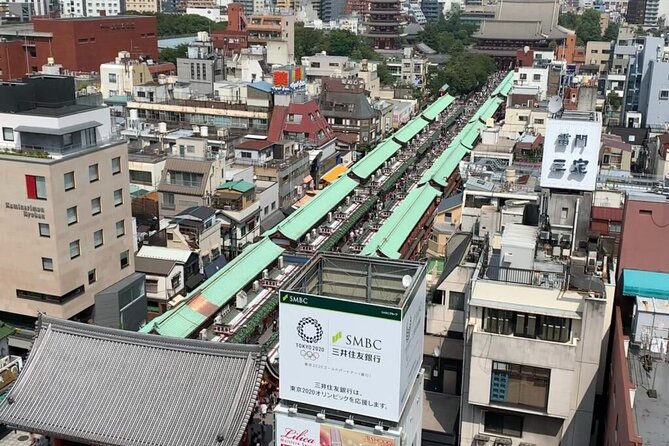
You meet at the Asakusa Culture Tourist Information Center, near Kaminarimon, at 5:30 pm. The building itself is one of Asakusa’s newer sightseeing stops, and the group heads to its open terrace observation deck.
The terrace gives you a useful first look at the district. Instead of beginning at street level with no sense of direction, you can see the area from above before walking through it. The stop lasts about 15 minutes, so think of it as an orientation and photo opportunity, not a long visit.
This meeting point is practical because it sits close to major Asakusa sights and public transportation. You should arrive with enough time to locate the building and check in calmly. Hotel pickup and drop-off are not included, so you are responsible for reaching the meeting point and making your own way home from the restaurant.
The experience is conducted in a small group of no more than eight people. That matters at the start, since a guide can usually keep the group together without the stretched-out feeling of a large coach excursion.
Kaminarimon and the approach to Senso-ji
From the information center, the route takes you to Kaminarimon, or Thunder Gate. Its enormous red lantern is one of Tokyo’s most recognizable sights, but the gate is more than a photo stop. It marks the entrance to the Buddhist temple and Shinto shrine area, and it sets up the contrast between ordinary shopping streets and sacred buildings.
The stop here is brief, about five minutes. You will not get a long independent exploration period at each location. Instead, the guide links the sights together and explains how they fit into Asakusa.
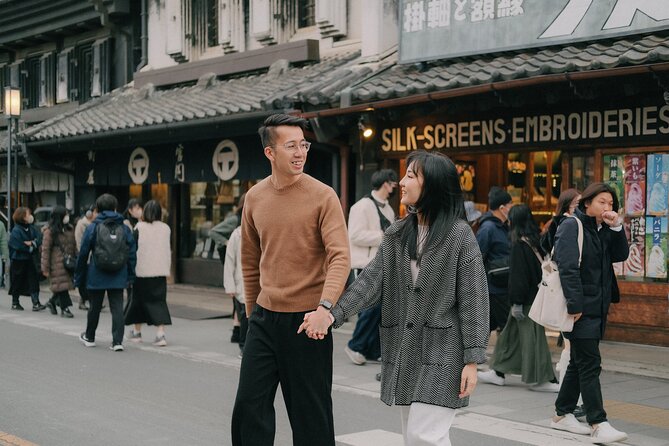
Next comes Nakamise Shopping Street, the direct approach to Senso-ji. The street is lined with shops and has a friendly, commercial feel that may surprise you if you expect a quiet religious precinct. This is one of the useful details a guide can point out: Japanese temple approaches often serve both religious and everyday purposes.
Again, the listed stop is about five minutes. That is enough for a quick explanation and a look down the street, but not enough for serious shopping. If you want souvenirs from Nakamise, you may need to return on your own another time.
Hozomon and Tokyo’s oldest temple
Hozomon is the inner of the two large gates leading toward Senso-ji. Its second story holds Buddhist treasures, and the gate gives you a stronger sense of entering the main temple grounds.
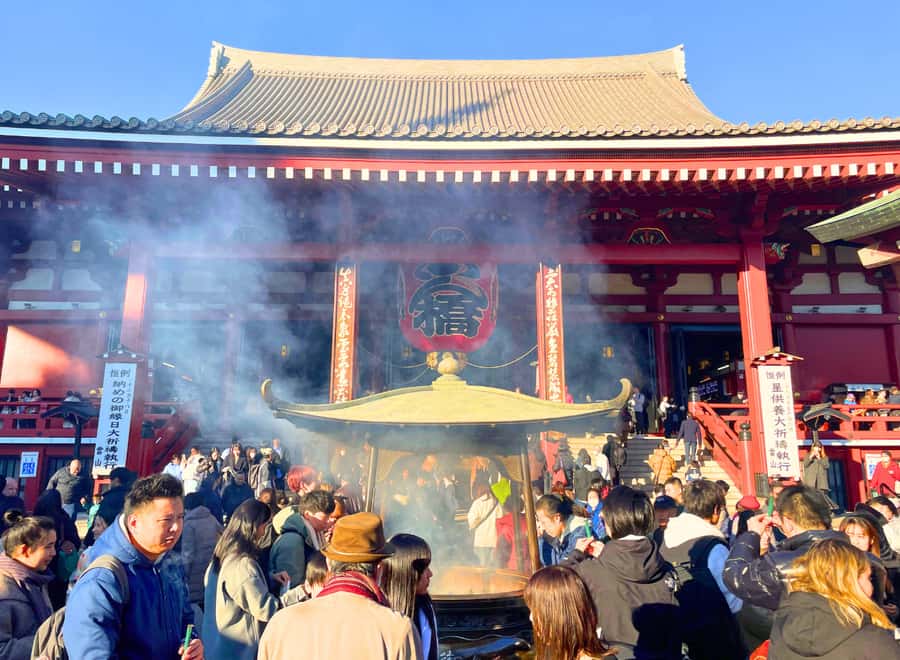
The group then reaches Senso-ji, Tokyo’s oldest temple and one of the city’s most important religious sites. A five-story pagoda stands nearby, associated with Buddha’s ashes presented by Sri Lanka as a gesture of goodwill between Buddhist communities.
The stop at Senso-ji is also listed at about five minutes, which is the clearest limitation of the sightseeing portion. You will see the key buildings and hear the basic story, but this is not a detailed temple study. If Senso-ji is your main reason for coming to Asakusa, schedule extra time before the tour or return on another day.
For an evening built around music and dinner, though, the short temple visits are reasonable. The guide gives you a framework without allowing the first half to consume the whole night. Guides named in the available tour details include Akiko and Yoko-san, both associated with clear explanations of Asakusa’s history and development.
Walking roughly a mile to dinner
The walk from the tourist information center to the restaurant is about a mile, give or take. That is not a difficult distance for most people, but you should treat this as a walking tour, not a vehicle-based sightseeing excursion.
Wear comfortable shoes. The route includes several stops close together, and the walk is part of the point: you move through Asakusa rather than viewing it through a window. If you have mobility concerns, ask the provider before booking, since the supplied details say most people can participate but do not provide a detailed accessibility description.
The evening timing is another advantage. You see the district late in the day, when the experience differs from a morning temple visit. The exact crowd level can change, and the tour does not promise an empty Asakusa, but a small group and a later start help keep the outing from feeling like a standard daytime circuit.
The restaurant address is in Asakusa at 5-chome-37-7. The tour ends there after dinner and music, rather than returning you to the starting point. You should factor that into your evening plans.
A few more Tokyo tours and experiences worth a look



A close-up Tsugaru-shamisen performance
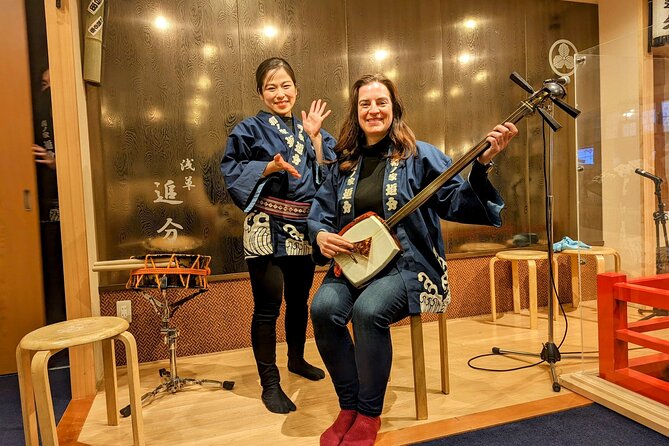
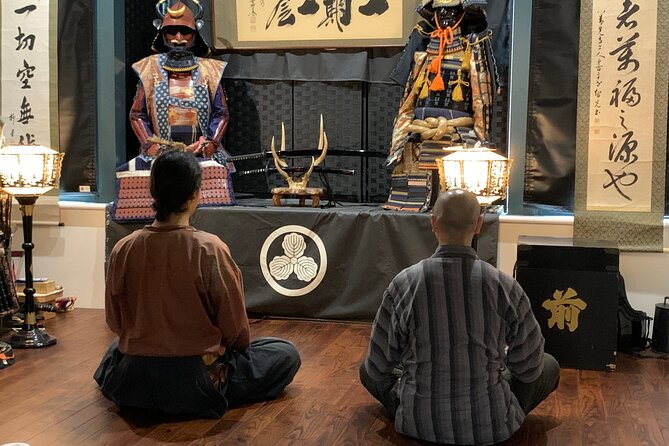
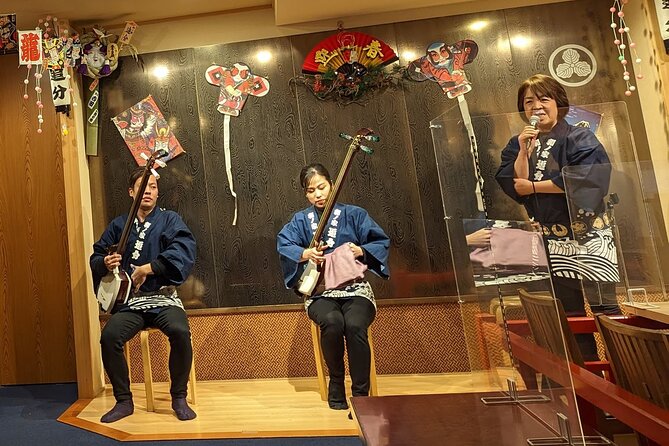
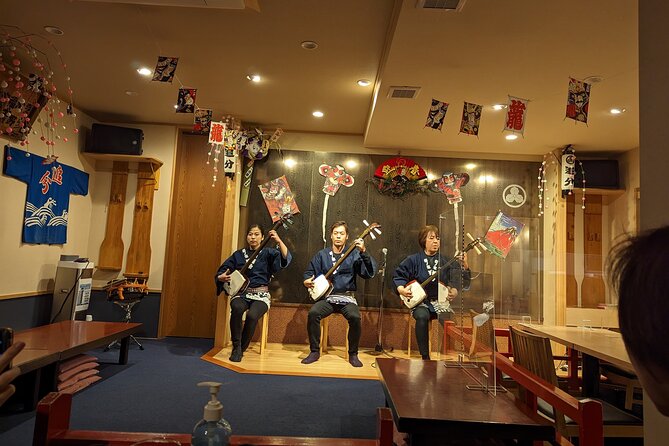
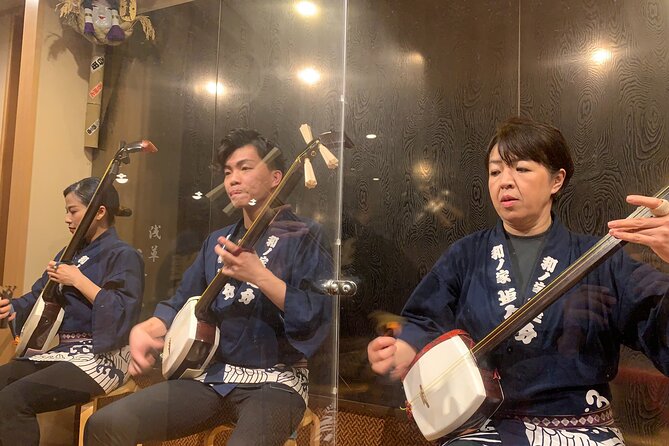
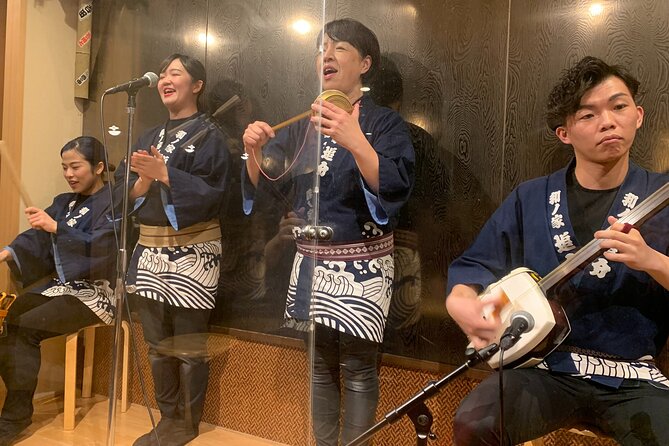
The musical centerpiece lasts 40 minutes. The performers play Tsugaru shamisen, a traditional Japanese three-stringed instrument, along with other traditional instruments.
Tsugaru shamisen is known for its forceful sound and expressive playing. In a small restaurant, you hear the instrument at close range rather than from the back of a theater. The setting also makes it easier to notice the musicians’ hands, rhythm, and interaction with one another.
The performers are described as award-winning, but this is still a restaurant performance rather than a formal concert hall production. That distinction is important. You are paying for the connection between food, place, and live music, not for a long theatrical program with elaborate staging.
The room has limited seating, and the performance is presented close to the diners. I see that as one of the strongest reasons to choose this experience. You are not simply watching a show and leaving. You remain in the room for dinner, then have the chance to meet the musicians afterward.
If you prefer quiet meals, note that the music is a central part of the evening. The restaurant is small, and the instruments can be lively and powerful. If you want an introduction to Japanese music with a social setting, that energy is a plus.
What dinner includes, and what it does not
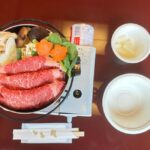
Dinner is included, along with one welcome drink. The meal features traditional Japanese food and a variety of Japanese staples. Vegetarian arrangements have been handled successfully, but you should provide dietary information when booking rather than waiting until the evening.
The meal is not presented as a fine-dining tasting menu in the details provided. Think of it as a traditional Japanese restaurant meal paired with live entertainment. That is a good match for the tour’s purpose: you get to sample familiar elements of Japanese dining while learning about a musical tradition.
Extra drinks are not included. You can order them separately, so the final cost may rise if you want beer, sake, wine, or soft drinks beyond the welcome beverage. The tour price covers the basic evening, but not every possible restaurant purchase.
Dinner also gives you time to ask questions and meet the musicians. That personal contact is harder to get at a large public performance. If you are curious about the instrument or the performers’ work, this is the moment to speak up.
Is $218.91 a fair price?
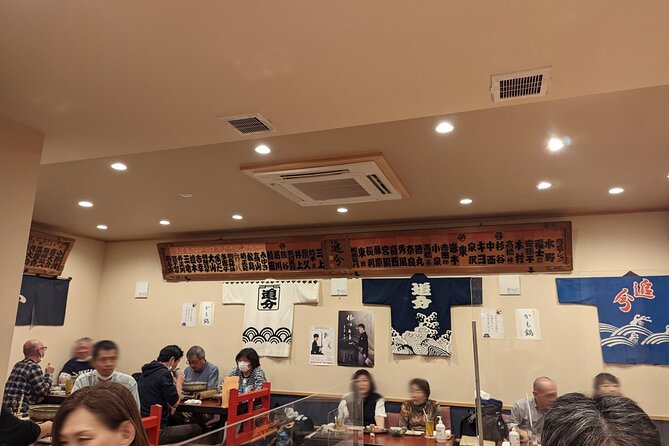
At $218.91 per person, this experience is best judged as a full evening package, not as a four-hour walking tour. You are paying for a small-group guide, a roughly mile-long Asakusa route, dinner, a welcome drink, and a 40-minute live concert.
The maximum group size of eight improves the value. A guide can give more attention to each person, and the restaurant setting feels less anonymous. The included dinner also removes the need to make a second reservation and coordinate transport between the sights and the show.
The price is less appealing if you already have a strong Asakusa plan and only want to see Senso-ji. The temple itself is free to visit, and the sightseeing stops are short. You are paying mainly for the guided context, music, meal, and access to a small performance.
I would recommend it for a special evening, first-time visitors who want several cultural experiences arranged together, and people who value live music more than shopping time. I would skip it if your budget is tight, you dislike group schedules, or you want a long, detailed visit inside the temple grounds.
Practical details that affect your evening
Confirmation arrives within 48 hours of booking, subject to availability. The tour usually sells about 26 days before the start date, so do not assume you can leave it until the last minute if your dates are fixed.
You receive a mobile ticket, and group discounts may be available. The tour requires a minimum number of participants, so cancellation is possible if that minimum is not reached. Poor weather can also affect the outing, with a different date or a full refund offered in those cases.
You can cancel for a full refund up to 24 hours before the 5:30 pm start time. Changes or cancellations inside that 24-hour window are not accepted for a refund.
The route is near public transportation, but the tour does not include hotel transfers. Since the end point is the restaurant, check your route home before dinner. The experience lasts about four hours, though the precise finish time can depend on the meal and performance schedule.
Who should book this Asakusa experience?
I would choose this tour if you want an evening with a clear beginning, middle, and end. The rooftop view starts the night, the temple walk supplies the setting, and the dinner concert provides the main cultural event.
It suits first-time Tokyo visitors who do not want to spend hours researching restaurants and traditional music venues. It also works well for couples, small groups, and solo visitors who would rather share dinner with a guide and a few other people than arrange an evening alone.
Vegetarians should contact the provider with their needs. A meat-free meal has been arranged before, which is encouraging, but advance notice remains the sensible move.
Families and older participants may find the plan manageable because most people can take part, but the walking distance and short stops should be considered. Anyone wanting extensive temple photography, shopping, or independent time will find the schedule too tightly organized.
Should you book it?
Book this experience if the live Tsugaru-shamisen concert and dinner are your priority, and you want Asakusa’s best-known sights explained along the way. The small group, personal contact with the musicians, and included meal give the evening a clear value beyond a standard temple visit.
Skip it if you only want Senso-ji, need hotel transportation, or are looking for the cheapest way to see Asakusa. At this price, the right buyer is someone who wants a carefully arranged cultural night, not simply a sightseeing walk.
FAQ
Where does the tour begin?
The tour begins at the Asakusa Culture Tourist Information Center at 5:30 pm. The address is in Kaminarimon, Asakusa, Tokyo.
Where does the tour end?
The tour ends at the Japanese restaurant at 5-chome-37-7 Asakusa, where the dinner and live performance take place.
How long does the experience last?
The experience lasts approximately four hours.
How large is the tour group?
The tour has a maximum of eight participants.
Is dinner included?
Yes. Dinner and one welcome drink are included. Additional drinks can be ordered separately but are not included in the tour price.
How long is the music performance?
The live concert lasts 40 minutes and features Tsugaru shamisen and other traditional Japanese instruments.
Is hotel pickup included?
No. Hotel pickup and drop-off are not included. The meeting point and end point are both in Asakusa and are near public transportation.
More Dinner Experiences in Tokyo
More Dining Experiences in Tokyo
More Shows & Performances in Tokyo
More tours in Tokyo we've reviewed












Dinner Experiences, compared.
 ★ 5.0Tokyo Bar Hopping Tour in Shinjuku (All-You-Can-Drink + Dinner)From $106
 ★ 4.8Tokyo: Sumo Show and Dining ExperienceFrom $7990 minutes - 2 hours
 ★ 4.6Sumida River: Japanese Traditional Yakatabune Dinner CruiseFrom $1032h 30m
 ★ 4.7Tokyo: Yakatabune Dinner Cruise with Japanese Show & DrinksFrom $104
 ★ 4.5Tokyo Bay Yakatabune Dinner/Day Cruise with Japan Show and DrinksFrom $65
 ★ 4.7Tokyo Bay: Traditional Japanese Yakatabune Dinner CruiseFrom $1083 hours