Reviewed · PRIVATE
Tokyo: Visit 5 Shrines & Collect Goshuin on Private Tour
Tokyo’s spiritual side is easiest to miss when you race from shopping streets to observation decks. This private tour slows things down with visits to five historic shrines and one Buddhist temple, linking famous places such as Sensoji and Meiji Shrine with the personal ritual of collecting Goshuin, hand-written calligraphy stamps.
In This Article
- Key points to know before booking
- Why a shrine-and-Goshuin tour works in Tokyo
- Starting with Sensoji in Asakusa
- Yasukuni Shrine and the weight of remembrance
- Hie Shrine and its red torii gates
- Passing Harajuku before entering Meiji Shrine
- Zojoji Temple with Tokyo Tower nearby
- Collecting Goshuin without rushing the ritual
- What the private car changes
- How the day feels in practice
- Who will get the most from this tour
- Should you book this private shrine tour?
- FAQ
- How long does the tour last?
- How many sacred sites are included?
- Is this a private tour?
- Is hotel pickup included?
- Are Goshuin stamps included in the price?
- Is a Goshuin book provided?
- Is lunch included?
- Are Tokyo Tower tickets included?
- What languages are available?
I like the private car, hotel pickup, and drop-off, which save you from piecing together several train rides in one long day. I also like the Goshuin focus: for about 500 yen at each shrine or temple, your stamp book becomes a personal record of the trip. The main consideration is pace. Six sacred sites in 6 to 7 hours means each stop is fairly short, and lunch is not included.
Oishi, one of the guides associated with this experience, has helped visitors understand shrine manners, pointed out important sights, and adjusted plans when requested. The tour is a good fit if you want cultural context without giving up comfort, but less so if you prefer spending half a day at one shrine.
Key points to know before booking
- Six sacred stops in one day: Visit Sensoji Temple, Yasukuni Shrine, Hie Shrine, Meiji Shrine, and Zojoji Temple, with five shrines included among the sites.
- Goshuin makes the day personal: Collect hand-written stamps and calligraphy at each stop, usually for about 500 yen per stamp.
- Private transport keeps the route practical: Hotel pickup and drop-off are included in central Tokyo areas, along with a private car.
- Each site offers a different focus: Expect connections to love, prosperity, business success, career progress, remembrance, and personal growth.
- Oishi can add local help: He has assisted with shrine protocols, pointed out landmarks, and accommodated a request to visit Asakusa Shrine.
- Plan for a quick lunch stop: Food is not included, so you will need to pay for lunch separately.
Why a shrine-and-Goshuin tour works in Tokyo
A shrine visit can feel confusing if you do not know what you are looking at. Torii gates mark the approach to a Shinto sacred space, purification comes before prayer, and the final act of worship is not simply a matter of walking up and taking a photo. A local guide can explain those steps as you go, instead of leaving you to copy the person in front of you.
Goshuin adds a useful thread to the day. A Goshuin is a calligraphic record of your visit, normally written into a special book by hand. It is not just a tourist sticker. You present your book, pay the fee, and receive a page marked with the site’s name, date, and sacred seal. The exact process can vary, so having help is useful.
This tour also gives you a broad look at Tokyo. You move from old Asakusa to the Imperial-era setting of Yasukuni, the compact torii path at Hie, the wooded Meiji Shrine grounds, and the Buddhist grounds of Zojoji near Tokyo Tower. The stops are not interchangeable. That variety is the real point.
Other private tours in Tokyo


Starting with Sensoji in Asakusa
Sensoji is the grand opening act. Located in Asakusa, it is Tokyo’s oldest and most visited temple, with the famous approach leading through the Kaminarimon area and toward the temple grounds. The 45-minute visit gives you enough time to see the main approach, take in the architecture, learn basic temple customs, and begin your Goshuin collection.
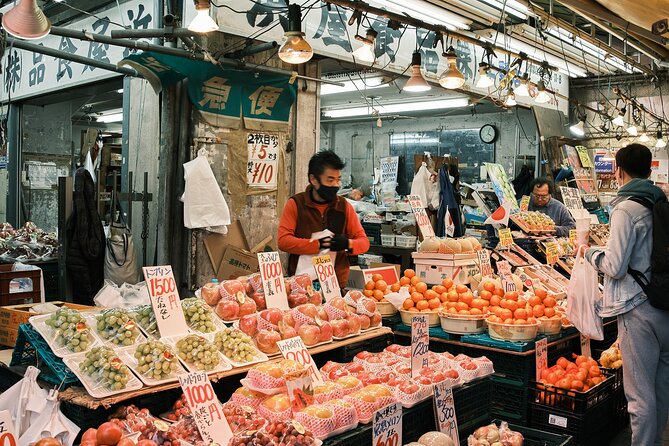
Asakusa is also the most openly commercial stop. Shops line the route toward the temple, selling snacks, souvenirs, and traditional goods. That can feel crowded and touristy, especially compared with the quieter sites later in the day, but it also gives you an immediate sense of how worship and everyday city life overlap in Tokyo.
Your guide can explain the difference between a Buddhist temple and a Shinto shrine, a useful distinction because the day includes both. Sensoji is linked with guardian deities and Buddhist practice, while the shrine visits follow Shinto customs. You will get more from the site if you ask the guide to point out the ritual details rather than treating it as a quick photo stop.
The schedule allows 45 minutes here. That is enough for an introduction, though you may want more time if you hope to shop along the approach or explore the surrounding Asakusa district. Since this is a private tour, you can ask about a nearby stop, but any change depends on the day’s route and timing.
Yasukuni Shrine and the weight of remembrance
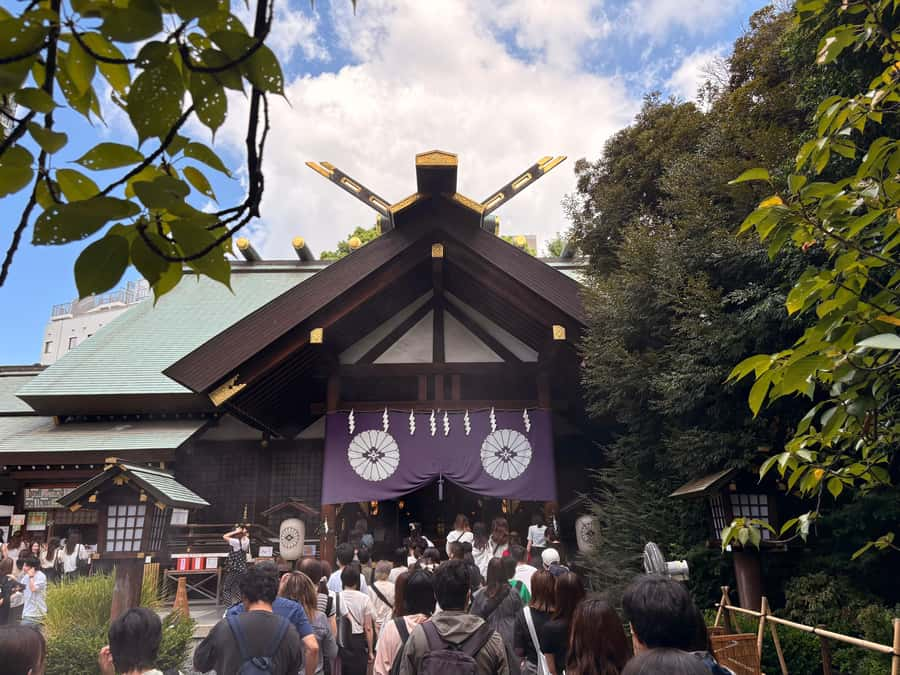
Yasukuni Shrine brings a different mood. The site is especially appealing during cherry blossom season, when its grounds are known for seasonal beauty, but its main importance is remembrance. This is not just another red gate and photo opportunity. Your guide can help explain the site’s role and why it carries a more serious tone than some of Tokyo’s other shrines.
The planned visit lasts about 30 minutes. That is enough to walk through the grounds, see the main shrine area, and collect a Goshuin if available, but it is not a long museum-style visit. If you want detailed background on Japan’s modern history, you should ask your guide what can be covered within the time allowed.
I appreciate the contrast here. A day made only of scenic shrines could become repetitive, while Yasukuni adds a reminder that religious sites can also carry national and political meaning. The experience is better when you approach this stop with respect and allow room for a thoughtful explanation.
Hie Shrine and its red torii gates
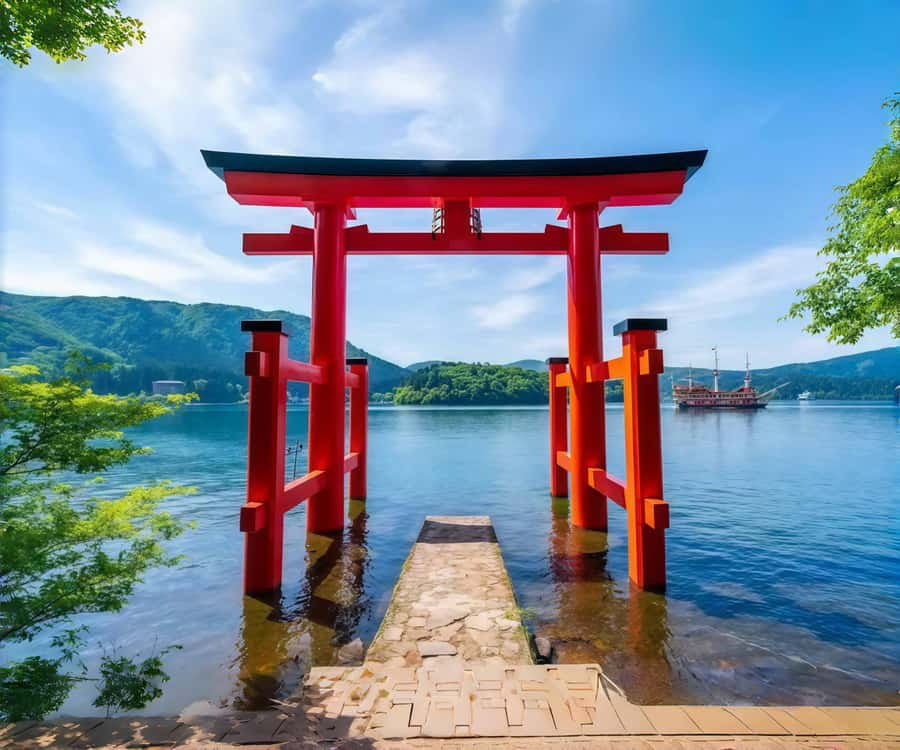
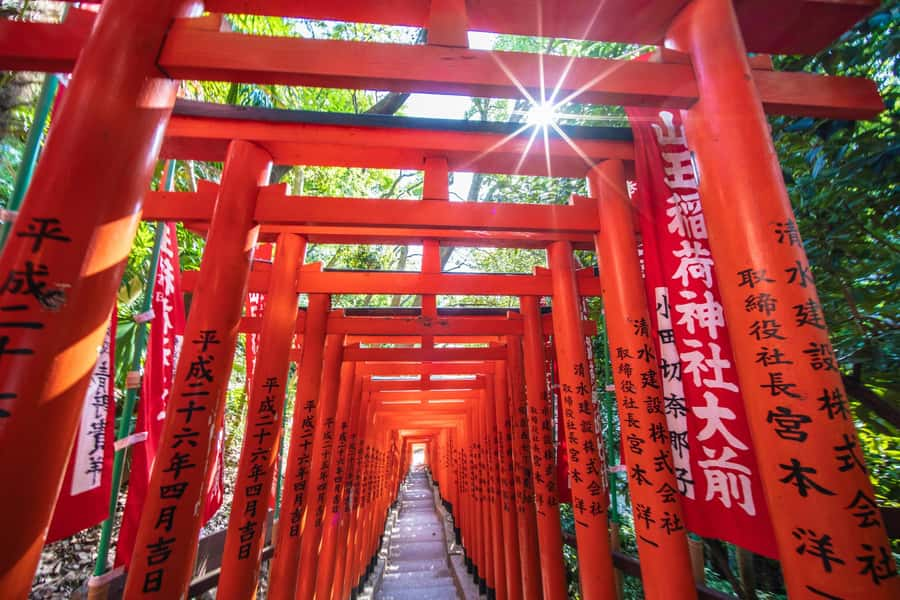
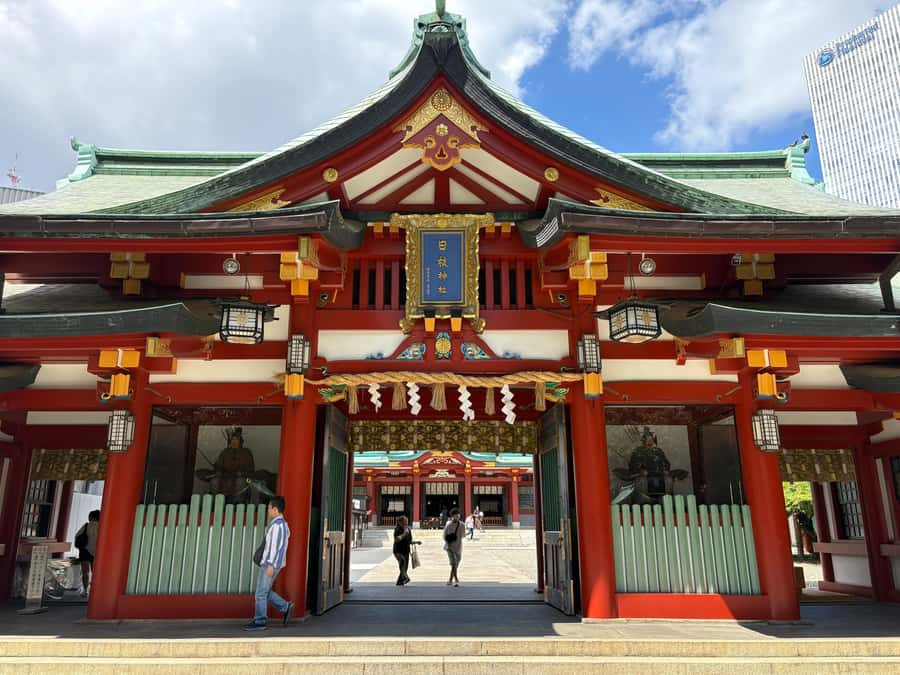
Hie Shrine is one of the most visually distinctive stops. It is known for rows of red torii gates and for blessings connected with love and prosperity. The gates create a memorable passage and give you one of the clearest chances to see how a compact shrine can feel separate from the city around it.
The scheduled visit is 30 minutes. That works well for walking through the torii, observing the shrine grounds, asking about the rituals, and arranging your Goshuin. It is a short visit, so you will not have endless time for quiet wandering, but the site’s focused layout makes the stop efficient.
This is also a good place to ask about the meaning of shrine prayers. The tour description connects Hie with love and prosperity, while the wider day includes business success and career advancement. Those themes make the Goshuin collection more than a checklist. Each page can remind you of a particular wish or reason for visiting.
Passing Harajuku before entering Meiji Shrine
Harajuku is listed as a brief pass-by, not a full shopping stop. You get about five minutes of sightseeing from the vehicle before reaching Meiji Shrine. That distinction matters. Do not book this tour expecting time for Takeshita Street, fashion shopping, or cafés.
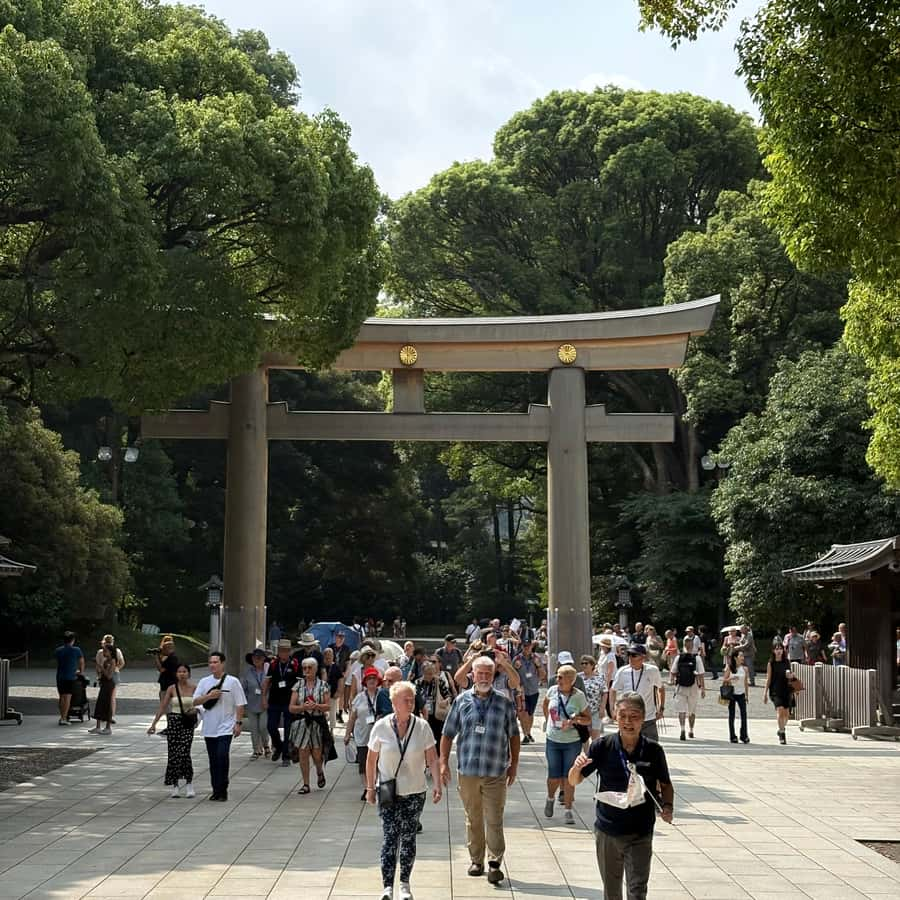
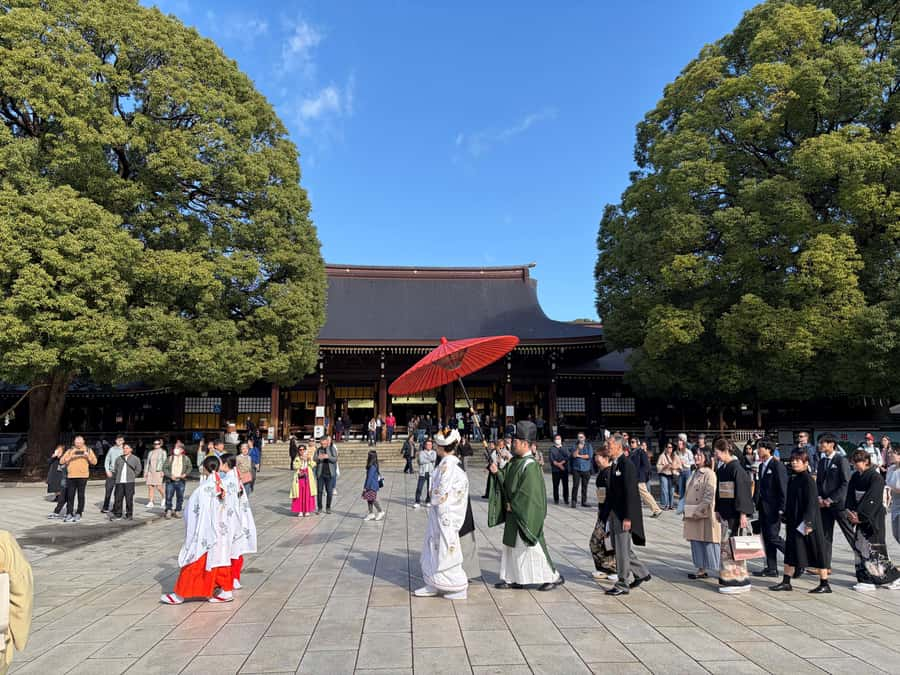
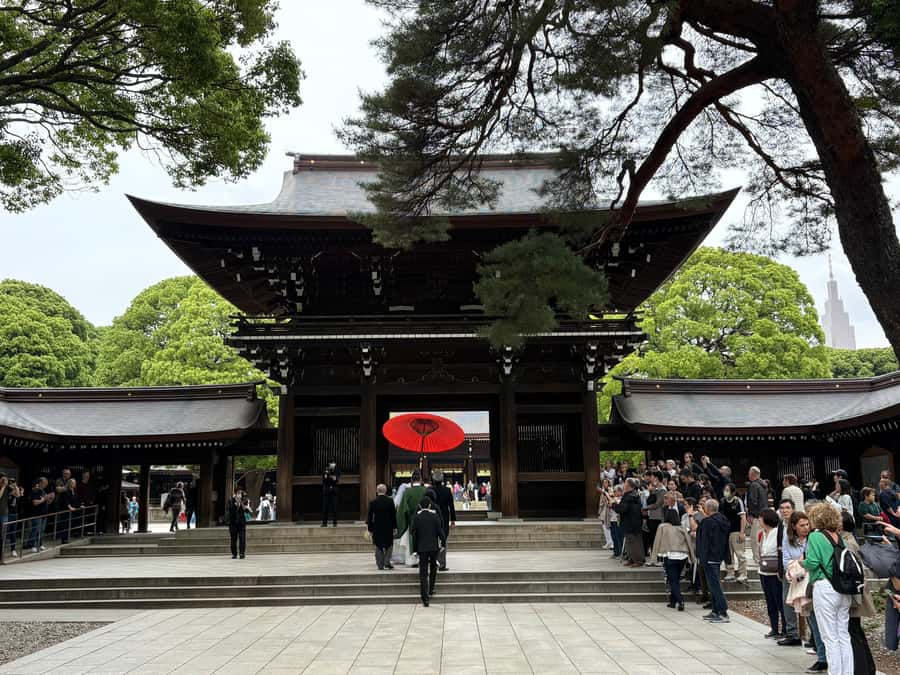
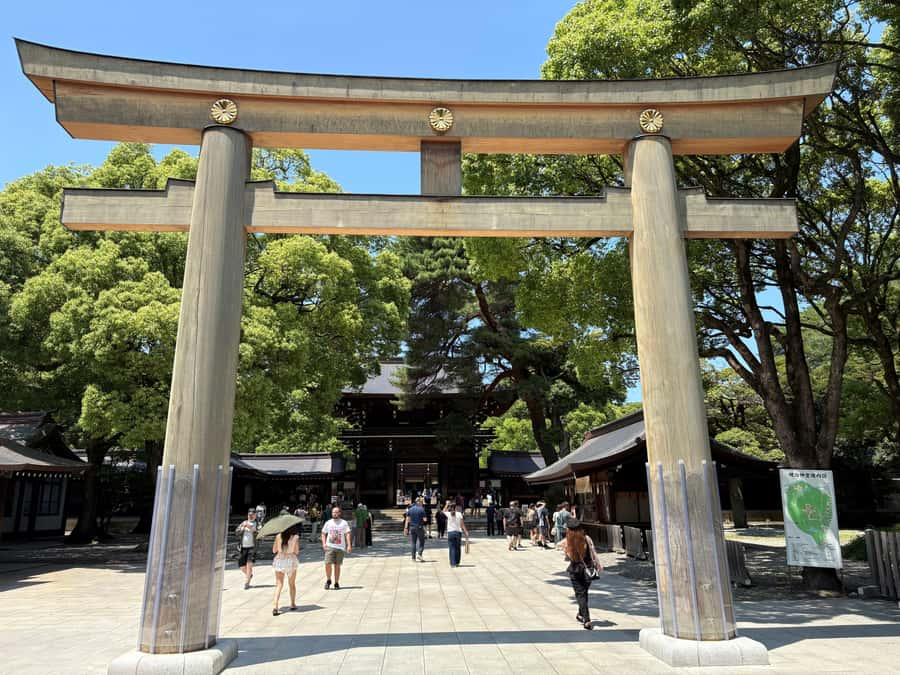
Meiji Shrine is the main forest sanctuary in central Tokyo, dedicated to Emperor Meiji. The planned visit lasts about 45 minutes and includes walking and sightseeing. The change in mood is immediate: after city streets and busy commercial areas, you spend time among trees and broad shrine approaches.
Meiji Shrine is one of the best places on this route to learn how a major Tokyo shrine handles arrival, purification, and prayer. Your guide can point out what to do and when to do it, which is especially helpful if this is your first Shinto visit.
The 45-minute window is sensible for a first look, but the grounds are large enough that you will not see every corner. Comfortable shoes are important. You may spend more time walking here than you expect, even though the stop itself is under an hour.


Zojoji Temple with Tokyo Tower nearby
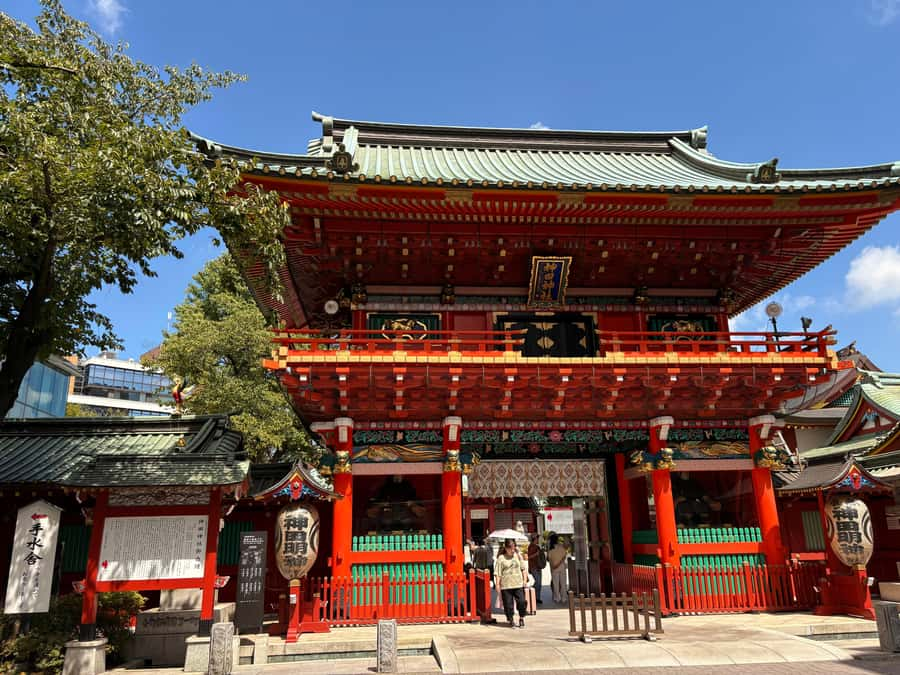
Zojoji Temple closes the sacred-site portion of the tour with a Buddhist setting near Tokyo Tower. Its connection with the Tokugawa shogunate gives it a different historical frame from Meiji Shrine and Hie Shrine. The combination of traditional temple grounds and modern Tokyo Tower nearby also makes this one of the strongest photo stops.
The schedule allows about 30 minutes for sightseeing and photos. Tokyo Tower tickets are not included, so this tour does not automatically take you up the tower. If you want the observation deck, treat it as a separate expense and ask about timing before the day begins. The tour needs to continue to its planned drop-off locations.
Zojoji is a useful final comparison with Sensoji. Both are Buddhist temples, but they sit in very different parts of the city and create different impressions. Sensoji is tied closely to Asakusa’s shopping streets and old downtown energy, while Zojoji offers a more open view toward Tokyo’s modern skyline.
Collecting Goshuin without rushing the ritual
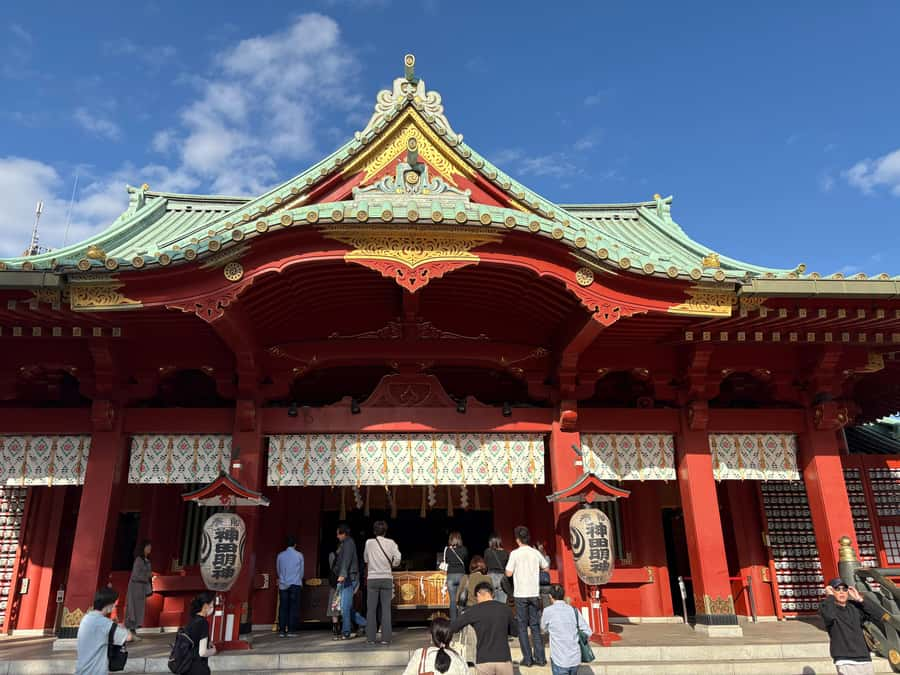
The Goshuin collection is the thread that holds the day together. You can ask for assistance at each shrine and temple, and the guide can help you understand where to go and what to do. The stamps are hand-written, so the finished book feels more personal than a standard souvenir.
The cost is not included in the tour price. The practical figure provided for the stamps is about 500 yen each, so budgeting around 2,500 yen for five shrine stamps is sensible, with extra money available if you also collect one at Zojoji. Fees can be paid separately at each site.
Bring a Goshuincho if you already own one. If you do not, ask the guide or staff about purchasing an appropriate book. The supplied details confirm help with Goshuin collection, but do not specify whether a book is included, so do not assume it is part of the package.
You should also treat the book with care. Goshuin are religious records, not simply amusement-park stamps. Keep your book clean and dry, and avoid asking for a stamp during a busy ritual moment. Your guide can help you judge the right time.
What the private car changes
The private car is one of the strongest practical reasons to choose this experience. The route crosses several Tokyo districts, and moving between Sensoji, Yasukuni, Hie, Meiji Shrine, and Zojoji by public transport would mean repeated station walks and transfers. With hotel pickup and drop-off, you can use the travel time to look out at the city or ask questions.
Pickup and drop-off options include Chiyoda, Chuo, Shibuya, Minato, and Shinjuku. You should be ready in your hotel lobby 15 minutes before the scheduled start. The group is private, with a price of $279 for up to three people, so the per-person value improves when three people share the booking.
For one person, $279 is a substantial day-tour price. For three people, it works out to about $93 per person before Goshuin fees and lunch. That price includes the vehicle, guide, hotel transfers, and help with the central purpose of the day. It does not include food or Tokyo Tower tickets.
The private format also gives you room to speak up. Oishi has accommodated a request to visit Asakusa Shrine, even though it was not part of the original plan. That does not guarantee every requested detour, but it suggests you should discuss priorities early, especially if you care more about a particular shrine than a fixed schedule.
How the day feels in practice
The day lasts 6 to 7 hours, with starting times available according to the date you choose. That length is enough for a broad route, but the tour is not designed for long, unhurried stays. Sensoji and Meiji Shrine receive about 45 minutes each, while Yasukuni, Hie, and Zojoji receive around 30 minutes.
I would wear comfortable shoes and modest, practical clothing. The walking is spread across several sites, but Meiji Shrine in particular can involve a fair amount of walking. Smoking is not allowed during the activity.
Lunch is not included. The schedule does not specify a fixed restaurant or lunch break, although Oishi has taken visitors to a good sushi restaurant when asked or when the timing allowed. Treat that as a possible guide-led suggestion, not a guaranteed meal inclusion. Bring money for lunch and the Goshuin fees.
The guide languages are Japanese and English. One guide named in the experience is Oishi, described as professional, entertaining, and helpful with landmarks and shrine protocols. Since guide assignment can vary, you should confirm your guide and preferred language when booking.
Who will get the most from this tour
I would recommend this experience to a first-time Tokyo visitor who wants cultural structure without managing the city’s transport system. It also suits couples, families, and small groups of up to three who want a private day rather than a large coach outing.
It is particularly good for you if:
- You want to collect several Goshuin in one organized day.
- You are unsure about shrine and temple etiquette.
- You value hotel pickup and private transport.
- You want to compare Shinto shrines with Buddhist temples.
- You like seeing several districts rather than staying in one neighborhood.
- You want blessings associated with love, prosperity, business, or career progress.
I would think twice if your main goal is shopping in Harajuku, spending hours at Sensoji, visiting Tokyo Tower’s observation deck, or studying one site in great historical detail. The route covers a lot, and that means the stops remain introductions.
The experience has received a top rating from the three reviews provided, with special praise for the guide’s professionalism, entertainment, help with shrine customs, and willingness to adjust the route. The stamp book was also singled out as a meaningful keepsake. Those strengths match the design of the tour: it is less about checking off famous buildings and more about giving you a manageable way into Tokyo’s religious customs.
Should you book this private shrine tour?
Book it if you want a comfortable, well-organized introduction to Tokyo’s sacred places and like the idea of taking home a Goshuin book filled with handwritten records. The private car, hotel transfers, and guide support give the day real value, especially when three people share the $279 group price.
Do not book it expecting a slow spiritual retreat. You will visit six sites in one day, with several stops lasting only 30 minutes. For the right traveler, that is an efficient and rewarding overview. Ask for your preferred priorities at the start, bring comfortable shoes, budget for lunch and stamp fees, and treat the Goshuin process with the respect it deserves.
FAQ
How long does the tour last?
The tour lasts 6 to 7 hours. Starting times depend on availability for your chosen date.
How many sacred sites are included?
The route includes five shrines and one Buddhist temple: Sensoji Temple, Yasukuni Shrine, Hie Shrine, Meiji Shrine, and Zojoji Temple. Harajuku is a brief pass-by, not a separate shrine visit.
Is this a private tour?
Yes. It is offered as a private group experience for up to three people.
Is hotel pickup included?
Yes. Hotel pickup and drop-off are included for locations in Chiyoda, Chuo, Shibuya, Minato, and Shinjuku. You should wait in the lobby 15 minutes before pickup.
Are Goshuin stamps included in the price?
The tour includes assistance with collecting Goshuin, but the stamp fees are separate. The provided information states that each stamp costs about 500 yen.
Is a Goshuin book provided?
The experience includes help with Goshuin collection, but the provided details do not state that a Goshuin book is included. Confirm this before departure or plan to ask about purchasing one.
Is lunch included?
No. Lunch is not included in the tour price. A guide may suggest or help arrange a restaurant, but you should budget separately for your meal.
Are Tokyo Tower tickets included?
No. Tokyo Tower tickets are not included. Zojoji Temple is visited near Tokyo Tower, but entry to the tower is a separate expense.
What languages are available?
The tour is offered with a live guide in English or Japanese. One named guide associated with the experience is Oishi.
More Private Tours in Tokyo


More tours in Tokyo we've reviewed

Private, compared.
 ★ 5.0Tokyo 6hr Private Tour with Government-Licensed GuideFrom $155
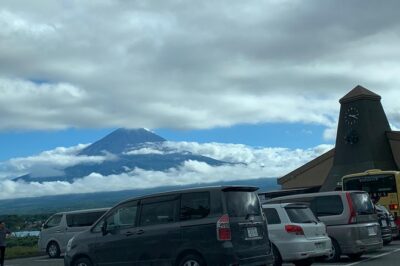 ★ 5.0Private Tour to Mt. Fuji and Hakone (Fully Licenced Operator)From $497
 ★ 5.0Tokyo Customized Private Tour (Must See Places in 1 Day)From $145
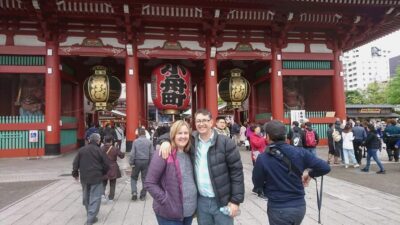 ★ 4.8Tokyo: Private City Highlights Tour with Local GuideFrom $1064 - 8 hours
 ★ 5.0Private Custom Tour: Tokyo in a DayFrom $159
 ★ 5.0Tokyo 4hr Private Tour with Government-Licensed GuideFrom $109