Reviewed · TOKYO
Tokyo: Learn to play traditonal songs on Tsugaru Shamisen
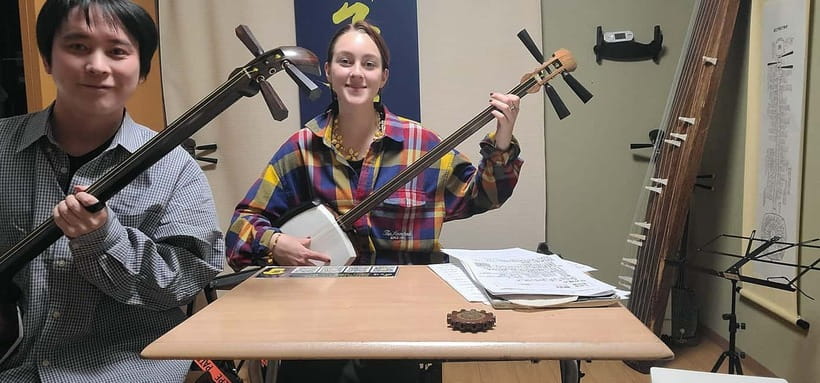
The striking thing about this one-hour lesson is how quickly you move from hearing Tsugaru shamisen to making its sharp, fast sound yourself. Master musician Kouzan Oyama, a two-time Tsugaru Shamisen World Cup champion, teaches in English and uses his own instructional books to help beginners play a song before the hour ends.
In This Article
- Key points
- The first sound of Tsugaru shamisen
- Meeting Kouzan Oyama near Shinjuku
- What happens during the one-hour lesson
- Why the private format matters
- Hearing more than one Japanese string instrument
- Tsugaru style is lively, not gentle background music
- Photos, videos, and a useful souvenir
- Is $59 a fair price?
- Who should book this lesson?
- Should you book the Tsugaru shamisen lesson?
- FAQ
- Where does the shamisen lesson take place?
- How long does the lesson last?
- How much does the lesson cost?
- Is the instruction available in English?
- Can I request a song?
- Is the lesson private?
- Can I cancel for a refund?
I like the private format, which gives you room to ask questions and work at your own pace. I also like the chance to compare several instruments, including the Okinawa sanshin, rather than treating the shamisen as a museum object. The main consideration is time: one hour is enough for a satisfying first lesson, but not enough to master the instrument or explore every technique in depth.
Key points
- Learn from a double world champion: Kouzan Oyama won the Tsugaru Shamisen World Cup in 2018 and 2019.
- Play a song in one hour: Beginners can work on a traditional Japanese folk song, or request a preferred song at the start.
- Hear several Japanese string instruments: The lesson may include demonstrations of different shamisen types and Okinawa sanshin.
- Expect a lively sound: Tsugaru shamisen is fast, forceful, and more energetic than a quiet ceremonial music lesson.
- Bring your camera: The private session includes chances to take photos and videos with the instructor.
- Good value for a focused introduction: At $59 per person, the lesson costs less than many long sightseeing activities while giving you an active cultural skill to take home.
The first sound of Tsugaru shamisen
Shamisen is a three-stringed Japanese instrument often compared with a banjo. Its sound is bright, dry, and direct. The tone can suggest wind, waves, or the force of Japan’s northern coast, and Tsugaru style pushes that character into fast rhythms and energetic playing.
This is not a lesson built around quietly watching an expert perform. You are there to hold the instrument, learn how its sound is made, and try a song yourself. That practical approach makes the session a good choice if you want more than a short cultural demonstration.
Tsugaru shamisen began as music connected with traveling performers and ordinary people in the Tsugaru area of northern Japan. That background helps explain its strong personality. The music feels physical and percussive, with a forceful attack that can sound surprisingly bold from a three-string instrument.
You will also learn how Japanese and Western instruments produce sound differently. That comparison gives the lesson useful context without turning it into a long lecture.
If you're still narrowing it down, here are other tours in Tokyo we've reviewed.



Meeting Kouzan Oyama near Shinjuku
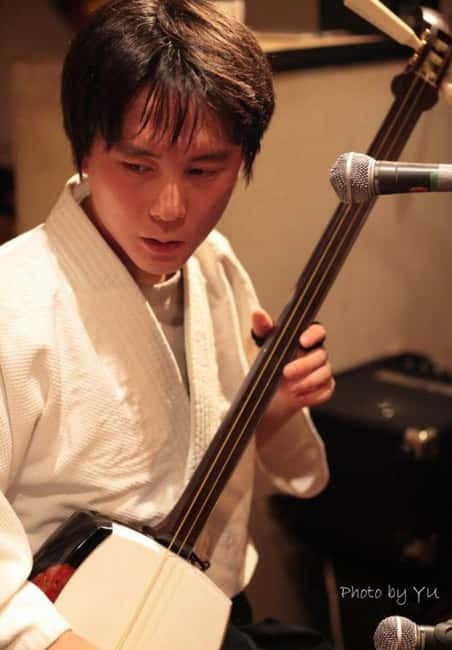
The instructor is Kouzan Oyama, a master of the Oyama school, described as the most prominent school of Tsugaru shamisen. His competition record matters here because it tells you that you are learning from a serious performer, not simply someone offering a casual tourist activity.
Just as important, Oyama teaches beginners. His own books are used during the lesson, giving you a clear guide for the first notes and song exercises. A complete newcomer can therefore spend less time wondering what to do next and more time building a basic feel for the instrument.
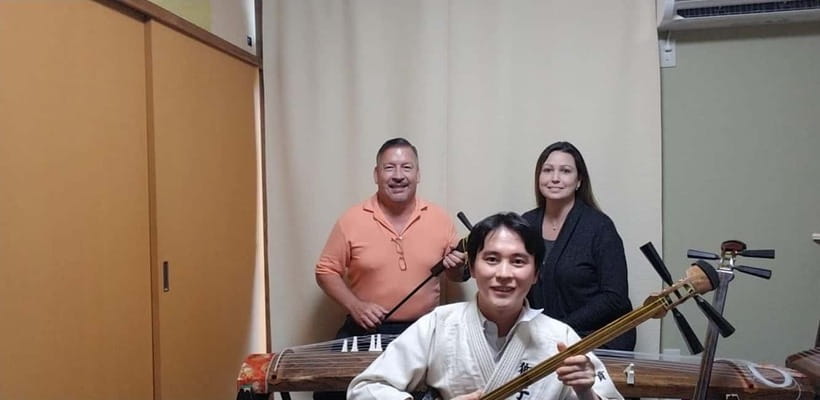
Oyama also plays koto, another traditional Japanese string instrument. During the lesson, he may perform on it and teach you a short tune. That extra demonstration broadens the session and helps you hear how different Japanese instruments handle melody, rhythm, and tone.
The teaching language is English. The available information notes that Oyama’s English is not perfect, but communication works well enough for instruction, questions, and musical practice. For a hands-on lesson, demonstration is often as useful as explanation, and Oyama can show techniques directly.
What happens during the one-hour lesson
The session begins with an introduction to the shamisen and its construction. You learn about the three strings, the instrument’s materials, and the basic idea behind its sound. This is useful preparation because the shamisen does not respond exactly like a guitar or other familiar Western instrument.
You then work on producing the instrument’s characteristic tone. The goal is not just to place your fingers in the right position. You are learning how to make a clean, sharp sound, which is central to the style.
Oyama demonstrates techniques as he teaches them. This gives you a clear sound to copy and lets you hear the difference between an early beginner attempt and a polished performance. The lesson also includes examples of various types of shamisen, along with the Okinawa sanshin.
At the start, tell the instructor if you have a particular song in mind. The activity allows you to request a song of your choice. If you have no preference, you practice a traditional Japanese folk song instead.
That choice is worth planning before you arrive. A familiar tune can give you a personal target, but a traditional folk song may be the better choice if you want a straightforward introduction without worrying about whether your request fits the lesson.
The final part focuses on playing. You will not become a concert performer in sixty minutes, but the lesson is designed to help you play a song or two at a basic level. One participant learned Sakura in a single session, which shows what can be possible when the song and instruction match your starting point.
Why the private format matters
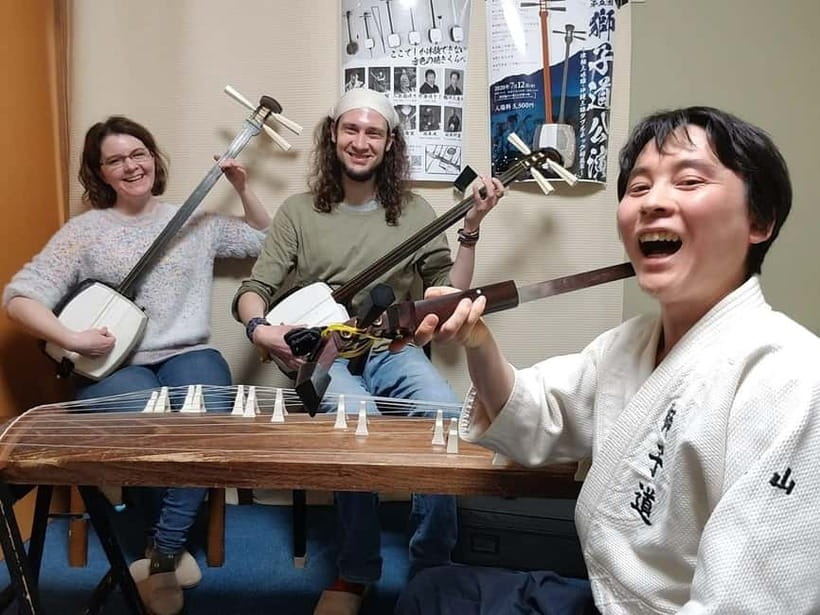
A private group makes this lesson more personal than a large class. You can ask about the instrument, request a song, and receive corrections without waiting for a room full of other people to catch up.
This matters especially for beginners. The shamisen’s playing method may feel unfamiliar at first, and small changes in hand position or striking technique can affect the sound. One-on-one attention helps you deal with those details quickly.
It also suits couples and small groups. Two people can learn together while still receiving direct guidance. The session remains focused on playing rather than on managing a large class.
The tradeoff is that the lesson depends on what you want from it. If you mainly want a polished show by a champion, you may find the performance portions too brief because much of the hour is set aside for your own practice. If you want active participation, the format is a strong match.
Hearing more than one Japanese string instrument
One of the best features is the chance to hear instruments beyond the shamisen you are learning. The Okinawa sanshin has its own sound and cultural identity, and comparing it with Tsugaru shamisen makes the differences easier to understand.
The koto demonstration adds another layer. You can hear how a different Japanese string instrument handles a melody, then try a short tune yourself. This variety keeps the hour from feeling like a narrow technical drill.
I appreciate this part because it places the lesson in a wider musical setting. You are not only learning how to copy notes. You are beginning to notice how Japanese instruments create tone, rhythm, and mood in different ways.
The demonstrations also help if your fingers are tiring or your concentration needs a short reset. You can listen to a skilled performance, then return to your own instrument with a clearer idea of the sound you are aiming for.





Tsugaru style is lively, not gentle background music
If you expect soft, delicate Japanese music, Tsugaru shamisen may surprise you. The style is known for its powerful energy, quick pace, and strong performance feel.
That makes it a good cultural activity for people who want something active and memorable. You hear the instrument at full character, then try to create a small part of that sound yourself.
The fast style can also be the main challenge. Beginners may not be able to reproduce the speed or force of a champion within one hour. Do not judge the lesson by how closely your first attempt matches Oyama’s performance.
Instead, treat the goal as learning the mechanics and playing a short piece with confidence. The achievement is not professional speed. It is understanding how the three strings work and leaving with a real first tune.
Photos, videos, and a useful souvenir
The session includes chances to take photos and videos of your performance with the instructor. This is more useful than a simple souvenir photograph because it preserves what you actually learned.
You can use a short video to remember hand positions, rhythm, and the sound of the instrument. It also gives you something more personal to share than a picture of a famous building.
Ask early if you want a particular photo or video moment. The activity specifically provides opportunities for this, but a one-hour class moves quickly. If you wait until the final seconds, you may have less time to arrange a good recording.
The private setting should make this easier. You do not need to worry about filming a large group or interrupting a public performance. Keep your focus on the lesson first, then use the final playing time for a record of your achievement.
Is $59 a fair price?
The price is $59 per person for one hour. I consider that fair if you value direct teaching and active participation rather than simply watching a performance.
You are paying for a private lesson with a high-level performer, English instruction, use of the instrument during the session, musical demonstrations, and a chance to play a song. The price also includes the cultural explanation behind the shamisen and its sound.
The value is strongest for someone who has already wondered about learning a Japanese instrument. A short class removes the cost and commitment of a long course while giving you a real first test.
It is less compelling if you want a full concert, a long workshop, or advanced technique. One hour is a compact introduction. You get a taste of the instrument and a playable result, not a complete musical education.
The option to reserve now and pay later helps if your Tokyo schedule is still shifting. You can also cancel up to 24 hours in advance for a full refund, which gives you some protection when planning a busy visit.
Who should book this lesson?
I would recommend it to music lovers, curious beginners, couples, and families who want a cultural activity near Shinjuku that asks them to participate.
It is particularly good for you if you enjoy learning by doing. You do not need prior shamisen experience, and the lesson is built to help a first-time player make progress quickly.
It also suits someone who wants a strong final-day activity. One participant described the lesson as the high point of a Japan trip, and I can understand why: it creates a personal memory rather than another hour spent only looking at something.
You may want to skip it if your schedule is so tight that a one-hour appointment would create stress, or if you are looking for an advanced course. The lesson is short, focused, and beginner-friendly by design.
The activity is wheelchair accessible, which makes it easier for more people to consider. It is offered as a private group, and the instruction is in English.
Should you book the Tsugaru shamisen lesson?
Book this lesson if you want to hear a distinctive Japanese sound, meet a serious musician, and play an actual song before leaving. The combination of champion instruction, private teaching, musical demonstrations, and photos or videos gives the hour more substance than a standard cultural photo stop.
Go in with sensible expectations. You will not master Tsugaru shamisen in one hour, and the fast style may be difficult at first. But you can learn how the instrument works, produce its clear three-string sound, ask questions in English, and leave with a memorable first performance.
For $59, that is a good exchange for an active cultural experience near Shinjuku. Tell Kouzan Oyama your preferred song at the beginning, or let him guide you through a traditional folk tune. Either way, you will do more than hear Japanese music. You will take part in making it.
FAQ
Where does the shamisen lesson take place?
The lesson takes place near Shinjuku in Tokyo, on Honshu, Japan.
How long does the lesson last?
The activity lasts one hour.
How much does the lesson cost?
The price is $59 per person.
Is the instruction available in English?
Yes. The instructor teaches in English.
Can I request a song?
Yes. You can request a preferred song at the beginning of the lesson. If you do not choose one, you will practice a traditional Japanese folk song.
Is the lesson private?
Yes. The activity is offered for a private group.
Can I cancel for a refund?
Yes. You can cancel up to 24 hours in advance for a full refund.
More tours in Tokyo we've reviewed












Tokyo, compared.
 ★ 5.0Mt Fuji and Hakone 1-Day Bus Tour Return by Bullet TrainFrom $163
 ★ 5.01-Day Tokyo Bus TourFrom $129
 ★ 4.6Tokyo: teamLab Planets TOKYO Digital Art Museum Entry TicketFrom $251 day
 ★ 4.0Mt Fuji & Hakone Cruise, Drum Show Bullet Train 1 Day from TokyoFrom $149
 ★ 5.0Tokyo: Shinjuku Food Tour (13 Dishes at 4 Local Eateries)From $86
 ★ 4.4Tokyo Mt Fuji 5th St & Hakone Cruise Bus Tour w/Bullet TrainFrom $15410 hours