Reviewed · SHOW
Traditional Japanese Comedy, Juggling & Magic Live Show in Tokyo
The best thing about this 90-minute Tokyo show is its mix. You get three old Japanese stage arts in one sitting: rakugo comedy, daikagura juggling and balance acts, and wazuma, a style of Japanese magic. The format is made for visitors who do not speak Japanese, with an interpreter helping explain the action and the jokes.
In This Article
- Key points to know before booking
- Three Japanese stage arts in 90 minutes
- Entering EDOCCO STUDIO at Kanda Myoujin Shrine
- Rakugo: comedy built from one performer and a few props
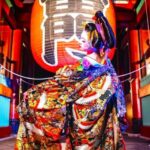
- Daikagura and the famous spinning umbrella
- Wazuma magic you can take home
- Translation makes the show easier to follow
- Why the price can make sense
- Who should book this Tokyo show
- Timing, group size, and practical details
- A useful stop near Akihabara
- Should you book Traditional Japanese Comedy, Juggling and Magic?
- FAQ
- Where does the show take place?
- What time does the activity start?
- How long does the show last?
- What types of entertainment are included?
- Do I need to speak Japanese?
- Can I participate in the performance?
- Is a souvenir included?
- How does cancellation work?
I like two details in particular. First, the performers bring people into the act without making the audience feel pushed around. Second, you do not only watch: you get a short lesson in rakugo expressions and chances to try simple daikagura and wazuma techniques. The main drawback is that the schedule is limited to Thursday afternoon, so it may not fit every Tokyo plan.
Key points to know before booking

- Three traditional arts in one show: Rakugo comedy, daikagura acrobatics, and wazuma magic give you a broad introduction to Japanese performance.
- English-friendly presentation: An interpreter explains the action, making the show suitable even if you have no Japanese language skills.
- Hands-on moments: You may take part in simple rakugo expressions, juggling or balance skills, and magic tricks.
- Historic setting: EDOCCO STUDIO sits inside Kanda Myoujin Shrine, only a few minutes from Akihabara.
- Small cultural gift: You receive a mini souvenir such as a tenugui hand towel, folding fan, or paper balloon.
- Short and weather-safe venue: The indoor performance lasts about 1.5 hours, though poor weather can still affect the scheduled activity.
Three Japanese stage arts in 90 minutes

This is not a single-style concert or a long theatrical production. It is a compact introduction to three forms of traditional entertainment, each with its own rhythm and skill.
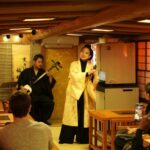
Rakugo is storytelling performed by one seated artist, usually with only a folding fan and a small cloth as props. The performer changes characters through voice, posture, and small turns of the head. That simple setup can be hard to follow in Japanese, but the interpreter helps you understand the situation and the comic timing.
Daikagura brings movement and visual surprise. The style is linked with juggling, spinning, balancing, and ceremonial performance. One of the acts highlighted by the audience is umbrella spinning, a classic image that is easy to appreciate even without words.
Wazuma is Japanese magic. Here, the pleasure comes from watching a performer handle familiar objects in ways that seem impossible, then learning a basic trick yourself. The magic section receives especially strong praise because it is both entertaining and practical. You leave with something you can try on friends.
The three-part structure works well for a first cultural experience in Tokyo. If one style is not your favorite, another arrives soon. You also get a clearer idea of how Japanese entertainment can rely on gesture, timing, props, and audience response rather than elaborate scenery.
A few more Tokyo tours and experiences worth a look

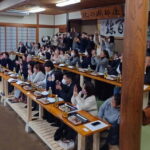
Entering EDOCCO STUDIO at Kanda Myoujin Shrine
The meeting point is EDOCCO STUDIO, at 2-chome-16-2 Sotokanda, Chiyoda City. The studio is located within the grounds of Kanda Myoujin Shrine, a historic religious site in central Tokyo.
That setting adds value without making the show feel like a formal temple ceremony. You attend a modern indoor performance space, then step into a shrine environment before or after the act. Since the venue is only a few minutes from Akihabara, it fits neatly with a day spent around electronics shops, arcades, anime stores, and nearby neighborhoods.
Doors open at 1:30 p.m., with the show starting at 2 p.m. I would treat the door time as useful breathing room rather than arriving at the last second. The activity ends at the same place, so you do not need to arrange a second pickup or find your way to a different theater afterward.
The indoor room is a practical choice for Tokyo weather. You are not standing outside for a street act or depending on a clear evening. Still, the stated policy allows cancellation for poor weather, so check your booking messages if conditions look bad.
Rakugo: comedy built from one performer and a few props
Rakugo may be the most unfamiliar part of the program. The performer sits onstage and tells a comic story, switching between characters with small changes in voice and body position. A folding fan and tenugui cloth can become many different objects, which makes the storytelling feel clever rather than equipment-heavy.
Language can be a concern with any comedy performance. A joke translated word for word often loses its timing. This presentation deals with that problem through an interpreter, and the interpreter also teaches basic rakugo expressions. That short lesson helps you notice the performer’s gestures and repeated patterns instead of simply waiting for a translation.
The audience may also get a chance to perform on the rakugo stage. That makes this more than a lecture about Japanese culture. You get a small taste of the discipline required to hold a story together while using very few props.
Do not expect a full evening of theater or a detailed academic talk on rakugo. The goal is an accessible sample. If you enjoy comic storytelling, stagecraft, or learning how ordinary objects gain new meaning in performance, this section may be the most rewarding.
Daikagura and the famous spinning umbrella

Daikagura provides the clearest visual spectacle. The performer handles objects through juggling, balance, and controlled movement. The spinning umbrella act is singled out as a highlight, and it is easy to see why: the image is instantly readable, even for children or anyone struggling with translation.
The act also gives you a chance to try a simple technique. You will not become a professional performer in a few minutes, but the attempt shows how much control and timing sit behind an act that can look effortless. That small failure-and-try-again moment is part of the fun.
Audience participation is handled in a relaxed way. The activity is interactive, but the format is not described as forceful. If you enjoy joining in, you have an opportunity to take part. If you prefer watching, the performers keep the mood welcoming.
Families may find this section especially easy to enjoy because the movement is clear and the props are playful. Adults interested in traditional arts get something more, too: a glimpse of performance skills that developed outside the modern circus model.
Wazuma magic you can take home

The Japanese magic segment, called wazuma, is one of the strongest reasons to book this show. The magician demonstrates tricks, then teaches the audience basic methods. That changes the experience from passive viewing into a short practical lesson.
The show includes a mini gift, with traditional props such as a tenugui hand towel, folding fan, or paper balloon. The exact item may vary, but the idea is useful: you take home a small object connected to what you saw onstage. It is a better souvenir than a generic Tokyo trinket because it reminds you of a specific performance skill.
You should keep your expectations sensible. This is a short introduction, not a professional magic workshop. But if you like learning a trick you can repeat later, the wazuma section gives the ticket a clear extra benefit.
The magic also works well for people who are uncertain about traditional Japanese theater. The setup is direct, the visual results are quick, and the lesson gives you a way to participate without needing background knowledge.
A few more Tokyo tours and experiences worth a look




Translation makes the show easier to follow

The English support matters most during rakugo, where much of the humor depends on language and character changes. The interpreter helps explain the premise and basic expressions, so you are not left guessing at the central joke.
The presentation is also helped by the physical nature of daikagura and magic. Even when a phrase does not translate perfectly, you can follow a spinning umbrella, a balance act, or a disappearing object with no special cultural training.
This makes the experience a good option for a mixed group. One person may be interested in Japanese history, another in comedy, and a child may only care about juggling and magic. The three acts give each person a way into the show.
The available information does not name the individual performers or interpreter, so you should not book expecting a particular artist. The consistent feature is the format: live performers, English explanation, audience participation, and simple lessons.
Why the price can make sense

At $36.24 per person, this is not the cheapest way to fill an hour in Tokyo. You are paying more than you would for a casual walk through a shopping district or a free shrine visit. The value comes from the combination of a live cultural performance, an interpreter, participation, and a small traditional gift.
The 90-minute length is also useful. Tokyo has many long shows and guided activities that can take half a day. This one leaves room for Akihabara, Kanda, Ueno, or another afternoon plan. You can make it a focused cultural stop rather than giving up an entire day.
I would consider the price fair if you want context and a real performance rather than a quick photo at a shrine. It is less compelling if you only want a large-scale stage spectacle, a fluent Japanese comedy show, or a long class in one art form.
The strongest value is for first-time visitors. You get three points of contact with Japanese performance in one booking, and you do not need to spend extra time researching how to find separate rakugo, juggling, and magic performances.
Who should book this Tokyo show

This activity suits families, solo visitors, couples, and small groups looking for a short cultural event. A solo visitor can enjoy it without needing a companion, since the format includes audience interaction and does not depend on group conversation.
It is also a good choice for anyone concerned about the language barrier. The interpreter makes the comedy and teaching sections more approachable, while the visual acts remain easy to follow.
I would especially recommend it to:
- First-time visitors who want a quick introduction to Japanese performing arts
- Families seeking an indoor activity with clear visual appeal
- Culture fans who want more than a shrine photo
- Solo visitors who like guided participation
- Anyone staying near Akihabara and looking for a nearby afternoon plan
You may want to skip it if you dislike audience participation, need a morning activity, or want a full-length performance centered on just one tradition. The Thursday-only schedule is the main planning limit.
Timing, group size, and practical details
The listed start time is 2 p.m., with doors opening at 1:30 p.m. The activity lasts about 1.5 hours and returns you to the original meeting point.
The maximum group size is 100 people. That is large enough to create an audience but still more focused than a major theater production. The exact room atmosphere can vary, so do not assume a tiny private workshop. It is an organized public show in an indoor studio.
Mobile tickets make entry simple. Confirmation normally arrives at booking, though reservations made within two hours of departure are confirmed as soon as possible, subject to availability. The venue is near public transportation, and service animals are allowed. Most people can participate.
Free cancellation is available up to 24 hours before the start time for a full refund. Changes or cancellations inside that 24-hour window are not accepted for a refund. If the minimum number is not reached or the activity is canceled for poor weather, you are offered another date or experience, or a full refund.
A useful stop near Akihabara
Kanda Myoujin Shrine gives this show a stronger sense of place than a theater in an anonymous commercial building. You can pair the performance with Akihabara because the venue is only a few minutes away.
That pairing lets you see two sides of Tokyo in a compact outing. Akihabara is known for modern entertainment and technology, while the show presents older performance traditions using simple props and direct contact with the audience.
Plan your route with the shrine and studio as the fixed point. The supplied details do not specify a full walking tour or additional sightseeing stops, so the shrine visit and any Akihabara time should be treated as your own surrounding plan, not part of the 90-minute performance.
Should you book Traditional Japanese Comedy, Juggling and Magic?
Book it if you want an accessible, moderately priced introduction to Japanese stage culture with enough participation to make the experience stick. The combination of rakugo, daikagura, and wazuma gives you variety, while the interpreter removes much of the worry about language.
The show is especially strong for families, solo visitors, and first-time visitors who want a cultural activity without committing half a day. The umbrella act, audience lessons, and take-home prop add memories beyond simply sitting in a theater.
Think twice if Thursday afternoon does not fit your schedule, if you want a polished large-scale production, or if you prefer to remain completely anonymous in the audience. For everyone else, this is a smart short stop near Akihabara, with real traditional arts, friendly participation, and a practical souvenir built into the experience.
FAQ
Where does the show take place?
The show takes place at EDOCCO STUDIO, located within Kanda Myoujin Shrine at 2-chome-16-2 Sotokanda, Chiyoda City, Tokyo 101-0021, Japan.
What time does the activity start?
Doors open at 1:30 p.m., and the show starts at 2 p.m. The event is scheduled for Thursday.
How long does the show last?
The performance lasts approximately 1.5 hours.
What types of entertainment are included?
The program includes rakugo traditional comedy, daikagura acrobatics and juggling, and wazuma Japanese magic.
Do I need to speak Japanese?
No. The presentation includes an interpreter, making it suitable for people without Japanese language skills.
Can I participate in the performance?
Yes. The experience includes chances to try daikagura and wazuma, and you may also learn basic rakugo expressions.
Is a souvenir included?
Yes. A special mini gift is included. Possible traditional props include a tenugui hand towel, folding fan, or paper balloon.
How does cancellation work?
You can cancel up to 24 hours before the start time for a full refund. Cancellations or changes made less than 24 hours before the start time are not refunded. If the activity is canceled because of poor weather or because the minimum number is not reached, you are offered another date or experience, or a full refund.
More Shows & Entertainment in Tokyo
More Shows & Performances in Tokyo
More tours in Tokyo we've reviewed












Show, compared.
 ★ 4.0Mt Fuji & Hakone Cruise, Drum Show Bullet Train 1 Day from TokyoFrom $149
 ★ 4.8Tokyo: Sumo Show Experience with Chicken Hot Pot and a PhotoFrom $1032 hours
 ★ 4.8Tokyo: Sumo Show and Dining ExperienceFrom $7990 minutes - 2 hours
 ★ 5.0the SUMO showFrom $89
 ★ 4.5Tokyo: Samurai Restaurant Show Ticket with 2 DrinksFrom $551h 30m
 ★ 4.0Mt Fuji & Hakone Cruise, Drum Show Bus 1 Day from TokyoFrom $122