Reviewed · TOURS
Tokyo: Full Course Tour: Explore 15 Must-Sees & Hidden Gems
Tokyo is a city that can swallow a first-time visitor whole. This 10-hour small-group tour gives you a fast, well-planned way to get oriented, from the quiet woods of Meiji Shrine to the neon of Akihabara and the old lanes around Senso-ji.
In This Article
- Key points
- Why this Tokyo day works for first-time visitors
- Starting at Yoyogi and entering Meiji Shrine
- Harajuku fashion and the everyday konbini
- Hachiko and the famous Shibuya crossing
- Tsukiji Hongan-ji and 90 minutes for food
- Imperial Palace, Marunouchi, and Tokyo Station
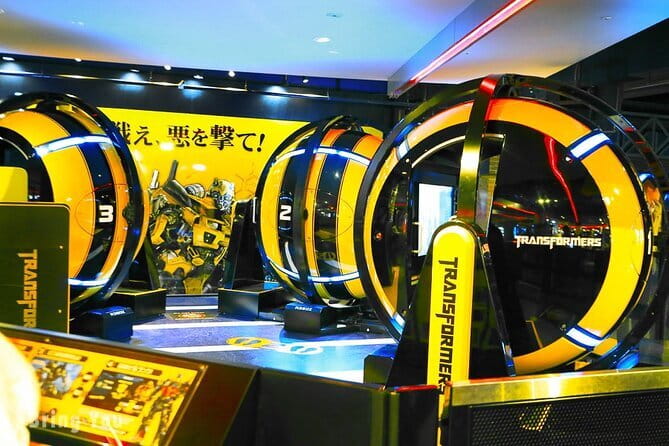
- Akihabara and the city’s pop-culture side
- Ueno Park and Ameyokocho
- Senso-ji and Asakusa’s older Tokyo
- What the $90 price really covers
- The walking, weather, and practical demands
- Who should book this full Tokyo circuit
- Should you book it?
- FAQ
- Where does the tour begin?
- Where does the tour finish?
- How long does the tour last?
- What language is the tour conducted in?
- How large is the group?
- Are attraction entrance fees included?
- How much should I budget for transportation?
- What should I bring?
I like two things right away: the group is limited to seven people, and every listed attraction is free to enter. I also like the practical teaching, including how to use the metro, behave at shrines, and handle everyday Japanese customs. The catch is simple: you will walk about 20,000 steps, so this is a poor match for anyone with low fitness, mobility limits, or a taste for slow sightseeing.
Key points
- Fifteen major stops in one day: Cover Meiji Shrine, Shibuya, Tsukiji, the Imperial Palace area, Akihabara, Ueno, and Asakusa.
- Small group of seven or fewer: A compact group makes metro transfers and street crossings easier to manage.
- Local English-speaking guides: Yasuko, also spelled Yatsuko in one comment, and Michiko are specifically praised for clear English, care, and city knowledge.
- All listed sights are free: Your main extra costs are about ¥1,500, or roughly $10, for trains and metro rides, plus food and drinks.
- A serious walking day: Wear sports shoes, carry rain gear, and expect around 20,000 steps.
- A useful first-day orientation: You learn transport manners, shrine etiquette, local food ideas, and daily-life tips while seeing the city.
Why this Tokyo day works for first-time visitors

Tokyo is not one city experience. It is a collection of districts with very different moods, and moving between them takes planning. This route links quiet shrine grounds, department-store avenues, market streets, pop-culture arcades, museums, and old temple lanes in a single day.
That variety is the tour’s main strength. You do not spend the entire day in one polished district. Instead, you see how Tokyo shifts from one neighborhood to the next. The route also uses trains and the metro between areas, giving you a practical lesson in getting around.
I would treat this as an orientation day, not a detailed study of every stop. Most visits are short. You will see the setting, hear the essential story, take photographs, and move on. That is useful if you have limited time, but it can feel rushed if you want long museum visits, careful shopping, or a quiet meal at every stop.
The guide is also part of the value. The company uses Japanese guides with local roots, and the English-language explanations cover more than dates and names. You can ask about etiquette, food, transport, and ordinary life. Yasuko receives especially strong praise for adapting the pace to the group and making time for individual questions. Michiko is praised for keeping a considerate pace and even helping one participant find a taxi after the day ended.
If you're still narrowing it down, here are other tours in Tokyo we've reviewed.

Starting at Yoyogi and entering Meiji Shrine

Meet outside the ticket gates at the West Exit of JR Yoyogi Station, at 1-chome-34 Yoyogi, Shibuya City. Be early. The group leaves on time, and late arrivals cannot join.
The first stop is Meiji Jingu, a forested Shinto shrine close to the city’s fashion and entertainment districts. The contrast arrives quickly: traffic and tall buildings give way to broad paths, trees, wooden gates, and a calmer pace. You get about 30 minutes here, enough for the guide to explain shrine behavior and point out the main features.
This is a smart first stop because it introduces Japanese religious customs before the day becomes more hectic. Your guide can show you how to approach a shrine respectfully and explain the difference between a shrine and a Buddhist temple. The visit is not long enough for a slow walk through every path, but it gives you a useful framework for later stops.
Harajuku fashion and the everyday konbini
Harajuku follows with about 30 minutes. The district is associated with youth style, cute fashion, street snacks, and changing trends. The tour also includes a Seven-Eleven stop to introduce konbini culture, Japan’s convenience-store world.
That may sound like an odd sightseeing choice, but it is one of the more useful details in the day. Japanese convenience stores are part of daily life, and they offer a quick look at local snacks, drinks, ready-made food, and practical travel supplies. You can ask the guide what to try, though food purchases are your responsibility.
The short timing means you will not have a full shopping session in Harajuku. Think of this as a guided introduction rather than a chance to browse every side street. If you want Takeshita Street merchandise or extended fashion shopping, plan to return on your own.
Hachiko and the famous Shibuya crossing

The route then heads to Shibuya for two compact stops: about 10 minutes at the Hachiko Statue and another 10 minutes at Shibuya Scramble Crossing.
Hachiko’s story is a small but moving piece of modern Japanese culture. The dog became famous for waiting at the station for his owner, even after the owner had died. The statue is now a common meeting point, so the guide can help you understand both the story and the role the area plays in present-day Tokyo.
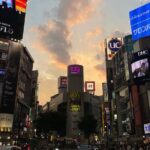
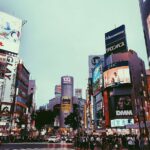
At the crossing, you get the classic view of people streaming across several lanes at once. Ten minutes is enough to cross and take pictures, but not enough to explore Shibuya’s department stores, side streets, or rooftop viewpoints. The point here is momentum. You see the symbol, understand the story, and keep moving.
The group’s small size matters in places like this. Stay close to the guide, especially when the crossing changes and the crowd spreads out.
Tsukiji Hongan-ji and 90 minutes for food

A metro ride of about 30 minutes takes you toward Tsukiji Hongan-ji Temple. The temple is known for an unusual Indian-inspired design and striking stained glass. It is a welcome change after Shibuya’s modern crowds, and the 30-minute visit gives you time to look at the architecture rather than simply pass by.
Next comes the longest stop of the day, 90 minutes at Tsukiji Outer Market. This is the best part of the schedule for eating because you have enough time to browse food stalls, consider snacks, and choose lunch.
The market is known as a kitchen of Japan, with seafood and other delicacies. The guide can point you toward famous restaurants and less obvious local places. Food is not included, so bring cash in Japanese yen. The tour specifically warns that some small shops accept cash only.
Vegetarian and vegan choices are available, but tell the provider or guide about your needs before ordering. The information supplied for this tour does not promise a set meal, so you should expect to choose and pay for your own food rather than receive a planned lunch.
Tsukiji is also one of the few places where the fast pace eases. Use the 90 minutes wisely. Eat, browse, and ask the guide about unfamiliar foods, but do not assume you can cover every lane.


Imperial Palace, Marunouchi, and Tokyo Station

After another short metro ride, the group reaches the Imperial Palace area. The palace itself is not presented as an interior visit. Instead, you walk the grounds of the former Edo Castle, including its impressive stone walls, for about 15 minutes.
That short visit is more about setting and context than extensive sightseeing. Your guide can connect the old castle town with modern Tokyo, especially as the route continues into Marunouchi.
Marunouchi gives you a polished business district of sleek towers and broad streets near imperial grounds. The 15-minute walk lets you see the city’s formal side, where corporate Tokyo meets its older political center.
Another 15 minutes brings you to Tokyo Station Square. The red-brick station is one of the city’s most recognizable buildings and an important gateway for rail travel. This is a good photo stop, though the schedule does not leave time to explore the station’s many shops and underground passages.
The three stops work well together. You see the former castle setting, the modern office quarter, and one of Tokyo’s grand transport landmarks. If architecture is your main interest, you may wish for more time here.
Akihabara and the city’s pop-culture side

A 10-minute train ride takes you to Akihabara, where the mood changes again. This is Tokyo’s center for anime, gaming, electronics, and Japanese pop culture.
You have about 30 minutes, which is enough to get a taste of the neon streets and hear how the district developed its current identity. It is not enough for serious shopping, arcade time, or a careful look through specialist stores.
That limitation is worth knowing before you book. The tour shows you the major character of each district, but it rarely lets you pursue a niche interest. If you are coming mainly for anime goods or gaming, use this stop as reconnaissance and return later with more time.
Ueno Park and Ameyokocho

Another 10-minute train ride brings you to Ueno Park for about 30 minutes. The park is presented as a cultural center, with museums and connections to samurai-era history. The route does not include paid museum entry, and all listed attractions are free, so your visit focuses on the park and its surrounding cultural setting.
Ueno is a helpful counterpoint to Akihabara. Instead of signs and screens, you get open space, trees, art institutions, and older layers of Tokyo. The short visit gives you a sample, not a museum day.
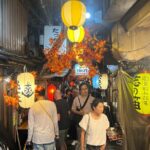
From there, the group walks to Ameya-Yokocho, known as Ameyokocho, for about 15 minutes. This market street has a rougher, more local feel, with food and retail stalls packed close together. It is a quick stop, so keep your eyes moving and listen for the guide’s suggestions.
The Ueno and Ameyokocho pairing makes sense. You see a cultural district and then a market street where Tokyo feels less polished and more immediate. You will not have much time to shop, but you can note places to revisit.
Senso-ji and Asakusa’s older Tokyo

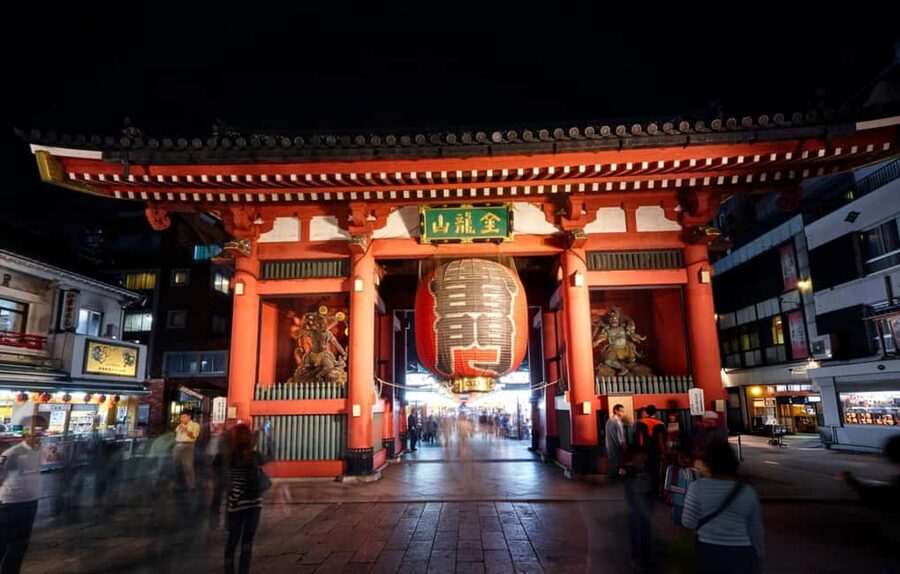
The final district is Asakusa, home to Senso-ji, Tokyo’s oldest temple. You get about 30 minutes at the temple, followed by 10 minutes at nearby Asakusa Shrine.
Senso-ji is one of the city’s essential stops. Its large gate, temple grounds, and spiritual importance make it a strong finish after a day of modern neighborhoods and commercial streets. The guide can help you understand Buddhist temple customs and explain what you are seeing.
Asakusa Shrine is a quieter Shinto site within the Senso-ji grounds. The brief visit gives you a useful chance to compare Shinto and Buddhist spaces in one place.
The tour ends at Asakusa Shrine. That is practical if your evening plans are in Asakusa, but less convenient if you need to return to western Tokyo or catch a train elsewhere. The description also mentions a goal celebration at a local izakaya. Since the timed route ends at the shrine and dinner is not included, confirm before booking if this evening gathering is part of your date’s schedule or simply an optional add-on.
What the $90 price really covers

At $90 per person, the tour’s value depends on how much help you want with Tokyo’s transport and planning. The guide fee and taxes are included, and the route covers a large number of free sights. You still pay about ¥1,500, or roughly $10, for metro and JR fares, along with lunch, snacks, drinks, and any dinner.
That makes the realistic cost higher than the headline price, but the main attractions do not add admission fees. You are paying for route planning, English explanations, transport guidance, and a full day of local assistance.
I think the price works best for a first day in Tokyo, especially if you are nervous about the rail system or want to see many districts before deciding where to spend more time. It is less appealing if you already know Tokyo well, dislike group schedules, or prefer to spend two hours in one temple.
The walking, weather, and practical demands
The tour requires about 20,000 steps. That is a serious day, even though the route includes several train and metro rides. Wear comfortable sports shoes and clothing that lets you move easily. High heels are specifically discouraged.
The tour runs in rain, so take an umbrella or raincoat. Bring cash in yen, since small food stalls and shops may not take cards. You also need a pre-charged Suica, Pasmo, or Icoca card for public transport.
Large luggage, baby strollers, and baby carriages are not allowed. The tour is not suitable for children under 13, pregnant people, wheelchair users, people with back problems, people with a cold, or anyone with low fitness. People under 18 must travel with an adult, and anyone under 13 requires a private tour.
The guide cannot leave the group to search for someone who wanders off, so stay together during station changes and crowded crossings. No alcohol or intoxication is allowed, and the conditions say there are no refunds for problems in these areas or for late arrival.
Free cancellation is available up to seven days before the tour for a full refund. Check the start time when choosing your date, since availability varies.
Who should book this full Tokyo circuit
I would choose this for a first visit, a short stay, or the opening day of a longer Tokyo trip. You will get a useful city map in your head, learn how the trains work, and collect ideas for later meals and neighborhood walks.
It also suits solo visitors and couples who want company without joining a huge coach group. A maximum of seven people gives the guide a better chance to answer questions and notice when someone needs a slower pace. The strong comments about Yasuko and Michiko focus on exactly that personal care, clear English, and thoughtful pacing.
I would skip it if you want deep temple study, long shopping sessions, museum interiors, or a relaxed lunch. The route is ambitious, and its success depends on accepting short visits and keeping up.
Should you book it?
Book this tour if you want a high-energy first look at Tokyo and value a local guide more than free time. The combination of free sights, transport instruction, food advice, and a group capped at seven makes the $90 fee reasonable, especially for visitors who would struggle to plan this route alone.
Skip it if 20,000 steps sounds exhausting or if you already have a detailed Tokyo plan. For everyone else, bring good shoes, a charged IC card, yen, and a willingness to move. You will not master every district in one day, but you will understand Tokyo far faster than you would by wandering without a plan.
FAQ
Where does the tour begin?
Meet outside the ticket gates at the West Exit of JR Yoyogi Station, at 1-chome-34 Yoyogi, Shibuya City, Tokyo 151-0053.
Where does the tour finish?
The scheduled finish is at Asakusa Shrine.
How long does the tour last?
The experience lasts 10 hours. Starting times vary, so check availability for your chosen date.
What language is the tour conducted in?
The tour has a live English-speaking guide.
How large is the group?
The tour is limited to seven participants.
Are attraction entrance fees included?
All listed attractions are free to enter. The guide fee and taxes are included, but transportation fares, food, drinks, and any other entrance fees are not included.
How much should I budget for transportation?
Metro and JR fares are approximately ¥1,500, or about $10, in addition to the tour price. You need a pre-charged Suica, Pasmo, or Icoca card.
What should I bring?
Bring comfortable sports shoes, easy-to-move clothing, rain gear, cash in Japanese yen, and your public transport ticket or IC card. The tour involves about 20,000 steps.
More tours in Tokyo we've reviewed


Tours, compared.
 ★ 5.0Mt Fuji and Hakone 1-Day Bus Tour Return by Bullet TrainFrom $163
 ★ 5.01-Day Tokyo Bus TourFrom $129
 ★ 5.0Tokyo: Shinjuku Food Tour (13 Dishes at 4 Local Eateries)From $86
 ★ 4.4Tokyo Mt Fuji 5th St & Hakone Cruise Bus Tour w/Bullet TrainFrom $15410 hours
 ★ 5.0Flagship 2-Hours Official Street Go-Kart Tour – Tokyo Bay ShopFrom $642 hours to 2 hours 30 minutes (approx.)
 ★ 4.7Tokyo: Mt. Fuji Tour, Hakone Ropeway, Owakudani, Lake AshiFrom $5410 hours