Reviewed · TOKYO FOOD TOURS
Shibuya Hidden Flavors A Family Friendly Foodie Tour With Guide
Shibuya is more than a famous crossing and giant shopping screens. This four-hour food walk takes you through izakaya streets, a narrow drinking alley, department-style food stops, and modern Miyashita Park while your guide helps connect the sights with what people actually eat in Tokyo.
In This Article
- Key points at a glance
- A food tour that gives Shibuya more flavor
- Starting at Hachiko and reading Shibuya properly
- Shibuya 109 and the first food streets
- Nonbei Yokocho, a narrow change of pace
- Shibuya Crossing without losing the point
- One hour inside MEGA Don Quijote
- Miyashita Park and Shibuya’s newer face
- What the food portion is really worth
- Why the family-friendly angle matters
- Timing, group size, and practical planning
- Who should book this Shibuya walk
- Should you book the Shibuya Hidden Flavors tour?
- FAQ
- How long does the Shibuya food tour last?
- Where does the tour start?
- Where does the tour end?
- How many people can join the tour?
- What food is included?
- Are drinks included?
- Is hotel pickup included?
- Is the tour suitable for families?
- Can I cancel for a full refund?
I like the small group of no more than eight and the family-friendly pace. I also like that the food is varied: sushi, Japanese meats, chocolates, soft drinks, and other tastes chosen by the guide. The main consideration is price. At $205 per person, you are paying for guidance, four to five tastings, and cultural context, not simply a meal.
Key points at a glance
- Four to five food stops: Expect a mix of sushi, Japanese meats, chocolates, and other local flavors selected by your guide.
- A maximum of eight people: The small group gives you room to ask questions and keeps a walking tour easier to manage.
- Family-friendly flexibility: Guide Hiromi adjusted the experience for one family and added a Pokémon Center visit for their son.
- Classic and changing Shibuya: The route includes Hachiko and Shibuya Crossing, plus Nonbei Yokocho and the newer Miyashita Park.
- Drinks included: Two soft drinks and water are part of the tour. Alcohol is available to buy, but it is not included.
- Simple transport plan: Meet at the Hachiko Statue and finish at the same place, close to public transportation.
A food tour that gives Shibuya more flavor
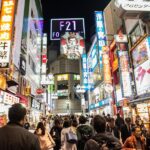
Shibuya can be hard to read on your own. The district throws neon signs, department stores, tiny alleys, and thousands of people into one compact area. You can eat well here without a plan, but you can also spend half a day guessing which door leads to a worthwhile meal.
This tour gives you a route and a local guide. Instead of sitting in one restaurant for four hours, you walk between several food stops and city sights. That matters in Shibuya, where the change from a famous landmark to a quiet side street can happen in a few minutes.
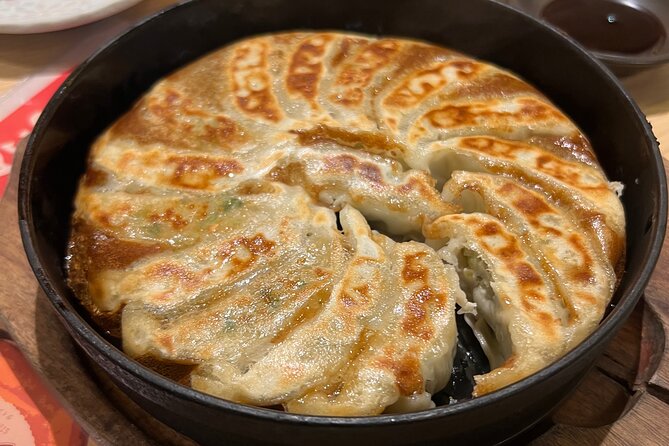
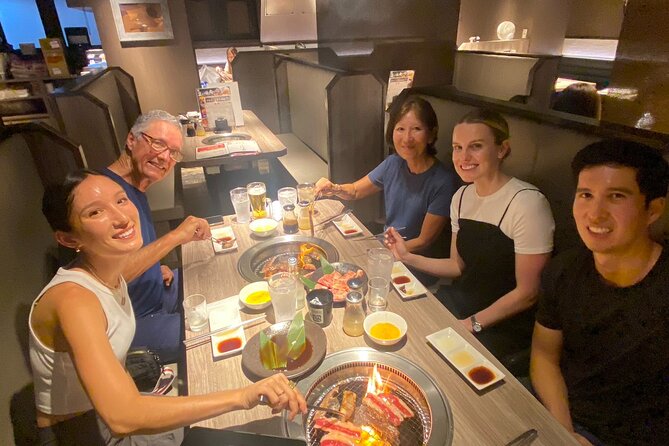
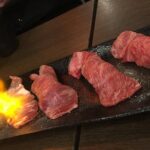
The food is the main reason to book. You should expect four to five stops, with examples including fresh sushi, Japanese meats, chocolates, and other Japanese flavors. The exact choices are made by the guide, so this is not the right tour if you need a fixed menu in advance.
The format also helps families. A long formal meal can be tiring for children, while smaller tastings give everyone a chance to try something without committing to one large dish. Hiromi received especially warm praise for modifying the route for a son and taking the family to a Pokémon Center in Shibuya. That does not guarantee the same detour for every group, but it shows the value of telling your guide about your interests early.
A few more Tokyo tours and experiences worth a look
Starting at Hachiko and reading Shibuya properly
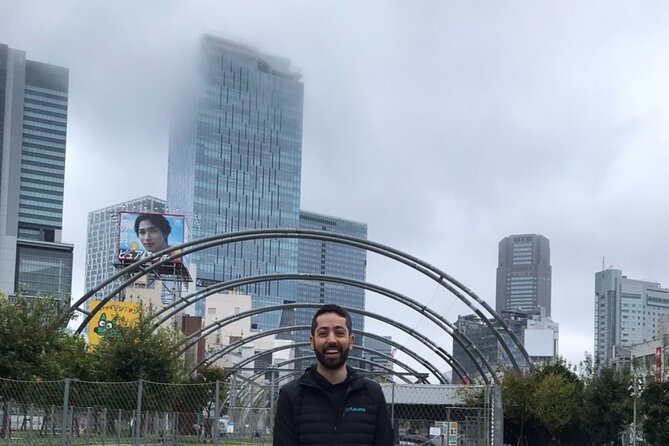
The meeting point is the Hachiko Statue at 2 Chome-1 Dogenzaka, near Shibuya Station. This is a practical place to begin because Hachiko is easy to identify and public transportation is close by.
Hachiko is not just a convenient meeting marker. The statue honors an Akita dog associated with a well-known story of loyalty. He waited at Shibuya Station for his owner, continuing even after his owner had died. The statue is now one of Japan’s unofficial landmarks and a common meeting place in its own right.
Your guide can help turn this quick photo stop into a useful orientation. Shibuya has several layers: a major railway hub, a shopping district, a nightlife area, and a food quarter. Starting with Hachiko gives you a clear point on the map before the walking begins.
The tour ends back at the same meeting point. That is helpful if you have an evening reservation, need to return to your hotel, or want to continue sightseeing from Shibuya Station.
Shibuya 109 and the first food streets
The first listed stop is Shibuya 109, with about 45 minutes in the area. The building is closely linked with Shibuya’s youth fashion and shopping culture, but the food focus here is the local street around it, where people stop at izakaya and other casual places to eat.
An izakaya is not simply a Japanese bar. It is a place for drinks and small dishes, often shared across the table. For a food-focused walk, this setting is useful because it introduces the social side of eating in Japan. Food is not always organized as one large entrée. Smaller plates, quick bites, and drinks can shape the evening.
You may find this part of the tour especially useful if you are unsure how to approach an izakaya on your own. Your guide can explain what you are seeing and help you focus on the food rather than the shopping signs.
The drawback is that Shibuya 109 itself is not a traditional food market. If you expect an old neighborhood or a quiet local street from the first minute, this stop may feel very commercial. Its value is in showing how food fits into modern Shibuya, not in providing a historic setting.
Nonbei Yokocho, a narrow change of pace
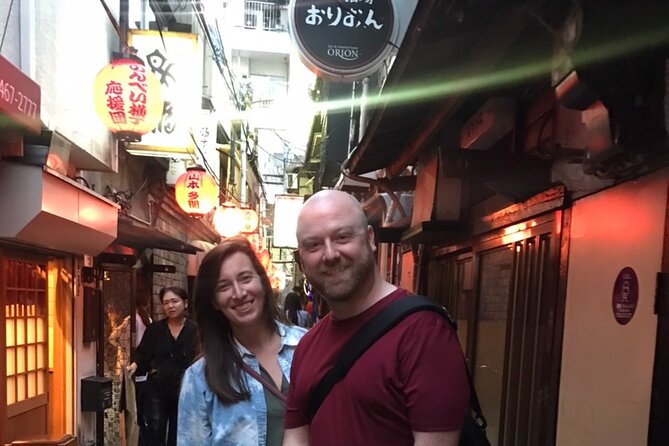
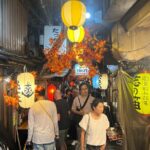
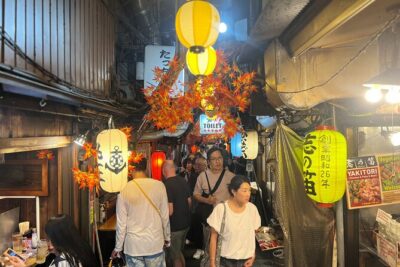
After the broader streets near Shibuya 109, the route heads to Nonbei Yokocho for about 30 minutes. This narrow alley is one of the most appealing parts of the walk for anyone who wants to see a less polished side of the district.
Nonbei Yokocho is known for its compact drinking spots and intimate alley setting. The contrast is sharp: Shibuya can feel enormous and loud, yet this small passage brings you close to the scale of neighborhood nightlife.
The tour uses the alley to explain how people spend an evening in Japan. You may see small venues where space is limited and the mood is more personal than in a large restaurant. The guide’s presence is valuable here because a quick walk through the alley would not tell you much about its role in local social life.
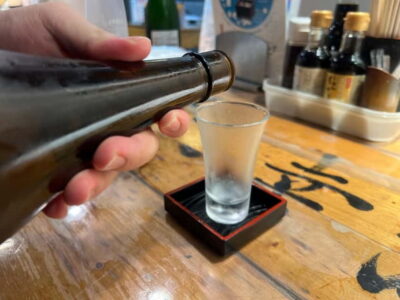
Thirty minutes is enough for a look without making the stop drag. Keep your expectations sensible, though. This is a short cultural and food-related visit, not a full night of bar hopping. Alcohol is not included, and any alcoholic drink must be purchased separately.
Shibuya Crossing without losing the point
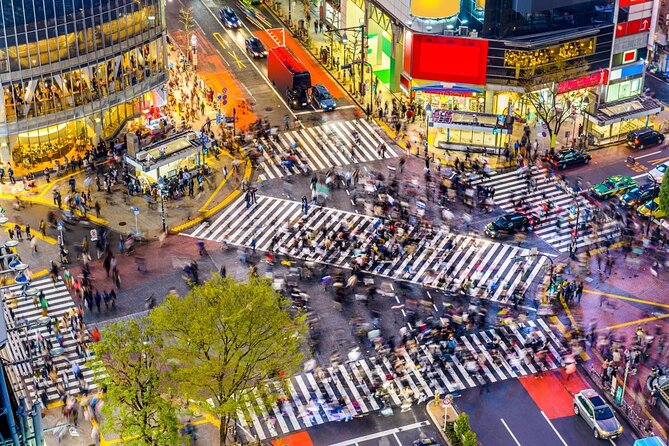
The tour sets aside about 15 minutes for Shibuya Crossing. More than 2,000 people cross during each signal change according to the supplied tour details, making this one of the city’s most recognizable public spaces.
You will have time for a quick photo and a look at the crossing from the center of the action. The stop is brief by design. Shibuya Crossing is a landmark, but standing there for an hour does not necessarily teach you more than standing there for fifteen minutes.
This is also where the walking format pays off. From street level, you can notice how many routes converge, how the lights control movement, and how quickly the crossing returns to normal after each wave. Your guide can help you see more than a backdrop for a photograph.
If your main goal is photography, you may want to return later for a longer look. The tour’s purpose is to connect the crossing with the food and streets around it, not to provide an extended photo session.
A few more Tokyo tours and experiences worth a look


One hour inside MEGA Don Quijote
MEGA Don Quijote Shibuya receives the longest stop, about one hour. This 24-hour shopping center sells a remarkably broad range of goods, including sweets, cosmetics, food, and electric devices.
For a visitor, this is a useful introduction to Japan’s gift and snack culture. You can see the sheer variety of packaged foods and everyday products in one place. It is also a practical stop if you want to buy small food souvenirs, though your guide may not control how much personal shopping time the group takes.
The store can feel crowded and visually intense. That is part of the experience, but it is not restful. Families should keep an eye on children, especially in a large shop with many departments and plenty of distractions.
The one-hour allocation may seem long if you are not interested in shopping. It makes more sense if the guide uses the time to point out Japanese foods and products you might otherwise overlook. Since the tour promises food stops chosen by the guide, do not assume the entire hour is a tasting session.
Miyashita Park and Shibuya’s newer face
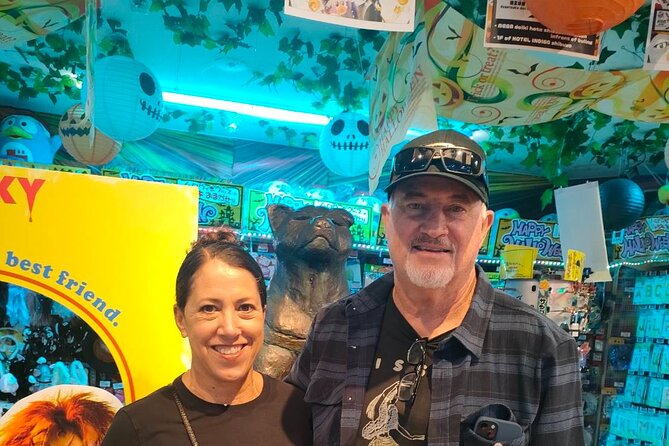
Miyashita Park takes about 30 minutes. The former public park along the Yamanote Line was rebuilt as a three-story complex with shopping and city space.
This stop helps balance the older alleyways and traditional food references earlier in the route. Shibuya changes quickly, and Miyashita Park shows the district’s newer style: retail, open public areas, and a modern building integrated into the city.
I like this pairing with Nonbei Yokocho. One shows a narrow, older-feeling nightlife setting. The other shows how new development is reshaping the same district. You are not just moving from snack to snack. You are seeing two different ideas of urban Tokyo within one walk.
The visit is fairly short, so you should treat it as a guided look rather than a full shopping session. If you want to browse every store or spend time in the park, plan to return after the tour.
What the food portion is really worth

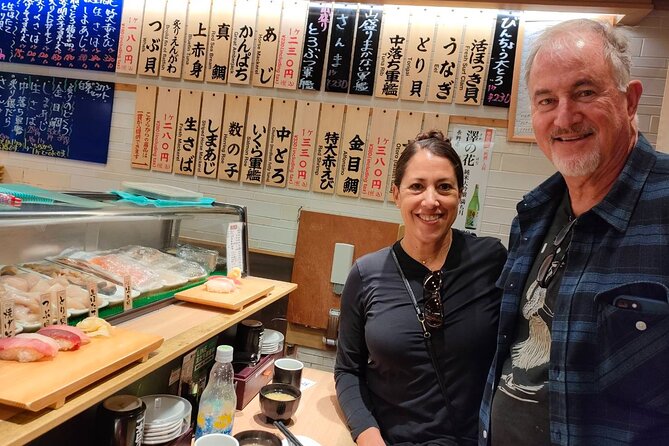
The included food is listed as four to five stops, with the guide choosing the places and tastes. Examples include fresh sushi, Japanese meats, chocolates, and other foods from across the Shibuya district.
That variety is the strongest part of the package. A first-time visitor can sample several categories without having to research each restaurant or order a full serving at every stop. You also get a chance to compare sweet and savory foods, familiar items and dishes that may be new to you.
Two soft drinks and water are included. Alcohol is available for purchase, but it is not part of the $205 price. Gratuities are optional and hotel transportation is not included.
At $205, value depends on how much help you want. If you are comfortable finding food on your own, the price will feel high for four hours of walking and tastings. If you want a guide to organize the route, explain the district, manage food choices, and adapt the experience for your family, the cost becomes easier to defend.
The small group matters here. With no more than eight participants, you should have more chances to ask about ingredients, customs, and local neighborhoods than on a large coach-style tour. You are also less likely to lose the guide in a crowded Shibuya street.
Why the family-friendly angle matters
The tour is designed for families, and the food format helps. Four hours is still a long outing, but the route has regular changes of scene: shopping streets, an alley, the crossing, a large store, a modern park, and food stops.
The most useful sign of flexibility comes from Hiromi, who adjusted one family’s experience for their son and included a Pokémon Center visit. If you are traveling with children, tell the guide what holds their attention. A small adjustment can make the difference between a food tour they tolerate and one they remember.
Still, family-friendly does not mean stroller-friendly in every moment. The tour is a walking activity through busy city areas, and the supplied information does not promise stroller access or a specific pace for young children. Most participants can take part, but you should consider your child’s walking ability before booking.
Food preferences and allergies are also worth raising at the start. The exact food stops are selected by the guide, and no fixed menu is provided in the tour details.
Timing, group size, and practical planning
The experience lasts approximately four hours and begins and ends at the Hachiko Statue. It is near public transportation, so you can reach the start without hotel pickup.
Arrive with comfortable walking shoes. The itinerary includes several neighborhood changes, and the experience is built around walking rather than sitting in one place. A small group of up to eight is easier to manage, but Shibuya itself remains a busy city district.
The tour is often booked about 23 days ahead on average. That is a useful planning clue if your Tokyo dates are fixed, especially if you want a particular day or are traveling as a family.
You receive confirmation at booking, and mobile tickets are supported. Free cancellation is available when you cancel at least 24 hours before the local start time. Inside that window, you receive no refund and changes are not accepted.
Who should book this Shibuya walk
I would point this tour toward first-time Tokyo visitors who want food guidance without spending an entire day in a formal culinary class. It also suits families who want a mix of tastings, landmarks, shopping, and room for questions.
It is a good match if you like moving through a city on foot and prefer several small food encounters to one large meal. The guide can provide context that is difficult to get from a map, especially around izakaya culture and the difference between old and new Shibuya.
I would be more cautious if you want a guaranteed restaurant list, a fixed tasting menu, a quiet pace, or a low-cost way to eat lunch. The route includes busy commercial areas, and the $205 price is a serious commitment for a four-hour experience.
Should you book the Shibuya Hidden Flavors tour?
Book it if you want an organized introduction to Shibuya that combines food with the district’s best-known sights and less obvious streets. The strongest reasons are the small group, broad tasting range, and the chance for a guide to adjust the outing for children, as Hiromi did for one family by adding a Pokémon Center visit.
Skip it if you are already confident ordering around Tokyo, prefer choosing every restaurant yourself, or want the lowest possible food cost. For the right person, this is less about buying four hours of snacks and more about paying for a smoother, more personal way to understand Shibuya.
FAQ
How long does the Shibuya food tour last?
The tour lasts approximately four hours.
Where does the tour start?
It starts at the Hachiko Statue, at 2 Chome-1 Dogenzaka, Shibuya, Tokyo 150-0043, Japan.
Where does the tour end?
The activity ends back at the Hachiko Statue meeting point.
How many people can join the tour?
The maximum group size is eight people.
What food is included?
The tour includes four to five food stops chosen by the guide. Food examples include fresh sushi, Japanese meats, chocolates, and other Japanese flavors.
Are drinks included?
Two soft drinks and water are included. Alcoholic beverages are available to purchase separately.
Is hotel pickup included?
No. Hotel pickup and drop-off are not included.
Is the tour suitable for families?
Yes. The experience is described as family-friendly, and most participants can take part. Guide Hiromi also modified one family’s tour for their son.
Can I cancel for a full refund?
Yes, if you cancel at least 24 hours before the experience start time. Cancellations within 24 hours are not refunded, and changes in that period are not accepted.
More Food Experiences in Tokyo
More Tokyo Food Tours in Tokyo
More Shibuya Tours in Tokyo
More tours in Tokyo we've reviewed



Tokyo Food Tours, compared.
 ★ 5.0Tokyo: Shinjuku Food Tour (13 Dishes at 4 Local Eateries)From $86
 ★ 4.9Tokyo: Shinjuku Food Tour (13 Dishes and 4 Eateries)From $97
 ★ 5.0Tokyo Night Foodie Tour in Shinjuku – Seasonal Sushi, Wagyu BeefFrom $111
 ★ 5.0Eat and Drink Like a Local: Tokyo Ueno Food Tour-Taverns&RamenFrom $95
 ★ 5.0Tokyo: Shibuya Food Tour (13 dishes and 4 Eateries)From $77
Tokyo: Shinjuku Food Tour – 15 Dishes, 3 Drinks, 4 EateriesFrom $723 hours
★ 5.0Tokyo: Shibuya Food Tour (13 dishes and 4 Eateries)From $77
Tokyo: Shinjuku Food Tour – 15 Dishes, 3 Drinks, 4 EateriesFrom $723 hours