Reviewed · NIKKO DAY TRIPS
Nikko Toshogu, Kegon waterfall, Lake Chuzenji One Day Pvt. Tour
Nikko gives you two very different Japan experiences in one long day: the ornate world of Toshogu Shrine, built for shogun Tokugawa Ieyasu, and the cool mountain scenery around Kegon Falls and Lake Chuzenji. A private vehicle makes the 12-hour outing far easier than piecing together local buses.
In This Article
- Key points to know before booking
- Why Nikko works as a full-day escape from Tokyo
- Toshogu Shrine and the Tokugawa story
- Rinno-ji Temple and the Buddhist side of Nikko
- The Toshogu Museum in 30 focused minutes
- Nikko Botanical Garden and a quieter pause
- Shinkyo Bridge, Nikko’s red gateway
- Kegon Falls and Lake Chuzenji
- What the $500 group price really buys
- The private vehicle and guide experience
- Who should book this Nikko day trip
- Should you book the Nikko Toshogu, Kegon Falls, and Lake Chuzenji tour?
- FAQ
- How long is the Nikko private tour?
- Where does the tour start and finish?
- How much does the tour cost?
- Is transportation private?
- Are entrance tickets included?
- Is lunch included?
- What places does the tour visit?
- Is Kegon Falls admission included?
- Can I cancel the booking?
I like the door-to-door setup and the freedom of having a vehicle for your own group of up to five. I also like the broad mix of sights, from a UNESCO World Heritage religious complex to a nearly 100-meter waterfall. Guide Rana has been praised for adding water, snacks, history, and a friendly approach to the ride.
The main drawback is cost. At $500 per group, this is not a cheap day out for one or two people, and admission fees and lunch are extra. It becomes a more sensible buy when shared by four or five people who value comfort and saved planning time.
Key points to know before booking

- Private Tokyo transport: Your group travels in an air-conditioned vehicle, with fuel and parking included.
- Six distinct stops: The day covers Toshogu, Rinno-ji, the Toshogu Museum, Nikko Botanical Garden, Shinkyo Bridge, and Kegon Falls.
- Strong history focus: Toshogu honors Tokugawa Ieyasu, while Rinno-ji connects Nikko’s Shinto and Buddhist traditions.
- Nature after culture: Kegon Falls and Lake Chuzenji give the second half of the day a cooler, quieter feel.
- Extra costs matter: Toshogu admission is listed at $10 per person, while Rinno-ji, the old garden, and Rinno-ji Museum cost $7 per person.
- Best for small groups: The $500 price is easier to justify when divided among several people.
Why Nikko works as a full-day escape from Tokyo

Nikko is far enough from Tokyo that a visit takes real planning. You need to coordinate transport, shrine hours, mountain roads, and several separate sights. This tour removes that work and gives you a private ride for roughly 12 hours.
I like the way the day moves from built-up Tokyo into a more wooded mountain setting. You start with some of Japan’s most decorated religious buildings, then head toward Lake Chuzenji and Kegon Falls. That contrast gives the outing a clear rhythm instead of making it feel like one long shrine visit.
The private format matters most if your group has different walking speeds or wants to avoid crowded public buses. You are not sharing the vehicle with strangers, and the tour ends back at Tokyo Station, the stated meeting point. The vehicle also includes onboard hotspot service, which is handy during a long day on the road.
Still, you should expect a full day rather than a relaxed half-day outing. Nikko is not close to central Tokyo, and six stops require a steady pace. If you prefer spending an entire morning at one temple or taking long café breaks, this schedule may feel tight.
A few more Tokyo tours and experiences worth a look

Toshogu Shrine and the Tokugawa story
Toshogu is the centerpiece. The shrine honors Tokugawa Ieyasu, the samurai leader whose rise helped unite Japan and begin the Edo period in 1603. That period lasted until 1867 and shaped the political, commercial, and cultural life of Japan for more than two centuries.
The buildings are famous for their carved details and strong colors. This is not the spare, restrained style some people expect from a Japanese shrine. Toshogu is deliberately ornate, with gates and structures covered in decorative work.
The site forms part of the Shrines and Temples of Nikko UNESCO World Heritage property. You can also see a 36-meter pagoda and several nearby religious structures in the same general area. The arrangement makes it possible to cover a lot without repeatedly getting back into the vehicle.
Plan on about two hours here. That sounds generous, but Toshogu rewards a slow look at the carvings, gates, and religious details. Your admission ticket is not included, and the stated price is $10 per person. Confirm the current fee when booking, since attraction prices can change.
A useful point for first-time visitors is that Nikko’s religious identity is not limited to one tradition. The area brings Shinto shrines and Buddhist temples close together, reflecting the way these traditions developed side by side in Japan. Toshogu is the most dramatic stop, but it makes more sense after you see it as part of a larger sacred area.
Rinno-ji Temple and the Buddhist side of Nikko
Rinno-ji gives the day a different tone. The temple was founded in 766 by the Buddhist monk Shodo Shonin, who introduced Buddhism to the Nikko area. It is also part of the UNESCO World Heritage property.
The main hall, Sanbutsudo, is a large wooden building containing three gilded Buddhist figures. They represent Amida Nyorai, Senju Kannon, and Bato Kannon, each linked to one of Nikko’s mountain deities. The scale and gold finish make this interior quite different from the open-air shrine setting at Toshogu.
You have about an hour here. That is enough to see the main hall and, depending on timing, the Shoyo-en Garden and Taiyuin Mausoleum. The garden uses ponds, rocks, and carefully placed plants to create a quiet traditional Japanese setting.
Admission is not included. The stated fee is $7 per person for Rinno-ji, the old garden, and the Rinno-ji Museum. This is one area where it helps to carry some flexibility in your sightseeing budget, since several attractions have separate charges.
I especially like the temple stop because it prevents the day from becoming a parade of similar-looking gates. Toshogu shows the public power of the Tokugawa family. Rinno-ji gives you a more contemplative religious setting.
The Toshogu Museum in 30 focused minutes

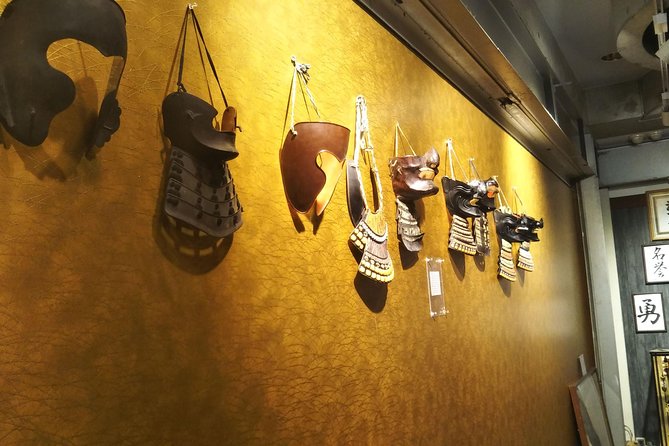
The Nikko Toshogu Museum, also called the Toshogu Treasure Museum, provides background that the buildings alone cannot give you. Its collection includes samurai armor, swords, and personal belongings connected with Tokugawa Ieyasu.
You have about 30 minutes here, so think of it as a focused visit rather than a major museum afternoon. The exhibits help explain the Edo period and the Tokugawa shogunate, giving context to the person honored at the shrine next door.
I find this stop useful if you want more than photographs. Toshogu’s decoration can easily pull your attention toward color and craftsmanship, while the museum points you toward politics, military life, and the people behind the monument.
The admission fee is not included. Since the tour provides only half an hour, ask your guide how the timing will work on your chosen day. A museum visit is most useful when you know how much time remains for the shrine grounds.
Nikko Botanical Garden and a quieter pause

The Nikko Botanical Garden offers a softer change of pace after the grand religious sites. It is associated with the broader Rinno-ji and Tokugawa setting, and its design uses rocks, ponds, and maintained vegetation to create a calm Japanese garden.
The planned stop is about 30 minutes. That is enough for a short walk and a look at the garden’s arrangement, but not enough for a long, unhurried visit. If gardens are your main interest, you may wish you had more time here.
For most people, the value is in the pause. You get away from the heavier architecture and see how Japanese garden design suggests natural scenery through careful placement. I would treat this as a pleasant interlude rather than the main reason to book the tour.
The supplied information refers to an old garden and lists it with the Rinno-ji and museum admission at $7 per person. Ask for clarification at booking if you want to know exactly which garden admission is covered by that fee.
A few more Tokyo tours and experiences worth a look


Shinkyo Bridge, Nikko’s red gateway

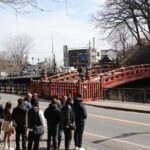
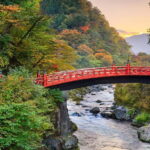
Shinkyo Bridge is one of Nikko’s most recognizable sights. Its red structure crosses the Daiya River at the entrance to the shrine and temple area, and it technically belongs to Futarasan Shrine.
The current bridge dates from 1636, during the Tokugawa era, although a bridge occupied this location earlier. It was closed to the general public until 1973, then underwent major renovation in the late 1990s and early 2000s.
You get about 30 minutes here, with the listed tour entry marked free. The bridge itself is small, so this is mainly a photo stop and a chance to understand the geography of the sacred area. You can walk across and back for an entrance fee, according to the supplied details, so confirm whether that optional crossing carries a charge on the day.
I like the stop because it adds a simple, human-scale sight after the large shrine complex. The red bridge also marks the transition between ordinary Nikko and the route toward the temples and shrines.
Kegon Falls and Lake Chuzenji

The final major stop is Kegon Falls, one of Japan’s best-known waterfalls. The water drops almost 100 meters, and an elevator installed in 1930 takes you closer to the falls for a stronger view.
The tour allows about two hours for Kegon Falls and the Lake Chuzenji area. That is a welcome block of time after the shorter garden, bridge, and museum visits. You can take in the waterfall, look across the lake, and visit Chuzenji Shrine in the same mountain setting.
The scenery here is the emotional counterpoint to Toshogu. Instead of carved gates and gilded statues, you get open water, steep terrain, and falling water. Lake Chuzenji is described as peaceful and scenic, and the change in setting helps explain why Nikko works so well as a day away from Tokyo.
Kegon Falls admission is listed as free for this experience, but the information also specifically mentions the elevator. Since ticket arrangements can vary, ask whether the elevator is included or optional before you arrive.
Weather may also affect this part of the day. The tour takes you into a mountain area, so conditions can differ from central Tokyo. Pack a light outer layer and shoes you can walk in, but do not assume the same temperature you had at the starting point.
What the $500 group price really buys

The total price is $500 for up to five people. That works out to $100 each for a full vehicle if you fill every seat. For two people, it is $250 each, before food and entrance fees, which is a much harder value argument.
Included costs are the air-conditioned vehicle, private transportation, fuel surcharge, parking fees, and onboard hotspot. Lunch and brunch are not included, nor are the listed shrine, temple, garden, museum, or possible waterfall elevator charges.
The best value is convenience. You are paying for a private ride, a planned route, parking, and the ability to see mountain sights that are less simple to reach from Tokyo. You also avoid the mental work of arranging every connection yourself.
The price makes more sense for a family or group of friends. A group of five would pay about $100 per person before extras, while a couple should compare this carefully with public transport and a self-guided day. The tour is not the budget choice. It is the comfort and time-saving choice.
Lunch is another practical point. One booking reported that driver Rana suggested a pleasant restaurant, and the same account praised the water, snacks, conversation, and historical explanations. That does not mean lunch is included, but it suggests the driver may help you make a sensible meal stop.
The private vehicle and guide experience
The tour begins and ends at Tokyo Station, at 1 Chome-9 Marunouchi, Chiyoda City. Pickup is offered, and the activity uses a private vehicle for your group only. Confirmation is provided when you book.
Driver Rana received specific praise for hosting the day with small comforts such as water and snacks, helping with lunch, and sharing history along the route. Hiroyuki Sato is associated with the provider and signed the service response. Guide quality can vary by date, so it is sensible to confirm who will drive or guide your group.
The vehicle includes air conditioning, fuel, parking, and a hotspot. Those details matter on a 12-hour outing. You can leave the driving and parking to someone else, keep your group together, and use the ride between stops as downtime.
The tour is marked suitable for most people, near public transportation, and open to service animals. It is still wise to consider your own comfort with a long day and several sightseeing stops. The provided details do not give a precise vehicle model, seating layout, or walking distance.
Who should book this Nikko day trip
I would recommend it most strongly to a small group that wants to see both culture and nature without managing public transport. Families, friends sharing the cost, and first-time visitors with limited time in Tokyo are the natural fit.
It also suits anyone who values a guide’s help with the day’s flow. Rana’s reported style, including snacks, history, and restaurant assistance, adds useful human contact to what could otherwise be a transport-only service.
I would think twice if you are traveling alone, watching every yen, or interested mainly in one shrine. The group price is high for solo use, and the schedule covers many places rather than allowing a deep, slow visit to one.
The booking is popular well ahead of time, with an average lead time of about 36 days. If your Tokyo dates are fixed, reserving early is sensible. Free cancellation is available up to 24 hours before the start time, while cancellations or changes made inside that window are not accepted for a refund.
Should you book the Nikko Toshogu, Kegon Falls, and Lake Chuzenji tour?
Book it if you have four or five people, want a private ride, and prefer a prepared day over a do-it-yourself route. The mix is excellent: Tokugawa history at Toshogu, Buddhist art at Rinno-ji, useful museum context, a traditional garden, Shinkyo Bridge, and mountain scenery at Kegon Falls and Lake Chuzenji.
Skip it if price matters more than comfort or if you want to set your own pace. You will pay extra for admissions and food, and 12 hours is a serious commitment.
For the right group, this is a practical way to reach Nikko from Tokyo without turning transport into the main event. The strongest reasons to choose it are the private vehicle, broad route, and the possibility of a warm, helpful guide such as Rana. The strongest reason to hesitate is simple: the value depends heavily on how many people share the $500 cost.
FAQ
How long is the Nikko private tour?
The tour lasts approximately 12 hours.
Where does the tour start and finish?
It starts at Tokyo Station, at 1 Chome-9 Marunouchi, Chiyoda City, Tokyo 100-0005. The activity ends back at the same meeting point.
How much does the tour cost?
The price is $500 per group for up to five people.
Is transportation private?
Yes. Your group travels in a private, air-conditioned vehicle. Fuel surcharges and parking fees are included.
Are entrance tickets included?
No. Toshogu Shrine admission is listed at $10 per person. Rinno-ji Temple, the old garden, and Rinno-ji Museum are listed at $7 per person. Lunch, brunch, and other entrance costs are also excluded.
Is lunch included?
No. Lunch and brunch are not included. A driver may help suggest a restaurant, but you pay for your own meal.
What places does the tour visit?
The route includes Nikko Toshogu, Rinno-ji Temple, the Nikko Toshogu Museum, Nikko Botanical Garden, Shinkyo Bridge, Kegon Falls, and the Lake Chuzenji area.
Is Kegon Falls admission included?
Kegon Falls is listed as free for the tour. The information also mentions an elevator that provides a closer view, so confirm any separate elevator charge before visiting.
Can I cancel the booking?
You can cancel up to 24 hours before the experience start time for a full refund. Cancellations or changes made less than 24 hours before the start time are not accepted for a refund.
More 1-Day Tours in Tokyo
More Nikko Day Trips in Tokyo
More tours in Tokyo we've reviewed












Nikko Day Trips, compared.
 ★ 4.5Tokyo: Nikko Toshogu Shrine and Kegon Waterfall TourFrom $8410h 30m
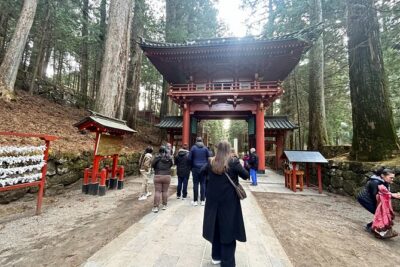 ★ 5.0Nikko, Kegon Waterfall & Chuzenji Lake from TokyoFrom $89
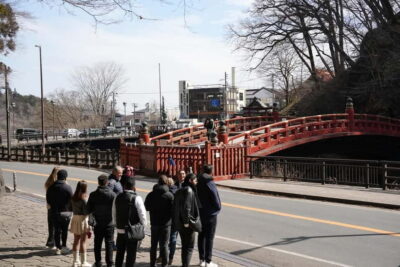 ★ 4.4From Tokyo: Nikko, Toshogu Shrine, Waterfall & Chūzenji LakeFrom $54
 ★ 4.3Nikko: Edo Wonderland Edomura Cultural Theme Park TicketFrom $351 day
 ★ 4.8Tokyo: Nikko World Heritage Private Day Trip Hotel Pick-upFrom $39011 hours - 1 day
From Tokyo: Nikko World Heritage Sight Full Day Private TourFrom $36210 hours
★ 4.8Tokyo: Nikko World Heritage Private Day Trip Hotel Pick-upFrom $39011 hours - 1 day
From Tokyo: Nikko World Heritage Sight Full Day Private TourFrom $36210 hours