Reviewed · WORKSHOPS
Japanese Whisky Hunting《HIGH-QUALITY-ONLY》Rare Tasting Class
Japanese whisky hunting is less about knocking back drinks and more about learning how Japan builds flavor. In a small room just 10 seconds from Yoyogi-Uehara Station, you can work through around 10 Japanese whiskies from across the country, guided by hosts such as Dan, Shugo, Yukata, and Hayato.
In This Article
- Key points at a glance
- Why this tasting works for whisky beginners
- Arriving at Yoyogi-Uehara Station
- The first pours set the pace
- Local snacks make the glasses easier to compare
- A relaxed class rather than a formal seminar
- What you can learn about Japanese whisky
- Photos and the surprise souvenir
- Is $110.62 a fair price?
- Who should book this experience
- Practical details before you book
- Should you book Japanese Whisky Hunting?
- FAQ
- Where does the Japanese whisky tasting meet?
- How long does the experience last?
- How many people can join?
- How many Japanese whiskies will I taste?
- Are food and nonalcoholic drinks included?
- Does the experience include transportation?
- Are photos and a souvenir included?
- Can I cancel for a refund?
I like the personal approach: your host can adjust the selection to your tastes instead of serving the same fixed lineup to everyone. I also like the food pairings, which include Japanese snacks and small sweets that give each glass a little context. The main drawback is the price, $110.62 per person, and the tasting may not suit you if you do not enjoy strong spirits or prefer a large, formal whisky bar.
Key points at a glance
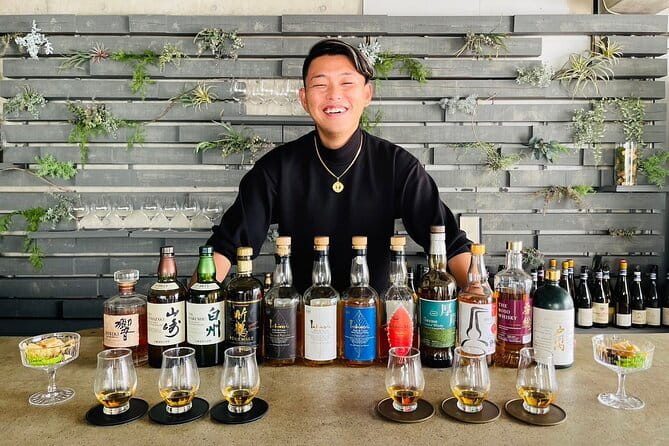
- Around 10 Japanese whiskies: The selection changes with the professional market and available stock, so each session can feel different.
- A genuinely small group: The experience is usually limited to four people, with a maximum of six.
- Guidance shaped by your taste: Dan, Shugo, Yukata, and Hayato have each led sessions that balance explanation with personal choice.
- Japanese food with the whisky: Brunch-style snacks and small desserts are included, along with bottled water and a soft drink chaser.
- Easy station access: The meeting point is beside Yoyogi-Uehara Station, about 10 minutes from Shinjuku and Shibuya.
- A personal finish: Photos are taken during the session, and you receive a surprise souvenir to take home.
Why this tasting works for whisky beginners
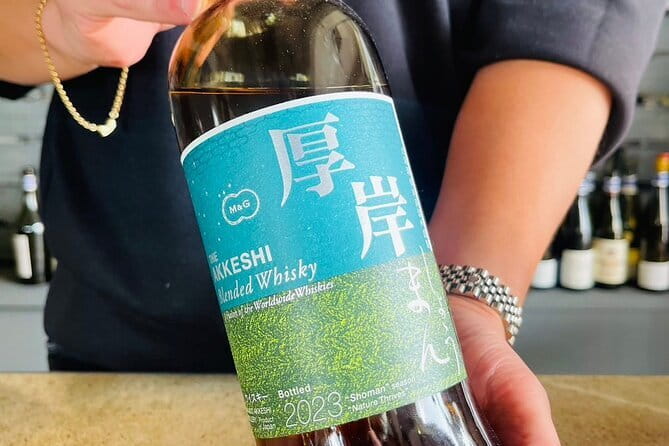
Japanese whisky can be hard to shop for in Tokyo. The country has a growing whisky scene, and bottles can vary widely in style, age, price, and availability. A tasting gives you a useful shortcut: instead of guessing from labels in a shop, you can compare several pours in one sitting.
You do not need to arrive as a whisky expert. The format is built around conversation and questions, so you can ask what makes one bottle different from another, how Japanese producers developed their style, or which bottles may be worth seeking out later.
The hosts explain both older traditions and the current state of Japanese whisky. Yukata, for example, has presented Japanese whisky history and current brands, while Hayato has combined guided explanation with time for personal exploration. That balance matters. You get enough background to understand what you are drinking, but the event does not sound like a lecture.
I would especially recommend this class early in your Japan trip if whisky is a serious interest. You can use what you learn during later visits to bars, department stores, and whisky shops. It is also a good choice after arrival in Tokyo, when a quiet, hosted activity can help you settle into the city.
A few more Tokyo tours and experiences worth a look
Arriving at Yoyogi-Uehara Station
The meeting point is at Yoyogi-Uehara Station, at 3 Chome-8 Nishihara in Shibuya, Tokyo. The activity takes place only about 10 seconds from the station, which is a major practical advantage in Tokyo. You will not need to spend half an hour hunting for an address through unfamiliar side streets.
The location is also convenient from two of Tokyo’s busiest visitor areas. The host states that it is about 10 minutes from Shinjuku and Shibuya stations, making this a manageable stop before dinner or after a day in western Tokyo.
The tour begins and ends at the same meeting point. There is no air-conditioned vehicle because this is a stationary tasting, not a transport-based tour. Plan your route by train and arrive ready to sit, taste, and talk.
Because the meeting point is so close to the station, this is easier to fit into a busy Tokyo schedule than a tasting held in a remote suburb. Still, leave enough time to find the correct station exit and meeting spot. Alcohol tastings are more pleasant when you are not rushing in at the last minute.
The first pours set the pace
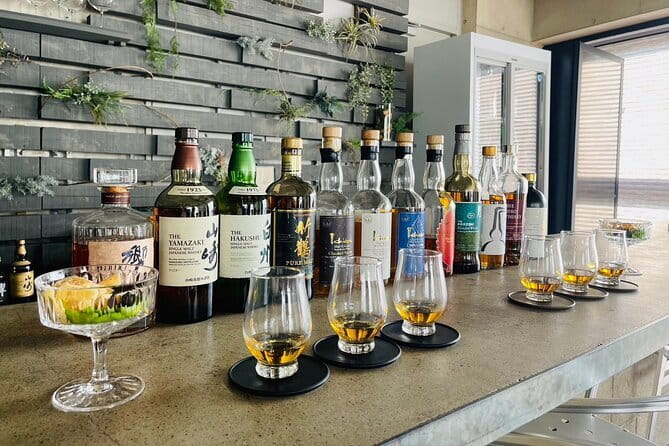
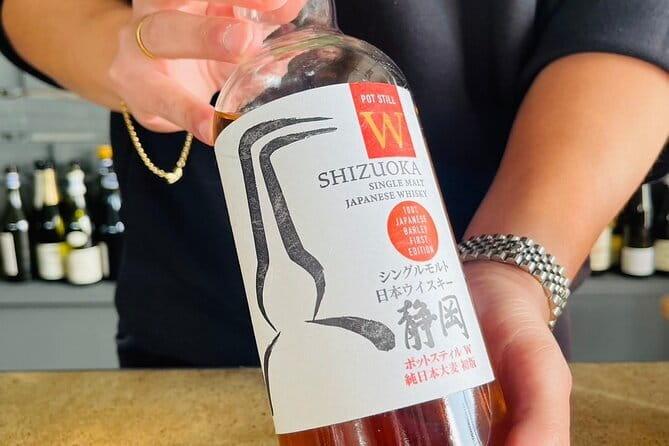
The tasting includes around 10 types of Japanese whisky collected from across Japan. The exact bottles can change according to market conditions and available stock, so you should not book expecting a guaranteed list of named labels.
That uncertainty is not necessarily a weakness. It means the host can work with the best stock available at the time rather than promising bottles that may no longer be practical to obtain. For collectors, this can make the session more interesting. For someone hoping to taste one specific famous whisky, it means you should contact the provider before booking if a particular bottle is essential.
The order of the whisky matters. Shugo has been praised for choosing a thoughtful sequence, and the hosts are described as adjusting pours to match your preferences. You may begin with a style that feels approachable, then move toward bottles with more pronounced character. The precise order will depend on your group and the stock that day.
You should expect discussion as you taste. Your host can explain what is in the glass, share facts about Japanese whisky, and ask what you notice. This is more useful than simply receiving a row of small glasses with no guidance.
If you already know your preferences, tell the host early. Mention if you prefer lighter, sweeter, smokier, fruitier, or more robust whisky. If you are new to whisky, say so. The small group gives you room to ask basic questions without feeling out of place.
Local snacks make the glasses easier to compare
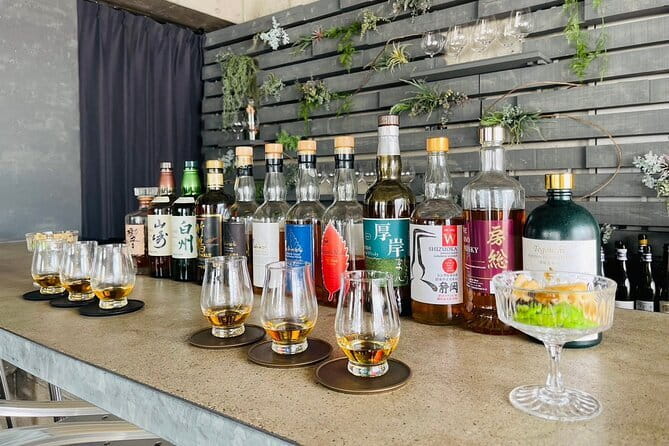
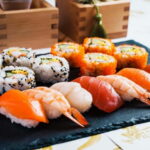
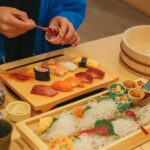
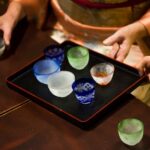
Food is part of the design, not an afterthought. Brunch-style Japanese snacks and small Japanese desserts are included, with pairings chosen to accompany the whisky.
That makes a real difference during a two-hour tasting. Strong spirits can become tiring when taken without food, and small bites help you reset your palate. Sweet treats can also show how a whisky changes beside sugar, salt, or a different texture.
The snacks give the session a local angle that a standard bar flight may lack. You are not only comparing bottles. You are seeing how Japanese food can sit beside Japanese whisky, even if the pairings are simple rather than a full meal.
Do not treat the included food as dinner. The description calls it brunch-style snacks and small desserts, not a complete restaurant meal. If you are booking this in the evening, plan to eat afterward. That is easy here because the experience ends back near the station, and one host has also offered dinner recommendations at the end of a session.
Bottled water and a free soft drink are included as chasers. Use them. Water helps you keep your palate in shape and makes a long series of whisky samples more comfortable.
A relaxed class rather than a formal seminar
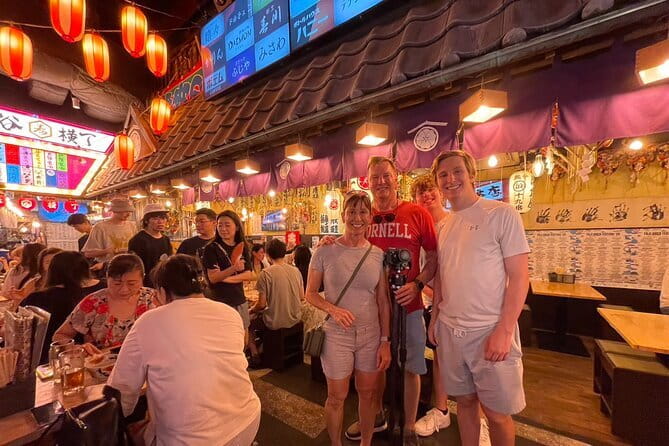
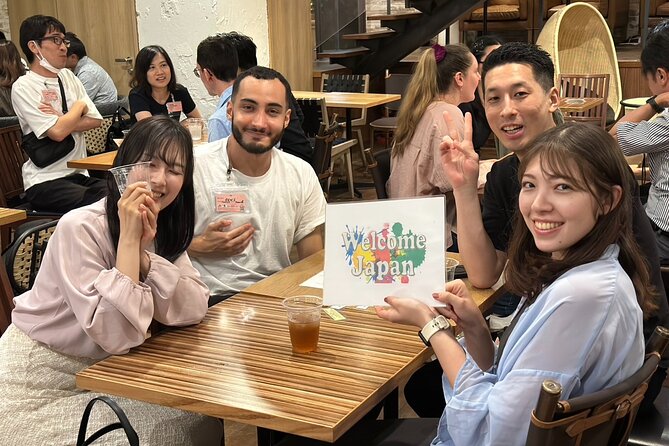
The tone appears to be friendly and informal. The hosts describe themselves as lovers of Japanese culture and Japanese alcohol, and their goal is to share their collections while enjoying conversation with new friends.
Dan has been singled out for creating a welcoming atmosphere and for helping people discover new favorites. Shugo has been described as friendly and good at matching whisky to personal taste. Yukata has focused on history, brands, and conversation. Hayato has offered a mix of direction and independent tasting.
Those different hosts may give the experience a slightly different feel from one date to another. That is worth keeping in mind. You are booking a host-led tasting rather than a standardized museum program with the same script every time.
The small group is one of the best features. The usual group size is up to four people, though the activity can accept a maximum of six. That gives you many chances to ask questions and discuss what you are tasting. It also means the experience may sell out, especially on popular dates.
There may be other participants, so a private tasting is not guaranteed. If you are hoping for a completely private evening, check the booking details before paying. If you enjoy meeting people over a shared interest, the group format should work well.


What you can learn about Japanese whisky
The class covers Japanese whisky’s past and present. You will hear about the development of the industry, current brands, and the different bottles available in Japan.
The value here is not simply memorizing names. A good explanation helps you understand why a bottle costs more, why a particular style appeals to you, and how to continue exploring once you return home. One useful outcome is leaving with a short list of bottles to look for later.
The tasting also helps you separate Japanese whisky as a national category from one single flavor profile. Around 10 pours should give you a broad sense of variation, though the exact range depends on the stock and the choices made for your group.
You might not receive a technical lesson on every production detail. The supplied description promises an explanation of history and brands, along with guided sampling, not a distillery visit or a production workshop. Think of it as a social tasting with solid background information.
That is a good match for most people. You get enough information to make smarter choices, but the evening remains relaxed.
Photos and the surprise souvenir

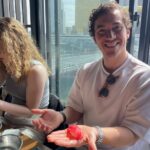
Photos during the tour are included. Your host is happy to help capture images, which is useful if you want a record of the evening without asking another participant to take pictures.
The photo element should remain secondary to the tasting. It is a nice extra, not the reason to book. You should also expect the photographs to document the session rather than provide a professional portrait shoot.
A surprise souvenir is included at the end. The provider describes it as something intended to help you enjoy Japanese food after returning home. The exact item is not specified, so do not book for a particular gift.
Still, it is a thoughtful closing touch. The strongest souvenir may be the bottle names and flavor preferences you discover during the class, but a small take-home item adds a pleasant local connection.
Is $110.62 a fair price?
At $110.62 per person, this is not a cheap way to drink whisky. You are paying more than the cost of a few bar pours, and the included snacks are not a full meal.
The value comes from the range, guidance, and access to a changing selection of Japanese whisky. Around 10 pours can add up quickly at a good whisky bar, especially if the host includes less common bottles. You also receive food, water, a soft drink, photos, and a souvenir.
The price makes the most sense if you want to learn and compare. If you already know exactly which whisky you want and only need one glass, visit a bar instead. If you want help finding new favorites and understanding what you are tasting, the guided setting gives the money a clearer purpose.
I also see value in the group size. A large commercial tasting may offer more seats, but it gives you less time with the host. Here, the limited size lets you ask questions and shape the session around your tastes.
Group discounts are available, so the price may work better for couples or small groups booking together. Check the current rate before making plans, since the listed cost can change.
Who should book this experience
I would choose this class if you fit one or more of these descriptions:
- You enjoy whisky but know little about Japanese producers.
- You want to compare several bottles before buying one in Japan.
- You prefer a small, conversational activity to a large organized tour.
- You are interested in Japanese food and drink together.
- You want a convenient evening near Shinjuku, Shibuya, or Yoyogi-Uehara.
- You appreciate a host who can adjust the tasting to your preferences.
It is also suitable for couples and small groups. Most people can participate, and the provider offers babysitting for an extra fee if you are visiting with children. The service is handled by team members who include licensed babysitters with overseas and group-home experience, and the children can take part in traditional Japanese cultural activities while parents attend.
You should think twice if you dislike whisky, need a full meal, or want a guaranteed lineup of famous bottles. The stock changes, and the tasting is built around discovery rather than a fixed menu.
Practical details before you book
The activity lasts about two hours. It begins and ends at Yoyogi-Uehara Station, so it is easy to combine with other plans in Shibuya or Shinjuku.
Mobile tickets are accepted, and confirmation is sent when you book. The experience requires a minimum number of participants, so an occasional cancellation is possible if that number is not reached. Poor weather can also lead to a change of date or a full refund, although this is a mainly indoor activity according to the supplied conditions.
You can cancel for a full refund up to 24 hours before the start time. Changes or cancellations inside that 24-hour window are not accepted for a refund. Cutoff times follow local Tokyo time.
The activity is advertised for a maximum of six people, with the usual small-group format limited to four. Since small sessions can fill quickly, book ahead if your Tokyo dates are fixed.
Should you book Japanese Whisky Hunting?
Book it if you want more than a quick drink. The combination of around 10 changing Japanese whiskies, food pairings, and personal guidance makes this a useful introduction to Japan’s whisky scene. The easy station location and two-hour length also fit neatly into a Tokyo itinerary.
I would especially choose it for a whisky-curious visitor who wants to leave with new favorites and enough background to recognize them later. I would skip it if the price feels high for a tasting, if you need dinner included, or if you are set on one particular bottle.
For the right drinker, this is a friendly, focused way to spend an evening in Tokyo, with the chance to learn something, eat a few local treats, and raise a glass with a host who enjoys the subject.
FAQ
Where does the Japanese whisky tasting meet?
The meeting point is at Yoyogi-Uehara Station, at 3 Chome-8 Nishihara, Shibuya, Tokyo 151-0066, Japan.
How long does the experience last?
The tasting lasts approximately two hours.
How many people can join?
The activity is designed as a small-group experience, usually with up to four people. The maximum listed capacity is six participants.
How many Japanese whiskies will I taste?
The experience includes around 10 types of Japanese whisky. The exact selection can change depending on the professional market and available stock.
Are food and nonalcoholic drinks included?
Yes. Japanese brunch-style snacks, a small Japanese dessert, bottled water, and a free soft drink chaser are included.
Does the experience include transportation?
No. There is no air-conditioned vehicle. The tasting takes place near Yoyogi-Uehara Station and ends at the meeting point.
Are photos and a souvenir included?
Yes. Photos during the experience and a surprise souvenir are included.
Can I cancel for a refund?
You can cancel at least 24 hours before the start time for a full refund. Cancellations or changes made less than 24 hours before the start time are not refunded.
More Workshops & Classes in Tokyo

More tours in Tokyo we've reviewed


Workshops, compared.
 ★ 5.0Sushi Making Tokyo Roll and Authentic Japanese Sushi ClassFrom $59
 ★ 4.9Tokyo: Roll and Authentic Sushi Making Class in AsakusaFrom $581h 40m
 ★ 4.9Tokyo: Sushi Making Class in a Happi Coat near a Famous SpotFrom $421h 30m
 ★ 4.8Chopstick Making Workshop in GinzaFrom $251 hour
 ★ 5.0Tokyo Sushi Making Class in Tsukiji with Professional ChefFrom $49
 ★ 5.0Ramen & Gyoza Cooking Class in Tokyo with Local Supermarket VisitFrom $122