Reviewed · TOURS
Discover Japan Tour: 15-day Small Group
Japan is a country where a little help can save you a lot of time. This 15-day small-group tour links Tokyo, Nikko, Mount Fuji, Kanazawa, Hiroshima, Miyajima, Kyoto, and more without asking you to solve every train connection yourself. Becki and Shawn lead a group capped at eight, and the itinerary can be adjusted around the group’s interests.
In This Article
- Key points at a glance
- A smart way to tackle a first visit to Japan
- Tokyo begins with trains, temples, and sumo
- Nikko and Mount Fuji bring two very different moods
- Castles, gardens, and old post towns in central Japan
- Pottery and baseball make Nagoya feel lived-in
- Hiroshima and Miyajima add weight and beauty
- Kyoto delivers the classic sights, with some quieter edges
- Tokyo National Museum closes the cultural loop
- What the $10,898 price really means
- Who should book this Japan tour?
- Should you book the 15-day Discover Japan Tour?
- FAQ
- How long is the Discover Japan Tour?
- What is the price?
- How large is the group?
- Who leads the tour?
- Where does the tour start?
- Where does the tour end?
- What level of fitness is required?
- Are admission tickets included?
- Can I cancel or change the booking?
I like the mix of famous sights and local experiences, especially the ryokan stay with an onsen and kaiseki dinner and the chance to attend both sumo and Japanese baseball. I also like that you use public trains and subways rather than spending the whole trip behind a coach window. The main caution is the price: at $10,898 per person, you should confirm exactly what lodging, meals, transport, and other services are included before booking.
Key points at a glance
- Small group of no more than eight: You get a more personal trip than a standard bus tour, with room for questions and itinerary adjustments.
- Japan by rail: Bullet trains, local trains, subways, and a streetcar help you see how the country works day to day.
- Big cultural range: Sumo, baseball, sake, Buddhist services, pottery, a ryokan, hot springs, and traditional food are all part of the plan.
- Major sights without the usual gaps: Tokyo, Nikko, Mount Fuji, Hiroshima, Miyajima, and Kyoto are joined with lesser-known stops such as Tsumago and Tokoname.
- Strong guide support: Becki and Shawn handle the complicated movement between cities and provide pre-trip planning and cultural background.
- A physically active schedule: Expect frequent walking, public transportation, stairs, and several long touring days.
A smart way to tackle a first visit to Japan
This trip is built for you if Japan sounds exciting but the practical side feels daunting. The country’s rail system is fast and orderly, yet large stations can be confusing, and a 15-day route through several regions requires careful planning. Becki and Shawn’s role is not simply to point at monuments. They organize the daily movement, explain customs and history, and help you experience Japan in ordinary settings.
The small size matters. With no more than eight people, the group can move through stations and narrow streets more easily than a large tour party. It also gives the guides a chance to tailor parts of the itinerary to shared interests. That flexibility is useful for couples or solo visitors who want structure without the fixed feel of a large bus tour.
You should still expect a busy trip. This is not a slow stay in three cities. You change places often, cover long distances, and spend many days on your feet. The moderate fitness requirement is worth taking seriously, especially on temple visits, station transfers, and days that combine more than one attraction.
If you're still narrowing it down, here are other tours in Tokyo we've reviewed.

Tokyo begins with trains, temples, and sumo
Day one starts at Tokyo Station’s Marunouchi Central Plaza, where you have free time to look at the station’s grand architecture and get oriented. It is a gentle beginning, though one hour is short if you hope to explore much beyond the immediate area.
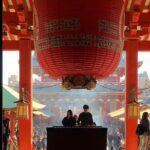
The next day moves to Asakusa and Senso-ji, Tokyo’s oldest Buddhist temple, founded in 645. The approach gives you a first look at one of Tokyo’s most recognizable religious sites, while the surrounding streets provide an easy introduction to traditional snacks, shops, and city crowds. Two hours should allow time for the temple area without turning the morning into a rushed photo stop.
The afternoon belongs to sumo at Ryogoku Kokugikan. Three hours and an included admission ticket make this more than a quick look at a stadium. If your dates match the Tokyo Grand Sumo Tournament, you get to see a sport shaped by ceremony, rank, ritual, and strength. This is one of the tour’s most distinctive choices because it places a traditional Japanese institution beside the modern capital.
Nikko and Mount Fuji bring two very different moods
Nikko Toshogu takes up most of day three. The shrine is the decorated tomb of Tokugawa Ieyasu, founder of the Tokugawa Shogunate, and its carvings and gold leaf are a sharp contrast to the restrained Zen spaces later in the trip. You also see the vermilion Sacred Bridge.
The four-hour visit gives you time to take in the detail, but the ornate decoration can be visually overwhelming. That is part of its appeal. Nikko shows you how power and religion could be expressed through color, craftsmanship, and ceremony.
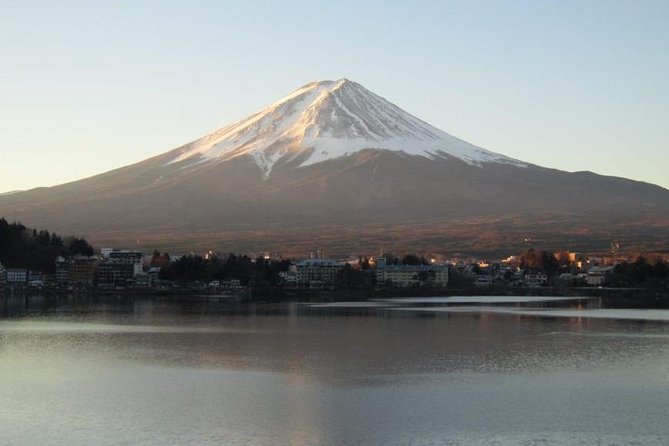
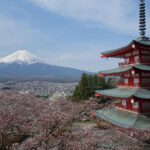
Day four shifts to Lake Kawaguchiko, with views toward Mount Fuji. Weather controls how much of the mountain you see, so keep your expectations flexible. The real prize here is the overnight ryokan experience: a traditional Japanese inn, a mineral-rich hot spring, and a kaiseki dinner. This is the sort of evening that helps you understand Japanese hospitality through routine, food, and quiet rather than through a museum label.
A ryokan may feel unfamiliar if you have never stayed in one, and the schedule allows eight hours for the stop, so ask how the overnight timing works. The provided information confirms the stay, onsen, and dinner, but you should verify room arrangements and what is covered in the tour price.
Castles, gardens, and old post towns in central Japan
Matsumoto Castle is one of only five original castles in Japan and is designated a National Treasure. The three-hour visit also includes the historic Nakamachi District, known for preserved shopping streets. This pairing works well: the castle gives you a major historic sight, while the old commercial quarter lets you see how a town’s identity survives outside a formal attraction.
Castles in Japan are not always easy to explore physically. Although the information supplied does not spell out the route inside Matsumoto Castle, you should be prepared for walking and possibly stairs when visiting an original structure.
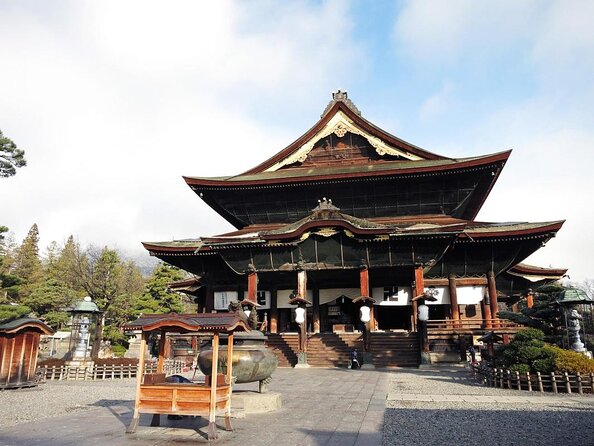
On day six, Zenko-ji Temple offers a different sort of morning. Founded in the seventh century, it is visited during a Buddhist morning service. That scheduled service is more meaningful than simply walking through a temple courtyard, though religious ceremonies can require quiet attention and respect.
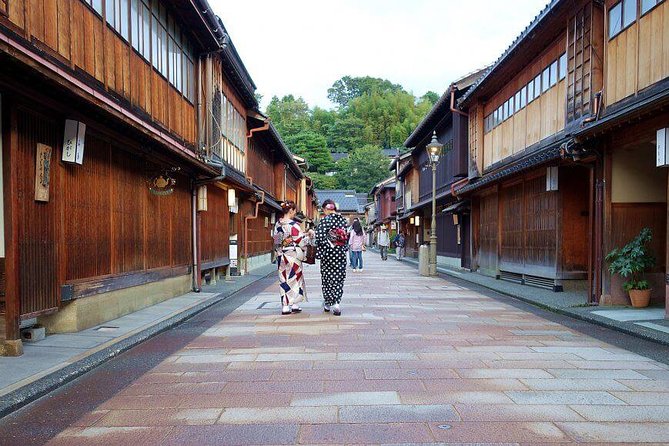
The same day takes you onward to Kanazawa, where the itinerary includes Kenrokuen Garden, the Higashi Chaya geisha district, the Nagamachi Samurai district, and Onomichi Market. Eight hours is a full day, and this is one of the itinerary’s more ambitious stretches. Kenrokuen is counted among Japan’s three most beautiful gardens, while Higashi Chaya and Nagamachi show two sides of old Kanazawa society.
The benefit is variety. The drawback is pace. You will see several different parts of Kanazawa, but you may not have long to linger in any one of them. If gardens, food, or traditional neighborhoods matter greatly to you, ask how much free time is normally available at each stop.
Day seven slows the setting down at Tsumagojuku in the Kiso Valley. This beautifully preserved post town once served people traveling the Nakasendo route between Tokyo and Kyoto during the Edo period. Two hours is enough for a walk through the historic streets and a feel for the old road, though not enough for a long exploration of the surrounding area.
Pottery and baseball make Nagoya feel lived-in
Tokoname’s Pottery Footpath is one of the tour’s best choices for seeing a working tradition outside Japan’s biggest headline attractions. The town dates to the 12th century and was a major ceramics center during the Edo period. A four-hour walk through its hillside community gives you a change from temples and castles, with old kilns and pottery shaping the character of the place.
You then attend a Chunichi Dragons baseball game at Vantelin Dome Nagoya. The two-hour game is not just a sports event. It gives you a chance to watch local fans, food habits, and the social side of Japanese baseball. The combination of pottery and baseball also keeps the itinerary from becoming a procession of shrines.
Because sporting schedules can affect the exact experience, confirm the game date when booking. The admission ticket is included, but the supplied details do not state what food, drinks, or seating arrangements are covered.


Hiroshima and Miyajima add weight and beauty
Day nine is devoted to Hiroshima. You ride a streetcar, see the Atomic Bomb Dome, walk through Peace Memorial Park, and visit the Hiroshima Peace Memorial Museum. Four hours is enough for an introduction, but this is a place where you may want emotional breathing room. The museum is serious and direct, and the subject deserves more than a hurried checklist visit.
The guided format can be useful here. Historical context helps connect the buildings, memorials, and displays, while a small group makes it easier to pause or ask questions. Still, the day is tightly planned, so do not expect to explore every corner of Hiroshima.
The next day brings a gentler setting at Miyajima. A ferry takes you to Itsukushima, where you see the famous floating torii gate and visit the World Heritage Itsukushima Shrine. Four hours allows time for the shrine, streets, and walking paths.
The appeal is the contrast with Hiroshima. Within a short journey, you move from a city defined by wartime memory to an island known for sacred architecture and coastal scenery. Ferry travel also makes this feel like a real change of place rather than another city block on a bus route.
Kyoto delivers the classic sights, with some quieter edges
Kyoto receives three days, beginning with Fushimi Inari Taisha. Its thousands of red torii gates create one of Japan’s most familiar images. The shrine dates to 711, and four hours gives you more opportunity to walk beyond the first photo stops. You do not need to complete every gate to appreciate the route, but comfortable shoes are essential.
The afternoon moves to the Gekkeikan Okura Sake Museum, founded in 1637. You see traditional sake-making techniques and taste several blends. This is a useful stop because it explains an important part of Japanese food culture in a practical way. It also gives the day a welcome change of rhythm after the long walk at Fushimi Inari.
Kiyomizu-dera and the Higashiyama District fill day 12. The temple is a World Heritage site, while the surrounding streets retain old wooden houses and small shops. Four hours lets you combine a major religious sight with street-level browsing. This is likely to be one of Kyoto’s busiest sections, so stay aware of the group meeting time.
Day 13 covers Kinkaku-ji, the Golden Temple, and Ryoanji. The first visit lasts one hour and the second also lasts one hour. Kinkaku-ji is about the striking gold-covered building and its setting beside the pond. Ryoanji offers a quieter, more spare experience through its famous Zen rock garden.
The short scheduled visits are practical for fitting in two major Kyoto sights, but they limit reflection. If you like to sit quietly in gardens or examine architecture at length, you may wish for more time. The tour’s strength is breadth, not long unstructured stays.
Tokyo National Museum closes the cultural loop
Day 14 returns you to Tokyo and the Tokyo National Museum. As Japan’s oldest national museum, it holds more than 110,000 items, including 87 Japanese National Treasures. Two hours is enough for a focused visit, but not for seeing everything.
That is probably a good thing. After two weeks of temples, shrines, towns, and ceremonies, a museum can help you connect the objects and ideas you have encountered along the way. Ask your guides which galleries best match your interests, since the collection is far too large for a complete visit in two hours.
Day 15 is departure day. You check out and head to Narita International Airport, with two hours allocated for the transfer. The information says the activity ends back at the meeting point, so clarify the exact final hotel and airport arrangements before you pay. The itinerary begins in Tokyo and ends at Narita, but the meeting-point wording is not fully specific.
What the $10,898 price really means
At $10,898 per person, this is a major investment. You are not paying only for admission tickets. The price reflects 15 days of planning, guide time, intercity movement, small-group attention, and a route that would take considerable work to organize independently.
The schedule includes admission tickets for sumo, Nikko Toshogu, the Lake Kawaguchiko experience, Matsumoto Castle, Zenko-ji, Kenrokuen, the Nagoya baseball game, Hiroshima Peace Memorial Museum, Itsukushima Shrine, the sake museum, Kiyomizu-dera, Kinkaku-ji, Ryoanji, and the Tokyo National Museum. Several temple and neighborhood visits are free.
The supplied details do not clearly list every hotel, meal, train fare, airport transfer, or optional expense included in the price. Some trip descriptions emphasize hotel planning, selected restaurants, and first-class accommodations, but you should request a written list of inclusions. That is the only fair way to judge the value.
The cost may make sense if you want a high level of support and dislike managing Japanese rail connections, hotel changes, tickets, and restaurant choices. It is less attractive if you are comfortable planning your own route or prefer to spend several days in one place. A small group and custom adjustments are valuable, but only if the included services match your expectations.
Who should book this Japan tour?
I would consider this trip a strong fit for a first visit to Japan when you want both famous sights and a guided cultural framework. It also suits experienced independent visitors who enjoy traveling alone but do not want to handle every rail transfer and hotel detail.
It may work well for solo participants because the group is small rather than bus-sized. Couples who have previously avoided organized tours may also appreciate the personal format described by the guides. The tour is not ideal for anyone wanting a slow holiday, a single-region focus, or minimal walking.
Confirmation is issued within 48 hours, subject to availability. The experience is non-refundable and cannot be changed for any reason, so do not book until your dates, fitness level, and budget are firm.
Should you book the 15-day Discover Japan Tour?
Book it if you want Japan’s major cultural sights tied together with sumo, baseball, pottery, sake, a ryokan, an onsen, and everyday rail travel. The route has real range, and the group limit of eight gives Becki and Shawn room to offer the personal help that makes a complex country easier to handle.
Before committing, ask for the full list of included costs, the hotel standard, the exact rail arrangements, the final airport transfer details, and how much free time you get in Kanazawa and Kyoto. If those answers suit you, this is a well-designed choice for seeing a broad slice of Japan without joining a large coach tour. If the price feels too steep, use the itinerary as a planning guide and build a slower independent trip around fewer cities.
FAQ
How long is the Discover Japan Tour?
The tour lasts approximately 15 days, covering 14 nights according to the experience description in the supplied reviews.
What is the price?
The listed price is $10,898 per person.
How large is the group?
The maximum group size is eight participants.
Who leads the tour?
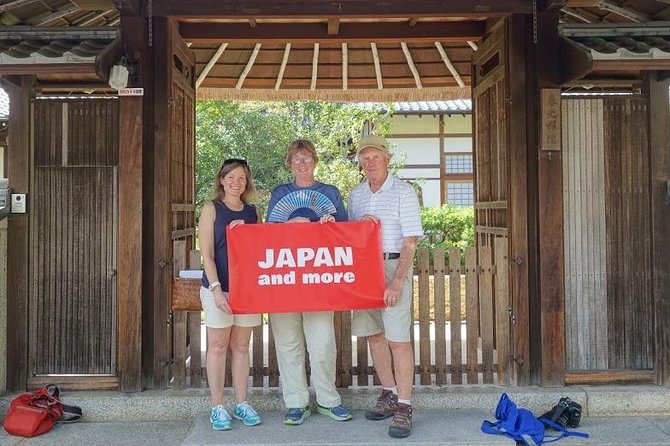
The tour is operated by Japan and More, with Becki and Shawn serving as the guides named in the tour information and guest feedback.
Where does the tour start?
The activity starts in Tokyo, Japan.
Where does the tour end?
The itinerary ends with departure to Narita International Airport. The activity information also says it ends back at the meeting point, so confirm the exact final transfer arrangements before booking.
What level of fitness is required?
A moderate level of physical fitness is recommended. The schedule includes walking, public transportation, temple visits, historic districts, and several full touring days.
Are admission tickets included?
Admission is included for many major stops, including the sumo tournament, Nikko Toshogu, the Lake Kawaguchiko experience, Matsumoto Castle, Kenrokuen Garden, the Nagoya baseball game, Hiroshima Peace Memorial Museum, Itsukushima Shrine, the sake museum, Kiyomizu-dera, Kinkaku-ji, Ryoanji, and the Tokyo National Museum.
Can I cancel or change the booking?
No. The experience is non-refundable and cannot be changed for any reason.
More tours in Tokyo we've reviewed




Tours, compared.
 ★ 5.0Mt Fuji and Hakone 1-Day Bus Tour Return by Bullet TrainFrom $163
 ★ 5.01-Day Tokyo Bus TourFrom $129
 ★ 5.0Tokyo: Shinjuku Food Tour (13 Dishes at 4 Local Eateries)From $86
 ★ 4.4Tokyo Mt Fuji 5th St & Hakone Cruise Bus Tour w/Bullet TrainFrom $15410 hours
 ★ 5.0Flagship 2-Hours Official Street Go-Kart Tour – Tokyo Bay ShopFrom $642 hours to 2 hours 30 minutes (approx.)
 ★ 4.7Tokyo: Mt. Fuji Tour, Hakone Ropeway, Owakudani, Lake AshiFrom $5410 hours