Reviewed · TOKYO
Tokyo: Make Your Own Hanko Stamp — Unique Cultural Souvenir
A small stone seal can tell more about Japan than another shop-bought souvenir. At this 90-minute hanko workshop in Otemachi, you learn why name seals matter, shape your name in kanji or katakana, and carve the final design under the eye of an experienced seal maker.
In This Article
- Key points to know before you book
- Why a hanko makes a better souvenir than another keychain
- Meeting in Otemachi and getting settled
- Learning what your name seal means in Japan
- Choosing kanji or katakana for your name
- Carving the stone with help from the craftsman
- Making the first red impression
- What the $154 price really covers
- What the language support adds
- Accessibility, weather, and practical limits
- Who will get the most from this workshop
- How this compares with an ordinary Tokyo souvenir
- Should you book the Otemachi hanko workshop?
- FAQ
- Where does the hanko workshop meet?
- How long does the experience last?
- How many people can join the session?
- Which languages are available?
- Is the workshop suitable for beginners?
- Can children join the workshop?
- Is the activity wheelchair accessible?
- What is included in the price?
- Can I cancel or pay later?
I like the tiny group size, capped at four, and the fact that your name design is explained rather than simply printed for you. I also like the finished result: an original hanko in a protective case, not a generic trinket. The main drawback is the price, $154 per person, which is a lot for a 90-minute activity unless you care about the craft and the personal meaning.
Key points to know before you book
- You carve a real personal hanko: The finished seal is made for you and includes the carving fee and a case.
- Your name becomes part of the design: You can choose kanji or katakana with help from a multilingual host.
- The workshop takes place at a traditional Tokyo seal shop: This gives the activity a stronger local feel than a standard souvenir class.
- The group is limited to four people: You get direct help from the craftsman and interpreter rather than waiting in a large class.
- The activity works in any weather: It is held indoors in central Tokyo and lasts about 90 minutes.
- Language support is broad: Guides can assist in English, French, Spanish, Italian, or Chinese.
Why a hanko makes a better souvenir than another keychain
Japan has long used hanko, also called Japanese name seals, as marks of identity and authenticity. A carved seal puts your name into a small object that carries a clear link to Japanese writing, calligraphy, and daily life.
You are not simply choosing a design from a shelf. You decide how your name will appear, then take part in making it. That gives the souvenir a personal story, which matters when you return home with a suitcase full of things that may otherwise blur together.
The experience takes place at a long-established seal shop in central Tokyo. That setting is important. You are working in a place devoted to the craft, with a local seal maker involved directly, rather than completing a broad cultural activity designed to cover several unrelated traditions.
A hanko is also compact and easy to pack. The included case protects it, and the finished seal can serve as a reminder of your trip long after the ink has dried.
If you're still narrowing it down, here are other tours in Tokyo we've reviewed.



Meeting in Otemachi and getting settled
You meet at the Lawson convenience store in front of Taihodo, at the Shin-Otemachi Building, 2-2-1 Otemachi, Chiyoda-ku. The guide welcomes you there and leads the session with help in English, French, Spanish, Italian, or Chinese.
Otemachi is a practical meeting area in central Tokyo, but you should still allow enough time to find the exact Lawson entrance. Large Tokyo buildings can have several exits and surrounding streets, so checking the meeting point before you leave your hotel is sensible.
The activity is held indoors, which removes one common problem with Tokyo tours: weather. Rain, heat, and cold should not affect the workshop itself. Transportation is not included, so you will need to pay your own way to the meeting point.
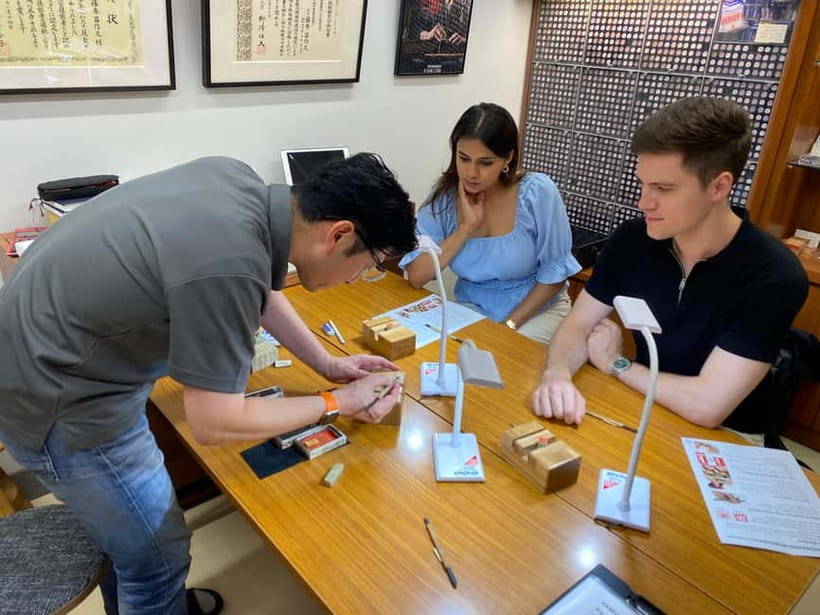
The private group format is one of the workshop’s strongest features. With no more than four participants, the guide can explain the choices at a calm pace, and the craftsman can give closer support during carving.
Learning what your name seal means in Japan
The first part of the session explains the cultural role of hanko. Your guide covers how seals have been used in Japan as marks of identity and authenticity for centuries.
That background gives the carving more purpose. Without it, the activity could feel like making a small rubber stamp. With it, you understand why the shape, characters, and red impression matter.
The workshop is especially useful if you enjoy seeing how everyday objects connect to culture. Hanko are not only decorative items. They relate to the Japanese use of names, written characters, and personal marks, all of which can feel unfamiliar if you come from a culture that relies mainly on handwritten signatures.
You do not need previous knowledge of Japanese writing. The multilingual host helps explain the choices, and the staff guide you through the technical steps. The setup is friendly to first-time participants, including people who cannot read kanji.
Choosing kanji or katakana for your name
Next comes the most personal choice: how to represent your name. You can choose kanji or katakana, with explanations of the meaning behind the characters.
Kanji can give your name a symbolic layer because each character carries meaning. Katakana offers another way to represent foreign names in Japanese writing. The important point is that you get help making the choice instead of guessing from a chart.
I would take your time here. The character selection is part of the value of the activity, and it is where the guide’s language ability matters most. Ask what each option means and how it changes the feel of the final seal.
Once the characters are chosen, you select a calligraphy style. This affects the look of the impression, so the seal becomes more than a simple translation of your name. It also reflects the visual style you prefer.
Because the group is small, you should have a chance to discuss the options directly. That personal guidance is harder to provide in a busy class with a dozen people.
Carving the stone with help from the craftsman
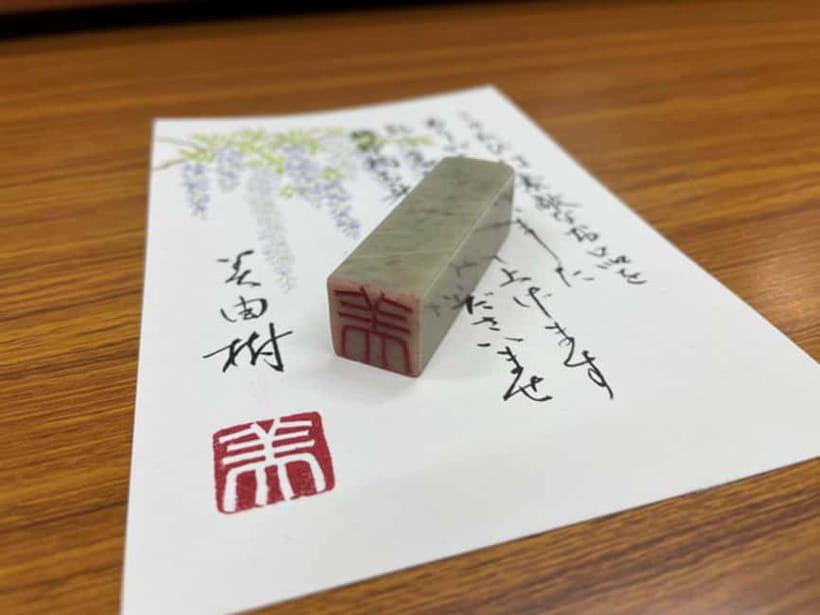
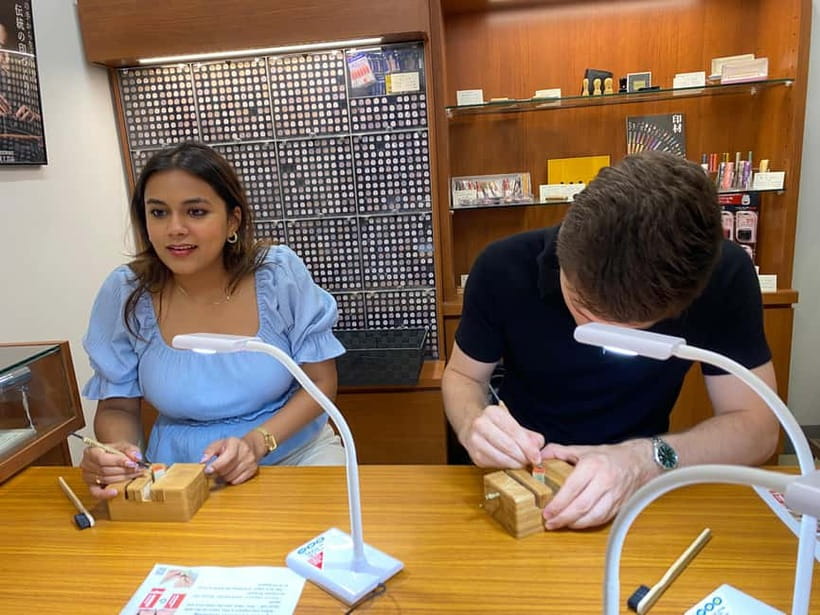
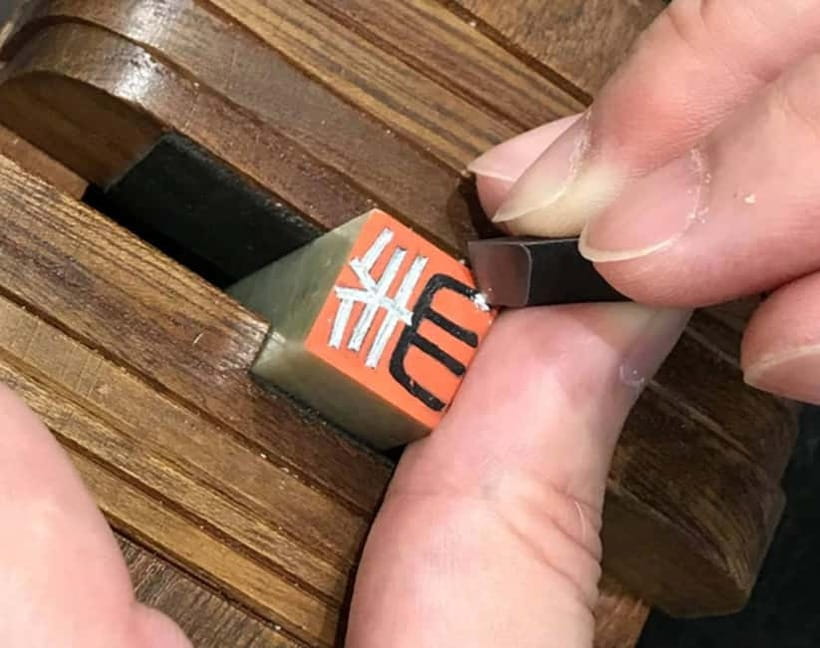
After the design is set, you begin carving your hanko. This is the hands-on heart of the session, and you do not need prior experience.
The experienced staff support you throughout the work, with attention to safety and precision. You are making the seal yourself, but you are not left to struggle alone with a tool and a blank piece of stone.
That balance is worth noting. The finished hanko is not simply made behind the counter while you watch, yet the staff also help protect you from common mistakes. If your hand is unsure, you can ask for guidance before making a cut that affects the final design.
The carving stage may appeal most to people who like craft workshops and careful manual work. It is less suited to anyone seeking a fast, passive souvenir. Even though the full experience lasts only 90 minutes, the process asks you to pay attention.
Children under five can attend as observers but cannot carve. Families with older children can consider the activity, though the supplied information does not give a specific minimum carving age beyond that rule. Staff assistance and the small group format help make the session accessible to a broad range of ages.





Making the first red impression
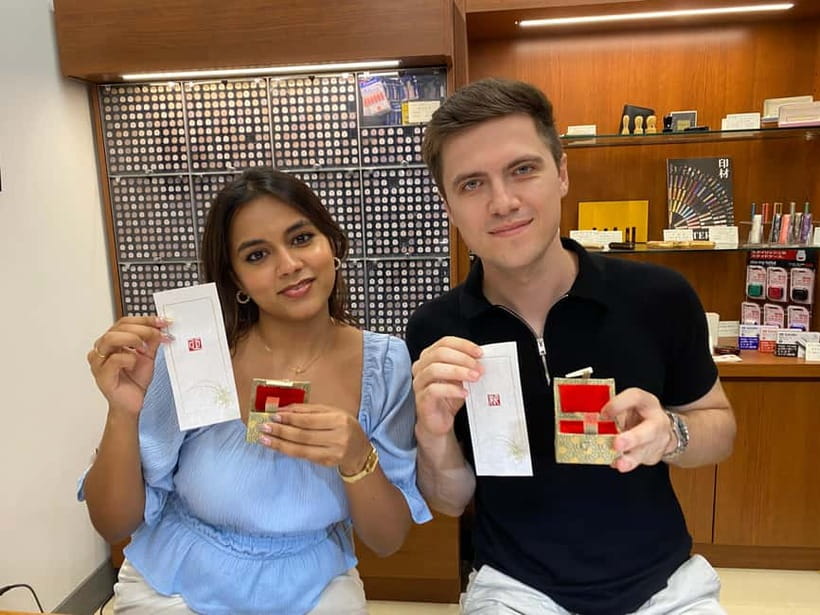
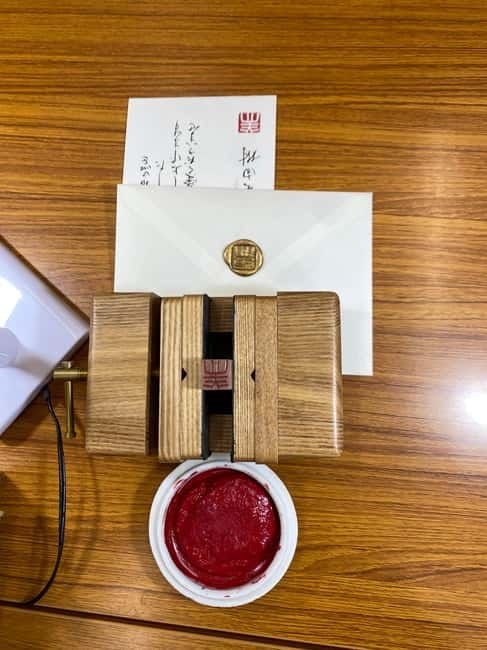
When the hanko is complete, you stamp it with traditional red ink. This first impression is the moment when the carved lines become a finished design.
You can admire the result and take commemorative photos. A first stamp also gives you a practical way to see how your chosen characters and calligraphy style work together.
The red impression is visually simple but meaningful. You have spent time deciding how your name should appear, then carved the mark by hand. That makes the final stamp a record of the workshop itself, not just a souvenir purchased at the end.
The finished hanko goes into a protective case for you to take home. The included case is a useful touch because a small carved seal could otherwise get scratched or lost in your luggage.
What the $154 price really covers
At $154 per person, this is not a cheap Tokyo activity. You are paying more than you would for a ready-made souvenir or a short demonstration.
The price makes more sense when you count what is included: the original hanko, carving fee, seal case, multilingual guide, and direct support from local staff. You are also paying for a private session with a maximum of four participants, rather than a large group class.
I would book it for the personal craft and cultural explanation, not simply for the object. If you only want a Japanese name stamp, you may find less expensive ways to buy one. If you want to understand the name choice, carve the seal yourself, and leave with a finished piece tied to your trip, the cost is easier to justify.
The experience may be particularly good for a special occasion, a couple seeking a shared activity, or a family wanting a souvenir that reflects each person. If four people attend, the private format also lets everyone work within a close group instead of splitting up.
What the language support adds
The session offers live guide support in English, French, Spanish, Italian, and Chinese. That is useful at several points, but especially when you are choosing characters and calligraphy styles.
A translation of your name is not enough by itself. You want to understand why one character is suggested, what it means, and how it may look when carved. A guide who can explain those points makes the decision more thoughtful.
The workshop has already been structured so communication works between the interpreter and the craftsman. That matters during carving, when a quick explanation can help you understand how to handle the process.
The information provided does not name the individual guides, so you should book based on the listed language support rather than expecting a particular host. The available languages are broad enough for many international visitors to take part with confidence.
Accessibility, weather, and practical limits
The workshop is wheelchair accessible, and staff can assist if needed. Since the activity takes place indoors, it runs in all weather conditions.
Pets are not allowed. Children under five may join as observers but cannot carve, so families should consider how much hands-on participation each child expects.
Transportation and personal shopping are not included. The meeting point is in Otemachi, and you are responsible for reaching it and for any extra purchases you make.
The session lasts 90 minutes. That is long enough for an introduction, design discussion, carving, and the first stamped impression, but it leaves little room for a slow pace if your group spends a long time weighing character choices. I would arrive ready to make decisions and keep the workshop focused.
Who will get the most from this workshop
I would recommend this activity to you if you prefer making something over buying something. It is also a good fit if you enjoy Japanese writing, calligraphy, small craft classes, or souvenirs with a clear story.
It suits first-time visitors because the guide explains the cultural setting from the start. Returning visitors may appreciate it even more, since it offers a quieter look at Japanese life beyond the usual temples, department stores, and food stops.
Couples can create seals together, while small families or friend groups can share the same private session. Solo participants should note that the booking format is a private group, so the experience may work best when arranged with companions, depending on availability.
I would think twice if your schedule is packed or if you are not interested in handmade objects. The workshop is not a sightseeing tour, and you will spend most of the time indoors at the seal shop. Its appeal comes from the process and meaning, not from seeing a long list of Tokyo sights.
How this compares with an ordinary Tokyo souvenir
A mass-produced souvenir gives you a quick reminder of Japan. This hanko gives you a story you can retell: how your name was represented, which calligraphy style you chose, and how you made the first red impression.
It is also more personal than a decorative object with no connection to you. The finished seal carries your chosen characters and the marks of your own work, with staff guidance along the way.
The tradeoff is that the object may not be immediately useful to you in daily life. Its value is mainly symbolic unless you have a practical reason to use a name seal. You are buying a cultural experience and a keepsake together.
The small group and direct craftsman support help keep the session focused on that personal result. The two most important qualities to me are the chance to make decisions about the name and the chance to do the carving yourself.
Should you book the Otemachi hanko workshop?
Book this workshop if you want a personal, hands-on Tokyo souvenir and are willing to pay for a small private session. The local seal shop, multilingual help, and direct guidance from the craftsman make it more meaningful than simply ordering a name stamp.
Skip it if $154 feels too high for a 90-minute activity or if you would rather spend your time outdoors seeing Tokyo landmarks. For the right person, though, the finished hanko and case offer something rare: a small object that carries your name, your choices, and a piece of Japanese craft tradition.
FAQ
Where does the hanko workshop meet?
Meet at the Lawson convenience store in front of Taihodo, in the Shin-Otemachi Building at 2-2-1 Otemachi, Chiyoda-ku, Tokyo.
How long does the experience last?
The workshop lasts 90 minutes.
How many people can join the session?
The private group has a maximum of four participants.
Which languages are available?
Live guide support is available in English, French, Spanish, Italian, and Chinese.
Is the workshop suitable for beginners?
Yes. No previous carving experience is required, and experienced staff provide support during the process.
Can children join the workshop?
Children under five may attend as observers but cannot carve.
Is the activity wheelchair accessible?
Yes. The workshop is wheelchair accessible, and staff can assist if needed.
What is included in the price?
The price includes an original hanko seal, the carving fee, a seal case, and a multilingual guide.
Can I cancel or pay later?
You can cancel up to 24 hours in advance for a full refund. A reserve-now, pay-later option is also available.
More tours in Tokyo we've reviewed




Tokyo, compared.
 ★ 5.0Mt Fuji and Hakone 1-Day Bus Tour Return by Bullet TrainFrom $163
 ★ 5.01-Day Tokyo Bus TourFrom $129
 ★ 4.6Tokyo: teamLab Planets TOKYO Digital Art Museum Entry TicketFrom $251 day
 ★ 4.0Mt Fuji & Hakone Cruise, Drum Show Bullet Train 1 Day from TokyoFrom $149
 ★ 5.0Tokyo: Shinjuku Food Tour (13 Dishes at 4 Local Eateries)From $86
 ★ 4.4Tokyo Mt Fuji 5th St & Hakone Cruise Bus Tour w/Bullet TrainFrom $15410 hours