Reviewed · GO-KARTS
Shibuya/Tokyo Tower & Shinjuku/Shibuya Go Karting Tours
Tokyo is one of the few cities where a go-kart ride can put you right in the middle of famous urban scenes. You roll through Shibuya Scramble Crossing, pass Tokyo Tower, and share the road with ordinary traffic while a guide leads the way. It is part sightseeing tour, part driving adventure, and a very different way to see central Tokyo.
In This Article
- Key points to know before booking
- What this Tokyo go-kart tour is really like
- Choosing between the 90-minute and two-hour routes
- Starting at Shinjuku or Kanda
- The safety briefing and road setup
- Shibuya Scramble Crossing from the driver’s seat
- Harajuku, Omotesando, and Shinjuku Kabukicho
- Tokyo Tower, the Imperial Palace, and Tokyo Station
- Costumes, photos, and the social side of the ride
- How traffic affects the fun
- The paperwork can make or break your booking
- Who will get the best value from $119?
- Small details that make the experience smoother
- Should you book the JAPANKART tour?
- FAQ
- How long is the Tokyo go-kart tour?
- Where does the tour start?
- Where does the tour end?
- What sights are included on the 90-minute route?
- What sights are included on the two-hour route?
- What driving documents do I need?
- Are Vienna Convention 1968 permits accepted?
- What documents do drivers from Germany, France, Switzerland, Taiwan, Belgium, Estonia, or Monaco need?
- Are photos included?
- Can anyone drive a kart on the tour?
I like two things here. First, the small group size, limited to 10, keeps the ride manageable, with a lead vehicle and support staff helping the group stay together. Second, the staff take photos and videos during the route, with the material provided at no extra cost. The main drawback is simple: Tokyo traffic means plenty of waiting at lights and slow stretches, so this is not a nonstop racing experience.
Key points to know before booking
- Shibuya Crossing is the star moment: The route takes you through one of Tokyo’s most recognizable street scenes at ground level.
- Two route lengths offer different sights: The 90-minute option focuses on West Tokyo, while the two-hour version adds Tokyo Tower, the Imperial Palace, and Tokyo Station.
- Safety support is built into the ride: Guides lead the group, and staff may follow in a vehicle or on a motorcycle.
- Your paperwork matters more than anything else: You need the correct Japanese driving documents in hard-copy form, or you will be refused without a refund.
- Photos and videos add real value: Staff capture the group on the road and during stops, then share the files without an additional charge.
- This suits confident adults: You must be at least 18, wear proper shoes, and be comfortable driving in Tokyo traffic.
What this Tokyo go-kart tour is really like
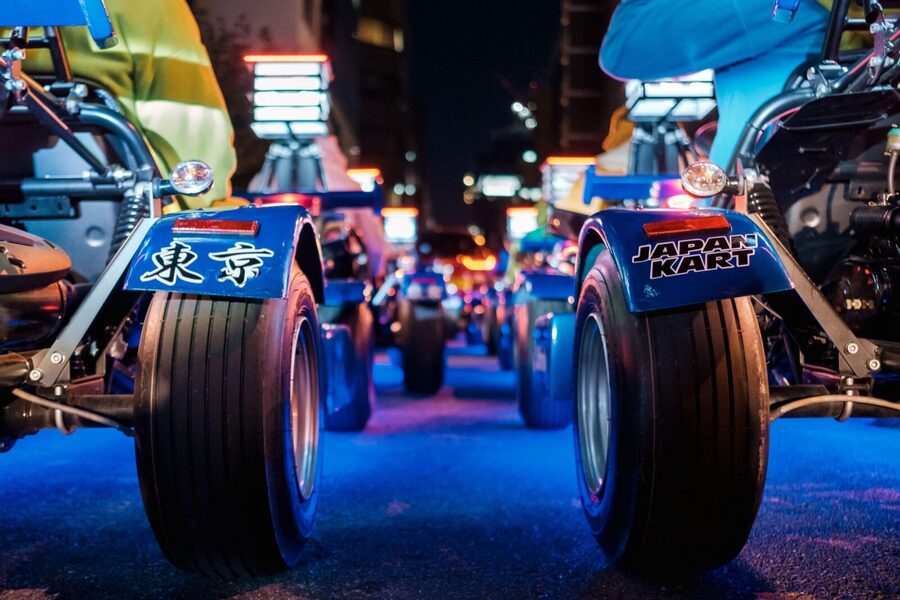
This is not a track-based karting session. You drive specially designed go-karts on public roads, following an English-speaking guide through central Tokyo. The karts are built for road driving, and the tour includes a safety briefing before departure.
That distinction matters. You are not measuring lap times or racing other people. You are watching traffic, stopping at lights, keeping your place in the group, and taking in the city from a very low seat. The reward is the odd, thrilling feeling of becoming part of Tokyo’s street scene rather than simply looking at it from a bus or pavement.
The experience lasts either about 90 minutes or two hours, depending on the option you select. Groups are limited to 10 participants, though the operator may adjust bookings if mechanical issues or kart availability affect capacity.
The staff provide costumes, jackets in colder months, and fuel. Food, drinks, and hotel transfers are not included. You return to the same branch where you started.
A few more Tokyo tours and experiences worth a look
Choosing between the 90-minute and two-hour routes
The 90-minute West Tokyo tour covers Shibuya Scramble Crossing, Harajuku, Omotesando, and Shinjuku Kabukicho. This is the better choice if you want the most concentrated dose of Tokyo street energy or have a packed schedule.
Shibuya gives you the major photo moment. Harajuku brings a different feel, with its youth culture and shopping streets, while Omotesando is known for polished architecture and major retail brands. The route then reaches Shinjuku Kabukicho, one of the city’s best-known entertainment areas.
The 90-minute option is also a sensible pick if this is your first time driving in Japan. You still get the signature crossing and several famous districts without committing as much time to public-road driving.
The two-hour route takes in the Imperial Palace, Shibuya Crossing, Roppongi, Tokyo Tower, and Tokyo Station. This version gives you a broader look at central Tokyo and includes a break for photos near Tokyo Tower.
I would choose the longer tour if Tokyo Tower is high on your list. It also gives you a better sense of how different parts of the city fit together, from the palace district and office areas to Shibuya’s crowded streets and the grand red-brick face of Tokyo Station.
The product information also refers to Ginza, Ueno, and Asakusa among the possible city highlights. Because the named route details differ by option, check the exact itinerary attached to your chosen departure before paying. The two routes are not interchangeable, and the starting branch affects which parts of the city are practical to cover.
Starting at Shinjuku or Kanda
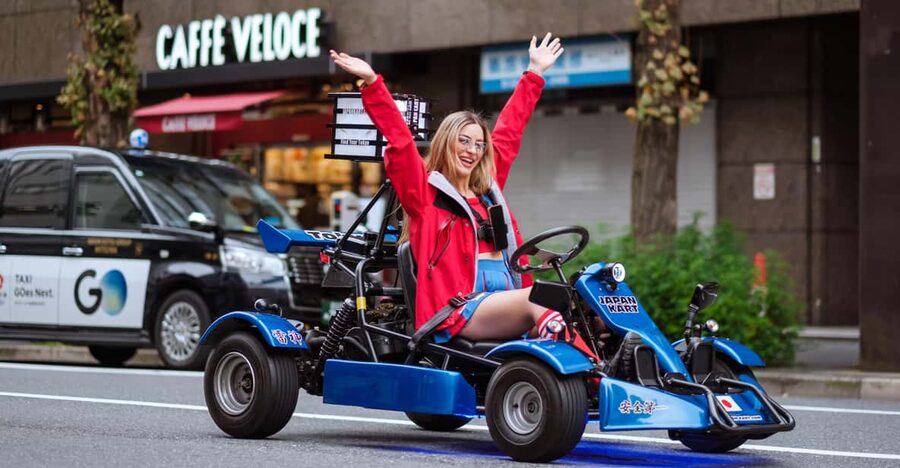
You can begin at either the JAPANKART Shinjuku Branch or the JAPANKART Kanda Branch, depending on the option selected. Your drop-off point is the same branch where you began.
This choice is not just a minor address detail. The starting point shapes the route, and the information provided specifically notes that not every branch covers the same highlights. If Shibuya, Tokyo Tower, or the Imperial Palace is your main goal, read the departure description carefully rather than assuming all branches follow the same circuit.
Allow enough time to reach the shop before departure. The tour cannot simply wait for a late arrival, since the group moves through live city traffic and must stay on schedule.
The safety briefing and road setup
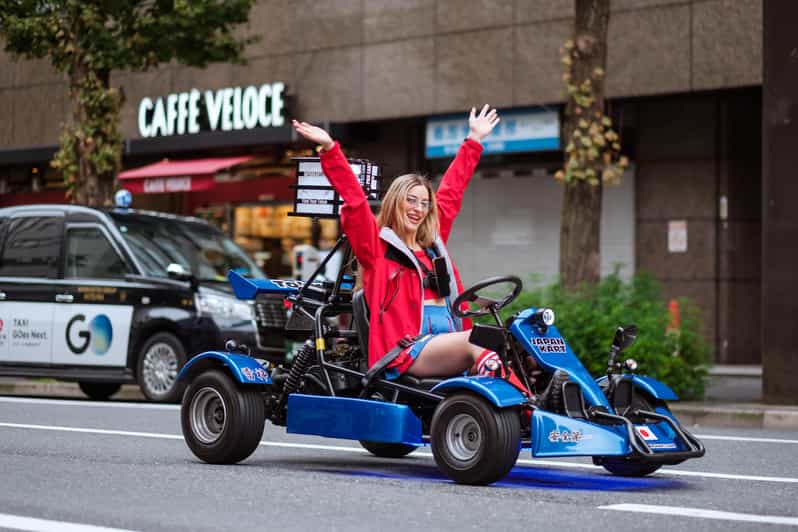
Before you drive, the staff explain how the karts work and cover the safety rules. This is an important part of the experience, not a quick formality. Several customers specifically appreciated the clear instructions and the patient help given to anyone who needed a few minutes to build confidence.
The group is guided from the front, with staff support behind. Depending on the group and route, you may see a support car and motorcycle helping keep participants together. That arrangement is useful because traffic lights and cars can separate the karts for short periods.
You should not panic if the group spreads out briefly. Staff are positioned to guide people back toward the main group. Still, you must pay attention, follow instructions, and drive responsibly. This is public-road driving in a major city, not a closed course.
The karts are described as originally designed for road use. The emphasis from the staff is on control and safe movement rather than speed. You may get a few open stretches, but city traffic creates frequent stops and slower sections.
Shibuya Scramble Crossing from the driver’s seat
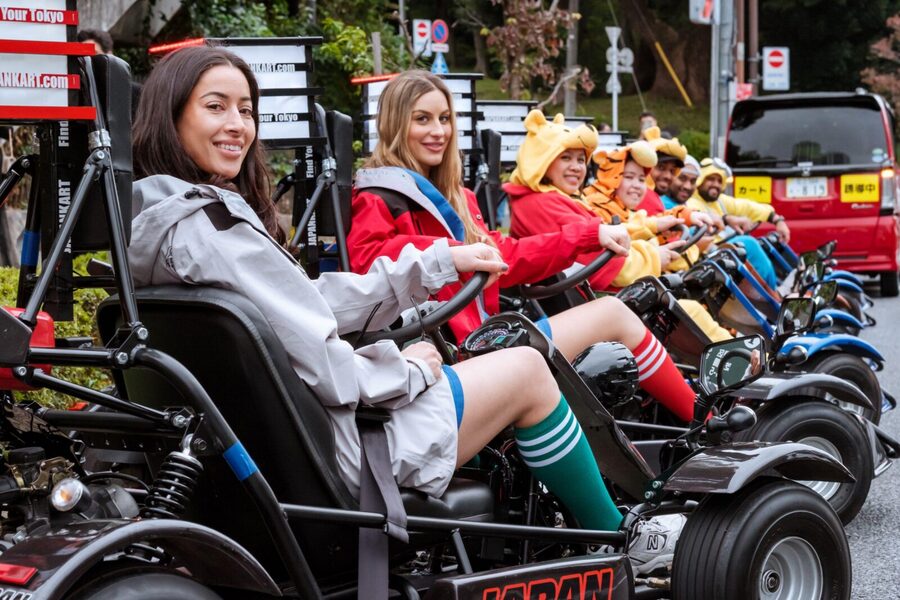
Shibuya Crossing is the tour’s headline attraction. From a kart, you experience it at street level, surrounded by the signs, buildings, traffic, and crowds that make this intersection famous.
The crossing itself is not a long ride. You wait for the signal, move with the group, and then continue through the surrounding streets. The special part is the viewpoint. Instead of watching the crossing from an observation deck or nearby pavement, you pass through it as part of the flow of Tokyo.
The route may take you across Shibuya more than once, depending on the tour plan. Staff also use the area for photographs, making it one of the strongest moments for the included media.
This is a busy section, so it can involve stopping and starting. If you want pure speed, you may find it restrained. If you want a memorable city scene with a bit of theatrical fun, it delivers.
A few more Tokyo tours and experiences worth a look

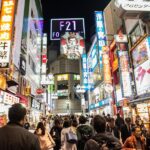
Harajuku, Omotesando, and Shinjuku Kabukicho
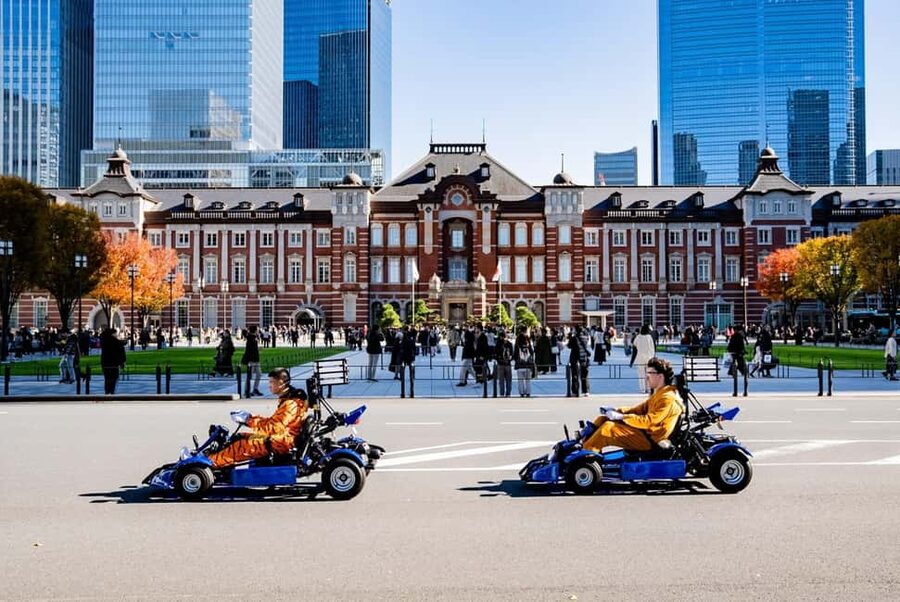
The shorter route gives you a useful slice of West Tokyo.
Harajuku is associated with youth fashion, shopping, and Tokyo’s more playful street culture. You will not have time to stop and browse during the driving portion, but passing through gives you a quick sense of the area’s character.
Omotesando offers a change of tone. Its broad avenue and modern buildings provide a more polished urban setting, making the drive feel less like a sightseeing circuit and more like a moving architecture tour.
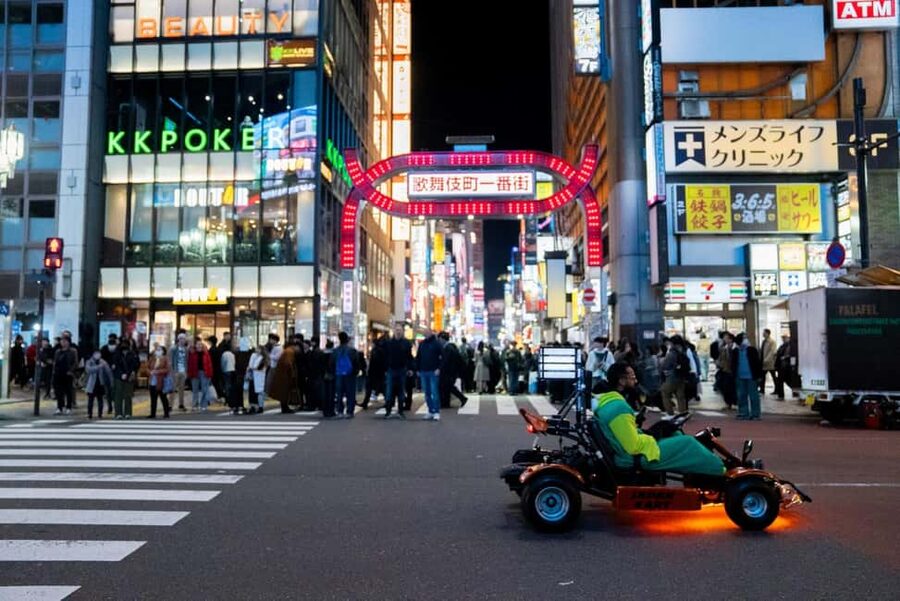
The route ends its West Tokyo focus around Shinjuku Kabukicho, a well-known entertainment district. The area is especially recognizable after dark, but the tour timing determines how much of its nightlife atmosphere you see. Do not book this ride expecting a walking tour or long stops in each district. Most sights pass by from the kart, with limited time to pause.
Tokyo Tower, the Imperial Palace, and Tokyo Station
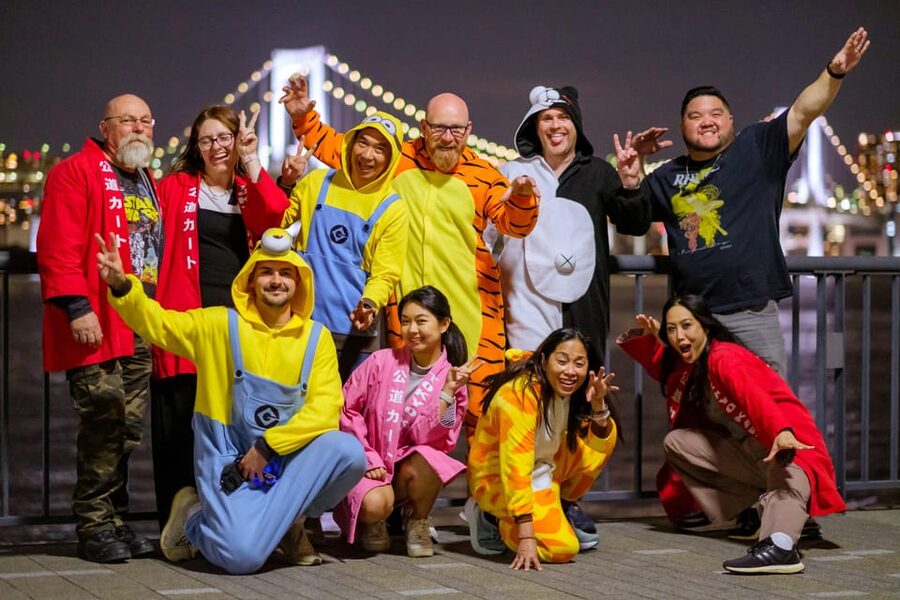
The longer course adds three major central Tokyo sights.
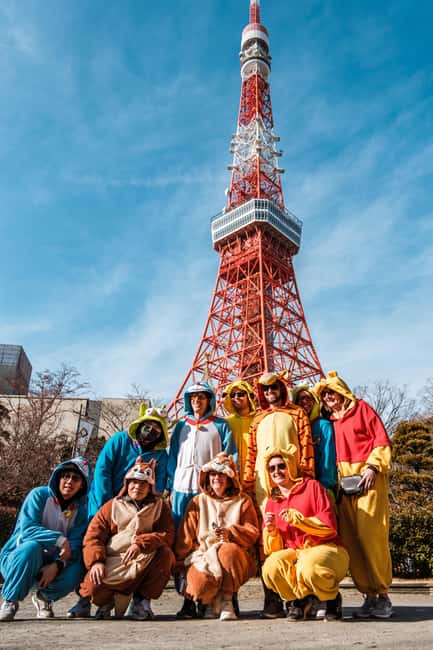
At Tokyo Tower, the tour includes a break and photo stop. This is useful because you can get out of the moving traffic for a moment and appreciate the tower’s design from a closer street-level position. The staff also use the break to capture group photos.
The Imperial Palace is listed as a pass-by stop. You should think of this as a scenic section rather than a palace visit. There is no entry or guided visit included, but the route gives you a look at the broad central district around Japan’s imperial residence.
Tokyo Station is a photo stop. Its distinctive red-brick exterior provides one of the more formal backdrops on the route, a contrast to the signs and crowds around Shibuya. Again, the kart gives you a quick street-level impression rather than time for an interior visit.
Roppongi is listed as a pass-by point on the longer route. It adds another central district to the drive, but there is no scheduled stop there.
Costumes, photos, and the social side of the ride
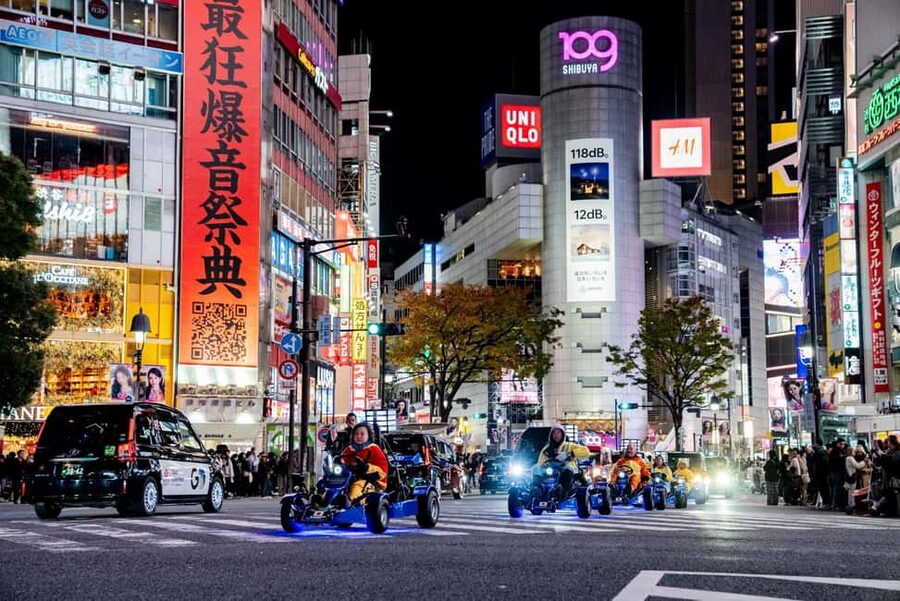
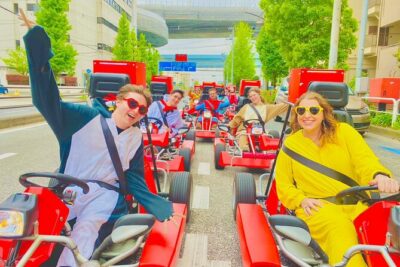
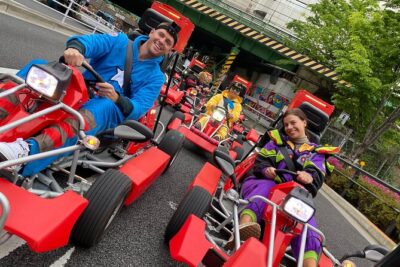
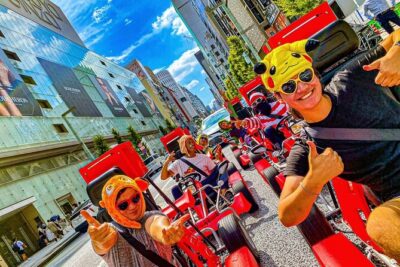
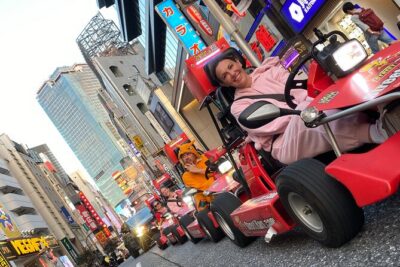
Costumes are included, which adds a deliberately silly layer to the experience. You can dress up for the street scenes, and the unusual sight of a line of costumed kart drivers is part of what makes the activity memorable.
You do not need to bring your own camera setup to get pictures. Staff take photographs and videos during the ride and at stopping points. The material is provided without an extra fee, and some karts have mounts ready for a phone or GoPro.
That is a strong practical benefit. You are unlikely to take many good pictures while driving, and stopping to use your phone would be unsafe. The staff-created images let you enjoy the ride without trying to document every turn yourself.
The social side is another plus. With a maximum of 10 people, this can work well for couples, families with adult children, and small friend groups. One group of nine was accommodated, and the organized formation helped everyone ride together.
How traffic affects the fun
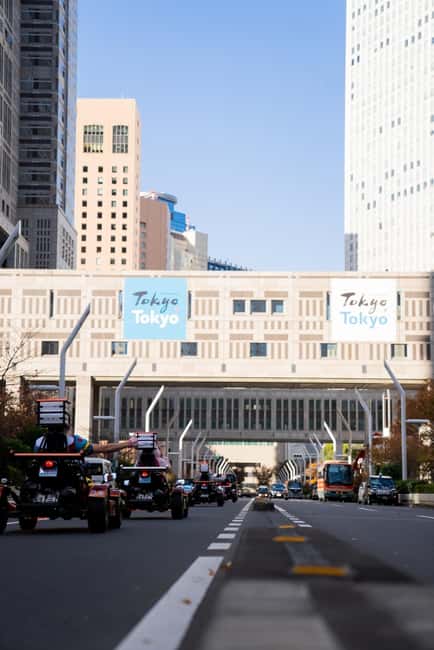
Tokyo’s roads are orderly, but they are still city roads. You will stop at traffic lights, wait behind cars, and sometimes lose sight of other karts when the traffic flow breaks up the group.
That can be frustrating if your main goal is speed. The ride offers only occasional chances to open up, and most of the time you are moving at a controlled city pace. The upside is that the slower rhythm gives you time to look around.
The experience depends partly on your attitude. If you treat it as a moving sightseeing tour with a playful driving element, the traffic becomes part of the city experience. If you expect a go-kart track with constant acceleration, you may feel the $119 price is harder to justify.
Weather also matters. Rain and cold can make the ride less comfortable, especially because you are exposed to the wind. Jackets are provided during colder months, but you should still dress for the forecast. One ride in rainy conditions was described as more difficult because of the cold, although the staff remained helpful.
In hot weather, the open-air format can feel intense. At the same time, the staff have provided ice water during very hot conditions, showing attention to comfort during the ride.
The paperwork can make or break your booking
This is the most important practical warning. You must arrive with the correct documents. If you do not, you cannot drive and you will not receive a refund.
For most participants, bring all three:
- Your valid driving license from your home country
- An international driving permit issued under the Geneva Convention of 1949
- Your passport
The international permit must be issued by an approved authority in your own country. Examples given include AAA or AATA in the United States, AAA in Australia, AA or RAC in the United Kingdom, and CAA in Canada.
Japan does not accept international driving permits issued under the Vienna Convention of 1968. Your permit must be a hard-copy booklet, not a loose paper document or a digital file. Do not rely on an online company that is not an approved issuer.
Drivers from Switzerland, Germany, France, Taiwan, Belgium, Estonia, and Monaco have different requirements. You need your original driving license, an official Japanese translation from the authorized organization, and your passport.
US military participants need the SOFA combination of an active military ID and a stateside driver’s license.
Bring the documents to the shop on the day of the tour. If you are uncertain, contact JAPANKART before booking or before your departure date. A cancellation made at least 24 hours before the start time qualifies for a full refund, but forgetting the required license or permit does not.
Who will get the best value from $119?
At $119 per person, this is not a cheap way to move around Tokyo. Public transport costs far less, and you can visit many of the same districts on foot or by train.
The price makes more sense when you value the full package: a road-legal kart, safety briefing, guide support, costume, seasonal jacket, fuel, organized route, and staff photos and videos. You are paying for a special activity, not simply transportation.
I see the best value for someone who has already planned ordinary sightseeing and wants one unusual Tokyo memory. The included media also improves the deal, since you do not have to arrange a photographer or risk handling a phone while driving.
This tour suits you if you are at least 18, hold the correct documents, enjoy novelty, and are comfortable sharing public roads. It is less suitable if you dislike traffic, want a quiet cultural tour, or have limited flexibility in case weather or mechanical problems alter the schedule.
The reserve-now, pay-later option can help if you are still arranging your Tokyo plans. Availability and start times vary, so check the specific departure rather than assuming a fixed schedule.
Small details that make the experience smoother
Wear closed-toe shoes. Sandals and flip-flops are not allowed. Alcohol and drugs are prohibited, and alcoholic drinks cannot be taken in the vehicle.
Do not plan a meal during the tour. Food and drinks are not included, apart from staff-provided water in some hot-weather conditions. Eat beforehand and arrive ready to drive.
Book this experience early in your Tokyo stay if possible. That gives you a chance to reschedule if bad weather cancels the tour, and it leaves room to try again if availability permits. Weather-related cancellations qualify for a full refund, or you may be offered a new time depending on availability.
Mechanical parts can also lead to schedule changes. The operator reserves the right to adjust or cancel a departure when the karts require attention.
Should you book the JAPANKART tour?
I would book it if you want a playful, highly visual way to see Tokyo and you have the paperwork perfectly sorted. The strongest moments are Shibuya Crossing, the Tokyo Tower photo stop on the longer route, the costumes, and the staff support that helps nervous drivers settle in.
Choose the 90-minute option for a focused West Tokyo outing through Shibuya, Harajuku, Omotesando, and Kabukicho. Choose two hours if you want Tokyo Tower, the Imperial Palace area, and Tokyo Station in the same ride.
I would skip it if you are seeking speed, a quiet tour, or a detailed explanation of Tokyo’s sights. Traffic slows the pace, and most landmarks are viewed from the road. For the right person, though, the combination of city views, low-slung karts, helpful guides, and free photos makes this one of Tokyo’s most memorable oddball activities.
FAQ
How long is the Tokyo go-kart tour?
The available options last about 90 minutes or two hours. Starting times depend on availability.
Where does the tour start?
The tour starts at either the JAPANKART Shinjuku Branch or the JAPANKART Kanda Branch, depending on the option you book.
Where does the tour end?
The activity ends back at the branch where you started.
What sights are included on the 90-minute route?
The 90-minute West Tokyo route includes Shibuya Scramble Crossing, Harajuku, Omotesando, and Shinjuku Kabukicho.
What sights are included on the two-hour route?
The two-hour route includes the Imperial Palace area, Shibuya Scramble Crossing, Roppongi, Tokyo Tower, and Tokyo Station. Tokyo Tower and Tokyo Station include photo time, while the Imperial Palace and Roppongi are pass-by points.
What driving documents do I need?
Most drivers need their home-country driving license, a hard-copy international driving permit issued under the Geneva Convention of 1949 by an approved authority in their own country, and their passport.
Are Vienna Convention 1968 permits accepted?
No. International driving permits issued under the Vienna Convention of 1968 are not accepted in Japan.
What documents do drivers from Germany, France, Switzerland, Taiwan, Belgium, Estonia, or Monaco need?
You need your original driving license, an official Japanese translation from the authorized organization, and your passport.
Are photos included?
Yes. Staff take photos and videos during the ride and at stops, and the files are provided without an additional charge. Some karts also have mounts for a phone or GoPro.
Can anyone drive a kart on the tour?
Drivers must be at least 18 years old. You also need the required driving documents and cannot wear sandals or flip-flops.
More Shibuya Tours in Tokyo
More Shinjuku Tours in Tokyo

More tours in Tokyo we've reviewed












Go-Karts, compared.
 ★ 5.0Flagship 2-Hours Official Street Go-Kart Tour – Tokyo Bay ShopFrom $642 hours to 2 hours 30 minutes (approx.)
 ★ 5.0Official Street Go-Kart in ShibuyaFrom $76
 ★ 5.0Official Street Go-Kart Tour – AkihabaraFrom $61
 ★ 5.0Tokyo Go Kart: Asakusa, Skytree, and Akihabara **IDP MUST**From $99
 ★ 5.0Shibuya Official Street Go-Kart in Shibuya AnnexFrom $69
 ★ 4.6Tokyo: Asakusa and Skytree Go-Kart Tour and Photo ShootFrom $67