Reviewed · ASAKUSA TOURS
Hand-carved stamps made with craftsmen in Asakusa, Tokyo
Carving your own Hanko seal turns a small souvenir into something you made with your own hands. At this private Asakusa workshop, you shape a piece of natural wood, carve a name or pattern into it, and take home a working Japanese seal.
In This Article
- Key points
- What Makes a Hanko Worth Making
- Arriving at the Taito Workshop
- Choosing Your Name or Pattern
- Learning the Carving Technique
- A Private Experience in Asakusa
- Testing the Finished Hanko
- Is $93.33 a Fair Price?
- Who Will Enjoy This Workshop Most?
- Practical Details Before You Book
- How It Fits Into an Asakusa Day
- Should You Book the Hanko Workshop?
- FAQ
- Where does the Hanko workshop take place?
- How long does the activity last?
- Is the workshop private?
- What is included in the price?
- Do I need to bring any equipment?
- What kind of wood is used?
- Can I choose my own design?
- What is the minimum age?
- Is there a restroom at the workshop?
I like the personal help from the artisan, especially since carving small designs can be tricky for beginners. I also like that the finished stamp comes with a vermilion inkpad, so you can use it right away. The main drawback is the price: at $93.33 per person, it can feel high if your session finishes closer to one hour than the advertised 90 to 120 minutes.
Key points
- Carve natural Sakura or Sansho wood: Your seal is made from a small wooden twig about 10 centimeters long.
- Get hands-on help: The artisan guides you through the design and carving instead of leaving you to guess.
- Create a personal design: You can carve your name or an original pattern, though complex designs may not fit the time limit.
- Enjoy a private workshop: Only your group takes part, giving you direct attention and a calmer pace.
- Take home a complete keepsake: The finished Hanko and a vermilion inkpad are included.
- Plan for 90 to 120 minutes: Some people may finish faster, so the value depends partly on how much guidance and carving time you need.
What Makes a Hanko Worth Making
A Hanko is a traditional Japanese name stamp or personal seal. Instead of signing a name with a pen, a person can use a carved stamp to leave an identifying mark in red ink. This workshop gives you a small, practical way to connect with that tradition without needing prior carving experience.
You are not simply choosing a premade souvenir from a shelf. You create the mark yourself, with help from a local craftsperson. That difference matters. The final piece may have small imperfections, but those marks show that your stamp was made by hand rather than mass-produced.
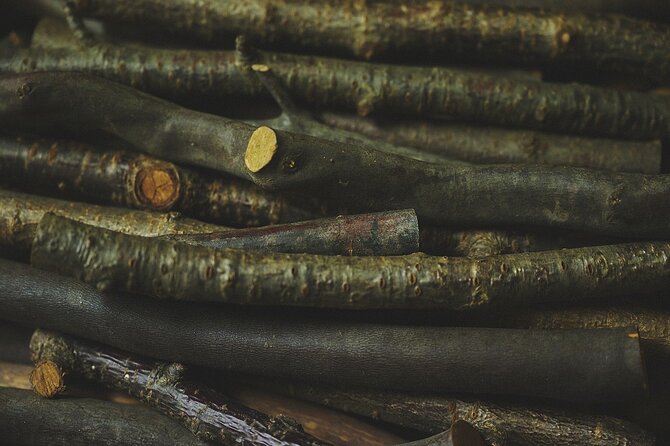
The workshop uses natural wood, including Sakura or Sansho. Your piece is a small twig, about 10 centimeters long, so it is easy to pack in luggage. It also has the look and feel of a real craft object rather than a bulky tourist purchase.
You can work from your name or choose an original pattern. The artisan can help you plan something suitable for the size of the wood. Keep your ambitions sensible, though. A detailed design may be too difficult to complete during the session, and complex patterns may not be possible within the allotted time.
A few more Tokyo tours and experiences worth a look



Arriving at the Taito Workshop
The experience begins at Ito Inbo, at 1-chome-19-4 Senzoku in Taito City. This is in the wider Asakusa area, near public transportation, but transportation to the workshop is not included. You will need to make your own way there and return to the same meeting point after the session.
Give yourself enough time to find the address. A hands-on activity is more enjoyable when you arrive settled rather than rushing in with a phone in one hand and a map in the other.
There is no toilet at the workshop. Use one before you arrive. A public restroom is about a one-minute walk away, which helps, but it is still better to handle this before the carving begins.
You do not need to bring tools or supplies. Everything needed for the activity is provided. Wear casual clothes, and consider bringing an apron if you are worried about small bits of carving debris. The workshop does not require any special equipment from you.
Choosing Your Name or Pattern
The first creative decision is what to carve. You may choose your name or develop a custom design with guidance from the artisan. This is a small surface, so the design needs to be clear enough to carve and recognizable when stamped.
If you are using your name, think ahead about the characters or lettering you want. The provided information does not promise a translation or a particular Japanese rendering, so you should ask the artisan what is practical during the session. An original symbol or simple pattern may be a better choice if you want a design that feels personal without adding too much technical difficulty.
This planning stage is important because the carving time is limited. A simple mark lets you focus on learning the technique. A more complicated image may require more correction and may not be finished within the session.
I would arrive with two or three ideas rather than one fixed plan. That gives you a backup if your first design is too detailed for the small piece of wood.
Learning the Carving Technique
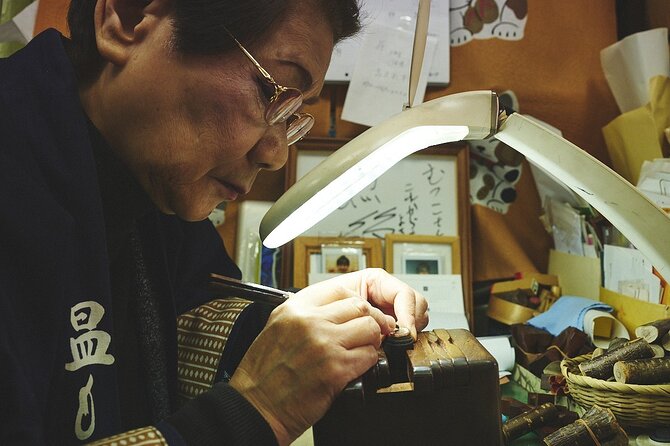
The main activity is carving into the wooden seal with hand tools. Some skill is required, but the artisan provides thorough guidance. You will learn how to hold and use the tools, remove material carefully, and work toward a clean stamp.
This is not a workshop where you are expected to produce perfect results alone. The direct assistance is one of the strongest reasons to book a private session. When your cut feels uncertain, you can ask for help. When a pattern needs simplifying, the artisan can guide you toward something achievable.
The pace will vary. The official duration is about 90 to 120 minutes, but one participant completed the work in about an hour. That shorter timing may suit you if you want a compact activity, but it affects the value at this price. People who enjoy careful craft work and take their time are more likely to feel they received a full experience.
The artisan’s kindness and patience are central to the workshop. The activity has been described as friendly and helpful, with both adults and children managing to complete personal stamps with assistance. That makes it a reasonable choice for families with older children, provided everyone understands that the tools require care.
A Private Experience in Asakusa
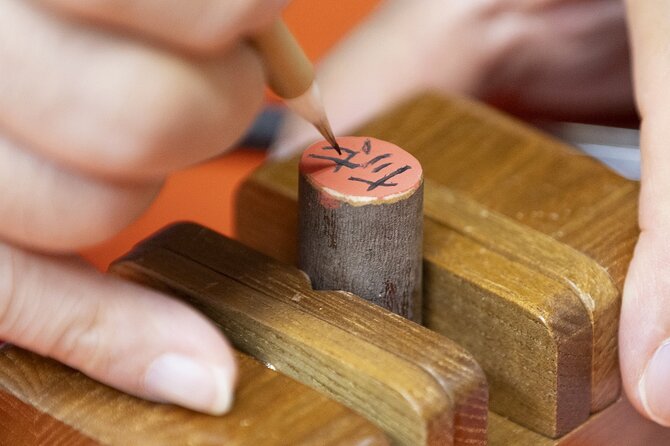
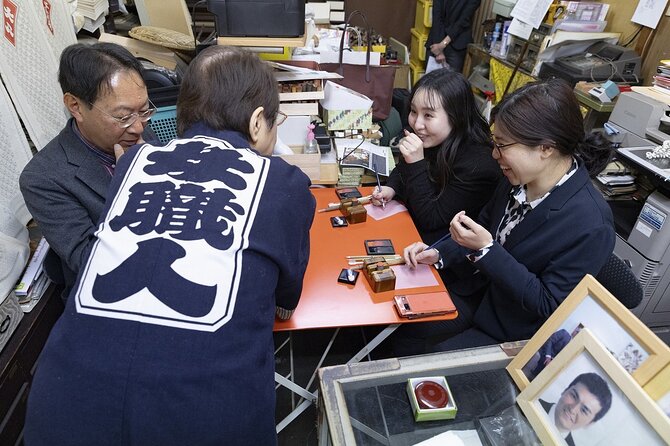
Only your group participates in this activity. A private format gives you more room to ask questions, work at your own pace, and adjust the design without comparing yourself with a larger class.
It also makes the workshop more flexible for mixed groups. One person might want careful help with a detailed name, while another might finish a simple pattern quickly. The artisan can respond to those different needs more easily than in a large public session.
The English interpreter is included, which is useful for explaining the carving process and discussing your design. The supplied information does not name the interpreter or artisan, so you should not expect to request a particular guide by name. The workshop is presented as a chance to learn from a local artisan, not as a formal lecture with a published instructor profile.
You may receive some background about Hanko and the craft tradition, though the balance between explanation and carving can vary. If cultural context matters greatly to you, ask questions during the process. One person felt the historical explanation was limited, so this should be treated mainly as a practical craft workshop with cultural insight, rather than a full history lesson.




Testing the Finished Hanko
Once the carving is complete, you can test the stamp with the included vermilion inkpad. This final step shows whether the design reads clearly and whether any small areas need attention.
The inkpad adds real value because you are not left with an object that cannot be used. You can stamp paper, cards, notebooks, or other suitable surfaces after returning home. The experience information does not specify packaging, storage, or postage, so protect the finished piece yourself when packing it.
Your Hanko can work as a personal keepsake or a small gift. Since the design is handmade, it carries a personal connection that a standard souvenir lacks. It also takes up very little space, making it practical if you are traveling with limited luggage.
Do not expect the polished finish of a machine-made seal. The appeal is the process and the handmade result. A slightly uneven mark is part of what you created.
Is $93.33 a Fair Price?
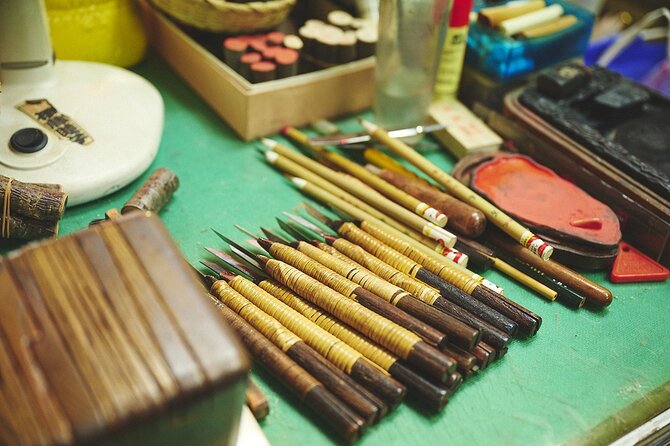
At $93.33 per person, this is not a bargain activity. The fee includes the workshop, tools, natural wood, English interpretation, the finished Hanko, and a vermilion inkpad. The private format also means your group receives direct attention rather than joining a large class.
The value depends on what you want from the outing. If you are looking for the cheapest souvenir, you can spend far less elsewhere. If you want a guided craft session and a personal object that records your time in Japan, the price becomes easier to justify.
Duration is the key concern. The expected session lasts 90 to 120 minutes, but it may finish in about an hour if you work efficiently. Ask questions, take care with your design, and use the time to learn about the tools and tradition. That will help you get more from the appointment, though it cannot guarantee a longer session.
Group discounts are available, which may improve the cost for families or friends booking together. The experience is private, so you are paying partly for the setting and attention, not just for the wood and inkpad.
Who Will Enjoy This Workshop Most?
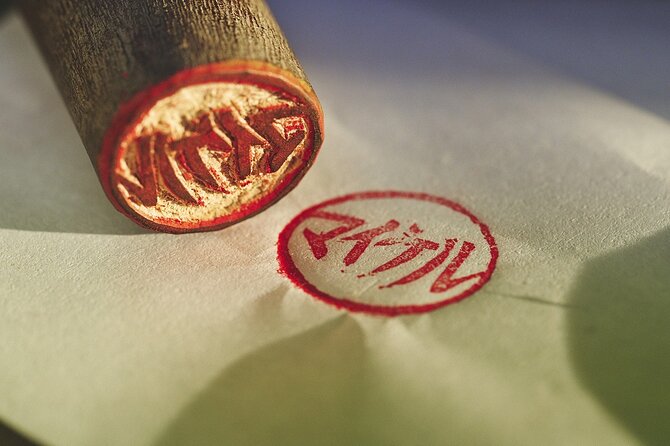
I would recommend this experience to anyone who prefers making a souvenir rather than buying one. It suits couples, families with children over 10, and small groups that want a quiet activity in Asakusa.
It is also a good fit if you enjoy careful handwork. You do not need advanced skill, but patience helps. The tools and small scale of the design mean that rushing can make the task harder.
Children under 10 may be able to participate, but separate confirmation is required. The stated minimum age is over 10, so families should check before booking rather than assume a younger child can join.
This is less suitable if you want a long cultural talk, a broad tour of Asakusa, or a highly polished professional product. The activity takes place at one workshop and focuses on making one seal. Its strength is direct participation, not sightseeing or a large program of demonstrations.
Practical Details Before You Book
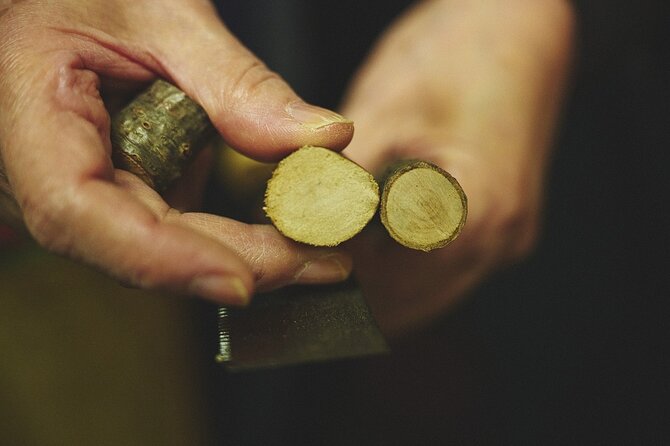
The experience lasts approximately 90 to 120 minutes, though your actual time may vary. Nothing particular is required to bring, and the tools and materials are supplied.
Wear casual clothing. An apron is optional, but useful if carving debris concerns you. You should also use a restroom before arriving, since there is no toilet inside the workshop.
The experience is subject to reservation requests and availability. Confirmation is sent within 48 hours of booking when the requested time is available. In some cases, the date may need to change or the request may not be accepted, so avoid building a tightly packed schedule around this one appointment.
The activity is non-refundable and cannot be changed after booking. Read that condition carefully before paying, especially because the workshop may be scheduled well ahead of your visit. It is booked, on average, 38 days in advance, so planning early is wise, but do not book until your Tokyo schedule is firm.
How It Fits Into an Asakusa Day
The workshop ends where it begins, at the Taito meeting point. That makes it easy to combine with other plans in the Asakusa area, though the activity itself does not include transportation or additional sightseeing.
You might schedule it as a break from temples, shopping, and street exploring. The carving gives you a reason to sit down and concentrate for a while. It is also a useful choice on a day when you want something hands-on rather than another guided walk.
Allow extra time before the appointment for the journey and restroom stop. Afterward, keep the fresh Hanko and inkpad secure in your bag. The workshop does not list additional souvenirs as included, though items may be available for purchase at the location.
Should You Book the Hanko Workshop?
Book this if you want a private, hands-on craft and value the story behind a personal souvenir. The kind artisan guidance, natural wood, English interpretation, and included inkpad make the activity easy to join, even for beginners.
Think twice if $93.33 feels steep for a session that could finish in about an hour. You should also choose a simple design and arrive ready to work, since an elaborate pattern may not fit the time.
For families with older children, couples, and anyone who likes making things, this is a memorable Asakusa activity. It is not the best pick for a history-focused tour or a low-cost souvenir hunt, but it offers something more personal than shopping: a small Japanese seal carrying your own mark.
FAQ
Where does the Hanko workshop take place?
It begins and ends at Ito Inbo, 1-chome-19-4 Senzoku, Taito City, Tokyo 111-0031, Japan.
How long does the activity last?
The expected duration is 90 to 120 minutes, though the actual time can vary. Some sessions may finish in about one hour.
Is the workshop private?
Yes. Only your group participates in the activity.
What is included in the price?
The fee includes the experience, tools, natural wood materials, the Hanko you create, an English interpreter, and a vermilion inkpad.
Do I need to bring any equipment?
No particular items are required. You may bring your own apron if you are concerned about carving debris.
What kind of wood is used?
The seal is made from a small twig of natural wood, such as Sakura or Sansho. It is approximately 10 centimeters long.
Can I choose my own design?
Yes. You can create your name or an original pattern with guidance from the artisan. Complex patterns may not be possible within the available time.
What is the minimum age?
Participation is for people over 10 years old. Children under 10 require separate confirmation.
Is there a restroom at the workshop?
There is no toilet at the workshop. A public restroom is about a one-minute walk away, so use the restroom beforehand if possible.
More Asakusa Tours in Tokyo

More tours in Tokyo we've reviewed












Asakusa Tours, compared.
 ★ 4.8Tokyo: Japanese Dance Cabaret Theater Asakusa-Kaguwa TicketFrom $492 hours
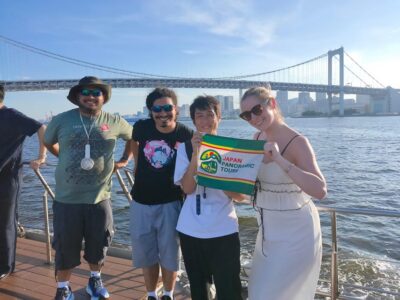 ★ 4.7Tokyo: Meiji Shrine, Asakusa, Skytree Bus Tour and CruiseFrom $12210 hours
 ★ 4.9Tokyo: Roll and Authentic Sushi Making Class in AsakusaFrom $581h 40m
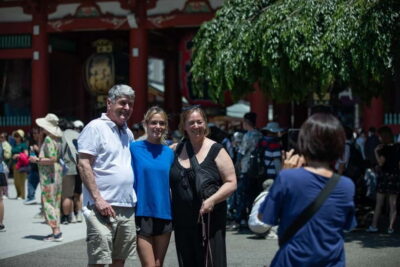 ★ 4.8Tokyo: Asakusa Walking Tour with Sensoji Temple VisitFrom $222 hours
 ★ 5.0Tokyo Asakusa Rickshaw TourFrom $42
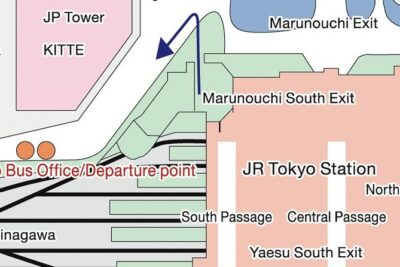 ★ 4.5Tokyo Panoramic 1 Day: Meiji Shrine, Asakusa, Odaiba and SKYTREE®From $85