Reviewed · MT FUJI DAY TRIPS
Full Day Tour at Mt. Fuji, Onsen, Lake Kawaguchi and Yamanaka
Mount Fuji is the star here, but the real appeal is having someone else manage the long drive from Tokyo. You’ll combine Fuji views with Lake Kawaguchi, seasonal photo stops, and a choice of a swan boat or hot spring at Lake Yamanaka.
In This Article
- Key points to know before booking
- What this $49.97 day trip really gives you
- Arakurayama Sengen Park from October through April
- Mt. Fuji 5th Station from April through September
- Lake Kawaguchi gives you the most breathing room
- Lake Yamanaka means choosing between water and an onsen
- The long ride is part of the bargain
- Shared group details and meeting instructions
- What to pack and what to budget
- Who will get the most from this tour
- Should you book this Fuji day trip?
- FAQ
- How long does the Mount Fuji tour last?
- What is the price of the tour?
- Is transportation included?
- Is the tour private?
- Which Mount Fuji stop is included in summer?
- Which stop replaces the 5th Station in winter?
- Can I see Mount Fuji for certain?
- Can I take both the boat and visit the onsen at Lake Yamanaka?
- Are the boat and onsen tickets included?
- Is lunch included?
- What happens if traffic delays the return?
- How early should I arrive at the meeting point?
- Can I cancel for a full refund?
I like the low $49.97 price, especially for a full day with transport, a driver, and a guide. I also like the flexible feel: you get roughly an hour at several stops instead of being rushed from one photo point to the next. The main caution is traffic. Weekend congestion can push your return past 8 p.m., and some stops may be shortened or dropped.
Key points to know before booking

- Mt. Fuji access changes by season: From April 26 through September 30, you visit the 5th Station. From October 1 through April 25, the tour uses Arakurayama Sengen Park instead.
- Lake Yamanaka offers one choice: You can take the swan-shaped boat or visit the onsen, but time does not allow both.
- The group may be larger than expected: Although the tour is described as private in parts of its sales information, the practical details say it is a shared group tour with up to 40 people.
- Guides can make a big difference: Damon, BC, Mario, and Laner are specifically associated with warm, organized help, though guide language skills may vary.
- Mt. Fuji visibility is never promised: Clear weather can produce an unforgettable view, but clouds may cover the mountain.
- Bring extra cash: Boat tickets, onsen entry, seasonal festival admission, food, and some local purchases are not included.
What this $49.97 day trip really gives you
At $49.97 per person, this is priced as a practical transport-and-sightseeing day rather than a polished private excursion. You get an air-conditioned vehicle, pickup and drop-off from a designated point, a professional driver, a multilingual guide, and bottled water.
That price is appealing if you are staying in Tokyo and do not want to work out several train and bus connections around the Fuji Five Lakes. It is also useful for families and larger parties. Several vehicle sizes are available, and the stated capacity reaches 10 for private arrangements, although the operating notes describe this particular experience as a shared group outing with as many as 40 people. Read that distinction carefully before booking.
The value depends on what you want from a guide. If your priority is reaching scenic places without driving, the price is strong. If you expect a detailed lesson on Fuji’s geology, Japanese religion, or local culture, you may find the commentary uneven. One guide may offer lively help and photo assistance, while another may speak only limited English.
The tour runs about 10 hours. That sounds generous, but Tokyo is a long way from the Fuji area, and traffic can eat into the sightseeing time. On busy weekends and holidays, the return may be later than 8 p.m. I would not schedule a flight, train, dinner reservation, or ticketed attraction immediately afterward.
A few more Tokyo tours and experiences worth a look
Arakurayama Sengen Park from October through April

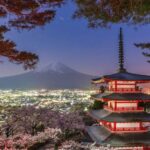
During the cooler part of the year, Arakurayama Sengen Park replaces Mt. Fuji’s 5th Station. The stop lasts about an hour and has become famous for its classic view of a pagoda, Mount Fuji, and the surrounding town.
This is a photographer’s stop. The view is especially attractive when the weather is clear and seasonal color frames the scene. You get a strong visual introduction to the Fuji area without traveling high up the mountain.
The catch is physical effort. The park is known for its uphill approach and many stairs, so this may feel more demanding than the short stop length suggests. The tour information says most people can participate, but it does not promise a completely level route. Wear shoes that can handle steps.
The timing also matters. The park is not an alternative that you can add to the 5th Station. It is the seasonal replacement. From October 1 to April 25, you go here instead of Mt. Fuji’s 5th Station.
Mt. Fuji 5th Station from April through September
From April 26 through September 30, the bus heads to Mt. Fuji’s 5th Station at an elevation of about 2,305 meters. This is roughly halfway up the mountain and gives you a closer look at Japan’s highest peak than the lakeside stops do.
You have about 40 minutes here. That is enough for photographs, a short look around, and perhaps a quick purchase, but not a long walk. The high elevation can also mean cooler conditions than in Tokyo, so a light extra layer is sensible.
The 5th Station is not the summit. You are not joining a mountain climb, and the short visit is focused on access and views. Weather can change quickly, and cloud cover may block the mountain. The tour provider clearly warns that Fuji visibility cannot be guaranteed, so book this for the wider day rather than a guaranteed iconic photograph.
This seasonal arrangement is one of the most important details to understand. If you are booking specifically for the famous pagoda-and-Fuji picture, choose a date between October 1 and April 25. If you want to reach the mountain itself, choose the April 26 to September 30 period.
Lake Kawaguchi gives you the most breathing room

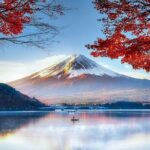
Lake Kawaguchi is the largest of the Fuji Five Lakes and receives about an hour on this schedule. It is the most flexible stop because you can use the time for a scenic walk, photos, or a boat ride if you choose to pay for it.
Oishi Park is included as part of the area’s seasonal highlights. The exact timing of flowers and other seasonal attractions changes from year to year, so treat the dates as a guide rather than a promise. Cherry blossoms, flowers, and clear Fuji reflections can make this stop excellent, but the view depends heavily on weather and crowds.
A boat ride is not included. The stated ticket price is $8 per person. Bring cash, since some places around the Fuji area may not accept cards. You may also want cash for lunch, snacks, and small purchases, as food is not covered in the tour price.
The drawback is that an hour passes quickly. If you want a long lakeside walk, a boat ride, and a meal, you will probably need to choose. I would decide before arriving whether your priority is the water, the view, or food.
Lake Yamanaka means choosing between water and an onsen

The final major stop is Lake Yamanaka, known as Swan Lake because swans visit during winter. You get about 1 hour and 10 minutes here, which gives this stop a little more time than Lake Kawaguchi.
You must choose one activity. The options are a scenic ride on a swan-shaped boat or a visit to a hot spring. You cannot do both because of the schedule. The boat ticket costs $8 per person, while the onsen ticket also costs $8 per person.
I like this choice because it lets you shape the end of the day. The boat is the better pick if you want more scenery and photographs. The onsen is better if your legs are tired after a full day out, though you should know the tattoo rule before you go. A single tattoo smaller than a palm may be covered with a tattoo sticker. Larger tattoos are not permitted in the hot spring.
This is not the place for a leisurely spa afternoon. You have limited time, and you will need to allow for changing and moving through the facility if you choose the onsen. Still, the option adds something different from the usual Fuji photo circuit.
A few more Tokyo tours and experiences worth a look


The long ride is part of the bargain

The vehicle handles the difficult part of this outing: getting from Tokyo to the Fuji area and back. The drive can be relaxing when the roads are moving, with broad views along the way and no need for you to navigate.
Comfort may vary by vehicle. One account describes an older van with cramped legroom, especially for anyone taller than about 5 feet 8 inches. The information also says that transportation can involve carpooling, despite the private-tour wording used elsewhere. If you need extra space, ask about the vehicle arrangement before paying.
The tour includes an air-conditioned vehicle and a professional driver, but the driver may not be the person providing detailed commentary. One English-language experience reported very little explanation from the driver, while other guide accounts praise friendly conversation, organization, and help with photographs.
The strongest guide names connected with this experience are Damon, BC, Mario, and Laner. Damon is described as organized, fun, and helpful, including advance communication about the meeting point. BC is noted for being funny and accommodating. Mario is described as friendly and smooth with logistics, while Laner is praised for attentive help and taking photographs.
That does not mean you are guaranteed one of those guides. It does mean the human side of the tour can be a real bonus when the assigned guide is engaged. It can also be less satisfying if you want a steady flow of historical information.
Shared group details and meeting instructions

Although the experience is promoted as private and customizable in some of its description, the additional details say this is a shared group tour with people from several countries. The maximum group size is listed as 40. Explanations may be given in several languages.
That arrangement keeps the cost low, but it can make loading, unloading, and meeting times slower. One poor experience reported long waits and too little time at stops, while other accounts describe roughly an hour at each location and a smooth day. Expect the pace to depend on traffic, group size, and how promptly everyone returns to the vehicle.
At the meeting point, look for a yellow flag marked with the Gogoday logo. Arrive 15 minutes early and give the guide the name used for the booking. Late arrivals and no-shows are not refunded.
The provider cannot see your email address through the booking platform, so you must send it after booking. An email is expected around 9 p.m. the night before departure with the guide’s details, driver information, and vehicle license plate. Keep an eye out for it, especially if you need exact meeting instructions.
What to pack and what to budget

The tour includes bottled water, but not lunch. You should plan to buy food during the day or bring something with you. Cash is wise because some restaurants, scenic sites, and local shops may not take cards.
Your likely optional costs are simple:
- Lake Kawaguchi boat ticket: $8
- Lake Yamanaka boat ticket: $8
- Lake Yamanaka onsen entry: $8
- Fuji Shibazakura Festival admission, when applicable: $8
- Lunch and personal purchases: extra
You do not pay both the Lake Yamanaka boat and onsen fees because you can choose only one. The seasonal Shibazakura Festival fee applies only if that attraction is part of the day’s route.
Bring comfortable shoes, a phone or camera, and a light layer for changing conditions. If you plan to use the onsen, check the tattoo policy before you commit. Since crowds can be heavy during peak seasons, patience is part of the packing list too.
Who will get the most from this tour
I would recommend this outing to you if you want a simple way to see several Fuji-area sights in one day without renting a car. It works particularly well for families, larger groups, and anyone who would rather sit back than manage rural transport.
It is also a good fit if you value photos more than long walks. Arakurayama Sengen Park, the 5th Station, Lake Kawaguchi, and Lake Yamanaka each offer a different angle on Fuji, even when one view is hidden by clouds.
You may want another option if you need guaranteed English commentary, a small private group, generous time at each stop, or a deeply educational guide. The day can also disappoint if your only goal is a clear Fuji photograph. Weather and traffic are outside the operator’s control.
The free cancellation policy is useful: cancel at least 24 hours before the start time for a full refund. Changes or cancellations inside that window are not accepted, and the cutoff uses local Japanese time.
Should you book this Fuji day trip?
Book it if the low price, included transport, and broad selection of stops matter most to you. For about $50, you can cover a lot of ground that is awkward to arrange independently, with a chance to add a boat ride or onsen for another $8.
Go in with realistic expectations. This is a shared, traffic-sensitive sightseeing day, not a guaranteed private tour with constant expert commentary. Choose your season carefully, keep the evening free, bring cash, and decide in advance between the Yamanaka boat and onsen. With that approach, it is a useful and affordable way to put Mount Fuji at the center of a Tokyo visit.
FAQ
How long does the Mount Fuji tour last?
The tour lasts approximately 10 hours.
What is the price of the tour?
The listed price is $49.97 per person.
Is transportation included?
Yes. The tour includes round-trip pickup and drop-off from a designated point in an air-conditioned vehicle.
Is the tour private?
The description presents it as a private and customizable tour, but the additional information says it is a shared group tour with a maximum of 40 people. Confirm the vehicle and group arrangement before booking.
Which Mount Fuji stop is included in summer?
From April 26 through September 30, the tour visits Mt. Fuji’s 5th Station at about 2,305 meters.
Which stop replaces the 5th Station in winter?
From October 1 through April 25 of the following year, the tour visits Arakurayama Sengen Park instead of the 5th Station.
Can I see Mount Fuji for certain?
No. Weather conditions are unpredictable, and visibility of Mount Fuji cannot be guaranteed.
Can I take both the boat and visit the onsen at Lake Yamanaka?
No. Due to time limits, you must choose either the swan-shaped boat ride or the hot spring.
Are the boat and onsen tickets included?
No. The boat ticket is listed at $8 per person, and the onsen ticket is also listed at $8 per person.
Is lunch included?
No. Lunch is not included, so you should budget for food or bring something with you.
What happens if traffic delays the return?
Weekend and holiday traffic may delay the return beyond 8 p.m. Attractions may also be shortened, adjusted, or canceled because of traffic.
How early should I arrive at the meeting point?
Arrive 15 minutes early. The guide will hold a yellow flag with the Gogoday logo.
Can I cancel for a full refund?
Yes, if you cancel at least 24 hours before the experience start time. Cancellations made less than 24 hours before the start time are not refunded.
More Full-Day in Tokyo

More Spa & Hot Springs in Tokyo
More Mt Fuji Day Trips in Tokyo
More tours in Tokyo we've reviewed












Mt Fuji Day Trips, compared.
 ★ 5.0Mt Fuji and Hakone 1-Day Bus Tour Return by Bullet TrainFrom $163
 ★ 4.0Mt Fuji & Hakone Cruise, Drum Show Bullet Train 1 Day from TokyoFrom $149
 ★ 4.4Tokyo Mt Fuji 5th St & Hakone Cruise Bus Tour w/Bullet TrainFrom $15410 hours
 ★ 4.5From Tokyo: Mount Fuji Full-Day Sightseeing TripFrom $6810 hours
 ★ 4.7Tokyo: Mt. Fuji Tour, Hakone Ropeway, Owakudani, Lake AshiFrom $5410 hours
 ★ 4.4Tokyo:Mt.Fuji,Kawaguchiko Oishi Park,Arakurayama Sengen ParkFrom $5410 hours