Reviewed · PRIVATE
Tokyo Top 10 Highlights & Hidden Gems Private Tour with a Local
Tokyo is easier to understand when someone helps connect its temples, train lines, food stalls, shopping streets, and quiet back lanes. This eight-hour private tour gives you a local host and a flexible plan, with famous stops such as Senso-ji and Akihabara mixed with places chosen around your interests.
In This Article
- Key things to know before booking
- A full day that changes to fit your Tokyo
- Starting in Asakusa at Kaminarimon
- Street markets and everyday Tokyo
- Akihabara for electronics, anime, and games
- Seafood and market flavors
- Gardens and imperial connections
- How much walking and transport to expect
- What the private format is worth at $231.13
- Which parts are fixed and which can change
- Guide quality and communication
- Who should book this Tokyo day
- Should you book it?
- FAQ
- How long does the Tokyo private tour last?
- Where does the tour start?
- Where does the tour end?
- Is hotel pickup available?
- Is this a private tour?
- Are transportation costs included?
- Are food and attraction tickets included?
- Can I request a particular type of itinerary?
- What is the cancellation policy?
I like the personal approach, especially the pre-tour questionnaire and direct contact with your host before the day begins. I also like that you can use the time for practical help, from finding a particular Kirby figure to choosing a restaurant or planning the rest of your Tokyo stay. The main drawback is the pace: you may walk more than 25,000 steps, and transport, food, and entry fees are not included.
Key things to know before booking

- Your host shapes the day around you: Share interests in history, food, shopping, gardens, anime, or local life before you meet.
- Asakusa is the starting point: Meet at the Asakusa Culture Tourist Information Center, near Senso-ji and Kaminarimon.
- The route mixes famous sights and quieter corners: Expect temples, markets, pop-culture shops, gardens, and possible stops selected for your group.
- This is mainly a walking day: Trains or taxis may be used between districts, at your own cost.
- Food stops are flexible but not included: Cafes, market snacks, and lunch can be added to the day, with you paying directly.
- The private format helps families and first-time visitors: Hosts have adapted days for teenagers, collectors, food lovers, and people seeing Tokyo for the first time.
A full day that changes to fit your Tokyo

This experience is less like following a fixed script and more like spending a long day with a well-connected local who helps you make sense of Tokyo. You complete a short questionnaire after booking, then communicate directly with your host about what matters most.
That detail has real value. Tokyo can pull you in too many directions at once. You may want ancient temples, department stores, anime shops, a garden, a seafood market, and a good bowl of noodles, all in one day. A host can help decide what fits and what should wait for another day.
Past hosts have included Hirotake, Fulvio, Kento, Martin, Patrick, Kenji, and Giuliano. The exact person is not guaranteed in advance, but the experience is designed around a private host rather than a large group. Kento, for example, has taken families through major sights and helped a child search for specific Kirby figures. Another host arranged a restaurant stop that the group would not have found alone.
You should still arrive with a short wish list. Tell your host if you care most about food, history, gardens, shopping, Japanese pop culture, or quiet neighborhoods. The more specific you are, the more useful the tailoring can be.
Other private tours in Tokyo


Starting in Asakusa at Kaminarimon
The stated meeting point is the Asakusa Culture Tourist Information Center at 2-chōme-18-9 Kaminarimon. This puts you in one of Tokyo’s most atmospheric districts from the first minute.
Your first major sight is Senso-ji, Tokyo’s oldest and best-known Buddhist temple. The Thunder Gate, with its huge red lantern, is an immediate visual marker. From there, the approach toward the temple gives you a chance to see traditional souvenirs, snack stalls, and the steady movement around one of the city’s most visited religious sites.
A local host adds context that is hard to get from a quick photograph. You can ask about temple customs, how to behave at a Buddhist site, and why Asakusa feels different from Tokyo’s office and shopping districts.
The tradeoff is that Senso-ji can be crowded. If you want quiet photographs or a slower look at the temple grounds, tell your host early. If you prefer people-watching and street food, the busy setting becomes part of the appeal.
Street markets and everyday Tokyo
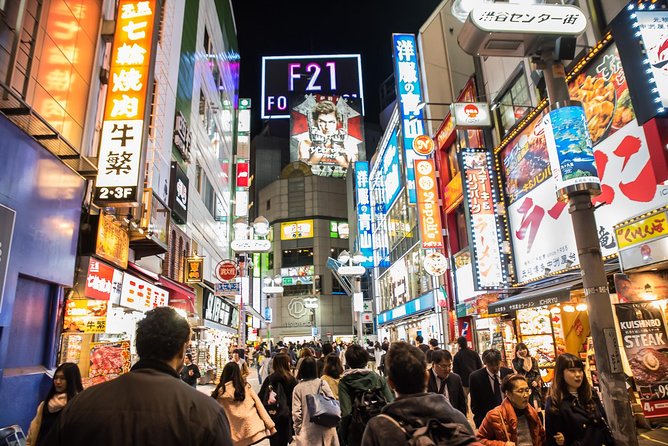
The market portion of the day is meant to show Tokyo beyond its polished towers and famous crossings. Expect fresh produce, street food, small shops, and a more ordinary side of city life.
This is a useful part of the day because markets make Tokyo feel practical and lived-in. You can watch people shop for food, compare snacks, and ask your host what local products are worth trying. Food stalls also give you a chance to eat in small portions rather than committing to one long restaurant meal.
You pay for food and drinks yourself, so set aside some yen or a payment method that works for small purchases. The exact market and food stops may depend on your interests, timing, and the host’s plan. If you have dietary limits or strong preferences, share them before the tour.
A market stop also keeps the day from becoming a string of major monuments. You get a better sense of how Tokyo works as a city, not just how it appears on a sightseeing checklist.
Akihabara for electronics, anime, and games

Akihabara brings a sharp change of mood. Here, your host can introduce you to electronics shops, anime stores, gaming arcades, and the wider world of Japanese fan culture.
You do not need to be an expert collector to enjoy this district. A good host can explain how Akihabara developed into a center for technology and otaku culture, then help you focus on the parts that actually interest you. You might spend time browsing character goods, looking for a particular game, or simply seeing how the streets differ from Asakusa.
This is where the private format can pay off. A large group often has to move on just as you find something worth examining. With your own host, you can pause, ask questions, or adjust the plan around a specific shopping goal.
Purchases are not included, of course, and it is wise to keep the time under control. Akihabara can absorb an entire afternoon if you let it. Tell your host how much shopping time you want before the day gets away from you.
Seafood and market flavors

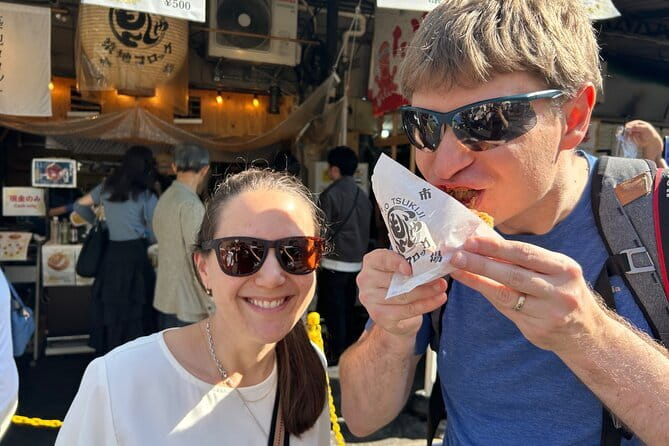
Tokyo’s seafood scene gets its own place in the day, with a market stop focused on fresh local bites and the sounds and smells of a food center.
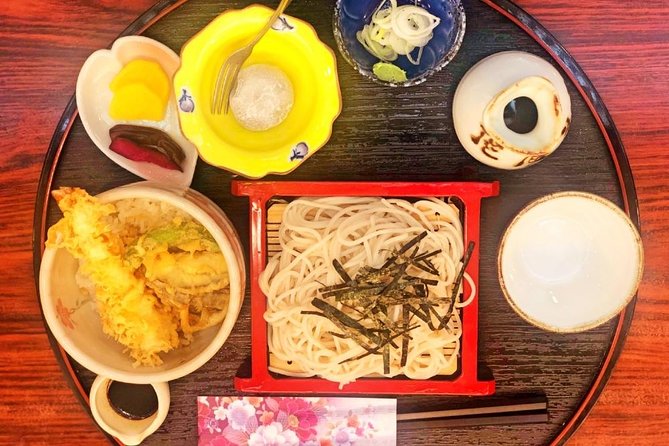
This part is best treated as a tasting opportunity rather than a formal meal included in the tour. You can try something small, ask your host what to order, and move on when you are ready. If food is one of your main reasons for booking, say so in the questionnaire. The host may be able to shape the route around the kinds of dishes you want to try.
Because meals are at your own expense, the final cost depends on your choices. That is helpful if you want a quick snack, but less helpful if you expect a planned lunch to be part of the $231.13 price.
The market also works well for families and mixed-interest groups. One person can focus on food while another takes in the setting and asks about local customs. Your host can help bridge those different interests.

Gardens and imperial connections

The garden stop gives the day a needed pause. These landscaped grounds include calm green areas and historic ruins tied to Japan’s imperial past.
After several hours of streets, shops, temples, and stations, a garden lets you slow down. You can look at the planting, paths, and remains without needing to rush from one photo point to the next. It is also a good setting for asking broader questions about Japan’s monarchy, city planning, and the way older sites remain part of modern Tokyo.
The exact garden is not specified, so do not book this expecting one particular named attraction. Instead, think of it as a flexible green-space stop chosen to suit the route.
If gardens matter to you, make that clear before the tour. The day can include more than the headline sights, but your host needs to know what you want to protect in the schedule.
How much walking and transport to expect

This is advertised as a walking experience, not a private vehicle tour. Public transport or local taxis may be used between districts, and those costs are extra.
The walking requirement is important. One person recorded more than 25,000 steps during an eight-hour day, while another group walked all day and still enjoyed the pace. That gives you a realistic warning: comfortable shoes are essential, and this may not be the right choice if you want a slow, low-effort sightseeing day.
Tokyo’s train and subway systems are part of the experience, but changing districts takes time. Your host can help you navigate, which is useful during a first visit, yet every transfer reduces the time available at the sights. A customized route should balance ambition with energy.
You can also finish about half an hour early if you are worn out, as one group did. It is sensible to tell your host when you need a break rather than trying to push through the full schedule.
What the private format is worth at $231.13

At $231.13 per person, this is not a budget walking tour. The price makes more sense if you value a private guide who adapts the day to your group and gives advice you can use for the rest of your trip.
The strongest value comes from the planning help. A host can combine your must-see places with stops you might not have chosen alone. You can ask for restaurant ideas, shopping help, family-friendly diversions, or a better way to arrange the next few days.
The cost is harder to justify if you only want a basic introduction to Senso-ji, Akihabara, or one market. You can visit many Tokyo sights independently using public transport and a guidebook. You also pay separately for trains, taxis, food, and attraction tickets, so budget beyond the advertised tour price.
For two or more people, compare the total private cost with the price of several separate guided activities. Families may find the personal attention especially useful, since the day can shift around a teenager’s interests or a child’s collecting hobby.
Which parts are fixed and which can change
The meeting point and broad themes give the day structure, but the experience is not a rigid route. The host can adjust the balance between major sights and quieter areas based on your answers and the conversation you have before the tour.
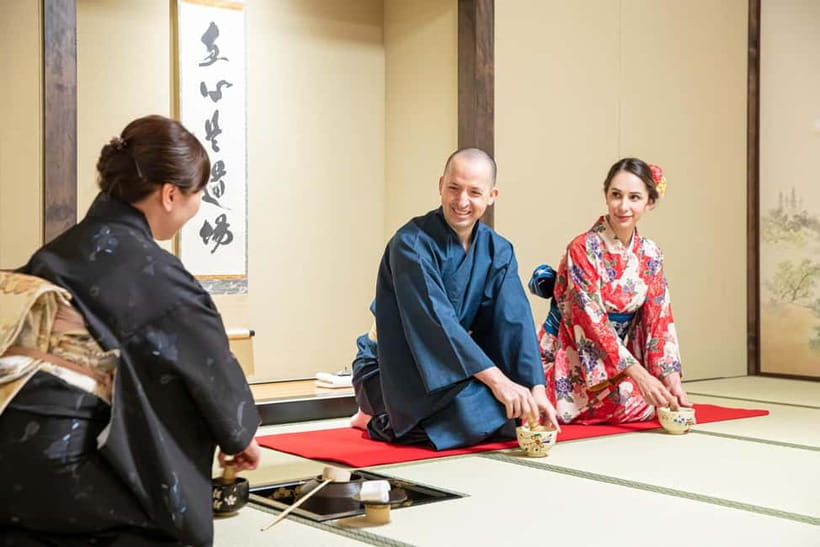
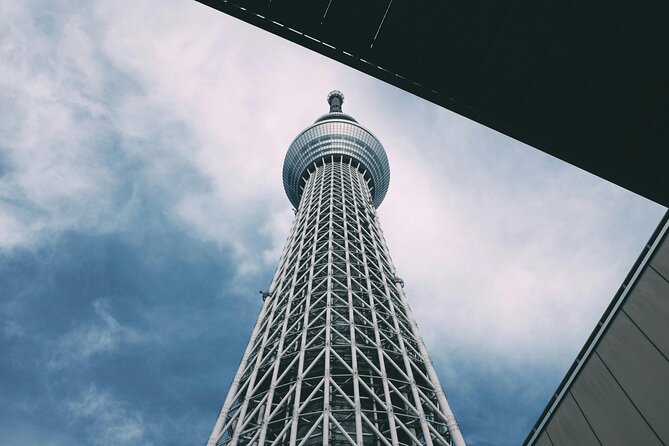
The listed themes include Asakusa, a market, Akihabara, a seafood market, and gardens. Past days have also included Ueno Park, Shibuya, Meiji Shrine, Tokyo Skytree, shrines, matcha cafes, department stores, secondhand kimono shops, and a boat ride on the river.
That range shows what customization can mean, but it does not guarantee every one of those places. A full day cannot cover all of Tokyo in depth. If you name five must-sees, your host may need to turn the day into a fast-moving checklist. I would choose two or three priorities and leave room for discoveries.
The day ends back at the meeting point according to the stated plan. If you arrange a central-city hotel meet-up, confirm how that affects the start and end details before the tour.
Guide quality and communication
Good communication is central to this experience. Hosts such as Hirotake, Kento, Martin, Patrick, Kenji, Fulvio, and Giuliano have led days that included history, food, shopping, major sights, and personal interests.
English ability has been praised for hosts including Hirotake and Kento, and guests have described Kenji as punctual and patient. Giuliano received thanks for adapting the day and offering useful suggestions for the rest of a Tokyo holiday.
Those details are encouraging, but your assigned host can vary. Use the direct communication option after booking to explain your pace, interests, mobility needs, and preferred balance of planned stops and free time.
A private host is also useful when plans change. If you find a shop worth staying in, need a meal break, or decide a major attraction is not for you, the day can be adjusted more easily than a fixed group outing.
Who should book this Tokyo day
I would choose this tour if you are visiting Tokyo for the first time and want help connecting several districts in one day. It also suits families, couples, and small groups who do not want to compromise around one fixed itinerary.
It is a particularly good fit if you have a specific goal. That might be anime shopping, secondhand kimonos, matcha, gardens, seafood, temples, or finding a particular character item. The Kirby shopping example shows how useful a host can be when your interest is narrow and personal.
You should think twice if you dislike long walks, want all costs included, or prefer a slow visit to one neighborhood. The eight-hour duration is generous, but the range of Tokyo can make it tiring.
Confirmation arrives at booking. Most people can participate, service animals are allowed, and the meeting point is near public transport. Free cancellation is available up to 24 hours before the start time. Changes or cancellations inside that window are not accepted for a refund.
Should you book it?
Book this private Tokyo tour if you want a flexible first-day framework, personal advice, and help moving between very different parts of the city. Its best feature is not simply the number of sights. It is the ability to shape the day around your own curiosity.
Before booking, make a short priority list and budget for trains, taxis, meals, snacks, and entry fees. Wear good walking shoes, keep the schedule realistic, and tell your host when you need a break.
If you want a low-cost overview, explore Tokyo independently. If you want a local companion who can connect temples, markets, pop culture, gardens, and food around your interests, the private format can be worth the premium.
FAQ
How long does the Tokyo private tour last?
The experience lasts approximately eight hours. The schedule can be adjusted to your preferences, and some groups have chosen to finish slightly early when tired.
Where does the tour start?
The stated meeting point is the Asakusa Culture Tourist Information Center at 2-chōme-18-9 Kaminarimon, Taito City, Tokyo 111-0034, Japan.
Where does the tour end?
The activity ends back at the meeting point.
Is hotel pickup available?
Hotel meet-up can be provided for central-city hotels. Confirm the exact arrangement with your host after booking.
Is this a private tour?
Yes. Only your group participates in the activity.
Are transportation costs included?
No. The experience is mainly on foot, but public transportation or local taxis may be used between sites at an additional cost.
Are food and attraction tickets included?
No. You pay separately for food, drinks, and tickets to attractions.
Can I request a particular type of itinerary?
Yes. After booking, you receive a questionnaire about your interests and preferences, and you can communicate directly with your host about planning.
What is the cancellation policy?
You can cancel up to 24 hours before the local start time for a full refund. Cancellations or changes made less than 24 hours before the start time are not accepted for a refund.
More Private Tours in Tokyo

More tours in Tokyo we've reviewed












Private, compared.
 ★ 5.0Tokyo 6hr Private Tour with Government-Licensed GuideFrom $155
 ★ 5.0Private Tour to Mt. Fuji and Hakone (Fully Licenced Operator)From $497
 ★ 5.0Tokyo Customized Private Tour (Must See Places in 1 Day)From $145
 ★ 4.8Tokyo: Private City Highlights Tour with Local GuideFrom $1064 - 8 hours
 ★ 5.0Private Custom Tour: Tokyo in a DayFrom $159
 ★ 5.0Tokyo 4hr Private Tour with Government-Licensed GuideFrom $109