Reviewed · TRAIN EXPERIENCES
From Tokyo: Hiroshima and Miyajima Day Trip by Bullet Train
Hiroshima and Miyajima give you two very different sides of Japan in one demanding day. You’ll see the floating torii gate at Itsukushima Shrine, then walk through Hiroshima Peace Memorial Park and face the Atomic Bomb Dome, a place that calls for quiet attention rather than quick snapshots. I like the efficient bullet train connection and the chance to visit both destinations without arranging several separate bookings. I also like the mix of scenic Miyajima streets, local oysters, and serious historical sites.
In This Article
- Key points at a glance
- A very long day from Shinagawa to Hiroshima
- Miyajima begins with a ferry and a famous gate
- One hundred minutes to explore Miyajima
- Back to Hiroshima for its most serious hour
- What the guide adds to the day
- Is $104 a good price?
- Who will enjoy this Hiroshima day trip?
- Small details that make the day easier
- Should you book this tour?
- FAQ
- Does the tour travel from Tokyo by bullet train?
- Can I join the tour in Hiroshima?
- What languages are available for the live guide?
- Is the ferry to Miyajima included?
- Are meals included?
- Is the tour suitable for wheelchair users?
The catch is time. With about four hours on the train each way from Tokyo, this is a long outing with only around 100 minutes of free time on Miyajima. Guide Alex has been praised for switching easily between English and Spanish, but you’ll still need comfortable shoes, patience, and a willingness to keep moving.
Key points at a glance
- Four hours each way by train: The Tokyo option makes Hiroshima possible as a day trip, but expect a full and tiring day.
- Two powerful experiences: Miyajima offers shrine views, deer, pastries, and oysters, while Hiroshima brings a solemn visit to Peace Memorial Park.
- Itsukushima Shrine admission included: Your ferry ride and shrine entry are covered when the relevant option is booked.
- Guided Atomic Bomb Dome visit: The guide helps explain the site and the 1945 bombing, rather than leaving you to interpret it alone.
- English and Spanish support: The tour operates with a live guide in either language, and Alex is specifically identified as a bilingual guide.
- Moderate walking required: The experience is not suitable for wheelchair users and can be affected by ferry weather conditions.
A very long day from Shinagawa to Hiroshima
The Tokyo version begins at Shinagawa Station. You board the high-speed Shinkansen and spend roughly four hours crossing Japan toward Hiroshima. That ride is not a minor transfer. It is the central reason the tour can cover so much ground in one day, and also the main reason you should think carefully about your energy level.
A bullet train makes the distance manageable. You avoid the hassle of booking several separate train connections, and the journey gives you a chance to rest before the walking begins. Still, this is not a relaxed sightseeing day with long café breaks. You will spend about eight hours on trains in total, followed by buses, ferries, shrine visits, and a substantial amount of walking.
The exact duration is listed as eight to 16 hours, depending on the selected option and schedule. Check the departure time and starting point closely. Some arrangements begin at Shinagawa Station, while others begin in Hiroshima, which may suit you if you are already staying in the area.
A few more Tokyo tours and experiences worth a look
Miyajima begins with a ferry and a famous gate
After reaching Hiroshima, you travel by coach toward the coast for about 50 minutes. Then comes a roughly 30-minute ferry ride to Miyajima. The change from train to coach to boat takes time, but it also makes the day feel like a proper regional trip rather than a quick city excursion.
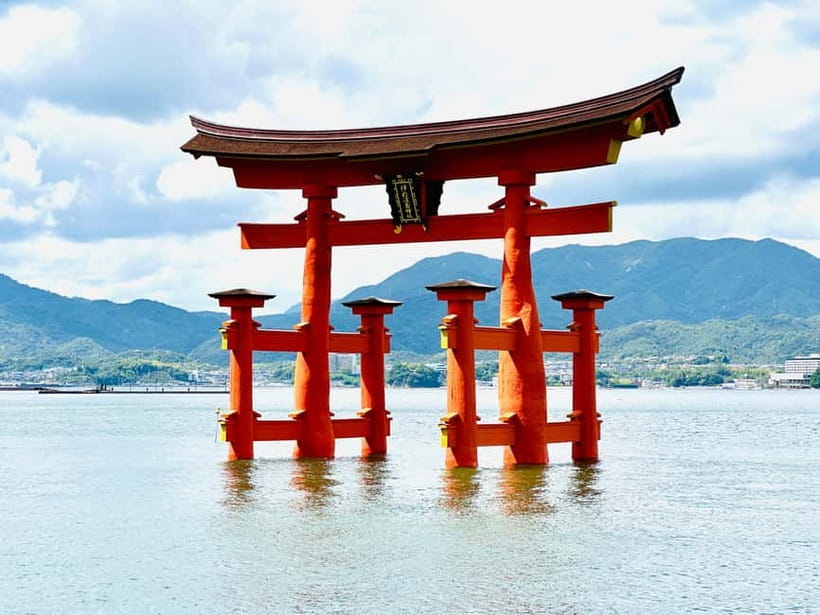
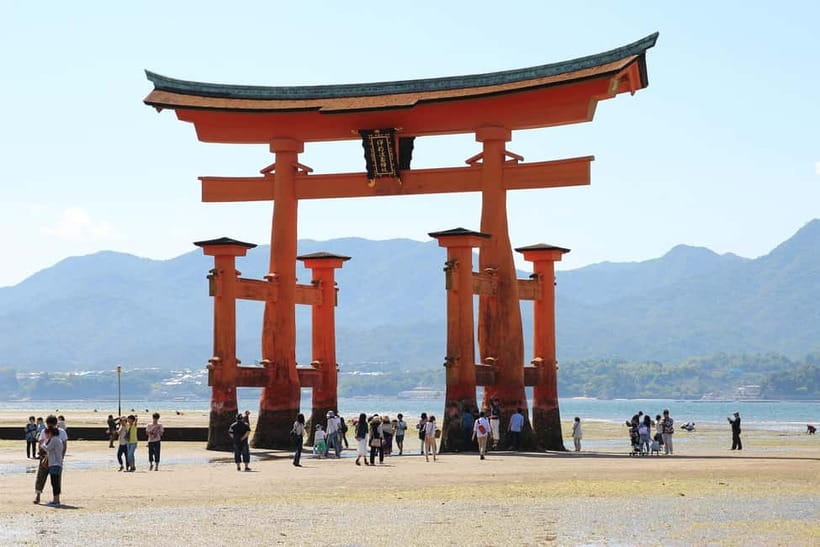
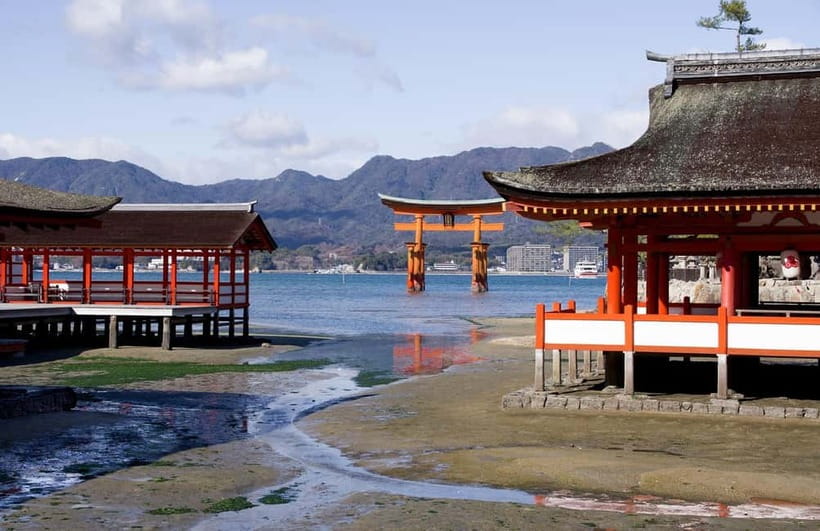
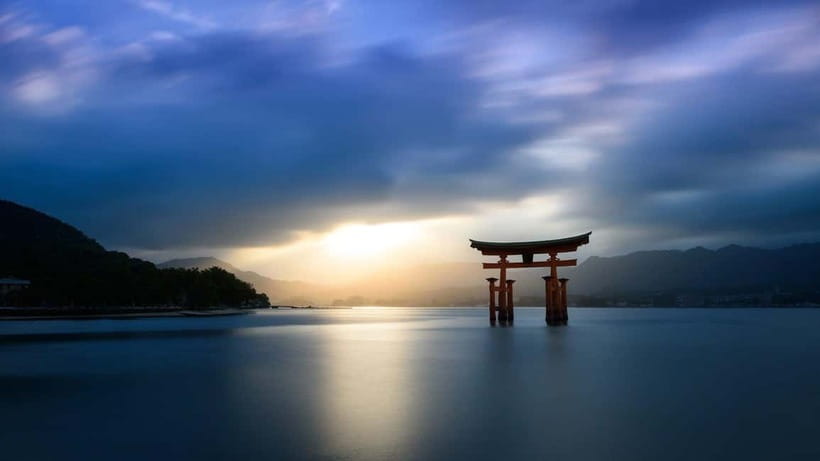
Miyajima is best known for Itsukushima Shrine and its large torii gate, which appears to float offshore at high tide. The view is one of Japan’s most recognizable, and the ferry approach gives you a useful first look at the island from the water.
Tides matter here. The gate’s appearance changes with the water level, so the exact view may not match the classic photographs you have seen. The ferry schedule can also change in poor weather, so bring an umbrella or raincoat and keep a little flexibility in your expectations.
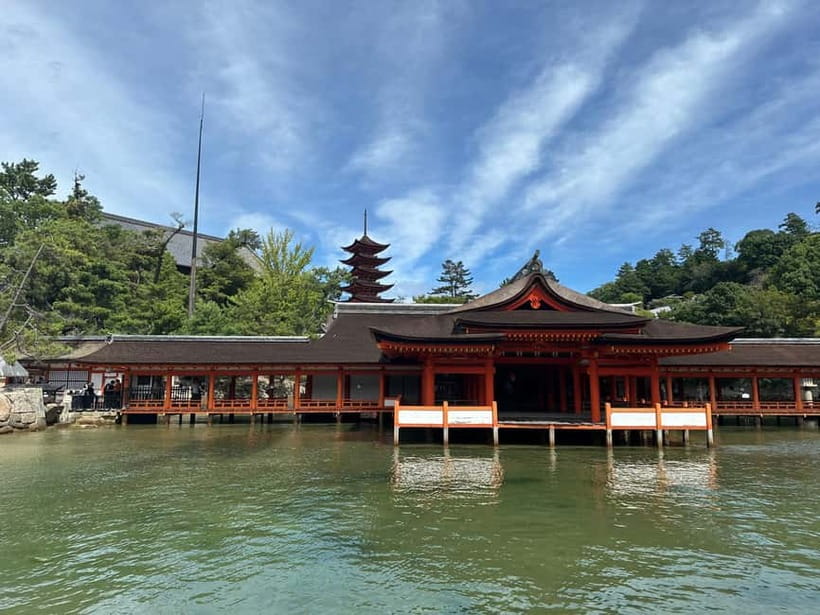
The tour includes admission to Itsukushima Shrine and a guided visit of about 30 minutes. That is enough for a focused look, but not enough for a slow, detailed examination of every corner. You’ll want to listen closely as the guide explains the shrine’s setting and significance.
One hundred minutes to explore Miyajima
After the shrine visit, you have roughly 100 minutes of free time on the island. That is enough for a short walk through the streets and a quick taste of local food, but it is not enough to see everything at an unhurried pace.
Miyajima’s streets are filled with the small pleasures that make the island more than a photo stop. You might try oysters, a local specialty, or momiji manju, a maple-leaf shaped pastry. These are simple, practical ways to connect the visit with the food culture of the area, especially since meals are not included in the tour price.
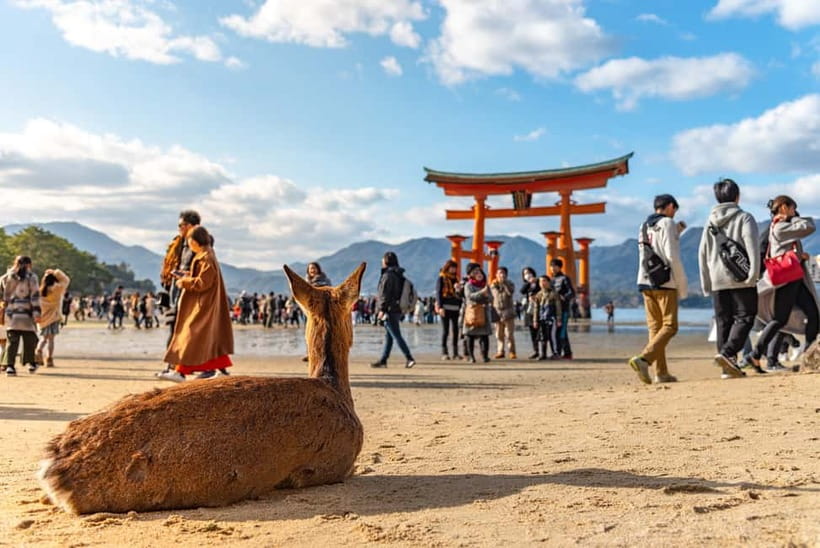
Friendly deer roam freely around the island, adding a memorable touch to the walk. You’ll also have opportunities to look into shops, take photographs, and see historic buildings and temples. Because your free time is limited, decide early what matters most to you. If the torii and shrine are your priority, keep your food stop brief. If you care more about tasting oysters or momiji manju, do not spend all your time taking photos near the waterfront.
The island can be especially appealing if you want a break from museums and memorials. It has a peaceful atmosphere, but the tour schedule does not allow a long wander. You will be watching the clock so you can meet the group for the return ferry.
Back to Hiroshima for its most serious hour
The ferry back to the mainland takes about 10 minutes, followed by roughly an hour by coach to Hiroshima Peace Memorial Park. The change in mood is sharp. Miyajima is scenic and easygoing. Hiroshima asks for concentration and respect.
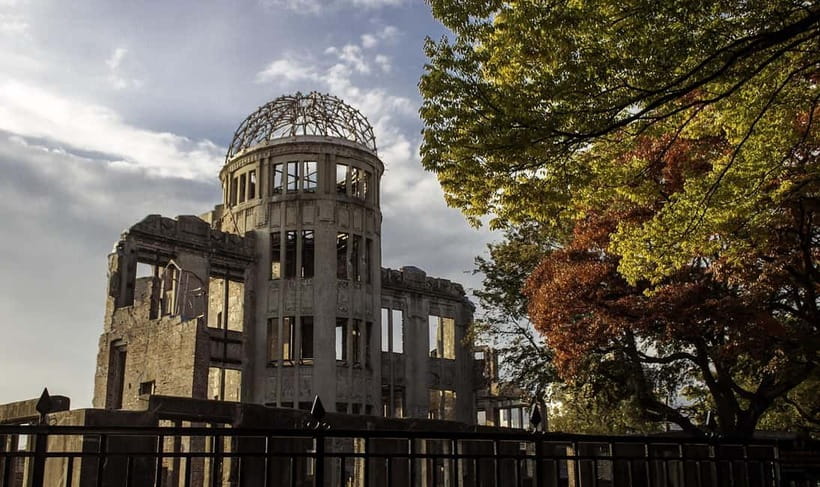
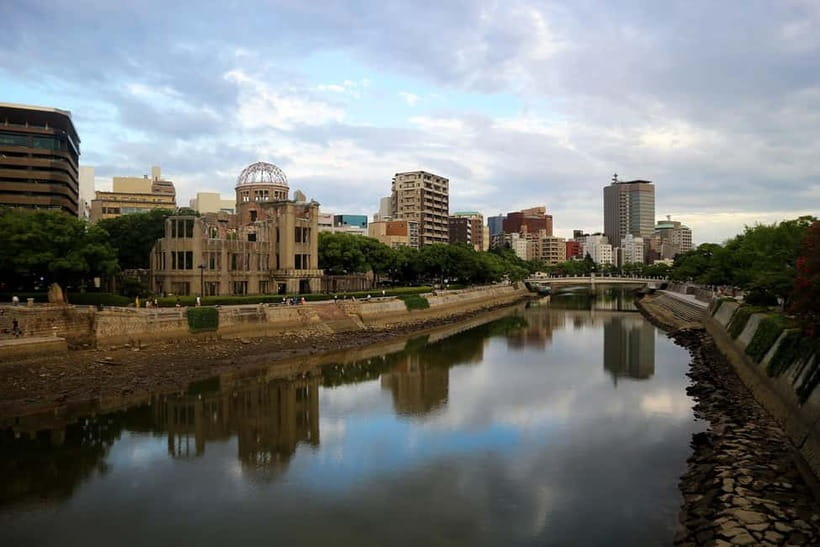
The park commemorates the people killed by the atomic bombing in 1945 and the many lives affected afterward. Your guided visit includes the Atomic Bomb Dome, a UNESCO World Heritage Site, along with other memorials in the park. The guide’s role matters here because the sites can feel abstract without historical context.
The Atomic Bomb Dome is especially difficult to forget. Its remaining structure sits near the center of the city as a direct reminder of the destruction. Photography is allowed, but you should treat the memorial areas differently from ordinary sightseeing spots. Take photographs carefully, listen to the guide, and allow yourself time to absorb what you are seeing.
The schedule allows about two hours in Peace Memorial Park, including guided time and free time. That is a much more useful amount of time than the 100 minutes on Miyajima, but it still requires choices. You may not have time for every monument or museum visit. The listed tour includes the park and the dome, not a separate meal or an explicitly listed museum admission.
I like the order of the day. Seeing Miyajima first gives you a lighter beginning, with water views, shrine architecture, food, and deer. Hiroshima then brings the day toward reflection. Some people may prefer the opposite order, but this sequence helps you approach the memorial sites with enough time and attention.
What the guide adds to the day
A good guide is especially useful on a trip with this many moving parts. You are changing from train to coach to ferry and back again, with fixed departure times. A guide can help you stay oriented and explain what you are seeing without forcing you to research every stop on your own.
The tour offers live guiding in English and Spanish. Alex is specifically named as a bilingual guide who can move between the two languages with ease. If you are booking for a mixed-language group, that detail may be important. The experience is designed to provide historical explanation at the Atomic Bomb Dome and Peace Memorial Park, as well as context at Itsukushima Shrine.
One practical point: do not expect a fully private, slow-paced lecture at every site. The day covers a wide distance, and the guide must keep the group on schedule. You’ll get the most from the experience by listening during the guided portions, then using free time for your own photographs, food, and quiet reflection.


Is $104 a good price?
At $104 per person, the value depends on which booking option you choose. The price is attractive if it includes round-trip high-speed train travel from Tokyo, since the tour also covers the ferry, coach transfers, guide service, and Itsukushima Shrine admission.
Read the option details before paying. The bullet train is included only if the selected option specifies it. Some versions may begin and end in Hiroshima, which is a different proposition from traveling from Shinagawa and back.
Meals are not included. That is not a major problem on Miyajima, where you can buy oysters, momiji manju, and other food during free time, but you should budget for those purchases. Carry water as well, since the day involves several transfers and outdoor walking.
The tour’s strongest value is convenience. You could organize Hiroshima and Miyajima independently, but you would need to coordinate the long-distance train, local transport, ferry timing, shrine entry, and return journey. This tour places those pieces into one plan. The trade-off is control. You have less freedom to linger, change the order, or stay longer on Miyajima.
Who will enjoy this Hiroshima day trip?
I would recommend this experience to a first-time visitor who has limited time in Japan and wants to see both Hiroshima and Miyajima without spending a night away from Tokyo. It also suits you if you prefer having a guide explain the memorial sites and handle the main transport connections.
It is a good fit for people who value variety. In one day, you get a long-distance train ride, a ferry, a shrine, a coastal island, local food, deer, and a major site of twentieth-century history.
I would be more cautious if you dislike early starts, long transit days, or fixed schedules. The amount of time spent traveling is substantial. You may also find the day emotionally heavy once you reach Peace Memorial Park, particularly after several hours of sightseeing.
This is not the right choice if you need step-free access or use a wheelchair, since the experience is not suitable for wheelchair users. Moderate walking is required, and comfortable shoes are essential. A hat, sunscreen, water, and a camera are useful, but weather protection matters just as much.
Small details that make the day easier
Start with a realistic view of the schedule. You are not spending a full day in either Hiroshima or Miyajima. You are getting a carefully packed introduction to both.
Keep your walking shoes on from the start. The route includes stations, coaches, ferry terminals, shrine grounds, city streets, and memorial sites. Even when the transport is comfortable, your feet will be doing plenty of work.
Use Miyajima’s free time with a simple plan. Pick one food to try, allow time for the torii and shrine surroundings, and leave enough time to return to the meeting point. An umbrella or raincoat is wise because ferry operations can be affected by weather.
At Peace Memorial Park, slow down when you can. You do not need to photograph every monument. The value of this part of the experience comes from understanding the place and giving it the attention it deserves.
The return journey takes you by coach to Hiroshima Station, then back by train toward Tokyo. The tour concludes at Shinagawa Station for the Tokyo option. That final train ride is a useful chance to rest, but you may arrive tired after a full day.
Should you book this tour?
Book it if your priority is seeing Hiroshima and Miyajima from Tokyo in one day, with the main transportation arranged and a guide available in English or Spanish. The included ferry and Itsukushima Shrine admission add practical value, and the guided visit to the Atomic Bomb Dome and Peace Memorial Park gives the Hiroshima portion more meaning than a quick self-guided stop.
Skip it if you can spare an overnight stay. A slower Hiroshima and Miyajima visit would give you more time for the island and a calmer pace at the memorial sites. But if your Japan schedule is tight, $104 can be a fair price for a difficult route made simple.
The best reason to book is the combination of places: Miyajima’s floating torii and island streets, followed by Hiroshima’s powerful memorial park. Just make sure you are ready for a long day, moderate walking, limited free time, and a schedule that keeps moving.
FAQ
Does the tour travel from Tokyo by bullet train?
The Tokyo option includes round-trip travel by high-speed bullet train from Tokyo when that option is selected. The listed train time is about four hours each way, with departure and return connected to Shinagawa Station.
Can I join the tour in Hiroshima?
Yes. Two starting location options are listed: Shinagawa Station and Hiroshima Station. The available starting point depends on the option you book.
What languages are available for the live guide?
The live guide is available in English and Spanish. Guide Alex is identified as bilingual and able to switch between the two languages during the experience.
Is the ferry to Miyajima included?
Yes. The tour includes the ferry ride to Miyajima and the return ferry connection. Ferry times may change because of weather conditions.
Are meals included?
No. Meals are not included. You can use your free time on Miyajima to purchase local specialties such as oysters and momiji manju.
Is the tour suitable for wheelchair users?
No. The experience is not suitable for wheelchair users. It also involves a moderate amount of walking, so comfortable shoes are recommended.
More 1-Day Tours in Tokyo


More tours in Tokyo we've reviewed












Train Experiences, compared.
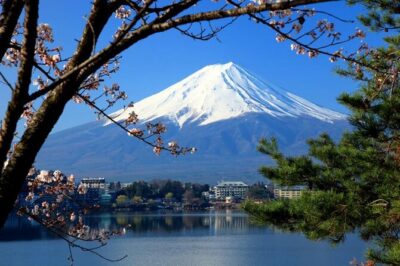 ★ 5.0Mt Fuji and Hakone 1-Day Bus Tour Return by Bullet TrainFrom $163
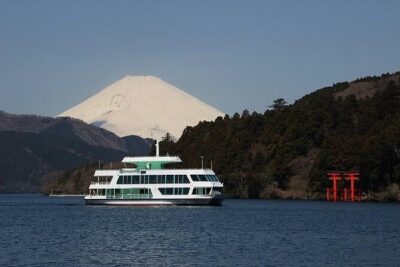 ★ 4.0Mt Fuji & Hakone Cruise, Drum Show Bullet Train 1 Day from TokyoFrom $149
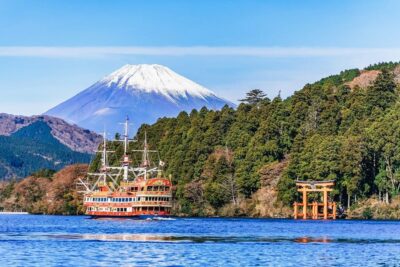 ★ 4.4Tokyo Mt Fuji 5th St & Hakone Cruise Bus Tour w/Bullet TrainFrom $15410 hours
 ★ 4.2From Tokyo: Mt. Fuji & Hakone Tour w/ Return by Bullet TrainFrom $11711 hours
 ★ 4.0From Tokyo 1-Day Kyoto English-guided Tour by Bullet TrainFrom $452
 ★ 4.0Mt. Fuji and Hakone Day Trip From Tokyo with Bullet Train OptionFrom $97