Reviewed · BAR HOPPING & IZAKAYA TOURS
Authentic Japanese Karaoke Bar Hopping in Tokyo Night
Akabane gives you a very different night from the neon-heavy streets of Shinjuku and Shibuya. Here, you move through old drinking alleys, a covered shopping arcade, small izakayas, and Japanese snack bars where conversation and karaoke matter as much as the drinks. Guide Hayate is often singled out for keeping conversation moving and helping English speakers feel at home.
In This Article
- Key points at a glance
- Why Akabane makes a better bar crawl than central Tokyo
- Stop one: dinner and drinks on Ichibangai
- Walking through OK Yokocho and Akabane Silk Road
- Stop two: the small snack bars of Akabane Ichibangai
- Stop three: karaoke and the warm welcome at Sofina
- What the English-speaking guide adds
- What $143.02 buys you
- Timing, meeting point, and practical details
- Who will enjoy this Akabane night
- Should you book it?
- FAQ
- Where does the karaoke bar-hopping tour begin?
- Where does the tour end?
- How long does the experience last?
- How many people can join the tour?
- Is dinner included?
- Are alcoholic drinks included?
- Are snacks included?
- Is karaoke included?
- Is transportation included?
- Can I cancel for a full refund?
I like two things right away: the small maximum of seven people, which makes cramped bars easier to manage, and the chance to enter snack bars that can be hard to approach on your own. The three stops also have clearly different moods, from a full meal and casual drinks to a more intimate karaoke evening. The main caution is simple: this is a drinking-centered night, and $143.02 is a serious price if you do not plan to make good use of the included alcohol.
Key points at a glance

- Akabane instead of the usual tourist districts: Explore a local drinking area north of central Tokyo, with Ichibangai Shopping Street, OK Yokocho, and Akabane Silk Road.
- Three different venues: Move from a traditional izakaya to small snack bars, each with its own setting and social style.
- All-you-can-drink format: Alcoholic drinks are included at the three stops, along with Japanese snacks at the second and third venues.
- A real dinner is included: Choose three local dishes from the first venue’s menu, with food such as fried rice and grilled items available according to the menu.
- Karaoke with local regulars: Sofina offers a friendly setting for singing, chatting, and meeting people who live in the area.
- Small English-speaking group: The tour accepts no more than seven people, and photos are sent after the evening.
Why Akabane makes a better bar crawl than central Tokyo

Akabane is not difficult to reach, but it feels a long way from the polished nightlife routes most first-time visitors follow. Its Ichibangai Shopping Street has roughly 100 establishments, many of them aimed at local residents finishing work and looking for a relaxed drink.
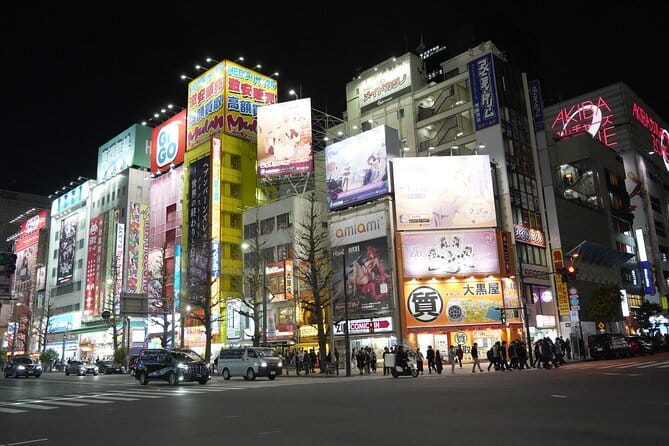
That difference matters. In Shinjuku, you can find endless bars, but choosing one often means sorting through bright signs, aggressive touts, and places built for short-term visitors. In Akabane, the appeal is smaller rooms, familiar faces, and streets where the drinking culture feels tied to the neighborhood.
Your guide does more than lead you from door to door. The evening includes stories about Akabane’s past as an Edo-period transportation hub and an explanation of local drinking customs. That background helps you read the setting: the narrow alleys, old-fashioned signs, and casual way people settle in for food and drinks.
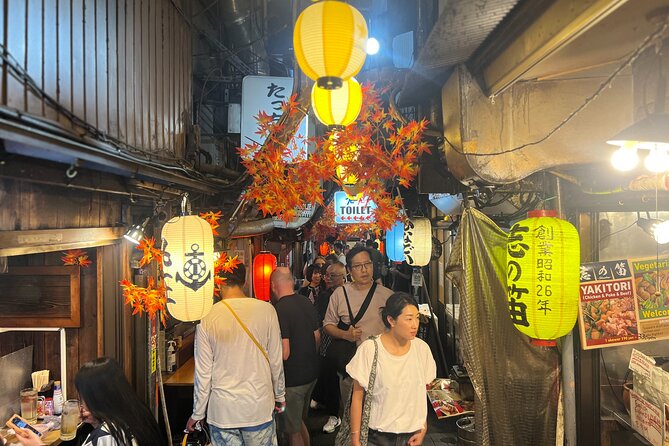
The route also passes through OK Yokocho and Akabane Silk Road. These are not simply walking links between bars. OK Yokocho is a cluster of atmospheric drinking alleys, while Silk Road is a covered arcade lined with eateries and local shops. The walking portions give the night some shape and keep it from becoming four hours in one noisy room.
A few more Tokyo tours and experiences worth a look
Stop one: dinner and drinks on Ichibangai
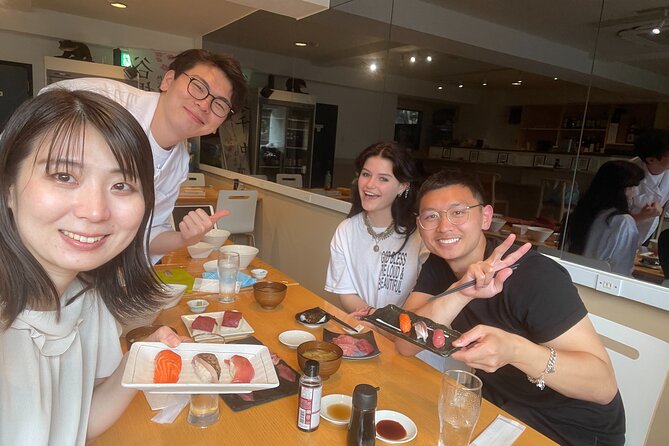
The evening begins at a traditional izakaya near Ichibangai Shopping Street. This first hour does the practical work of getting everyone settled, fed, and acquainted before the smaller snack bars later in the night.
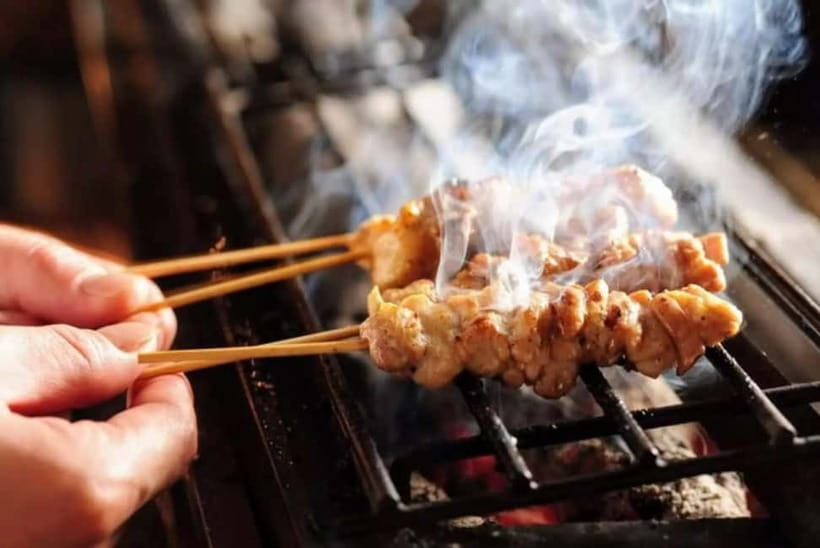
You receive a full dinner of three local dishes, chosen from the available menu. Specific dishes can vary, but food highlighted in the supplied details includes fried rice, cheese, grilled food, and crispy poultry. One account describes a restaurant with a grill at each table, so you might find that the cooking setup adds a bit of fun to the meal, though the exact restaurant and menu are not guaranteed.
The all-you-can-drink arrangement is useful here. It means you can sample classic Japanese drinks without worrying about the price of each glass, and the guide can explain what you are ordering. The format is especially handy if you want to try drinks beyond the familiar beer or highball.
I would treat this stop as the foundation of the evening, not just a quick first drink. The food gives you something substantial before the alcohol picks up, and the izakaya setting introduces the basic rhythm of Japanese bar dining: shared dishes, drinks, conversation, and a steady flow of small plates.
One practical point: a full dinner does not mean an elaborate tasting menu. You receive three local dishes from the menu, while snacks are included later. If you expect a large restaurant meal with many courses, adjust your expectations. The value is in combining dinner with the bar crawl, not in dining alone.
Walking through OK Yokocho and Akabane Silk Road
Between venues, you explore two of Akabane’s most atmospheric areas. The pace is likely to be an easy walk, but wear shoes you can manage for several hours. The streets and arcades are part of the setting, not background scenery to rush past.
OK Yokocho shows the compact, alley-based side of local nightlife. Its close-set drinking spots help explain why a guide is useful. Many bars are small, and the difference between a welcoming local place and a room that feels difficult to enter can be hard to judge from the street.
Akabane Silk Road offers a slightly different mood. This covered arcade has traditional eateries and local shops, giving you a look at the everyday commercial side of the district as well as its nightlife. The tour’s historical notes add context without turning the evening into a formal history walk.
I like this part because it gives you a sense of place. You are not simply being driven to three unrelated bars. You see how the drinking streets connect, how the neighborhood has changed, and why Akabane has become a favorite evening destination for people who live in Tokyo.
Stop two: the small snack bars of Akabane Ichibangai

The second stop brings you into two tucked-away snack bars within Ichibangai Shopping Street. Japanese snack bars, or snakku, are not the same as convenience-store snacks or ordinary pubs. They are small neighborhood drinking rooms often built around a mama, the woman who runs the bar and helps create its social atmosphere.
This is the point where a local guide becomes particularly valuable. The venues can be difficult for a first-time visitor to find and even harder to enter with confidence. With an English-speaking Japanese guide, you have help with ordering, etiquette, and conversation, while still getting a chance to interact with local people.
All-you-can-drink alcohol continues at this part of the evening, and Japanese snacks are included. The snack bars are described as offering an intimate setting away from tourist areas, so expect smaller spaces and a more personal style than you would find in a large chain pub.
The social side is as important as the food. You might chat with regulars, learn how people use these bars, or find yourself sharing a drink with someone you would never have met on a standard sightseeing tour. The experience works best if you are willing to speak up, ask questions, and accept that a little friendly awkwardness is part of crossing a language barrier.
There is also an important cultural point here. A snack bar is not simply a place to consume alcohol. The relationship between the mama, the regulars, and the customers is central to the room. You are being shown how this type of establishment works, not just given a list of drinks.
Stop three: karaoke and the warm welcome at Sofina

The final stop is Sofina, a snack bar run by a friendly Romanian mama. That detail gives the venue its own character while keeping the setting firmly within Japanese snack-bar culture.
Sofina is where the evening shifts toward karaoke. You can sing Japanese or international songs, chat with local regulars, and enjoy more drinks and snacks in a homestyle room. The karaoke is not presented as a private booth session. It is a shared activity, so you should be comfortable taking a turn and cheering for other singers.
This final stop seems to receive the strongest praise for atmosphere. The combination of a welcoming host, local customers, and karaoke creates the kind of night that is hard to plan from a guidebook. Some accounts also describe a surprise or mystery bar at the end of the night. Treat that as a possible extra rather than a promised part of the published route, since the stated program ends at Sofina.
The setting may not suit you if you want a quiet final drink or polished cocktail service. Snack bars are personal and informal. That is their charm, but it also means the evening depends partly on the mood of the room and your willingness to join in.
A few more Tokyo tours and experiences worth a look




What the English-speaking guide adds

The guide is a major part of the value here. Hayate is named repeatedly in the supplied material, with particular praise for asking questions, starting conversations, and making sure people do not get left on the edge of the group.
That skill matters more than a long list of facts. In a snack bar, the guide helps you understand when to order, how to respond to local conversation, and how to take part without feeling intrusive. English support also lowers the risk of spending the night in a bar that does not match your comfort level.
The maximum group size is seven. That is small enough for the guide to check in with each person and help introduce you around the room. It also fits the scale of the venues better than a large bus group would.
The guide also takes photos during the evening and sends them afterward. That is a modest but useful extra, particularly on a night when your hands may be full and you may not want to keep stopping to take pictures.
What $143.02 buys you

At $143.02 per person, this is not a cheap night out. You could certainly eat and drink for less in Tokyo, especially if you stick to chain izakayas or convenience stores.
The comparison is not quite fair, though. The price includes a full dinner of three local dishes, drinks across three venues, Japanese snacks at the second and third stops, a local English-speaking guide, neighborhood orientation, karaoke, and help entering small snack bars. You are paying for access and social ease as much as for food and alcohol.
The value improves if you plan to drink steadily and want a guided introduction to Japanese nightlife. It drops if you do not drink alcohol, prefer independent restaurant choices, or already feel comfortable finding and entering small local bars.
The all-you-can-drink format also requires some judgment. You do not need to treat it as a challenge. Pace yourself, eat the dinner, and remember that the goal is to enjoy three different places rather than rush through as many drinks as possible.
Timing, meeting point, and practical details

The tour lasts about four hours and begins at Akabane Station, at 1 Chome-1 Akabane, Kita City, Tokyo 115-0045. It ends back at the same meeting point, which makes the return simple and removes the need to navigate home from an unfamiliar bar.
Public transportation is nearby, and no private transportation is included. You should therefore plan your route to Akabane Station and check your last train plans before drinking. The tour is confirmed at booking, and most people can participate, but the activity is centered on alcohol, walking, small bars, and karaoke.
The mobile ticket is convenient. Keep it accessible on your phone at the meeting point. Since the group is capped at seven people, booking ahead is sensible. The typical booking lead time is about five days, which suggests that leaving it until the same day may not work.
Free cancellation is available up to 24 hours before the start time for a full refund. Changes or cancellations inside that 24-hour window are not accepted or refunded, and the cut-off follows Tokyo local time.
Who will enjoy this Akabane night
I would recommend this for you if you want a social evening, enjoy trying local food and drinks, and feel curious about a side of Tokyo that is easy to miss. It is particularly useful for a first visit to Japan, when language and local customs can make small bars feel out of reach.
It also suits solo visitors and couples who want company for the evening. A small group gives you people to talk with while still allowing contact with local regulars. If karaoke is a highlight rather than a worry, Sofina may become the most memorable stop.
You may want to skip it if you dislike alcohol, do not enjoy singing, or prefer a predictable schedule. Small snack bars have a more personal atmosphere than standard pubs, and the evening depends on conversation and participation.
Should you book it?
Book this tour if your ideal Tokyo night includes local food, free-flowing drinks, narrow drinking alleys, and a chance to sing with people you did not know that morning. The strongest reasons are the access to snack bars, the small group, and Hayate’s role in making conversation easy.
Skip it if $143.02 feels high for a bar crawl or if you would rather choose your own restaurants. For the right person, though, this is less a pub tour than a guided introduction to Akabane’s social life, with dinner and karaoke included.
FAQ
Where does the karaoke bar-hopping tour begin?
It begins at Akabane Station, located at 1 Chome-1 Akabane, Kita City, Tokyo 115-0045, Japan.
Where does the tour end?
The activity ends back at the meeting point at Akabane Station.
How long does the experience last?
The tour lasts approximately four hours.
How many people can join the tour?
The maximum group size is seven travelers.
Is dinner included?
Yes. You receive a full dinner consisting of three local dishes, with choices available from the menu.
Are alcoholic drinks included?
Yes. Alcoholic beverages are included while visiting the three local izakayas and snack bars.
Are snacks included?
Yes. Japanese snacks are available on an all-you-can-eat basis at the second and third snack bars.
Is karaoke included?
Yes. Karaoke is part of the visit to Sofina, the third snack bar.
Is transportation included?
No. Private transportation is not included. The tour takes place near public transportation and begins and ends at Akabane Station.
Can I cancel for a full refund?
Yes. You can cancel at least 24 hours before the start time for a full refund. Cancellations or changes made less than 24 hours before the start time are not accepted or refunded.
More Evening Experiences in Tokyo
More Night Tours in Tokyo
More Bar Hopping & Izakaya Tours in Tokyo
More tours in Tokyo we've reviewed












Bar Hopping & Izakaya Tours, compared.
 ★ 5.0Tokyo Bar Hopping Tour in Shinjuku (All-You-Can-Drink + Dinner)From $106
 ★ 4.9Tokyo: Shinjuku Local Bar and Izakaya Guided Walking TourFrom $343 hours
 ★ 5.0Shibuya Meltdown Nightlife Tour: All-You-Can-Drink Bar HoppingFrom $106
 ★ 4.5Tokyo: Pub Crawl and Bar TourFrom $275 hours
 ★ 5.0Tokyo: Shinjuku Local Bar & Izakaya Crawl TourFrom $39
 ★ 4.5Tokyo Pub CrawlFrom $25