Reviewed · TOKYO
Tokyo Metropolis
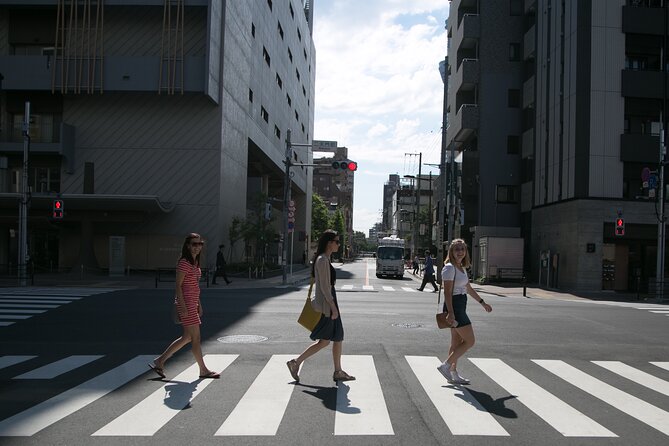
Tokyo is at its most photogenic when you stop treating it as a collection of famous sights and start looking at its lines, reflections, people, and odd corners. This 2.5-hour workshop does exactly that, leading you from Shimbashi through Shiodome, Ginza, and Yurakucho with a local photographer.
In This Article
- Key points at a glance
- Why this workshop is different from a normal Tokyo tour
- Starting at Shimbashi’s steam locomotive
- Shiodome: learning to frame Tokyo’s towers
- Ginza’s side streets and working city
- Tokyo International Forum: a final lesson in scale and symmetry
- The guide makes the small group matter
- What you will learn, and what you will not
- Price and practical value at $158.52 per group
- Who should book this Tokyo photography walk
- Weather, cancellation, and timing details
- Should you book it?
- FAQ
- Where does the photography workshop start?
- Where does the workshop end?
- How long is the experience?
- How many people can join?
- What is included in the price?
- What happens if the weather is poor?
I like the focused route and the chance to work directly with guides such as Lukasz and Stephane, who are praised for practical instruction and an artistic eye. I also like that the tour teaches you how to see, not just where to point your camera. The main consideration is the weather requirement, since the experience can be canceled in poor conditions, and the nonrefundable policy is strict.
Key points at a glance

- Start beneath a real steam locomotive: Meet at SL Square outside Shimbashi Station at 10:00 a.m., an easy landmark in a busy part of Tokyo.
- Practice composition in Shiodome: Use towers, light, reflections, people, and surrounding details to build stronger images.
- Find a different Ginza: The route moves beyond major avenues into small back lanes and workaday street scenes.
- Photograph the Tokyo International Forum: Its huge interior offers strong lines, curves, symmetry, and dramatic angles.
- Small and personal: The activity is limited to six participants, with private bookings available for your own group.
- A useful city orientation: The tour ends near Yurakucho Station, making it easy to continue sightseeing by train.
Why this workshop is different from a normal Tokyo tour

Most Tokyo sightseeing walks point you toward temples, shrines, markets, or observation decks. This one focuses on the modern city itself: steel towers, glass walls, office workers, service alleys, train connections, and dramatic interior architecture.
That makes it a good choice if you have already seen the standard sights, or if modern urban photography is your main interest. You are not simply being shown a series of photo stops. You are asked to think about how a picture works.
The teaching centers on composition, framing, timing, camera settings, and visual storytelling. You may work with lines and reflections in one scene, then use people and the surrounding setting to give the next image a sense of place.
The guide also helps you look at buildings in a fresh way. One of the most useful lessons here is that a modern tower does not need to be photographed as a full building. A slice of glass, a repeating pattern, a reflection, or a person passing through the frame may tell the story better.
If you're still narrowing it down, here are other tours in Tokyo we've reviewed.
Starting at Shimbashi’s steam locomotive
The meeting point is SL Square at the west entrance of Shimbashi Station. Look for the steam locomotive, a clear landmark in the square, and plan to arrive with enough time to find it before the 10:00 a.m. start.
Shimbashi is a smart starting point because it immediately places you in the contrast that defines this walk. The station area is tied to Tokyo’s railway culture, while nearby Shiodome is filled with newer office towers and polished commercial buildings.
From the beginning, your guide can help you move from casual snapshots to deliberate photographs. That may mean changing your position, waiting for a person to enter the frame, checking how a reflection alters the image, or using the edges of the scene instead of pointing straight at the center.
The walking distance is about 1.3 miles, or 2 kilometers. That is manageable for most people, but the tour is still an active walking lesson, not a seated camera class. Wear comfortable shoes and keep your camera easy to reach.
Shiodome: learning to frame Tokyo’s towers
The first main stop is Shiodome Siosite, where you spend about an hour photographing the skyscraper district. This is the longest portion of the workshop, and it gives you time to work through the basics rather than rush from one landmark to the next.
The morning light is part of the appeal. Glass and steel can look flat in ordinary light, but angled light can bring out reflections, shadows, edges, and repeating surfaces. Your guide may encourage you to compare a broad view with a tighter detail, then consider which one communicates more.
This is also where the workshop’s composition lessons have the most room to develop. You can practice:
- Framing a building so its lines lead the eye
- Using reflections to create a second version of the scene
- Including people to show scale
- Using the surrounding environment to add context
- Building a visual story rather than collecting isolated pictures
The people matter here. Office workers, commuters, and pedestrians give the architecture a human scale. You are not photographing an empty collection of towers. You are photographing a working part of Tokyo, with people moving through it on their way to jobs, trains, shops, and lunch.
For beginners, this section gives you a clear way to practice. Instead of trying to master every camera function at once, you can concentrate on one idea, such as leading lines or negative space, and see how it changes your image.
For experienced photographers, the value is more about fresh angles and disciplined observation. The guides are described as offering constructive advice on composition, timing, and camera settings, and some participants received help using different functions on their cameras. Bring questions if you have them. This is the point of a small group.
Ginza’s side streets and working city
The route continues into Ginza, with about 45 minutes devoted to architecture and street photography. Ginza is known for grand shopping streets and polished facades, but this walk also looks for smaller back lanes and less obvious pockets.
That shift is important. Large avenues are easy to photograph, but narrow streets often provide better stories. You might find cooks, restaurant staff, salarymen, and other workers going about their day. The goal is not to treat them as scenery. Your guide can help you consider how people fit into a frame and how the setting explains what is happening.
This is also a good place to work on timing. A person crossing between buildings, a change in shadow, or a reflection in a shopfront can turn a tidy architectural image into a more engaging photograph.
I like this section because it keeps the workshop from becoming a pure skyscraper tour. Tokyo’s modern districts are not only towers and wide streets. They also include service entrances, narrow passages, restaurant doors, utility details, and the everyday movement that keeps the district running.
The route is compact, but do not expect a full tour of Ginza. Forty-five minutes is enough for a concentrated photography session, not a broad neighborhood visit. If you want time to shop or stop for coffee, plan to do that before or after the workshop.
Tokyo International Forum: a final lesson in scale and symmetry

The final stop is the Tokyo International Forum in Yurakucho, where you spend about 45 minutes photographing the interior. The building offers a very different subject from Shiodome’s towers and Ginza’s street scenes.
Here, you can work with the immense interior space, strong structural lines, curves, symmetry, and changing viewpoints. It is the kind of place where a small adjustment in position can completely alter the balance of the image.
This stop is especially useful for photographers who enjoy architecture. You can practice looking upward, working with negative space, finding repeated patterns, and deciding how much of the structure to include. The scale also gives you a chance to use people as small figures within the frame.
The Tokyo International Forum is a practical ending point, too. The tour finishes at Anthony Caro’s Barcelona Ballad, near the forum, and you can easily reach a train from Yurakucho afterward. That makes it simple to continue to another part of Tokyo without retracing your steps.
One limitation is that the workshop ends once you have reached the forum. You will not receive a formal editing session or a finished portfolio review. The value is in the field instruction and the way it changes how you approach photographs during the rest of your time in Tokyo.


The guide makes the small group matter
The listed group limit is six people, and the experience is also described as private, with only your own group participating. For photography instruction, that matters more than it would on an ordinary sightseeing walk.
A guide can look at your camera screen, respond to a specific problem, suggest a different angle, and check whether you understood the reason behind the adjustment. That is hard to do in a large group.
Several guides are praised for different strengths. Lukasz is described as patient, practical, and particularly good at finding unusual angles without getting in the way of pedestrians. Stephane is noted for his enthusiasm, artistic approach, and ability to explain both technique and mood. Another guide, Exel, is described as patient with very inexperienced photographers.
Guide assignments may vary, so you should not assume that you will receive a particular instructor. Still, the consistent pattern is useful: this experience is built around personal instruction rather than a memorized script.
The workshop suits beginners because you can ask basic questions without needing to know photography jargon. It also suits experienced photographers who want another set of eyes on composition, camera settings, and the way a photograph tells a story.
What you will learn, and what you will not

The strongest part of the instruction is its practical nature. You are working with real scenes in real time, not studying examples in a classroom.
You can expect guidance on:
- Composition and framing
- Lines, patterns, and reflections
- Timing and the use of people in a scene
- Camera settings and functions
- Negative space
- How to create a mood or story
- Finding unusual viewpoints in familiar-looking places
The experience does not promise professional-level technical training in every area. There is no stated time for lighting theory, post-processing, printing, or a detailed critique after the walk. If your goal is to learn studio photography or advanced editing, this is not the right format.
If your goal is to return from Tokyo with stronger architectural and street photographs, it makes much more sense. The lessons can also help beyond the tour. A useful result is learning to notice better subjects during the rest of your visit.
Price and practical value at $158.52 per group

The listed price is $158.52 per group of up to two people. If two people share the booking, that works out to $79.26 per person before considering any transport costs.
That price is easier to justify if you want instruction rather than a simple walk through central Tokyo. You are paying for a professional photography instructor, a carefully chosen route, and one-on-one attention in a very small setting.
The value is strongest for people carrying a camera and hoping to improve during the trip. If you only want a general introduction to Shiodome, Ginza, and Yurakucho, you can explore those districts independently. The workshop earns its price through the guide’s feedback and the specific way the route is used.
Bus fare is not included. The activity is close to public transportation, and the final stop near Yurakucho makes onward travel convenient, but you should budget separately for any public transport you use.
The experience is usually booked about 16 days ahead. That suggests planning early, especially if your Tokyo schedule is tight. Confirmation is normally issued at booking, unless you book within one day of departure, when confirmation depends on availability.
Who should book this Tokyo photography walk
I would recommend it most strongly to:
- Beginners who want patient, hands-on help
- Amateur photographers interested in architecture and street scenes
- Experienced photographers seeking new angles on Tokyo
- Couples or private groups who want focused instruction
- Visitors who have already seen the main traditional sights
- Anyone who wants to photograph modern Tokyo without wandering randomly
It is less suitable if you dislike walking, want a broad cultural tour, or prefer famous temples and historic neighborhoods. The emphasis is firmly on modern districts and photographic technique.
You should also be comfortable photographing in public spaces. The route includes streets, workers, pedestrians, and active commercial areas. Your guide can help you think about timing and framing, but you remain responsible for being respectful and unobtrusive.
Bring your camera, charged batteries, and enough memory for a morning of practice. A phone camera can still benefit from composition advice, but the instruction is especially useful if you have manual controls or want help with camera settings.
Weather, cancellation, and timing details
The tour starts at 10:00 a.m. and lasts about two and a half hours. Because the workshop depends on outdoor photography, good weather is required.
If poor weather causes the operator to cancel, you are offered another date or a full refund. If you cancel for your own reasons, however, the experience is nonrefundable and cannot be changed. That makes it wise to book only after your plans are reasonably firm.
Most people can participate, and the route is near public transportation. The supplied information does not describe special accessibility arrangements, so contact the provider directly if you have mobility needs or require a specific accommodation.
Should you book it?
Book this workshop if you want Tokyo to change the way you look through your camera. The route gives you three distinct subjects in one morning: Shiodome’s glass towers, Ginza’s working side streets, and the Tokyo International Forum’s grand interior.
The best reason to go is the personal instruction. Guides such as Lukasz and Stephane are praised for practical advice, constructive feedback, and a strong sense of composition. You may leave with better pictures, but the bigger gain is learning to notice lines, reflections, scale, timing, and the people who give the city its sense of place.
Skip it if you want a general sightseeing tour or if your schedule cannot handle a weather-dependent, nonrefundable booking. For photographers, though, the combination of small-group teaching, modern Tokyo settings, and a convenient finish near Yurakucho offers solid value.
FAQ
Where does the photography workshop start?
It starts at SL Square, the West Entrance Square of Shimbashi Station, beside the steam locomotive. The stated start time is 10:00 a.m.
Where does the workshop end?
It ends at Anthony Caro’s Barcelona Ballad near the Tokyo International Forum in Yurakucho. You can take a train from this area to your next destination.
How long is the experience?
The workshop lasts approximately 2 hours and 30 minutes. The average walking distance is about 1.3 miles, or 2 kilometers.
How many people can join?
The experience is limited to six participants for personalized attention. It is also described as a private activity in which only your group participates.
What is included in the price?
A professional photography instructor is included. Bus fare is not included.
What happens if the weather is poor?
The experience requires good weather. If it is canceled because of poor weather, you are offered a different date or a full refund. Personal cancellations and amendments are nonrefundable.
More tours in Tokyo we've reviewed












Tokyo, compared.
 ★ 5.0Mt Fuji and Hakone 1-Day Bus Tour Return by Bullet TrainFrom $163
 ★ 5.01-Day Tokyo Bus TourFrom $129
 ★ 4.6Tokyo: teamLab Planets TOKYO Digital Art Museum Entry TicketFrom $251 day
 ★ 4.0Mt Fuji & Hakone Cruise, Drum Show Bullet Train 1 Day from TokyoFrom $149
 ★ 5.0Tokyo: Shinjuku Food Tour (13 Dishes at 4 Local Eateries)From $86
 ★ 4.4Tokyo Mt Fuji 5th St & Hakone Cruise Bus Tour w/Bullet TrainFrom $15410 hours