Reviewed · JDM & CAR CULTURE
Tokyo: JDM Car Culture Tour with Mercedes C63s AMG
Tokyo’s famous car meets are not easy to reach on your own, especially at night. This tour solves that problem with a tuned 2016 Mercedes C63 AMG Edition 1, a local guide, and a direct run to Daikoku Parking Area in Yokohama.
In This Article
- Key points at a glance
- Why this night ride is different from a normal Tokyo tour
- The Mercedes C63 AMG sets the tone
- The expressway ride through Tokyo at night
- Arriving at Daikoku Parking Area
- What makes the JDM scene worth seeing
- The tuning shop or Super Autobacs stop
- How much time the 3 to 4 hour format gives you
- Is $125 a fair price?
- Who should book this experience?
- What to know before you reserve
- Should you book the Tokyo JDM Car Culture Tour?
- FAQ
- Where does the tour start?
- How long does the tour last?
- What car is used for the experience?
- Does the tour visit Daikoku Parking Area?
- What cars might I see at Daikoku PA?
- Is a tuning shop included?
- What happens if Daikoku PA is closed?
- Is the tour offered in English?
- How many people can join?
- Are highway tolls included?
- Are children allowed?
- What should I bring?
I like two things right away: you get the thrill of Tokyo’s expressways and city lights, then see the cars that make Japan’s tuning scene famous. I also like the small group size, just one to four people, which makes it easier to ask questions and take your time with photos.
The main consideration is timing. Daikoku PA is best at night, but car meets can change from evening to evening, and the parking area can occasionally close. If that happens, the tour uses Tatsumi PA or Umiharu instead.
Key points at a glance
- A V8 Mercedes leads the night ride: You travel in a 2016 Mercedes-Benz C63 AMG Edition 1, with a powerful biturbo V8 and a tuned setup.
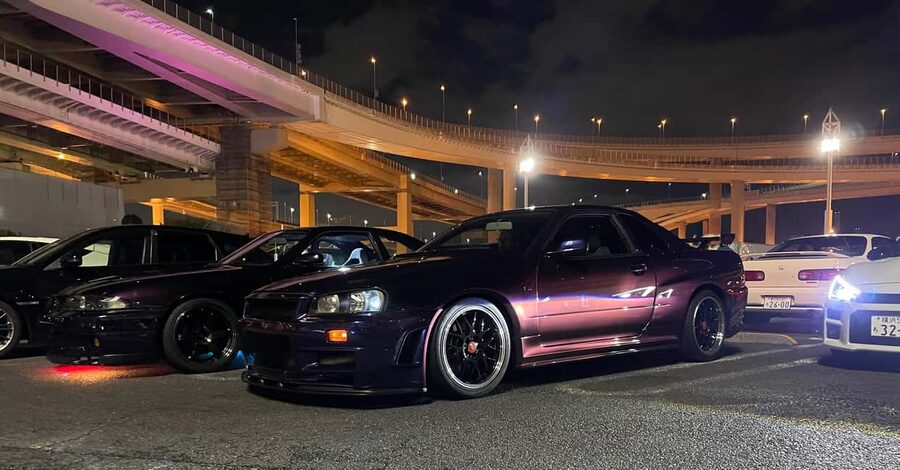
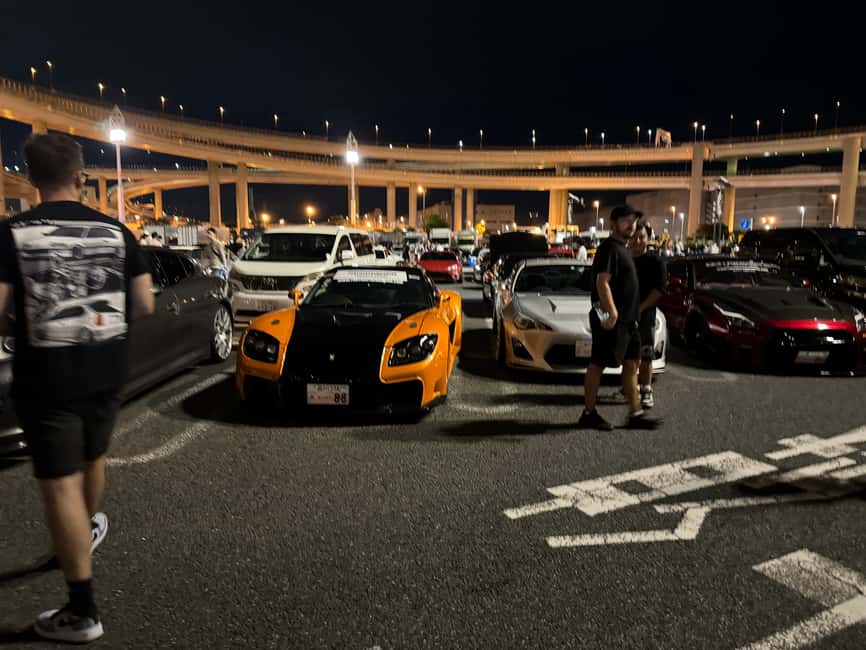
- Daikoku PA is the main prize: The Yokohama parking area is known for gatherings of Nissan GT-Rs, Toyota Supras, Mazda RX-7s, classic cars, and modified imports.
- You see more than parked cars: The route includes a tuning shop or parts store, such as Super Autobacs in Shinonome.
- Akira is a hands-on host: He answers questions about Japanese car culture and, where appropriate, may let you experience the sound and power of the Mercedes.
- The format stays small: Pickup is available from Shibuya or Shinjuku, the tour lasts about 3 to 4 hours, and the maximum group size is four.
- There is a sensible backup plan: If Daikoku PA is closed, the route may switch to Tatsumi PA or Umiharu.
Why this night ride is different from a normal Tokyo tour
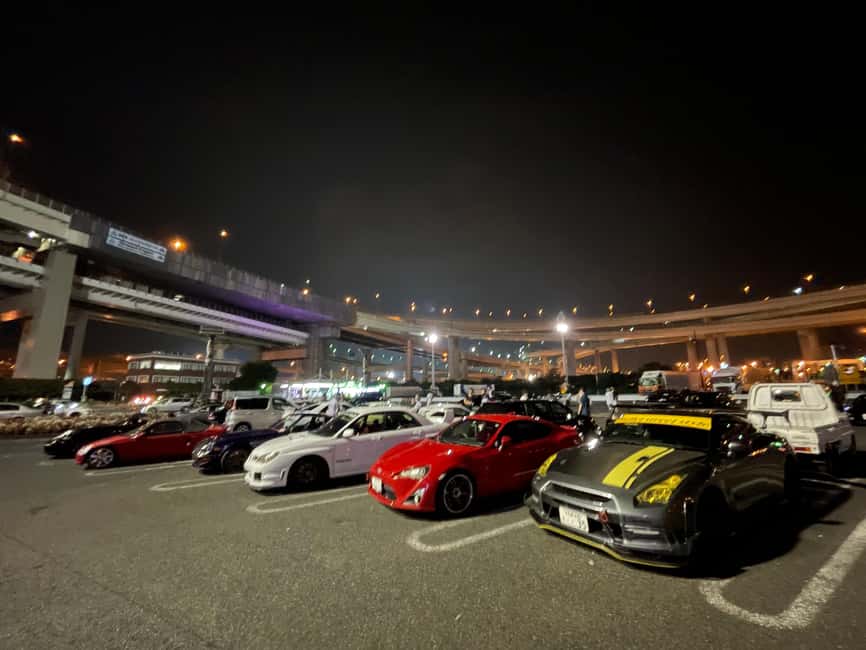
Most Tokyo sightseeing tours keep you on foot, in a coach, or around the same central districts. This one is built around the road itself. You are not simply being driven to a photo stop. The expressways, ramps, tunnels, and city lights are part of the evening.
That matters because Japanese car culture is tied to movement. The appeal is not only a bright sports car sitting still. It is the sound of a tuned engine, the look of a carefully chosen wheel and body kit, and the shared interest that brings owners together at a parking area late at night.
You begin in Shibuya or Shinjuku, two practical pickup points for a night in Tokyo. From there, the Mercedes takes you onto the expressways toward Yokohama. The route provides skyline views and glowing city streets, though the exact drive will depend on traffic and the evening plan.
The car is a major part of the value here. The 2016 Mercedes-Benz C63 AMG Edition 1 is not a standard taxi or ordinary sightseeing vehicle. It brings German performance into a tour focused on Japanese cars, which gives the evening a nice twist. You get to compare a European performance car with the Japanese machines waiting at Daikoku.
A few more Tokyo tours and experiences worth a look
The Mercedes C63 AMG sets the tone
The car used for the experience is a 2016 Mercedes-Benz C63 AMG Edition 1. It has a biturbo V8, and the tour presents it as a tuned performance car rather than a quiet transfer vehicle.
One of the useful details from the experience is that Akira may let you sample the power of the V8, depending on the circumstances and what is appropriate during the ride. That does not turn the tour into a racing activity. It simply adds a real sense of occasion to the drive.
I would choose this tour if the vehicle matters almost as much as the destination. You may have seen Japanese performance cars in magazines or at auto shows, but arriving at Daikoku in a quick, distinctive Mercedes gives the night its own character.
The cabin also limits the group to four people. That is a practical advantage for anyone who wants to talk with the guide rather than sit in a large group and wait for general commentary. It also suits couples, a small group of friends, or a solo car fan who wants plenty of room for questions.
Smoking is not allowed inside the vehicle. You should bring a passport or ID card, and you should tell the operator ahead of time about any accessibility needs. The vehicle and activity are not suitable for wheelchair users.
The expressway ride through Tokyo at night
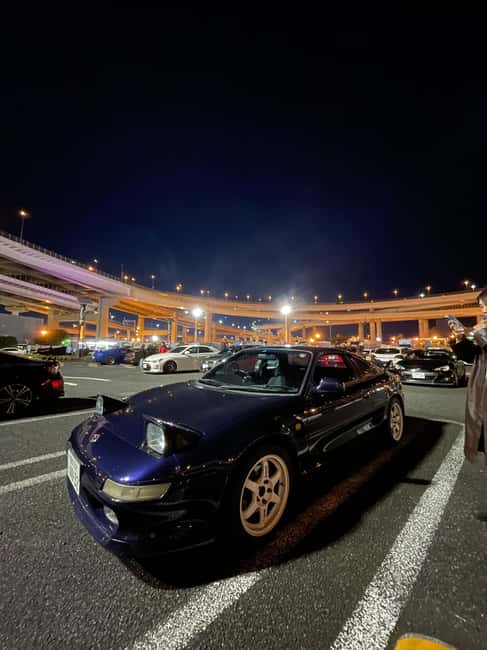
The first part of the evening is a city drive from Shibuya or Shinjuku toward the Yokohama area. Tokyo’s expressways are not just a way to save time. They offer a different view of the city, with high roads, lit buildings, signs, and changing views as the route leaves central Tokyo.
The exact sights are not listed as a fixed route, so you should not book this expecting a set roll call of famous towers or landmarks. The reward is the moving view and the feeling of being part of Tokyo after dark.
Traffic can affect the pace. That is simply part of Tokyo, and it is worth keeping your expectations sensible. This is a car culture outing, not a timed driving demonstration. The Mercedes gives you a lively setting, but public roads and traffic conditions control the ride.
Akira’s role adds value here. He is described as a friendly, polite, and engaging driver who answers questions about Tokyo’s car scene. Communication can take place in English or Japanese, and one detailed account notes that he uses a translation tool when needed. That makes this a good fit even if you do not know technical Japanese terms.
Arriving at Daikoku Parking Area
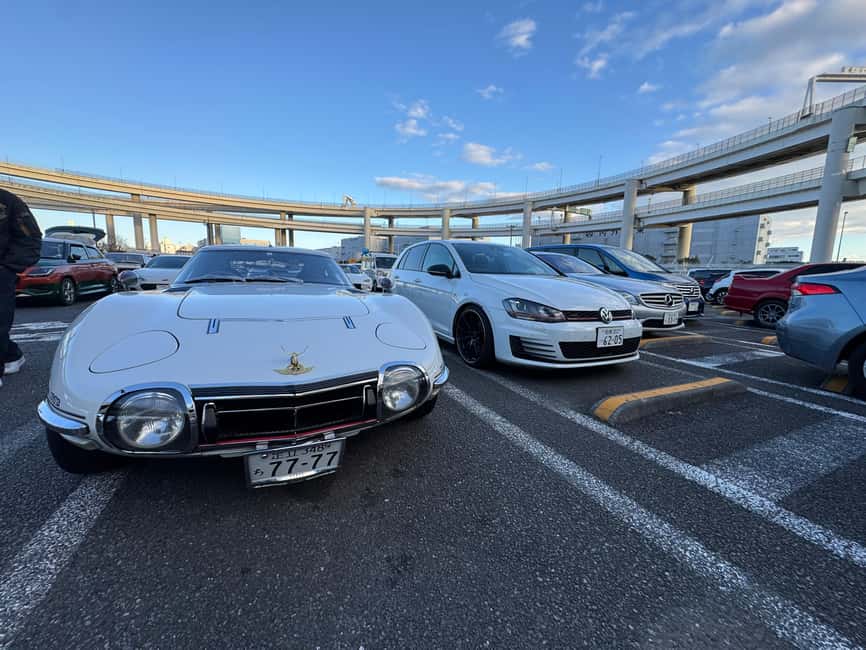
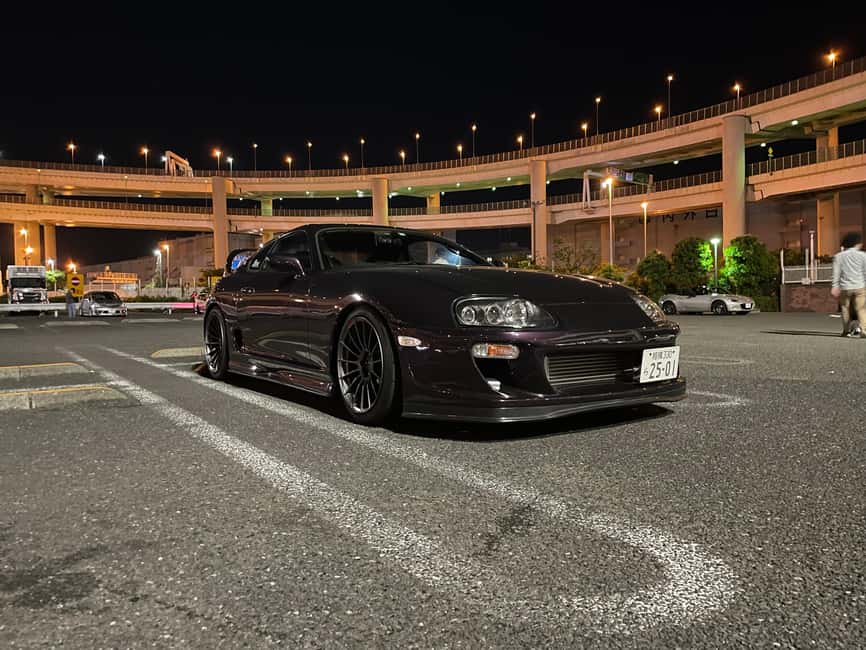
Daikoku PA is the core of the experience. Located in Yokohama, it is famous for late-night gatherings of Japanese performance cars and modified vehicles. The attraction is not a museum display with barriers and labels. It is a working parking area where car owners may gather, look at one another’s builds, and talk about modifications.
You might see tuned Nissan GT-Rs, Toyota Supras, Mazda RX-7s, classic Japanese models, rare imports, and heavily modified street cars. The mix changes from night to night, which is part of the appeal. You are seeing a living meeting place rather than a collection arranged for guaranteed viewing.
That flexibility is also the chief drawback. No tour can promise a precise number of cars or a particular model on a given evening. The experience description says dozens of cars often gather, but the actual scene may be larger, smaller, or focused on different styles when you arrive.
The guide helps put the cars in context. You can ask about tuning choices, performance parts, rare models, and the local scene. If you are new to JDM culture, this is useful because a row of modified cars can otherwise become a blur of spoilers, wheels, exhausts, and badges.
The Tokyo Bay setting gives you a strong background for night photos. Bring your passport or ID, but the supplied information does not promise photography equipment, special lighting, or guaranteed access to every vehicle. You should treat the stop as a chance to photograph and observe respectfully, not as a private photo shoot with every car available on demand.
What makes the JDM scene worth seeing
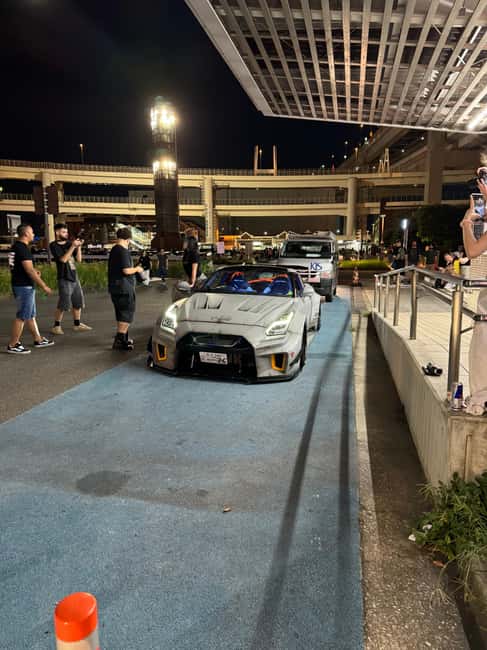
JDM means Japanese Domestic Market, a term used for cars and parts made for Japan or associated with Japan’s home market. The culture around these cars is about more than horsepower. Owners often care about period-correct details, engine work, suspension, wheels, body styling, and the way a car reflects a certain era or tuning approach.
At Daikoku, you can see that range in one place. A Nissan GT-R may represent high-end performance and careful mechanical work. A Supra may draw attention because of its famous place in Japanese and international car culture. An RX-7 may appeal to anyone interested in rotary engines and distinctive styling.
The scene can also include rare imported cars and German performance vehicles. That is why the Mercedes works well as the tour car. It does not pretend that the evening is only about one narrow type of Japanese machine. It gives you a point of comparison and shows that the meeting has room for different kinds of enthusiasts.
You will get the most from this stop if you come with a few questions ready. Ask Akira how a car differs from a standard model, what a part does, or why a certain build attracts attention. The tour is short, so a little preparation helps you use the guide’s time well.
The tuning shop or Super Autobacs stop
After Daikoku PA, the tour continues to a well-known tuning shop or performance parts store. One possible stop is Super Autobacs in Shinonome.
This changes the tone of the evening in a useful way. Daikoku shows you the finished cars and the social side of the scene. A tuning shop shows you the parts and buying culture behind those cars. You may find performance parts, wheels, body kits, and other equipment used to change a car’s looks or behavior.
The exact shop can vary, so you should not assume that Super Autobacs is guaranteed on every departure. Still, the planned visit gives the tour more depth than a simple drive to a parking lot. You see where owners can shop for the hardware that shapes the cars gathered at the meet.
For serious enthusiasts, this may be one of the most valuable stops. You can connect what you saw on a car at Daikoku with the kind of parts sold in Japan. For a casual visitor, the stop is easier to enjoy if you are curious about design and modification rather than expecting a standard sightseeing attraction.
It is also a practical place to look at the difference between a specialty car shop and a general souvenir store. The tour does not include personal purchases, so anything you buy is your own expense.
How much time the 3 to 4 hour format gives you
The total duration is about 3 to 4 hours. That is long enough for a proper evening outing, but short enough to fit around a Tokyo dinner or another night plan.
The schedule includes the city pickup, expressway ride, Daikoku PA, the tuning shop or parts store, and the return drive. Time at each stop is not specified, so the evening may not follow a strict minute-by-minute plan.
I like this length for a first look at Tokyo’s car culture. A longer tour could become repetitive if the meet is quiet, while a shorter trip might feel rushed once you reach Yokohama. The 3 to 4 hour window leaves room for the drive to feel like part of the event.
The night schedule is important. Daikoku is known for evening gatherings, so booking a daytime departure would not make sense for this particular experience. Confirm the pickup time when you reserve, especially if you are coordinating it with dinner, a show, or late-night train plans.
Hotel pickup and drop-off are not included. You meet in Shibuya or Shinjuku, so plan how you will reach the starting point and how you will return after the tour. The operator includes highway tolls, which keeps the advertised price clearer.
Is $125 a fair price?
The cost is $125 per person. That is not the cheapest way to see cars in Tokyo, but the price covers more than transport.
You are paying for a private or very small-group ride in a tuned Mercedes C63 AMG, a local English or Japanese-speaking host, highway tolls, the trip to Yokohama, the Daikoku PA visit, and a tuning shop or parts store stop. If you tried to reproduce the evening alone, the hardest part would not simply be reaching Yokohama. It would be knowing where to go, understanding the scene, and having a car that makes the drive part of the experience.
The value is strongest for someone who already cares about cars. A casual sightseer may find the price high if the Mercedes and JDM meets are only mild interests. A serious enthusiast, photographer, or automotive content creator is more likely to see the benefit in the small group, local guidance, and access to a famous meeting point.
Because the number of cars at Daikoku can vary, I would not treat the price as a guarantee of a perfect meet. Think of it as paying for an organized night in the car scene, with the Mercedes and guide providing continuity even if the parking area is quieter than hoped.
Who should book this experience?
This tour is best for car enthusiasts who want to see Japanese tuning culture in its natural setting. It also fits photographers, YouTubers, and visitors who want a night activity that feels far removed from the usual Tokyo sightseeing circuit.
The one to four person limit works well for friends who share the same interest. It is also a good choice for a couple, since the guide can adapt the conversation more easily than a large coach tour can.
You do not need to be an expert. Akira’s willingness to answer questions makes the outing accessible to beginners. Still, you should have at least some interest in cars, engines, design, or Japanese street culture. If you would rather spend the night in bars, food alleys, or illuminated shopping districts, this is probably not the right use of your evening.
Children are not allowed due to the nature of the activity, and the additional information says it is not suitable for children under six. The experience is also not suitable for wheelchair users. No meals or drinks are included, so eat before the pickup or plan food separately.
What to know before you reserve
Akira is the named guide associated with the experience. He is described as relaxed, helpful, polite, and able to answer questions with translation support when needed. A particularly appealing detail is the chance, when appropriate, to experience the sound and power of the Mercedes V8 biturbo.
Daikoku PA can close temporarily, although this is described as rare. If it does, the alternative may be Tatsumi PA or Umiharu. These changes are worth accepting because access to an active car meet cannot be guaranteed every night.
The activity is offered in English and Japanese. Bring a passport or ID card, do not smoke in the car, and tell the operator in advance about accessibility requirements. Cancellation is free up to 24 hours before the tour, and you can reserve now and pay later, which helps if your Tokyo schedule is still changing.
Should you book the Tokyo JDM Car Culture Tour?
Book it if the idea of riding through Tokyo in a tuned Mercedes, seeing modified GT-Rs and Supras at Daikoku, and browsing Japanese performance parts sounds like a highlight of your trip. The small group and Akira’s personal approach add more value than a basic transfer to Yokohama.
Skip it if you want a guaranteed list of specific cars, a fixed photo session, or a broad Tokyo sightseeing tour. The meet changes, the backup location may be used, and traffic can shape the evening.
For the right person, $125 is a fair price for a focused night built around cars rather than landmarks. You get the drive, the famous parking area, the shop visit, and a guide who can explain what you are seeing. That combination makes this one of the more practical ways to reach Tokyo’s car culture without trying to find the scene on your own.
FAQ
Where does the tour start?
Pickup is available from either Shibuya or Shinjuku.
How long does the tour last?
The tour lasts approximately 3 to 4 hours.
What car is used for the experience?
The included vehicle is a 2016 Mercedes-Benz C63 AMG Edition 1.
Does the tour visit Daikoku Parking Area?
Yes. Daikoku PA in Yokohama is the main destination.
What cars might I see at Daikoku PA?
You might see Nissan GT-Rs, Toyota Supras, Mazda RX-7s, classic JDM cars, rare imports, and heavily modified street cars.
Is a tuning shop included?
Yes. The tour includes a visit to a famous tuning shop or performance parts store, such as Super Autobacs in Shinonome.
What happens if Daikoku PA is closed?
The tour may visit an alternative location such as Tatsumi PA or Umiharu.
Is the tour offered in English?
Yes. The experience is hosted in English or Japanese.
How many people can join?
The maximum group size is four passengers.
Are highway tolls included?
Yes. Highway tolls are included, but meals, drinks, and personal expenses are not.
Are children allowed?
The activity information says children are not allowed due to the nature of the experience, and it is not suitable for children under six.
What should I bring?
Bring a passport or ID card. Smoking is not allowed inside the vehicle.
More JDM & Car Culture in Tokyo
More tours in Tokyo we've reviewed












JDM & Car Culture, compared.
 ★ 4.8Tokyo: Fast & Furious Tokyo Drift 3 Experience (Kaila Yu SP)From $157
 ★ 4.8Tokyo: FAST&FURIOUS EXPERIENCE Daikoku Tokyo Car ClubFrom $157
 ★ 4.8Tokyo Drift: GT-R Car Club R35 Liberty Walk Daikoku meetingFrom $240
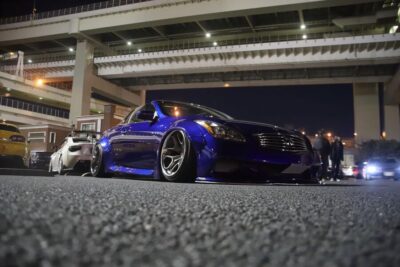 ★ 4.8Tokyo: Daikoku JDM Fast Furious Drift Style Car ExperienceFrom $123
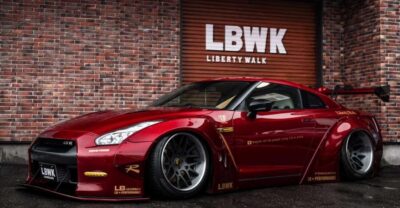 ★ 4.8Tokyo Drift: GO Daikoku Car Meet R34 Skyline Car ClubFrom $246
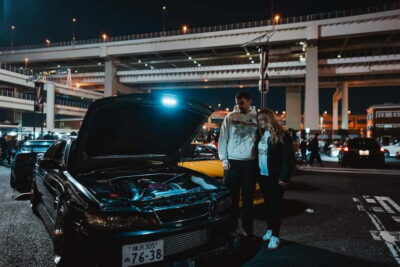 ★ 4.7Tokyo Drift: Daikoku PA Supreme Car Experience 大黒PAFrom $583 hours