Reviewed · MT FUJI DAY TRIPS
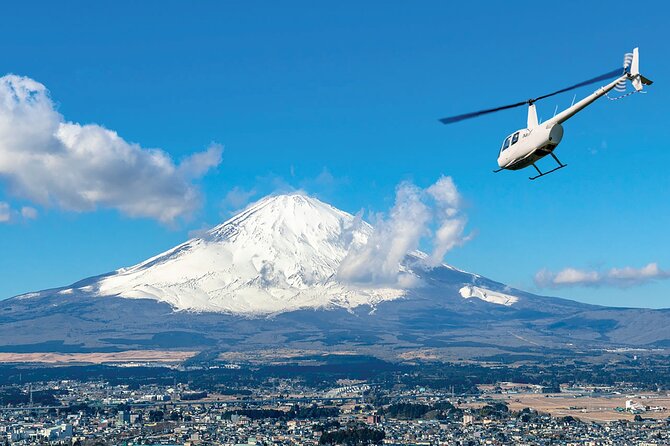
Mt. Fuji & Tokyo Helicopter Tour【90 mins】 : Close to Mt.Fuji!
The best part of this tour is the sudden change in scale. Tokyo Tower, Yokohama Landmark Tower, lakes, islands, and Mount Fuji all become part of one broad view from the air. Mount Fuji is the prize, but the city itself may be the bigger surprise.
In This Article
- Key points to know before takeoff
- Why this helicopter route feels different from Tokyo sightseeing
- Leaving Tokyo Heliport in Shinkiba
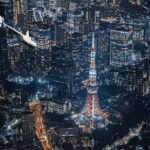
- Tokyo Tower and the city below
- Yokohama Landmark Tower and the move toward the coast
- Enoshima Island from the helicopter
- Lake Ashinoko and the approach to Mount Fuji
- Mount Fuji: spectacular when the sky cooperates
- What the private format means for value
- Weight limits, health rules, and practical restrictions
- Cancellation and weather flexibility
- Who should book this flight
- Should you book the Mt. Fuji and Tokyo helicopter tour?
- FAQ
- How long does the helicopter tour last?
- Where does the tour begin and end?
- How many people can join the private flight?
- Is Mount Fuji guaranteed to be visible?
- Which sights can I see from the helicopter?
- What is the passenger weight limit?
- Can I take photographs at the heliport?
- What happens if bad weather cancels the flight?
I like the private group format, which limits the flight to your party of up to three. I also like the generous 90-minute flight time. That is long enough to see Tokyo and reach the Fuji area, rather than simply circle one city landmark and return.
The main catch is weather. Fuji is not promised, and clouds can force a route change. This is also a costly outing at $3,458.71 per group, so you will want clear skies, flexible plans, and two companions to make the price easier to accept.
Key points to know before takeoff
- Ninety minutes in the air: The flight itself lasts about an hour and a half, with the full experience taking roughly two hours.
- A private flight for up to three: You share the helicopter only with your own party, not a large sightseeing crowd.
- Fuji depends on the forecast: Clear conditions can reveal snow-capped Mount Fuji, Lake Ashinoko, and the surrounding scenery, but the route may change when clouds block the mountain.
- Tokyo Heliport departure: The tour begins and ends at Tokyo Heliport in Shinkiba, Koto City.
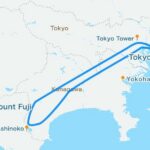
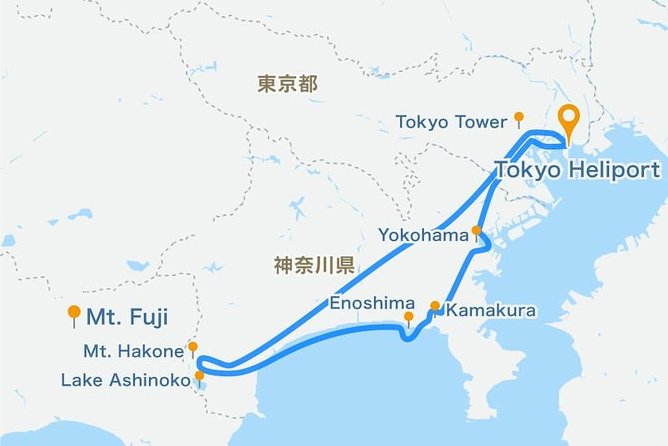
- Several major sights from above: The planned sightseeing area includes Tokyo Tower, Yokohama Landmark Tower, Enoshima Island, Lake Ashinoko, and Mount Fuji.
- Strict flight rules apply: The combined passenger weight limit is 190 kilograms, with no passenger over 110 kilograms, and recent scuba diving within 24 hours rules out participation.
Why this helicopter route feels different from Tokyo sightseeing
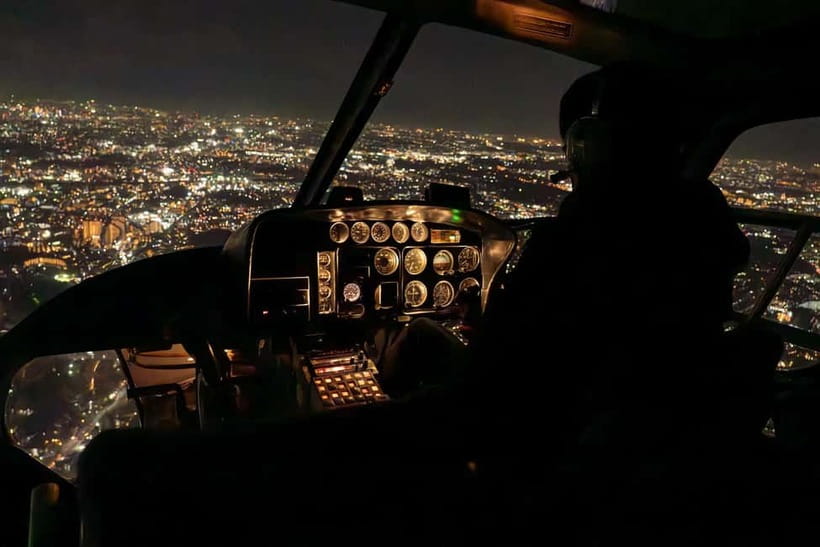
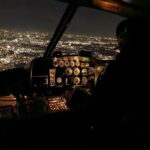
Tokyo is easy to experience at street level, but the city can be hard to understand from the ground. Roads bend, buildings block one another, and the sheer spread of the metropolis is difficult to grasp. From a helicopter, the city becomes a connected whole.
You can look down on Tokyo Tower, then see the urban mass continue toward Yokohama. The view is not only about checking off landmarks. It gives you a sense of how Tokyo, its waterfront, nearby cities, and the wider Kanto area fit together.
The flight also offers a sharper contrast than a standard city tour. Tokyo’s dense built-up areas give way to water, islands, lakes, and mountain views. That change is one of the strongest reasons to choose a long flight rather than a short city loop.
The experience is private, too. With a maximum of three people, you are not trying to share the best view with a busload of strangers. That matters when the price is being split among two or three people, and it makes the outing feel more personal.
A few more Tokyo tours and experiences worth a look
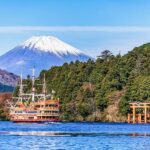
Leaving Tokyo Heliport in Shinkiba
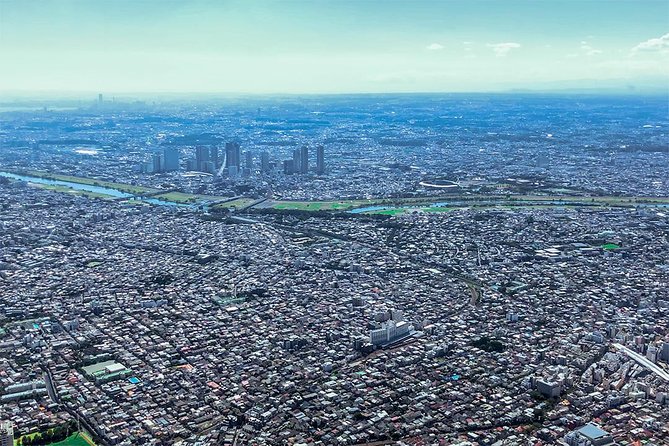
Your starting point is Tokyo Heliport at 4-chōme-7-25 Shinkiba, Koto City, Tokyo 136-0082. The activity returns to this same meeting point at the end, so you do not need to arrange a separate finish elsewhere in the city.
The full outing takes about two hours, including time on the ground, while the stated flight time is 90 minutes. That distinction is useful when planning the rest of your day. Do not schedule a museum reservation or train connection immediately afterward.
The heliport is near public transportation, which helps, but the information provided does not specify a particular station, transfer, or pickup service. I would check the exact route before leaving your hotel and allow extra time. A heliport is not the sort of place where arriving late is likely to be forgiven easily.
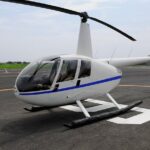
One unusual rule concerns photography at the Tokyo Heliport site. Photography and picture taking are banned on the premises as part of Tokyo security measures. You can take pictures inside the helicopter and during the flight, but not at the site before departure.
If a photo in front of the helicopter matters to you, the operator points to Funabashi Heliport or a night course from Yokohama Nishi Heliport as alternatives. Those are separate options, not part of this tour.
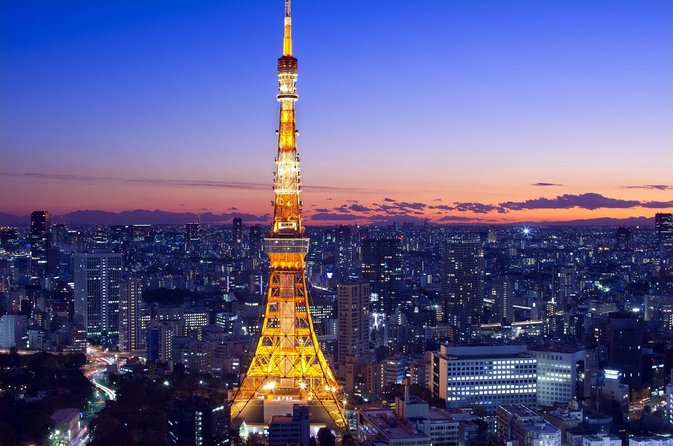
Tokyo Tower and the city below
Tokyo Tower is one of the clearest visual markers on this route. From street level, it is an observation tower and a familiar orange-and-white landmark. From the air, it helps you read the city around it.
You may find that the tower is less important as a destination than as a reference point. It shows how tightly Tokyo’s buildings, roads, and districts are packed together. The aerial view also removes the problem of tall buildings blocking your sightline.
The helicopter does not make a sightseeing stop at Tokyo Tower. You see it during the flight, so this is not a substitute for visiting the tower’s observation decks. The benefit is speed and scale: you can place the tower within the wider city in a matter of minutes.
If your main aim is a close look at Tokyo’s streets, this flight may feel too distant. If you want a clean view of the city’s shape, it is much more effective than a conventional walking route.
Yokohama Landmark Tower and the move toward the coast
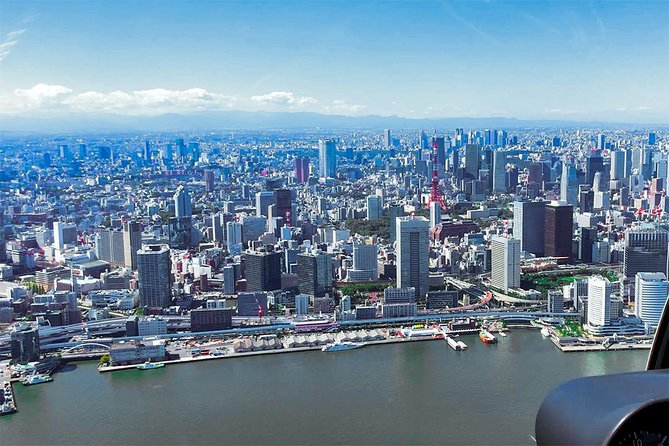
The route includes Yokohama Landmark Tower, giving you a view beyond central Tokyo. Yokohama is a separate major city, and seeing its tower from the air helps show the reach of the urban area between Tokyo and the coast.
This section adds variety to the flight. Instead of looking at one continuous field of high-rises, you get a different city marker and a change in the surrounding view. The contrast is especially useful if you have already spent several days among Tokyo’s packed neighborhoods.
There is no indication that the helicopter lands at Yokohama Landmark Tower or that you have time on the ground there. Treat it as an aerial sighting, not a stop where you can explore, eat, or visit an observation deck.
That limitation applies to the other sights as well. The tour is a cruising flight, with the attractions viewed from above. You are paying for access to the air and the route, not for admission to each landmark.
Enoshima Island from the helicopter
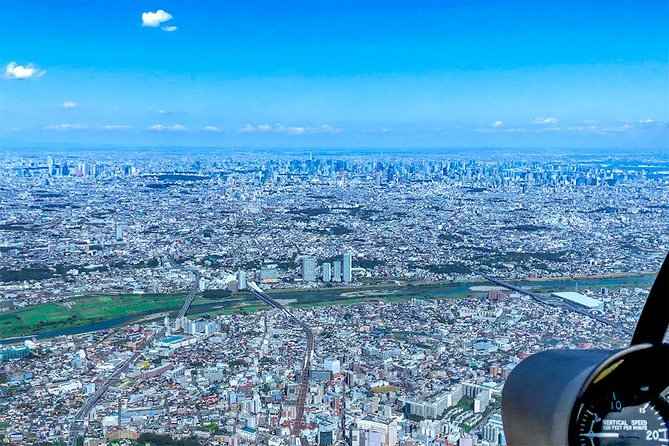
Enoshima Island brings a more open coastal element to the trip. From above, an island is easier to understand than from a crowded shore. You can see its position against the surrounding water and the nearby coastline in one glance.
I like this part of the route because it breaks up the tall-building views. Tokyo Tower and Yokohama Landmark Tower are vertical reference points. Enoshima gives you a horizontal one, with water and open space changing the rhythm of the flight.
Still, the aerial view is brief compared with a land visit. You will not be walking through Enoshima, visiting its sights, or spending time at the shore. If you want the island’s streets and atmosphere, plan a separate visit.
For this helicopter tour, Enoshima works best as part of the larger picture. It helps turn the flight into a journey through city, coast, lake, and mountain rather than a simple Tokyo landmark circuit.
A few more Tokyo tours and experiences worth a look


Lake Ashinoko and the approach to Mount Fuji
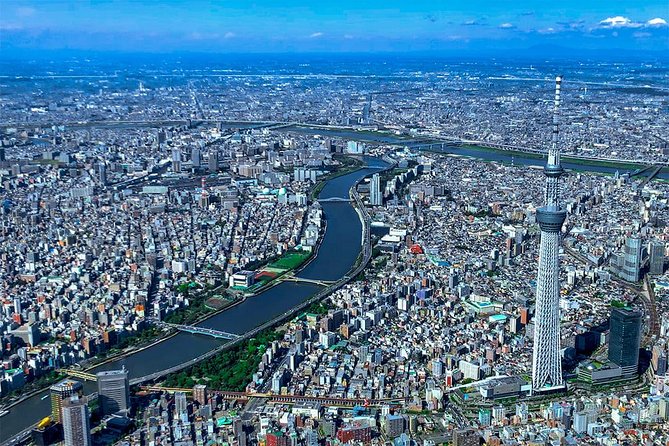
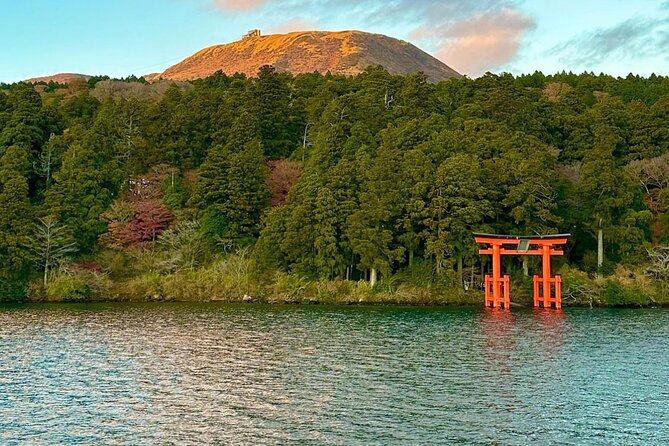
Lake Ashinoko is another major sight on the route, and it is closely tied to the Fuji portion of the experience. A lake viewed from above has a different impact than a lake seen from its shore because you can take in its shape and setting at once.
The lake also gives you a better chance to appreciate the transition away from Tokyo’s dense urban core. The route reaches beyond city towers into a more open setting, with the mountain area as the main visual goal.
The tour description places Mount Fuji at the center of the experience, but the operator is clear that the mountain is not guaranteed. Clouds can hide Fuji even when conditions seem decent in Tokyo. If that happens, the course may be changed, and any difference in price will be refunded.
That is fair, but it is also the key booking risk. You should not book this as a guaranteed Fuji sighting. Book it as a long aerial tour whose best possible outcome is a clear view of Japan’s famous snow-capped mountain.
Mount Fuji: spectacular when the sky cooperates
When Fuji is visible, it can dominate the entire flight. The mountain’s height and clean outline make it easy to understand why the tour is marketed around getting close to Fuji. One strong aerial view can become the memory that defines the day.
The second published experience highlights the mountain, lakes, and surrounding scenery as especially impressive when the weather was favorable. That matches the basic logic of this tour: the clearer the air, the more the route comes alive.
Timing matters. If you plan to fly within five days of booking, check the weather forecast closely. The operator warns that bad weather can lead to cancellation, so a short lead time leaves you less room to adjust.
You should also keep your schedule flexible. Weather, aircraft problems, other disruptions to flight operations, and flight cancellation can all affect the outing. In those cases, you may receive a full refund or change to another date, according to the stated policy.
Even on a clear day, Fuji can be partly covered. A clear forecast improves your odds but does not create a promise. I would choose a date when you can accept either a Fuji flight or a changed course without feeling that the day has failed.
What the private format means for value
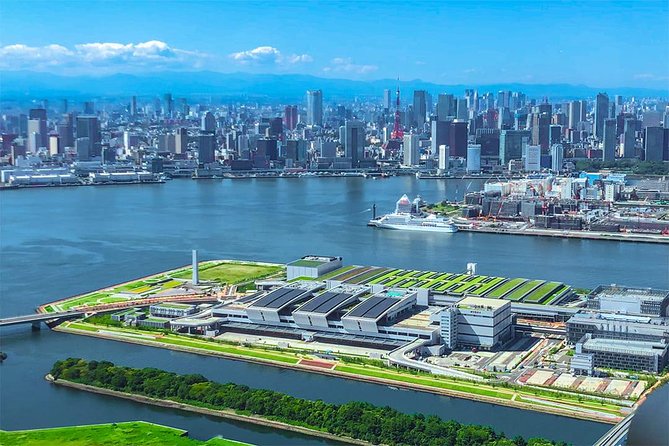
The listed price is $3,458.71 per group of up to three. That is a major expense, but the correct comparison is not the cost of a normal sightseeing ticket. You are paying for a private aircraft experience with 90 minutes of flight time and a route that reaches well beyond central Tokyo.
Split among three people, the cost is easier to absorb than paying it alone. It remains expensive, but the private format gives you control over who shares the flight and avoids a large group setting.
I see this as a special-occasion purchase rather than a routine Tokyo activity. It could make sense for a birthday, proposal, anniversary, family celebration, or a once-only trip where you want one large memory. It makes less sense if you are watching every yen or if your schedule allows only one fixed attempt at seeing Fuji.
The value also depends heavily on weather. A clear route over Tokyo, Yokohama, Enoshima, Lake Ashinoko, and Fuji offers a lot in 90 minutes. A cloudy day with a changed course may still provide an interesting flight, but it will not match the headline promise in your imagination.
Weight limits, health rules, and practical restrictions
The combined passenger weight limit is 190 kilograms per flight. No individual passenger may weigh more than 110 kilograms. These limits are important because the booking is for a small aircraft, not a large sightseeing plane.
If you are booking for three people, calculate the total before reserving. Do not assume that a group under three automatically meets the requirement. If you are uncertain, confirm the details with the provider before paying.
You cannot participate if you have gone scuba diving within the previous 24 hours. This is a flight safety rule, so it is worth considering if your Tokyo plans include underwater activities.
Most people can participate, and the tour is near public transportation. The supplied information does not provide a detailed accessibility description, so anyone with mobility or medical concerns should confirm suitability directly before booking.
Confirmation is sent within 48 hours, subject to availability. That means you should not treat the reservation as final until confirmation arrives, especially if your Japan itinerary is tightly timed.
Cancellation and weather flexibility
You can cancel up to 24 hours before the experience for a full refund. That gives you a useful safety valve if the forecast turns poor or your plans change.
Weather cancellations are handled separately from ordinary customer cancellations. If bad weather, aircraft problems, flight-operation disruptions, or cancellation prevent the flight, the stated options are a full refund or a change to another date.
Transportation and accommodation costs are not refunded if Fuji cannot be seen. This is a crucial point for anyone planning an expensive hotel night or special transfer around the flight. Keep your arrangements flexible and avoid building nonrefundable plans around a guaranteed mountain view.
Who should book this flight
I would recommend it most strongly to three kinds of people. First are visitors who want a rare view of Tokyo and the Fuji area in one outing. Second are small groups who can split the price and value privacy. Third are photographers who care more about aerial views than about taking pictures at the heliport.
It is also a good fit for someone who has already seen Tokyo’s main sights and wants a fresh way to understand the city. The flight does not replace Tokyo Tower, Yokohama, or Enoshima at ground level, but it links them in a way ordinary sightseeing cannot.
I would hesitate if Mount Fuji is your only goal. Since the mountain is weather dependent, you could pay a high price and still miss it. A land-based Fuji excursion may give you more time in the area, though it would not provide this same private view from the sky.
Should you book the Mt. Fuji and Tokyo helicopter tour?
Book it if you want a private, high-cost highlight and can share the expense with two other people. The 90-minute route is unusually broad, taking in Tokyo Tower, Yokohama Landmark Tower, Enoshima Island, Lake Ashinoko, and Mount Fuji when conditions allow.
Wait or choose another plan if your budget is tight, your schedule cannot handle a weather change, or you need a guaranteed Fuji sighting. The smartest approach is to check the forecast, confirm the weight rules, leave room in your day, and accept that the mountain is a possibility rather than a promise.
FAQ
How long does the helicopter tour last?
The full activity takes approximately two hours, including time on the ground. The flight itself lasts 90 minutes.
Where does the tour begin and end?
It begins at Tokyo Heliport, 4-chōme-7-25 Shinkiba, Koto City, Tokyo 136-0082, Japan. The activity ends back at the same meeting point.
How many people can join the private flight?
A maximum of three people can participate per booking. The activity is private to your group.
Is Mount Fuji guaranteed to be visible?
No. The tour does not promise a view of Mount Fuji. Clouds or poor conditions can lead to a changed route, with any difference refunded.
Which sights can I see from the helicopter?
The route includes Tokyo Tower, Lake Ashinoko, Enoshima Island, Yokohama Landmark Tower, and Mount Fuji when weather permits. The sights are viewed during the flight rather than visited on foot.
What is the passenger weight limit?
The total weight limit is 190 kilograms per flight, and no individual passenger may weigh more than 110 kilograms.
Can I take photographs at the heliport?
Photography and picture taking are banned at the Tokyo Heliport site because of security measures. You can take photographs inside the helicopter and during the flight.
What happens if bad weather cancels the flight?
If bad weather, aircraft problems, flight-operation disruptions, or cancellation prevent the tour, you can receive a full refund or change to another date. Accommodation and transportation costs are not refunded if you cannot see Mount Fuji.
More Helicopter Tours in Tokyo
More Mt Fuji Day Trips in Tokyo

More tours in Tokyo we've reviewed












Mt Fuji Day Trips, compared.
 ★ 5.0Mt Fuji and Hakone 1-Day Bus Tour Return by Bullet TrainFrom $163
 ★ 4.0Mt Fuji & Hakone Cruise, Drum Show Bullet Train 1 Day from TokyoFrom $149
 ★ 4.4Tokyo Mt Fuji 5th St & Hakone Cruise Bus Tour w/Bullet TrainFrom $15410 hours
 ★ 4.5From Tokyo: Mount Fuji Full-Day Sightseeing TripFrom $6810 hours
 ★ 4.7Tokyo: Mt. Fuji Tour, Hakone Ropeway, Owakudani, Lake AshiFrom $5410 hours
 ★ 4.4Tokyo:Mt.Fuji,Kawaguchiko Oishi Park,Arakurayama Sengen ParkFrom $5410 hours
![[1 Group Only] Tokyo Shinjuku Food Tour for Family - Starting at Shinjuku 3 Chome with okonomiyaki](https://tokyoezine.com/wp-content/uploads/2026/08/1-group-only-tokyo-shinjuku-food-tour-for-family.jpg)