Reviewed · TOKYO
Japanese Traditional Entertainment Experience in Tokyo
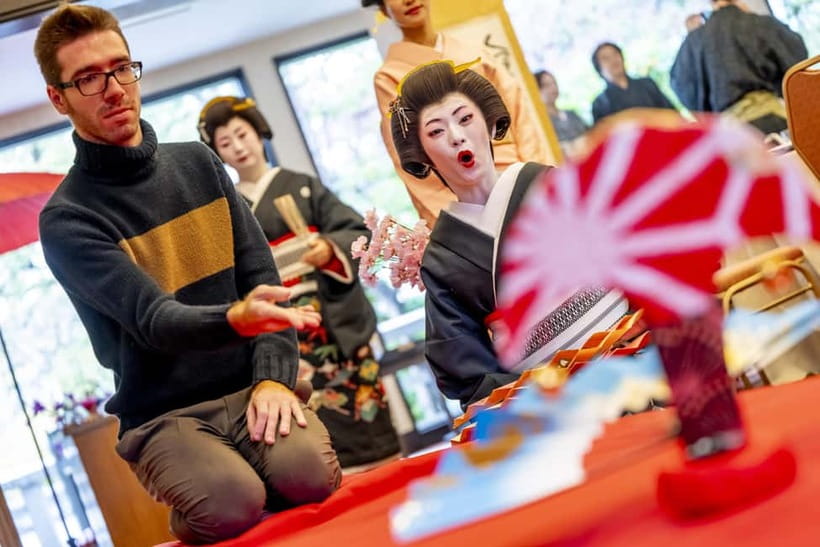
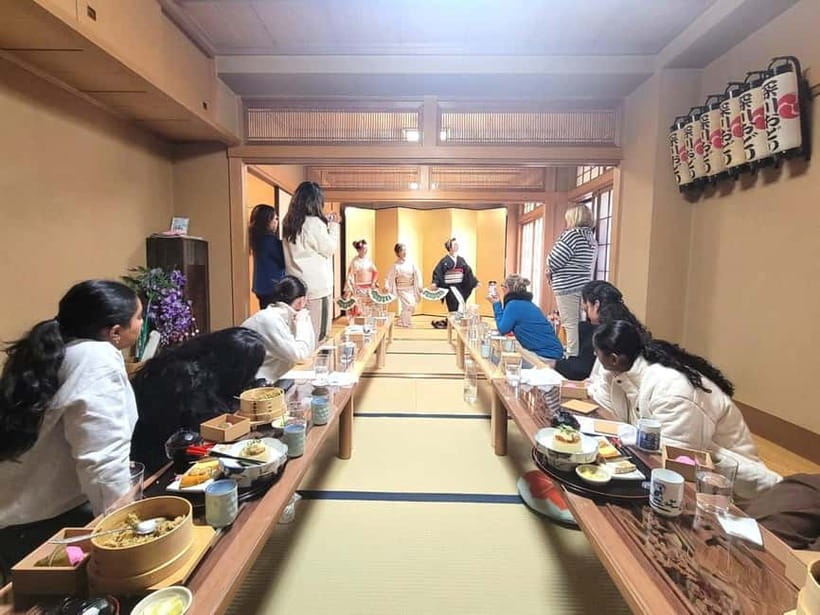
The most unusual part of this Tokyo experience is the chance to dress in a kimono and enter an Edo-style world after dark, with temple grounds and traditional entertainment setting the scene. You are not just watching a dance from a theater seat. You join an ozashiki party, a shared Japanese parlor gathering built around food, performance, and conversation.
In This Article
- Key Points
- Entering an Edo Night in Fukagawa
- The Geisha Parlor Experience
- Dance, Shamisen, and the Tea Ceremony
- Choosing Between UME, TAKE, and MATSU
- Why the Food Matters Here
- A Shared Party, Not a Quiet Stage Show
- The Optional Period Drama Film
- Is $74 a Fair Price?
- Location, Timing, and Cancellation
- Who Will Get the Most From This Experience?
- Should You Book the Fukagawa Ozashiki Experience?
- FAQ
- Where does the Japanese Traditional Entertainment Experience take place?
- How long does the experience last?
- What languages are available?
- Is transportation to the venue included?
- What happens during the experience?
- What is included with the UME course?
- What is included with the TAKE course?
- What is included with the MATSU course?
- Is the period drama-style movie included?
- Can I cancel for a full refund?
I like the personal feel of the geisha encounter, where you can learn about tea ceremony customs and ask about culture. I also like the choice of three courses, from Japanese sweets and matcha to a full kaiseki meal with Fukagawa Meshi. The main drawback is the short listed duration of 30 minutes, which may feel tight if you hope for a long meal, extended conversation, and a full cultural program in one sitting.
Key Points
- Kimono transformation: Dress up as an Edo townsman before entering the evening attraction.
- Nighttime temple setting: Walk around the temple grounds as part of the period-style experience.
- Three price levels: Choose UME for sweets and matcha, TAKE for a Fukagawa meal set, or MATSU for kaiseki cuisine and a drink.
- Live traditional arts: Expect geisha entertainment, Japanese dance, and shamisen music.
- Shared ozashiki party: The format brings strangers together for a lively Japanese social experience.
- Optional film shoot: A professional cameraman can record a short period drama-style movie for an additional fee.
Entering an Edo Night in Fukagawa
The experience takes place at Fukagawa Odori Hachiman Zashiki, at 1-22-8 Tomioka in Tokyo’s Koto Ward. Its setting matters. Rather than meeting in a modern restaurant or a standard performance hall, you are invited into a traditional-style ozashiki environment connected with Fukagawa and its older entertainment culture.
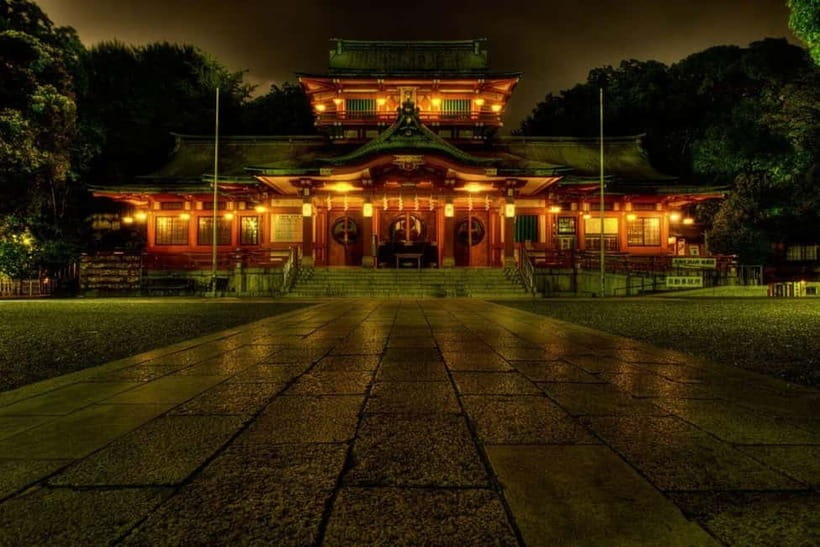
The evening begins with a costume change. You are transformed into a kimono-clad Edo townsman, then given a chance to walk around the temple grounds at night. That detail gives the visit a theatrical frame without requiring you to know much about Japanese history or etiquette.
I like this opening because it gives you something active to do before the performance. You are not simply handed a seat and asked to observe. The costume and night walk help you understand the atmosphere through your surroundings, clothing, and role.
Still, keep your expectations in check. The information provided describes a walk-through attraction and a traditional entertainment setting, but it does not give a detailed route, the exact temple access arrangements, or the amount of time spent in costume. Treat the transformation as part of the program, not as a full evening of independent sightseeing around temple grounds.
If you're still narrowing it down, here are other tours in Tokyo we've reviewed.
The Geisha Parlor Experience
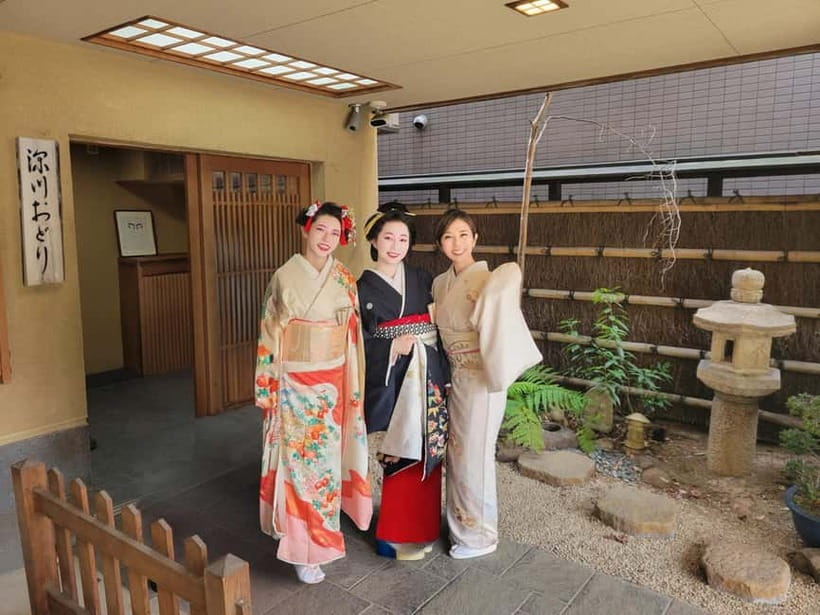
The central feature is the ozashiki experience with a geisha. In Japanese culture, ozashiki refers to a private-style banquet or parlor gathering where food, drink, games, conversation, and traditional arts can come together. Here, the format is designed for international visitors as well as Japanese participants.
The strongest part of the program is the direct contact. You can learn about the tea ceremony, discuss cultural differences, and see how a traditional entertainment setting works. That conversational element gives the experience more value than a short dance show alone.
The hosts are described as elegant, gracious, and professional, with a warm approach to explaining the customs. English and Japanese are available, so you do not need to speak Japanese to take part. The presence of English support is especially useful during the tea ceremony explanation and any cultural conversation.
I would not expect an intimate private appointment unless your booking specifically says so. The description calls this a big Japanese party where strangers gather and have fun together. That means the atmosphere may be social and communal rather than quiet or highly personal.
This format suits you if you want a friendly introduction to geisha culture without needing to arrange a private dinner. It may be less suitable if you are looking for a solemn, museum-like presentation or an extended one-to-one conversation.
Dance, Shamisen, and the Tea Ceremony
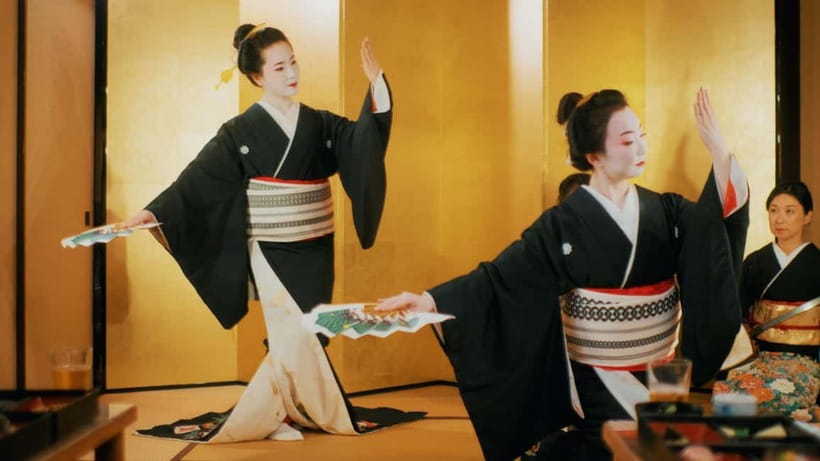
Traditional performing arts are woven into the meal and parlor setting. You can watch Japanese dance and shamisen performance while the program explains parts of the tea ceremony. The shamisen, a three-stringed Japanese instrument, supplies one of the clearest links to older stage and banquet traditions.
The dance is an important reason to choose this activity. It gives the evening a visual focus and lets you see formal movement, costume, and gesture in a setting tied to geisha entertainment. The traditional dance is also placed at the end of the session according to the available details, so it may serve as the closing performance.
The tea ceremony explanation adds another layer. You are not expected to arrive with technical knowledge. The hosts explain the aspects of the ceremony, which makes the experience easier to follow even if this is your first contact with Japanese tea customs.
The short duration is the point to watch. A listed 30-minute program is enough for a compact introduction, but it leaves little room for a leisurely progression through every element. If you choose a course with food, check the exact schedule carefully. The UME course includes sweets and matcha, while TAKE and MATSU include more substantial dining, so the pace and serving order may differ.
Choosing Between UME, TAKE, and MATSU
The three courses let you match the experience to your budget and appetite. The price shown is $74 per person, but the exact course selected is important because the inclusions are different.
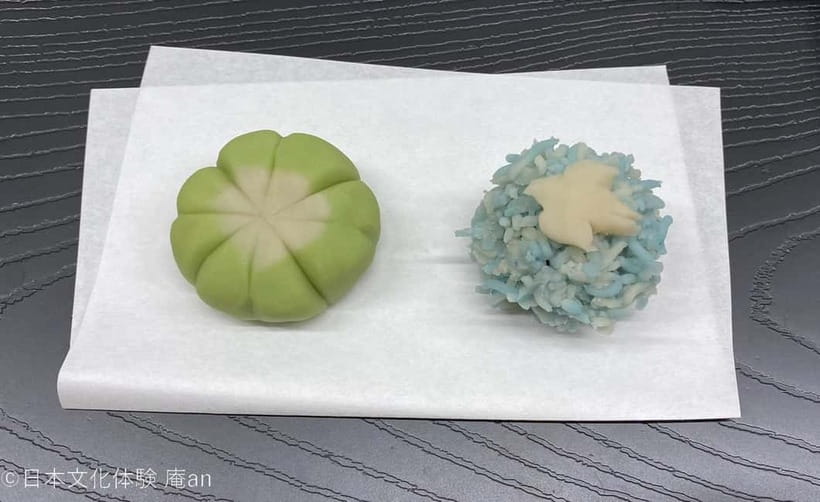
UME is the lightest option. It includes admission, the performance, a souvenir, Japanese sweets, and matcha. This is the sensible choice if you mainly want the kimono setting, geisha entertainment, cultural explanation, and traditional arts without committing to a full meal.
UME also fits a packed sightseeing day. You can enjoy a taste of the experience without adding a large dinner to your schedule. If you are sensitive to meal timing or already have restaurant plans, this course is likely the easiest fit.
TAKE adds a Fukagawa Meal Set. It includes the core admission and performance elements, the souvenir, ozashiki geisha entertainment, and a Fukagawa meal set. This is a middle option for you if food is part of the appeal but you do not need the full kaiseki presentation.
Fukagawa Meshi is associated with the Fukagawa area and is a useful local touch. The available information does not give the full menu or portion size, so I would not book TAKE expecting a precise dish list. Think of it as a regional meal component within the entertainment program.
MATSU is the fullest package. It includes kaiseki cuisine with Fukagawa Meshi and a drink, along with the performance, souvenir, and ozashiki geisha entertainment. Kaiseki is the most formal food option of the three, making MATSU the best match if you want the meal to be a major part of the evening.
One important practical point: the listed duration remains 30 minutes, so you should confirm the timing for the course you select. A full kaiseki meal, drink, performance, and conversation may be presented in a tightly arranged format. That does not make it poor value, but it does mean you should understand the schedule before paying for the highest tier.
Why the Food Matters Here
Food is not simply an add-on. In an ozashiki setting, eating and entertainment belong together. The meal gives you a reason to sit, watch the performers, and take part in the social side of the event rather than treating the show as a quick photo stop.
The MATSU course combines kaiseki cuisine with Fukagawa Meshi. That pairing gives you both a formal Japanese dining style and a local connection to the Fukagawa district. The available comments describe the food as delicious and organic, and one practical warning is worth taking seriously: prepare for a full meal if you choose the more substantial option.
That advice matters for itinerary planning. Do not schedule a large dinner immediately afterward if your booking includes TAKE or MATSU. UME is the only course specifically described with sweets and matcha rather than a full meal.
The meal details are not extensive enough to promise particular ingredients, dietary accommodations, portion sizes, or service procedures. If those factors affect your decision, ask the provider before booking. The experience provider is Japanticket Inc., and the host or greeter can communicate in Japanese or English.

A Shared Party, Not a Quiet Stage Show
The program describes itself as a large Japanese party where strangers come together and enjoy the occasion. That is a useful clue about the mood. You may find the social energy as important as the formal performance.
I like this approach for first-time visitors because it removes some of the distance that can surround traditional arts. You can see the dance and shamisen, but you also take part in a gathering. The party format may help you feel less like an outsider watching through glass.
On the other hand, a group event can be less predictable than a private cultural lesson. The number of people, seating arrangement, and level of audience interaction are not specified. If you prefer a calm, carefully paced presentation, the shared party style may feel busy.
The social setup is best for couples, friends, solo visitors who enjoy meeting people, and families with older children who can appreciate a short cultural program. It is also a good choice for someone who wants an introduction to geisha arts but does not want to arrange an expensive private banquet.
The Optional Period Drama Film
For an additional charge, you can have a professional cameraman shoot a short movie in a period drama style. This is not included in the base activity, so consider it a separate souvenir experience rather than part of the standard admission.
The filming option could appeal to you if the kimono transformation is one of the main reasons you are booking. It gives the costume and Edo townsman role a lasting record. It may also be fun for families or groups who want something more playful than ordinary photographs.
You should confirm the extra cost, filming time, finished format, and delivery method before adding it. Those details are not provided. Without that information, I would treat the movie as optional entertainment, not an essential part of the value calculation.
Is $74 a Fair Price?
At $74 per person, the value depends heavily on the course you choose. For UME, you are paying for the setting, costume experience, admission, performance, souvenir, sweets, matcha, and cultural contact. That is reasonable if you value an organized introduction to traditional entertainment and do not want to arrange each piece separately.
TAKE and MATSU make more sense if you want food included. The meal adds local and formal dining elements, while MATSU also includes a drink and kaiseki cuisine. If you were already planning a comparable dinner and cultural performance, the package may save you the trouble of coordinating separate reservations.
The short duration is the main value question. Thirty minutes is not a full evening program. You are paying for a concentrated cultural encounter, not hours of dining and theater.
For a first visit to Tokyo, I see the price as fair when you choose the course that matches your goal. UME is the practical pick for culture and performance. TAKE is the balanced choice for food and entertainment. MATSU is for you if the formal meal is central to the plan.
Location, Timing, and Cancellation
The venue is Fukagawa Odori Hachiman Zashiki, 1-22-8 Tomioka, Koto-ku, Tokyo. Transportation to the venue is not included, so you need to arrange your own way there and allow time to find the entrance.
The experience lasts 30 minutes, with starting times available according to the date you select. Since the program involves dressing, a walk-through setting, performance, and possibly food, arrive with enough time to avoid rushing. The precise arrival time is not stated, so check your booking confirmation.
Free cancellation is available up to seven days in advance for a full refund. That is helpful if your Tokyo schedule is still changing, but the seven-day cutoff is strict enough to note before you reserve.
English and Japanese support is available through the host or greeter. The activity description does not provide accessibility details, so ask the provider directly if mobility, seating, stairs, or costume changes are concerns.
Who Will Get the Most From This Experience?
You should consider booking if you want:
- A short introduction to geisha entertainment in a social setting
- A kimono and Edo townsman experience rather than a standard stage show
- Traditional Japanese dance and shamisen music
- Tea ceremony explanation with English support
- A choice between sweets, a Fukagawa meal set, or kaiseki cuisine
- A cultural activity that works well in an evening Tokyo itinerary
You may want to skip it if you need a long, unhurried dinner or a detailed lecture on Japanese arts. The 30-minute duration and group-party format favor a lively introduction over a slow, private cultural lesson.
Should You Book the Fukagawa Ozashiki Experience?
I would book this for a first-time Tokyo visit when you want traditional culture presented in an approachable way. The strongest features are the kimono transformation, direct geisha contact, elegant dance, shamisen music, and the chance to join an ozashiki party rather than simply watch from a distance.
Choose UME if the performance and sweets are enough. Choose TAKE if you want a regional meal set. Choose MATSU only after confirming that the timing suits a kaiseki meal and that you want food to be a major part of the experience.
The main caution is simple: do not mistake 30 minutes for a full banquet evening. If you accept it as a compact, social introduction to Edo-style entertainment, the $74 price can be worthwhile. The perfect match is someone who wants a memorable cultural snapshot, not a long formal dinner.
FAQ
Where does the Japanese Traditional Entertainment Experience take place?
It takes place at Fukagawa Odori Hachiman Zashiki, 1-22-8 Tomioka, Koto-ku, Tokyo. The Japanese address is 東京都江東区富岡1-22-8 深川おどり八幡座敷.
How long does the experience last?
The listed duration is 30 minutes. Starting times depend on availability.
What languages are available?
The host or greeter can communicate in Japanese and English.
Is transportation to the venue included?
No. Transportation to Fukagawa Odori Hachiman Zashiki is not included.
What happens during the experience?
You dress in a kimono, walk around the temple grounds at night as an Edo townsman, join a geisha parlor experience, and watch traditional performing arts such as dance and shamisen.
What is included with the UME course?
The UME course includes admission, the performance, a souvenir, Japanese sweets, and matcha.
What is included with the TAKE course?
The TAKE course includes admission, the performance, a souvenir, ozashiki geisha entertainment, and a Fukagawa Meal Set.
What is included with the MATSU course?
The MATSU course includes admission, the performance, a souvenir, ozashiki geisha entertainment, kaiseki cuisine with Fukagawa Meshi, and a drink.
Is the period drama-style movie included?
No. A professional cameraman can shoot a short period drama-style movie for an additional charge.
Can I cancel for a full refund?
Yes. You can cancel up to seven days in advance for a full refund.
More tours in Tokyo we've reviewed
Tokyo, compared.
 ★ 5.0Mt Fuji and Hakone 1-Day Bus Tour Return by Bullet TrainFrom $163
 ★ 5.01-Day Tokyo Bus TourFrom $129
 ★ 4.6Tokyo: teamLab Planets TOKYO Digital Art Museum Entry TicketFrom $251 day
 ★ 4.0Mt Fuji & Hakone Cruise, Drum Show Bullet Train 1 Day from TokyoFrom $149
 ★ 5.0Tokyo: Shinjuku Food Tour (13 Dishes at 4 Local Eateries)From $86
 ★ 4.4Tokyo Mt Fuji 5th St & Hakone Cruise Bus Tour w/Bullet TrainFrom $15410 hours