Reviewed · THEME PARKS & DIGITAL ART
Experience TeamLab Planets in Tokyo
Tokyo’s teamLab Planets turns a museum visit into a physical art experience. You remove your shoes, walk through shallow water, move beneath endless LED lights, and enter rooms where flowers, mirrors, and digital images respond to your presence. I like the hands-on format and the sheer variety of rooms. I also like that one ticket covers the full exhibition, including the Water Area, Infinite Crystal Universe, and Floating Flower Garden.
In This Article
- Key points to know
- What teamLab Planets asks you to do
- The Water Area begins with wet feet
- Infinite Crystal Universe creates the biggest photo stop
- The Floating Flower Garden adds scent and real plants
- The Transforming Space feels like art as a play area
- Mirrors and glowing rooms deliver the surreal finish
- Four hours gives you room to slow down
- What the ticket covers, and what it does not
- Who will enjoy teamLab Planets most
- Practical clothing and movement advice
- Should you book teamLab Planets Tokyo?
- FAQ
- Where is teamLab Planets Tokyo located?
- How long does the visit take?
- What does the admission ticket include?
- Is a locker included?
- Do I need to remove my shoes?
- Will I get wet?
- What should I wear?
- Is the experience suitable for most people?
- Is transportation included?
- Can I cancel or change my booking?
The main catch is that this is not a quiet gallery for studying paintings. It feels closer to an art playground, and some rooms require balance, mobility, and a willingness to get your feet and lower legs wet. The experience has earned a mixed 3.3 out of 5 rating from nine published ratings, so you should book it for sensory fun rather than traditional fine art.
Key points to know
- Bare feet and shallow water: You will remove your shoes and socks, and your feet and shins can get wet.
- Five distinct room types: Expect water projections, LED lights, mirrors, interactive floors, and real flowers.
- About four hours: The visit is long enough to take your time with the rooms and photographs.
- A locker is included: You can store shoes and personal belongings before entering.
- Strong family appeal: Children and playful adults will likely get the most from the physical interaction.
- Check the time carefully: A reserved start time was changed for one booking, so read advance emails closely.
What teamLab Planets asks you to do

At many art museums, you look at the work from behind a rope. Here, you become part of it. Your footsteps, body position, and movement help shape what you see, even if the response is sometimes simple rather than highly precise.
The visit begins with practical preparation. You take off your shoes and socks, place your belongings in a locker, and move through the exhibition barefoot. That small change matters. Water feels cooler against your feet, uneven surfaces become more noticeable, and you pay closer attention to every step.
Plan on roughly four hours for the complete visit. You may spend less time if you move quickly, but rushing would miss the point. The rooms are designed for pausing, watching, walking, and taking photographs.
There is no guide listed for this experience. You enter as an individual visitor and make your way through the art spaces rather than following a narrated tour. That gives you freedom, but it also means you should not expect historical background, an artist talk, or personal explanation along the route.
A few more Tokyo tours and experiences worth a look


The Water Area begins with wet feet
The Water Area is the most physical part of the visit. You walk barefoot through shallow water while projected koi fish move around you and react to your movement. The effect turns a simple walk into a changing scene, with your body affecting what appears around your legs.
You should wear clothing that rolls comfortably to the knees. One published account specifically warns that feet and shins get wet, and that advice is worth taking seriously. If you arrive in trousers that cannot be rolled up, this room will be awkward rather than relaxing.
The floor can be uneven, so you need a reasonable sense of balance. The experience information says most people can take part, but that does not mean every section feels easy for every person. If you have mobility concerns, weak balance, or dislike walking on unfamiliar surfaces, give yourself extra time and move slowly.
I like this room because it immediately explains the basic idea of teamLab Planets: you are not just watching an image. You are moving through it. The drawback is equally clear. Wet feet are part of the ticket, not an accident, and some people will find the novelty wears off quickly.
Infinite Crystal Universe creates the biggest photo stop
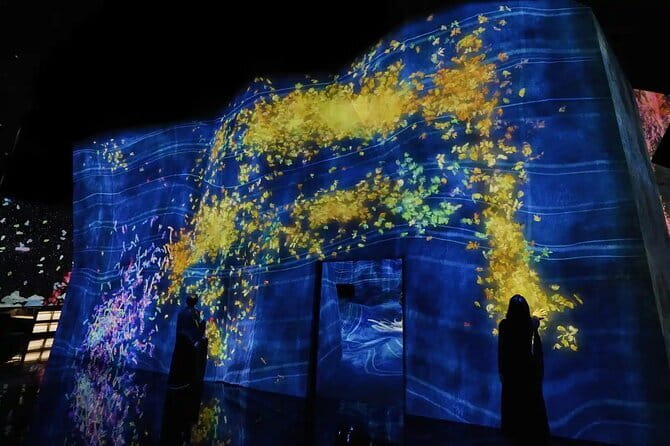
The Infinite Crystal Universe surrounds you with countless LED lights that suggest stars or a galaxy. Mirrors extend the lights far beyond the physical room, creating the feeling that the installation continues in every direction.
This is likely to be one of your best stops for photographs. The repeated lights and reflections produce the kind of images that look larger and more dramatic than an ordinary museum interior. You can also use an app to control patterns, adding an interactive element to the room.
The app detail is important, but keep your expectations sensible. You are not composing a full digital artwork from scratch. You are influencing patterns within a prepared installation. The pleasure comes from watching the room shift around you and finding a good angle, not from detailed creative control.
This room may appeal most to visitors who enjoy light art, digital design, and photography. If you prefer physical objects, paintings, or clear historical context, it may feel like an elaborate visual trick. That is not a flaw in the installation, but it is a useful distinction when deciding how to spend your Tokyo time.
The Floating Flower Garden adds scent and real plants
The Floating Flower Garden changes the mood. Instead of water and LED lights, you enter a space filled with real, fragrant flowers. The flowers move in harmony with your presence, creating a room that combines physical plants with the same responsive approach used elsewhere.
This is one of the more unusual parts of the visit because the flowers bring scent and texture into an exhibition otherwise built around light, projection, and mirrors. You are not simply looking at a picture of a garden. You are standing inside a room with actual flowers around you.
The name can create a very specific expectation, so it helps to know that the flowers are suspended within the installation. If you are hoping for a traditional garden with soil, paths, and living beds, this will feel very different. One sharply negative response described the flowers as dead and suspended on wires, while the experience information presents them as real and fragrant. The practical lesson is simple: treat this as a flower-based art room, not a botanical garden.
I would give this room time if you enjoy quiet visual details. It is less about action and more about the relationship between your body, the flowers, and the changing room. It may also be a welcome pause after the wet section.
The Transforming Space feels like art as a play area

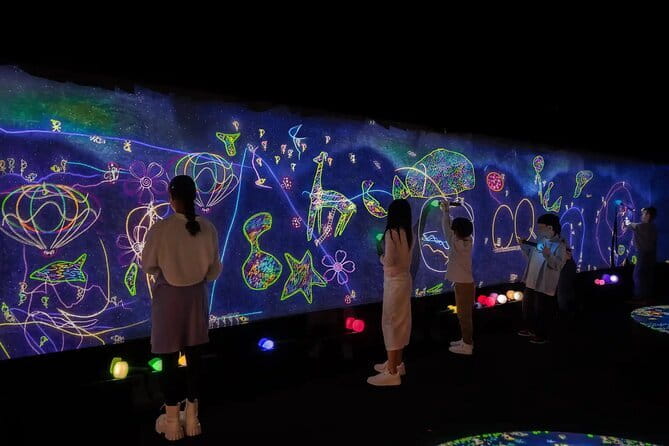
The Transforming Space uses a bouncy, interactive floor. Your movements reshape the space, so walking, shifting weight, and stepping around become part of the work.
This is where the exhibition most clearly feels like a play facility. Children will likely understand the appeal at once. Adults can enjoy it too, especially if you are willing to stop worrying about looking serious in an art museum.
The floor also makes footwear and balance advice especially important. Bare feet give you a better sense of the surface, but uneven and springy ground can be tiring or uncomfortable for some people. Move at your own pace and do not assume every room is suitable for standing still for long periods.
I like the way this section makes an abstract idea easy to understand. Instead of being told that the artwork responds to you, you can feel the response under your feet. The tradeoff is that people seeking a refined gallery experience may find the tone too child-friendly.






Mirrors and glowing rooms deliver the surreal finish
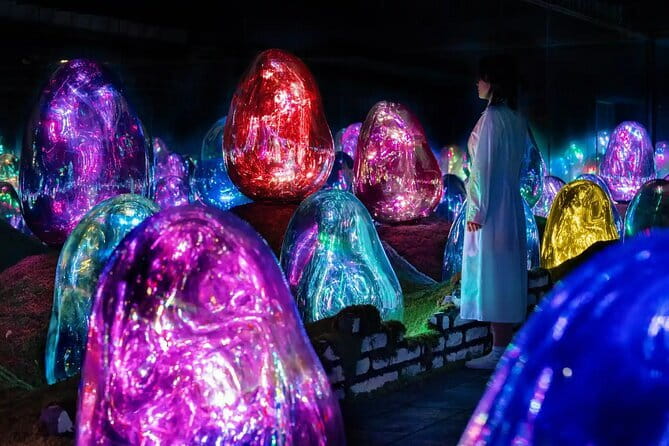
The Light and Mirror Rooms use glowing installations and repeated reflections to make the rooms seem larger, stranger, and less stable than they really are. Mirrors remove ordinary visual clues, while colored light gives the space a dreamlike quality.
These rooms reward patience. A quick glance will show you the basic effect, but standing still for a moment lets your eyes adjust and reveals how the light and reflections work together. You may find some of the strongest photographs here, though the results depend on crowds, your position, and the room’s lighting.
The visual style is polished and highly shareable. That is a major reason people book teamLab Planets, but it can also be the source of disappointment. Photos and videos can make the rooms look more intense than they feel in person. One low rating made exactly that point, saying the images created expectations the real visit did not match.
For me, that is not a reason to skip the museum. It is a reason to judge it by the experience of moving through the rooms, not by the most dramatic images online.
Four hours gives you room to slow down
The stated duration is about four hours, which is generous for a single art attraction. You can use that time to take photographs, watch the projections change, and avoid racing through the wet and uneven sections.
A longer visit is also useful if you are visiting with children. You may need pauses between rooms, especially after walking barefoot through water or spending time in the bouncy section. Adults who come for photography will appreciate having more than a quick pass through each installation.
The attraction is near public transportation, so it can fit into a wider Tokyo day without requiring a private vehicle. No air-conditioned vehicle is included, but that is not especially important here because this is an admission-based museum visit rather than a transport tour.
A pre-booked admission ticket helps with entry. Confirmation is normally issued at booking, though reservations made within two days of the visit may receive confirmation within 48 hours and remain subject to availability. Read any email carefully. One booking had its start time moved from 9:00 to 9:30, even though the opening time had not changed.
What the ticket covers, and what it does not
The ticket includes admission to teamLab Planets Tokyo and a locker for shoes and personal belongings. It also covers the full set of listed areas, rather than charging separately for the Water Area, crystal installation, flower garden, or interactive rooms.
The supplied price is shown as $0.00. Because that figure may reflect a placeholder or booking display rather than a guaranteed free admission price, check the final amount before payment. The value question depends on the price you actually see at checkout.
At a normal paid admission price, I would judge the experience by how much you enjoy interactive art. You are paying for access to several large installations and the time to move through them, not for a guided explanation or a collection of traditional artworks.
The ticket makes better value for a family, a group of friends, or anyone who enjoys photography because you can share the physical experience and compare how each person reacts to the rooms. It is weaker value for a serious art-lover who wants original objects, detailed interpretation, or a museum collection.
The ticket is non-refundable and cannot be changed for any reason. That makes checking your date, time, and email notices especially important before you commit.
Who will enjoy teamLab Planets most
I would recommend teamLab Planets to you if you like digital art, unusual photo settings, sensory experiences, or attractions that ask you to participate. It is also a strong choice for a family day, since several sections feel playful rather than formal.
Solo visitors can enjoy it, though some interactive rooms may feel more fun with companions. Friends can turn the visit into a shared experiment, comparing photographs and seeing how the installations react to different movements.
You should think twice if you want a calm, conventional museum. You should also prepare carefully if you dislike wet feet, uneven floors, mirrors, enclosed visual effects, or bouncy surfaces.
The exhibition is not only for children, but the childlike side is real. One positive account described it as a chance to be a kid again, while another felt the attraction suited children more than adults. Both reactions make sense. Your enjoyment will depend less on your age than on your willingness to play along.
Practical clothing and movement advice
Wear clothing that can be rolled up to the knees. You will remove socks and shoes, and the Water Area can wet your lower legs.
Use the provided locker for shoes and personal belongings. Keep what you need easy to store, since the visit is built around moving barefoot from one room to another.
Take care on uneven surfaces. Balance and mobility matter, particularly in the water and interactive floor areas. Most people can participate, but the general statement should not replace your own judgment about comfort and movement.
Allow time for photographs without blocking your own enjoyment. The rooms are designed for striking images, but looking through a phone for the whole visit can make the physical details disappear. Put the camera down now and then, especially in the water and flower rooms.
Should you book teamLab Planets Tokyo?
Book it if you want a playful, highly visual Tokyo attraction where you can walk through water, control light patterns, stand among suspended flowers, and watch rooms respond to your movements. The best parts are the variety, the unusual physical format, and the chance to take photographs unlike ordinary museum pictures.
Skip it if your idea of art means quiet galleries, paintings, sculpture, or substantial explanation. Also skip it if wet feet and uneven surfaces would make the visit stressful.
My call is a cautious yes for families, photographers, and curious first-time visitors to digital art. Go in expecting a sensory art playground, not a traditional museum. Wear practical clothes, check the reserved time, and judge the experience by what you feel and do inside the rooms, not only by polished online images.
FAQ
Where is teamLab Planets Tokyo located?
The experience is in Tokyo, Japan, and it is near public transportation.
How long does the visit take?
The approximate duration is four hours.
What does the admission ticket include?
The ticket includes admission to teamLab Planets Tokyo and access to all listed exhibits, including the Water Area, Infinite Crystal Universe, and Floating Flower Garden.
Is a locker included?
Yes. A locker is included for storing shoes and personal belongings.
Do I need to remove my shoes?
Yes. You will remove your shoes and socks before entering the exhibition.
Will I get wet?
Yes. The Water Area involves walking barefoot through shallow water, and your feet and shins can get wet.
What should I wear?
Wear comfortable clothing that can be rolled up to your knees. This is practical for the Water Area.
Is the experience suitable for most people?
The provided information says most people can participate. Some surfaces are uneven, and balance and mobility are important, so move carefully if those areas concern you.
Is transportation included?
No air-conditioned vehicle is included. The attraction is near public transportation.
Can I cancel or change my booking?
No. The experience is non-refundable and cannot be changed for any reason.
More Theme Parks & Digital Art in Tokyo



More tours in Tokyo we've reviewed












Theme Parks & Digital Art, compared.
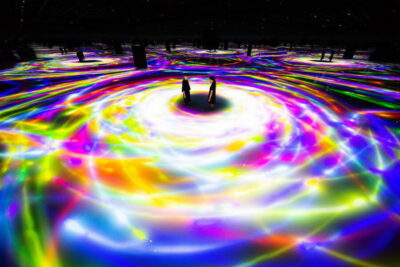 ★ 4.6Tokyo: teamLab Planets TOKYO Digital Art Museum Entry TicketFrom $251 day
 ★ 4.5Tokyo: DisneySea 1-Day PassportFrom $571 day
 ★ 4.6Tokyo Disneyland 1-Day PassportFrom $571 day
 ★ 4.1Tokyo: ‘Red Tokyo Tower’ Digital Amusement Park TicketFrom $37
 ★ 4.3Tokyo Disneyland or DisneySea Ticket & Door to Door TransferFrom $1431 day
 ★ 4.2Tokyo Disneyland: 1-Day Entry Ticket and Private TransferFrom $154