Reviewed · NIKKO DAY TRIPS
Nikko: Day Tour from Tokyo in Spanish – Spanish
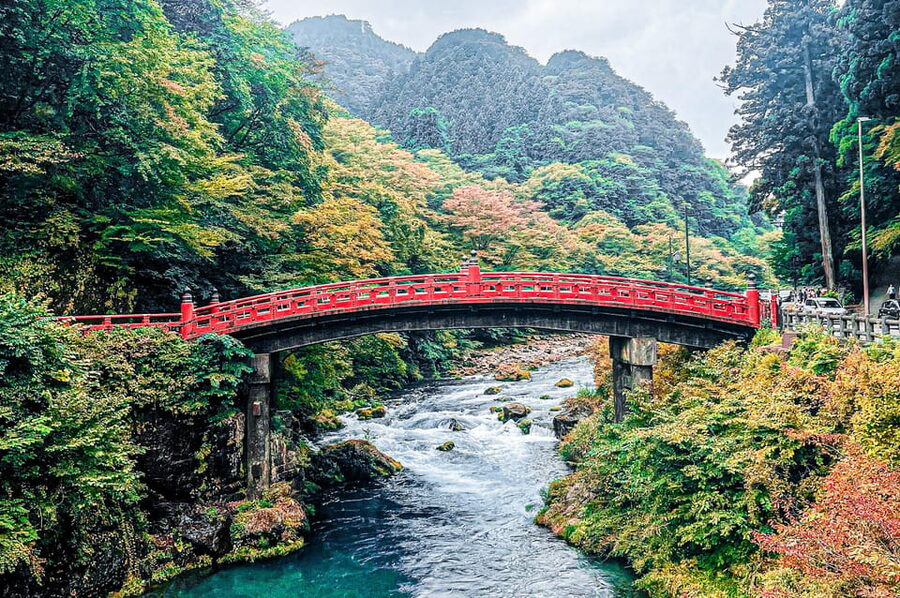
Nikko’s appeal is easy to grasp once you reach Shinkyo Bridge, the red bridge known as the Bridge of the Gods. From there, this Spanish-language day trip leads you through forested temple grounds, Rinnoji Temple, and the ornate Toshogu Shrine, one of Japan’s most striking sacred sites.
In This Article
- Key points to know before you book
- Why Nikko makes a strong day trip from Tokyo
- Meeting in Asakusa and taking the express train
- Walking into Nikko and the Bridge of the Gods
- Rinnoji Temple and the Futarasan complex
- Toshogu Shrine gets the full attention
- Lunch and a slower hour in Nikko
- The long ride back to Tokyo
- What the $254 price really buys you
- The guides and the human side of the day
- Who should book this Nikko day tour
- Should you book it?
- FAQ
- Is the express train included in the tour price?
- Where does the tour meet?
- What language is the tour conducted in?
- How long does the experience last?
- Are temple admission fees included?
- Can I bring luggage or book if I use a wheelchair?
I like the reserved express train seats, which take the guesswork out of a long day from Tokyo. I also like the human side of the tour. Guides including Nerea, Laura, Ori, and Isma are praised for explaining both Japanese culture and everyday customs, then offering tips for the rest of your trip.
The main drawback is the price, $254 per person, before temple tickets and food. The day also involves walking, stairs, and a long return journey, so it is best for visitors who want structure and Spanish guidance rather than a cheap, independent outing.
Key points to know before you book
- Shinkyo Bridge begins the Nikko visit: You get a short guided introduction to one of Japan’s best-known bridges before moving into the temple district.
- Toshogu Shrine gets the most time: Allow 95 minutes for its elaborate gates, carvings, and sacred buildings.
- Spanish guidance adds context: Nerea, Laura, Ori, and Isma are named guides associated with warm, personal explanations and practical advice.
- Reserved trains are included for newer bookings: Reservations made from September 15, 2025 include the round-trip express train fare.
- Temple admission costs extra: Budget ¥1,900 for the temple tickets, along with lunch and drinks.
- This is a full walking day: The tour is not suitable for wheelchair users, and large bags are not allowed.
Why Nikko makes a strong day trip from Tokyo
Tokyo can feel endless, polished, and modern. Nikko gives you a very different Japan in one day: mountain shrines, old religious compounds, legendary figures, and architecture that is deliberately showy.
The journey takes about 105 minutes each way by express train. That is a serious chunk of your day, but the train keeps the trip simple. You do not need to work out the route, reserve seats, or coordinate the return on your own.
I would choose this excursion if you want to see Nikko but do not want to spend your limited Japan time researching train connections and shrine layouts. A guide also helps with the details that are easy to miss, especially the stories and legends connected with the Futarasan area and the symbolism at Toshogu.
The group can be private if you select that option. Otherwise, expect a guided outing designed to keep people moving together while allowing some adjustment for different walking speeds. One guide, Nerea, is specifically praised for adapting when people in a small group wanted to move at different rhythms. That matters on a day with several stops and a fixed train schedule.
A few more Nikko tours and experiences worth a look


Meeting in Asakusa and taking the express train
The standard meeting point is in front of the Asakusa Tourist and Cultural Information Center. Look for the guide wearing a name tag marked NIPONEANDO. Hotel pickup is also available if you choose that option, with the guide meeting you at your hotel reception while wearing the same identifying tag.
The Asakusa meeting point makes practical sense because the return destinations include the Asakusa Tourist and Cultural Information Center and Tobu-Asakusa Station. Check the exact pickup choice and starting time when booking, since the departure time depends on the option you select.
The train ride lasts about 105 minutes. Reserved seats are a real convenience here. You can settle in, listen to the guide, and save your energy for Nikko instead of dealing with a crowded platform or wondering where to sit.
There is an important date-related price detail. Bookings made from September 15, 2025 include the round-trip express trains. If you booked before that date, the trains were not included in the price. Check your booking terms carefully if your reservation was made earlier.
Large bags and luggage are not allowed. Bring only what you need for the day, such as a small day bag, water, and personal items.
Walking into Nikko and the Bridge of the Gods
The first guided portion in Nikko lasts about 30 minutes. This gives you time to get oriented before reaching Shinkyo Bridge.
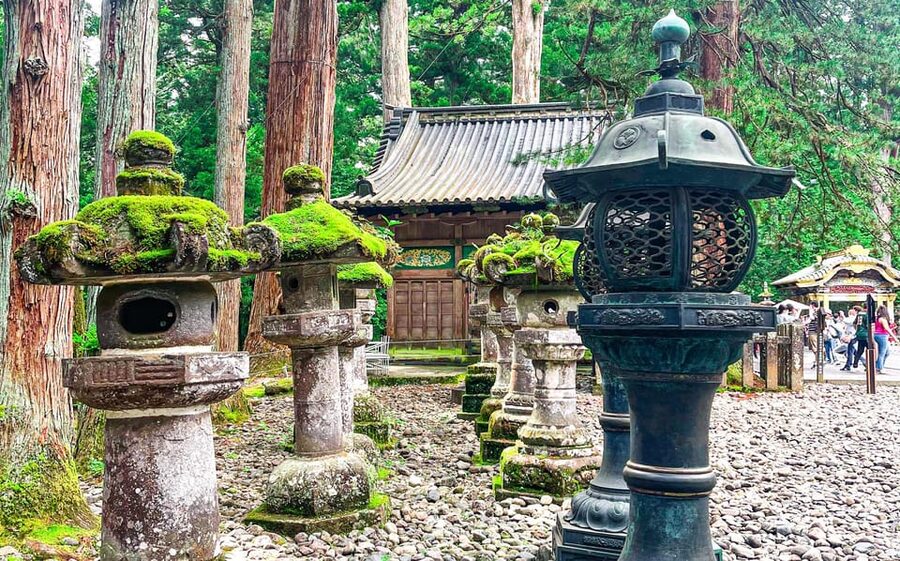
Shinkyo Bridge is more than a quick photo stop. Its name, the Bridge of the Gods, connects it with the sacred character of Nikko. The bright red structure looks especially different from the surrounding trees and darker religious buildings, giving you an immediate sense that you have left Tokyo behind.
The bridge visit lasts about 15 minutes. That is enough for a focused explanation and photographs, but not a long stop. If you want extensive time taking pictures, keep your expectations modest. This is a guided day with a set route, not an open-ended photography walk.
From the bridge, you walk for about 10 minutes toward the temple area. That short transfer is useful because the day does not depend on repeated vehicle rides between nearby sights. Wear comfortable shoes and expect a steady amount of walking.
Rinnoji Temple and the Futarasan complex
The visit to Nikkozan Rinnoji Temple lasts about 25 minutes. The temple is part of the larger sacred zone around Nikko, where Buddhist and Shinto traditions have shaped the area together.
The tour also brings you through parts of the Futarasan complex. This is where the guide’s stories can add real value. You will hear legends tied to the site and gain a better sense of why Nikko became such an important religious destination.
Twenty-five minutes is enough for an introduction, but it is not an exhaustive temple study. If you like to linger over every building, inscription, and garden detail, the schedule may feel brisk. The tradeoff is that you continue on to Toshogu Shrine without sacrificing the main highlight of the day.
The walk from Rinnoji to Toshogu takes about five minutes. That short connection keeps the visit compact and leaves the longest sightseeing period for the shrine most people come to Nikko to see.
Toshogu Shrine gets the full attention
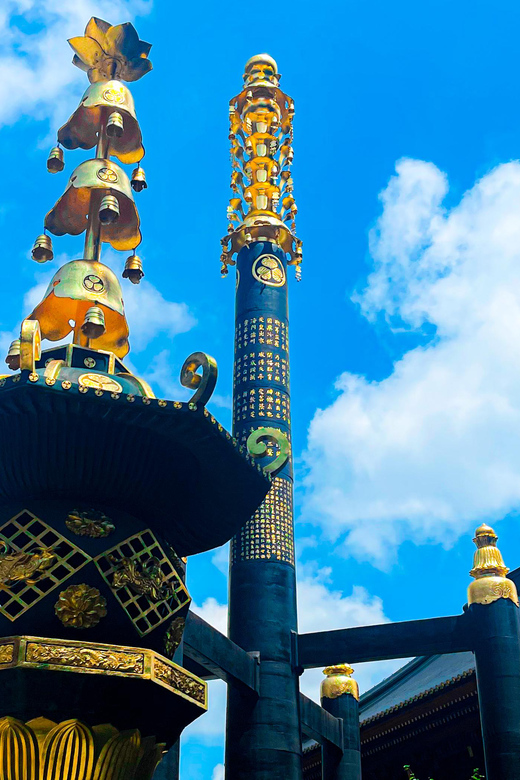
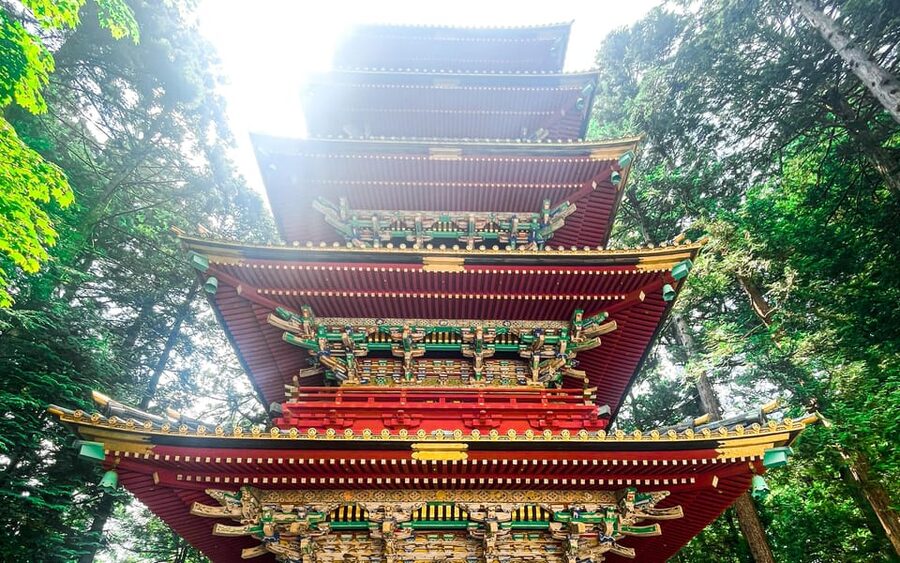
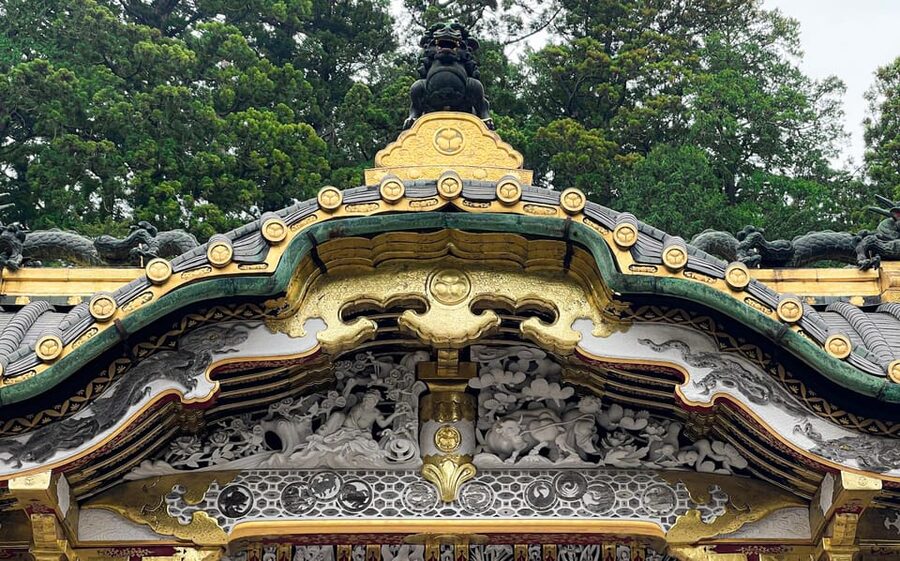
Toshogu Shrine receives about 95 minutes, making it the central stop. This is the shrine dedicated to Tokugawa Ieyasu, the founder of the Tokugawa shogunate, and its design is famous for its elaborate decoration.
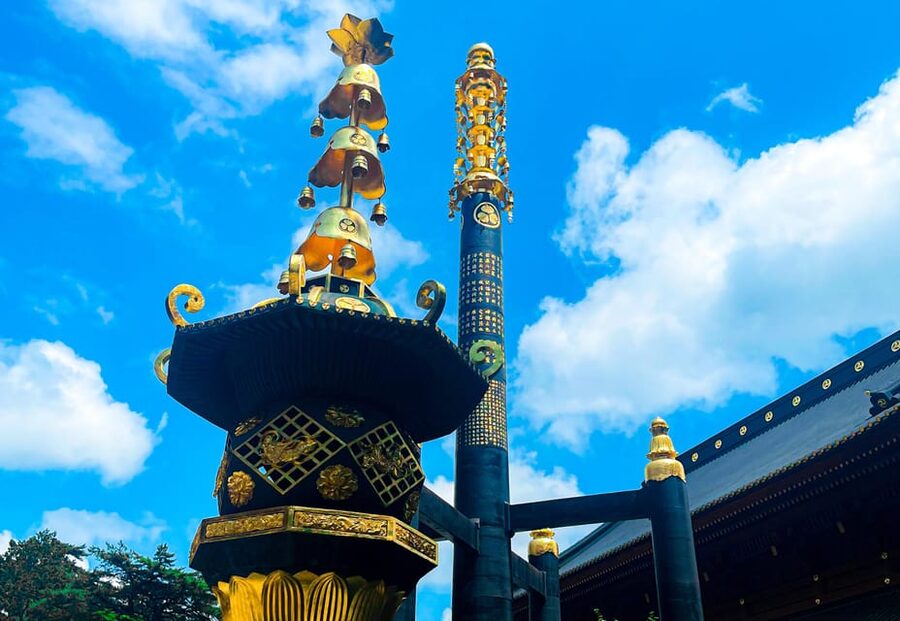
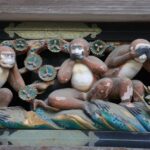
Toshogu looks different from many other Japanese shrines. Instead of restrained simplicity, you get ornate gates, detailed carvings, vivid colors, and a strong sense of ceremony. The contrast is part of the experience. A guide can point out visual details and explain why the shrine feels so unlike the quieter religious sites you may have visited elsewhere in Japan.
The route includes another 10-minute walk after the shrine. You should not expect every corner of the complex to be covered in depth, but 95 minutes gives you much more breathing room than the earlier stops.
Temple tickets cost ¥1,900 and are not included. Set this money aside before you arrive. It is a small but important addition to a $254 day, especially if you are traveling with several people.
The activity includes a separate entrance to skip the line. That can help on a busy day, though it does not turn the shrine visit into a private, empty experience. Toshogu is a major sight, and the pace will still be shaped by the group and the departure train.

Lunch and a slower hour in Nikko
After the main shrine visit, you have about one hour for lunch. Food and drinks are not included, so plan to pay separately.
The schedule gives you a useful pause after the most information-heavy part of the tour. One account of the day describes lunch at a local restaurant, but the exact restaurant and meal should not be treated as guaranteed. Ask your guide for recommendations if you want help choosing what to eat.
Lunch is also a good moment to use the guide’s local advice. The strongest part of this tour is not only getting from one sight to another. Guides such as Laura and Ori are praised for answering questions about Japan and explaining everyday customs, while Isma is noted for sharing his interest in the country’s history. Use that access. Ask about foods, etiquette, neighborhoods, or ideas for the rest of your trip.
After lunch, the plan includes about 20 minutes of walking before the return train. That final walk may be gentle, but your feet will already have done a fair amount by then.
The long ride back to Tokyo
The return train takes another 105 minutes. By this point, you will have spent roughly 510 minutes on the full experience, or about eight and a half hours. The activity is sometimes described as an eight-hour tour, so allow a little flexibility around the stated duration and train timetable.
The return destinations are the Asakusa Tourist and Cultural Information Center and Tobu-Asakusa Station. That is convenient if you are staying near Asakusa or want to continue exploring the area. If your hotel is elsewhere in Tokyo, you will need to arrange your own onward transport.
The train ride gives you a chance to rest, but it also means this is not a short escape from the city. You spend about three and a half hours traveling in total. I consider that reasonable for Nikko, but only if Nikko is high on your list.
What the $254 price really buys you
At $254 per person, this is a premium day trip. The price makes more sense if you value three things: Spanish-language support, reserved express train seats, and a guide who handles the route and cultural explanation.
You still pay for ¥1,900 temple admission, food, drinks, and any transportation other than the express trains. That means the final cost will be higher than the advertised rate.
For an independent visitor, the train and sightseeing could cost less. You would also have total control over how long you stay at each place. But you would need to plan the route, understand the station arrangements, buy the right tickets, navigate Nikko, and build your own explanation of the religious sites.
I would not book this tour simply because it is the cheapest way to reach Nikko. It is not. I would book it because the Spanish guidance and practical support solve a real problem, especially if you want cultural context without depending on English-language material.
The environmental note is also worth acknowledging. The tour promotes an environmentally friendly approach, and traveling by train rather than arranging a private vehicle for the whole day fits that aim. The experience still involves a long day and several transport stages, but the main connection is by rail.
The guides and the human side of the day
The guides are one of the clearest strengths. Nerea is described as bringing visible enthusiasm for Japanese culture and history while adjusting to different walking speeds. Laura is praised for explaining Japan, answering questions, and sharing useful advice.
Ori is associated with friendly, careful explanations, including details about ordinary life in Japan. Isma is noted for his interest in history and for making the route feel personal rather than mechanical.
Guide quality can vary from one departure to another, but these names give you a useful sense of the company’s approach. You are not signing up only for transport and a list of monuments. You are signing up for conversation, interpretation, and help making sense of places that can otherwise blur together.
The tour is available in Spanish, and a private-group option is offered. Spanish is the only stated tour language. Some content may appear in its original language, so do not expect every sign, announcement, or cultural term to be translated word for word.
Who should book this Nikko day tour
I would recommend it to:
- Spanish-speaking visitors who want clear explanations throughout the day
- First-time visitors to Nikko who prefer a planned route
- Couples, families with older children, and small groups who value personal guidance
- People who want reserved train seats and help with transport
- Visitors who enjoy cultural stories as much as photographs
- Anyone who wants practical Japan tips from a local guide during the trip
I would be more cautious if you are watching your budget, dislike fixed schedules, or want to explore one shrine at a very slow pace. The day includes walking, a long train ride, and several timed stops.
It is also not suitable for wheelchair users or unaccompanied minors. Hearing-impaired visitors should note the stated suitability restriction before booking.
Free cancellation is available up to 24 hours in advance for a full refund, and you can reserve now and pay later. Those policies help if your Tokyo plans are still shifting, but they do not change the physical demands of the day.
Should you book it?
Book this tour if you want Nikko explained in Spanish and prefer a smooth rail journey over independent planning. The combination of Shinkyo Bridge, Rinnoji Temple, the Futarasan area, and Toshogu Shrine gives you a solid first look at the site, while guides such as Nerea, Laura, Ori, and Isma add the cultural and everyday context that signs alone cannot provide.
Skip it if your main goal is the lowest possible cost or complete freedom. You can visit Nikko independently for less and stay longer at each shrine, but you will give up the reserved-seat convenience and direct Spanish help.
For the right person, the $254 price is payment for time, structure, and understanding. Just add the ¥1,900 temple ticket, budget for lunch, carry a small bag, and be ready for a full day on your feet.
FAQ
Is the express train included in the tour price?
Bookings made from September 15, 2025 include round-trip express trains with reserved seats. Bookings made before that date did not include the trains, so check the terms attached to your reservation.
Where does the tour meet?
The standard meeting point is in front of the Asakusa Tourist and Cultural Information Center. The guide will wear a NIPONEANDO name tag. Hotel pickup is available when selected as an option.
What language is the tour conducted in?
The live tour guide language is Spanish. Some content may be presented in its original language.
How long does the experience last?
The stated duration is 510 minutes, or about eight and a half hours. The itinerary includes approximately 105 minutes by train in each direction.
Are temple admission fees included?
No. Temple tickets cost ¥1,900 and are paid separately. Food and drinks are also not included.
Can I bring luggage or book if I use a wheelchair?
Large bags and luggage are not allowed. The activity is not suitable for wheelchair users, hearing-impaired people, or unaccompanied minors.
More Nikko Day Trips in Nikko
More tours in Nikko we've reviewed
Nikko Day Trips, compared.
 ★ 4.5Tokyo: Nikko Toshogu Shrine and Kegon Waterfall TourFrom $8410h 30m
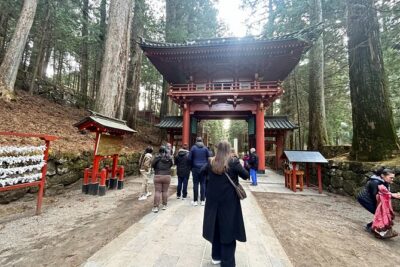 ★ 5.0Nikko, Kegon Waterfall & Chuzenji Lake from TokyoFrom $89
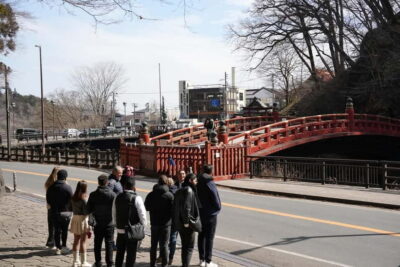 ★ 4.4From Tokyo: Nikko, Toshogu Shrine, Waterfall & Chūzenji LakeFrom $54
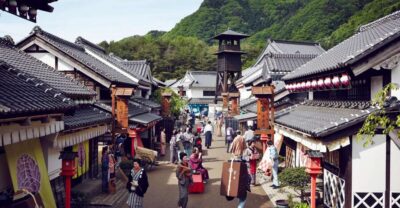 ★ 4.3Nikko: Edo Wonderland Edomura Cultural Theme Park TicketFrom $351 day
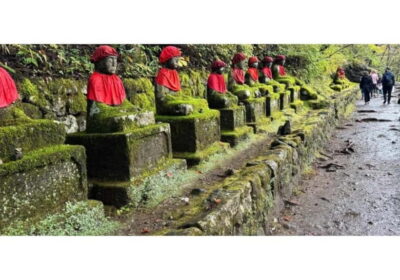 ★ 4.8Tokyo: Nikko World Heritage Private Day Trip Hotel Pick-upFrom $39011 hours - 1 day
From Tokyo: Nikko World Heritage Sight Full Day Private TourFrom $36210 hours
★ 4.8Tokyo: Nikko World Heritage Private Day Trip Hotel Pick-upFrom $39011 hours - 1 day
From Tokyo: Nikko World Heritage Sight Full Day Private TourFrom $36210 hours