Reviewed · GO-KARTS
Iconic Tokyo Uptown Landmarks Go Kart Tour (120 Minutes)
Tokyo is at its most vivid from the driver’s seat. This 120-minute go-kart tour threads together Skytree, the sumo district, Tokyo Station, the Imperial Palace area, Tokyo Tower, Ginza, and Kabukiza, giving you a moving view of the city instead of another lookout platform. You drive your own street-legal kart, but a guide leads the way and talks to you by two-way radio.
In This Article
- Key points before you book
- What this Tokyo drive is really like
- Starting near Yotsugi and Tokyo Skytree
- Ryogoku and the world of sumo
- Tokyo Station and the central city
- The Imperial Palace surroundings
- Tokyo Tower from the road
- Ginza after dark and the Kabukiza Theatre
- The karts, safety briefing, and radio system
- Cost and what you receive for $116
- Who will enjoy this most
- The documents you cannot forget
- Languages, timing, and flexibility
- Should you book the Tokyo Uptown Route?
- FAQ
- How long is the Tokyo Uptown go-kart tour?
- Where does the tour begin?
- Which landmarks are included?
- Do I need a driving permit?
- What documents should I bring?
- Is camera equipment included?
- Can I cancel the booking?
I like the newer, comfort-focused karts, especially their suspension, hydraulic brakes, and stable handling. I also like the live storytelling, which turns a passing building into part of Tokyo’s larger story. The main consideration is simple: you need the correct driving documents in hand, and you must arrive 40 minutes early.
Key points before you book
- Skytree to Ginza in one ride: See Tokyo’s northern and central districts without changing trains between each stop.
- A calm city drive: This is a guided group ride, not a race. The guide controls the pace and gives traffic instructions by radio.
- Comfortable karts for first-time drivers: Suspension, hydraulic brakes, reinforced frames, and stable handling make the vehicles easier to manage.
- Small group of up to 10: You are not lost in a huge convoy, and the guide can keep communication clear.
- Anime costumes and camera options: Costume rental is included, while the onboard Insta360 camera requires a Micro SD card.
- Strict license rules: A Japanese license, a 1949 Geneva Convention International Driving Permit, or one of the listed license and translation combinations is required.
What this Tokyo drive is really like
This experience is less about speed and more about seeing Tokyo at street level. You move through several parts of the city in one continuous outing, with the guide pointing out landmarks and helping the group handle the road in real time.
The route is especially useful if you want an overview early in your stay. You will not stop for long museum visits or formal landmark tours. Instead, you see the exteriors, surrounding streets, and changing feel of each district while driving between them.
The karts are built for city use rather than a closed track. Advanced suspension helps soften the ride, hydraulic brakes give you controlled stopping, and reinforced frames are designed to accommodate larger and taller riders. That matters in Tokyo traffic, where confidence and control are more useful than raw speed.
The pace is beginner-friendly, with no racing. Your guide remains in front, gives directions through a two-way radio, and adds cultural notes along the way. The radio system is one of the most important parts of the tour. It means you are not left guessing when to turn, slow down, or keep the group together.
A few more Tokyo tours and experiences worth a look
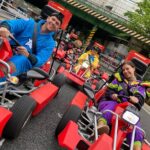
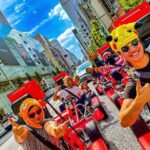
Starting near Yotsugi and Tokyo Skytree
The Kartzilla facility is about an 8 to 10-minute walk from Yotsugi Station on the Keisei Line. The route from the station passes through a quiet residential area, so do not expect a grand tourist entrance on the way. Follow Google Maps and look for the facility signage.
Arrive at least 40 minutes before your scheduled departure. That time is needed for check-in, document checks, driving instructions, and the required road-safety briefing. Bring your passport, your physical driving license, and the correct international permit or Japanese translation.
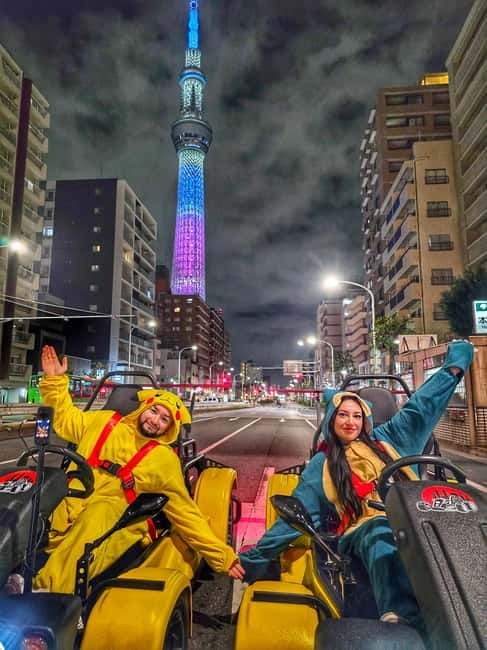
The first major sight is Tokyo Skytree. At 634 meters, it is one of the easiest landmarks in the city to recognize, and seeing it from the road gives you a better sense of its scale than a quick photograph from a distance. The surrounding area also provides a clear change from the polished central districts later in the tour.
Do not expect to climb Skytree during this activity. The attraction here is the drive and the view on the way. Your guide shares information over the radio while keeping the group moving.
Ryogoku and the world of sumo
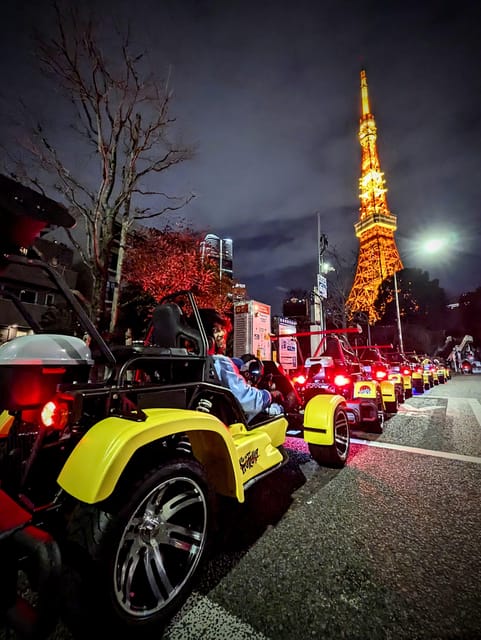
From Skytree, the route continues toward Ryogoku Kokugikan, Tokyo’s best-known sumo venue. Ryogoku is closely tied to Japan’s national sport, and the stadium gives the district a strong local identity.
A drive-by visit cannot replace a sumo match or a visit to a sumo stable, but it does add useful context to the city. Tokyo is not only neon signs and department stores. Districts such as Ryogoku preserve traditions that remain part of daily life.
This is also a good point to appreciate the tour’s format. You are not being moved from one isolated attraction to another by coach. You are crossing the city under your own control, watching ordinary streets connect major sights.
Tokyo Station and the central city
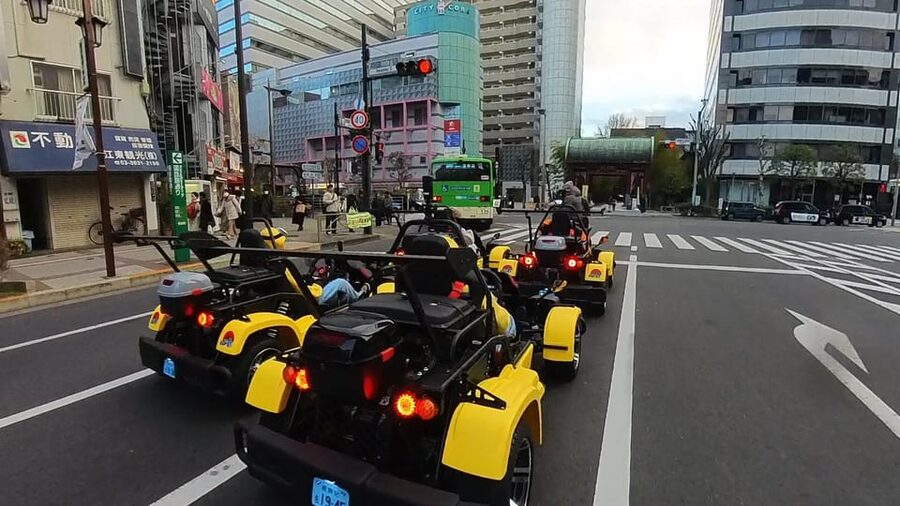
The route then heads toward Tokyo Station. Its red-brick Marunouchi facade is one of the capital’s most recognizable city views, set against the offices and commercial streets of central Tokyo.
You will see the station area rather than explore the interior. That makes this stop visual and atmospheric, not a full architectural visit. If Tokyo Station is high on your list, plan a separate stop on foot so you can examine the building and nearby shopping arcades at your own pace.
From the kart, the value is the transition. The route shows how quickly Tokyo shifts from older neighborhoods to major business centers. The guide’s live commentary helps you notice those changes instead of focusing only on traffic and directions.
The Imperial Palace surroundings
The drive continues around the Imperial Palace area. The palace itself is not presented as a long stop, and you should not book this experience expecting entry to the grounds. You are seeing the surrounding city and the broad ceremonial setting from the road.
That brief view still adds balance to the tour. After the compact streets and commercial activity around the station, the Imperial Palace surroundings provide a different sense of space. Your guide can give context while you continue through the area.
The road setting also means the exact view depends on traffic, the group’s pace, and the route used on the day. Treat this as a moving city tour rather than a series of guaranteed photo stops.
Tokyo Tower from the road
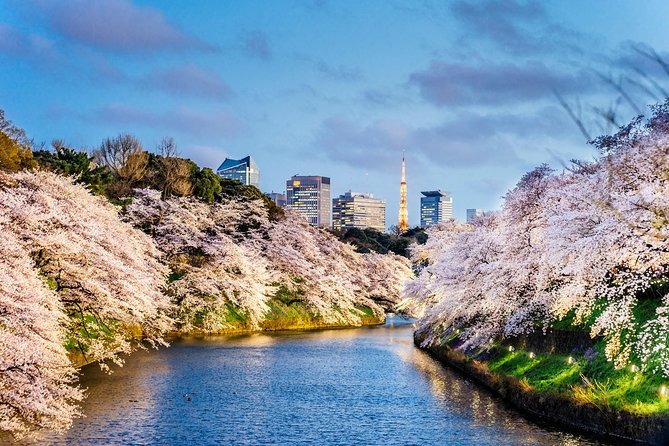
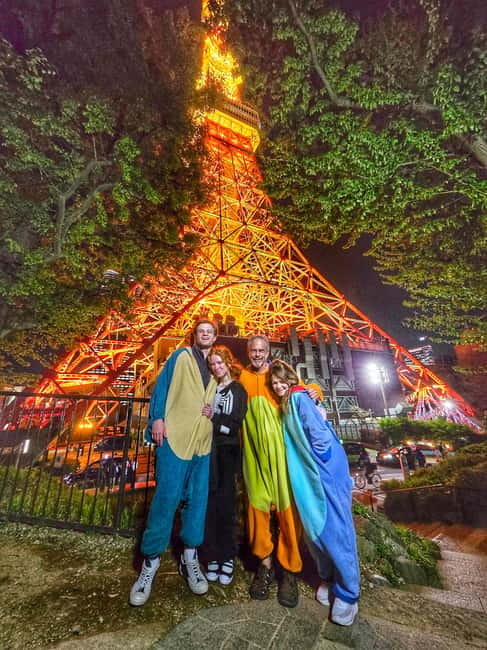
Tokyo Tower brings the route to another famous skyline marker. Its orange and white structure has a very different character from Skytree, and seeing both on the same outing gives you a useful visual comparison between old and new Tokyo.
Again, this is a scenic drive and guided pass, not a tower admission. You will not have time to ride up Tokyo Tower as part of the two-hour route. If you want the observation decks, arrange that separately.
The advantage of including Tokyo Tower is that it places you in another central district without requiring another train trip. The disadvantage is that traffic and the group format limit how long you can stop for photographs.
Ginza after dark and the Kabukiza Theatre
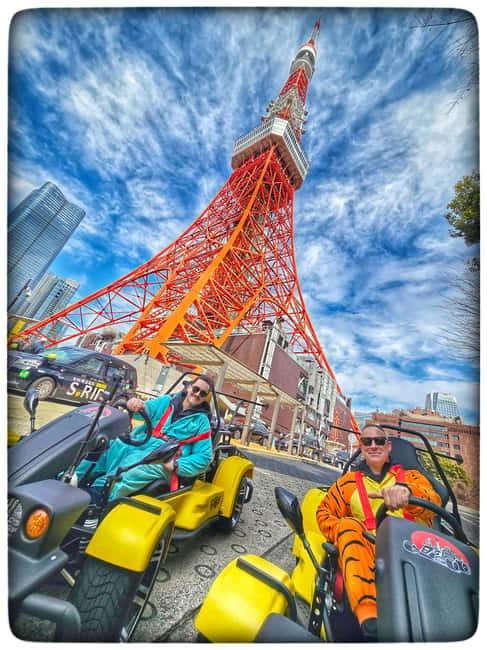
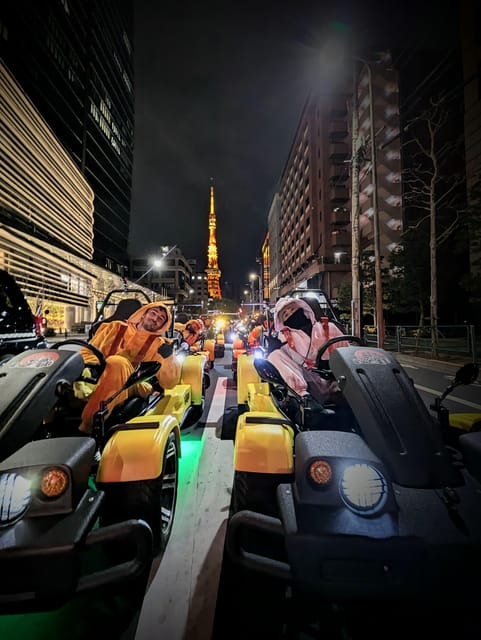
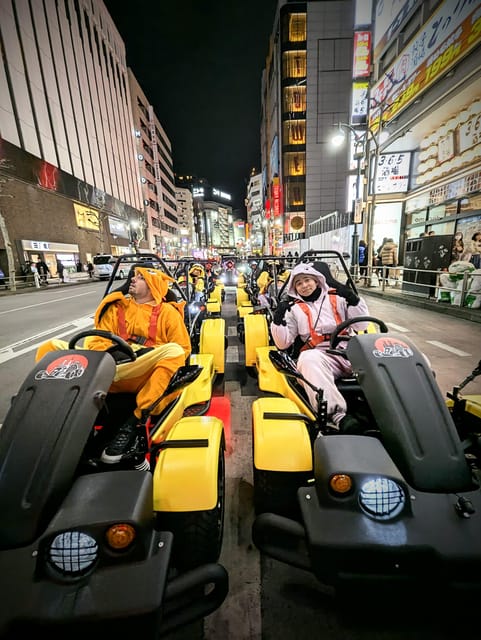
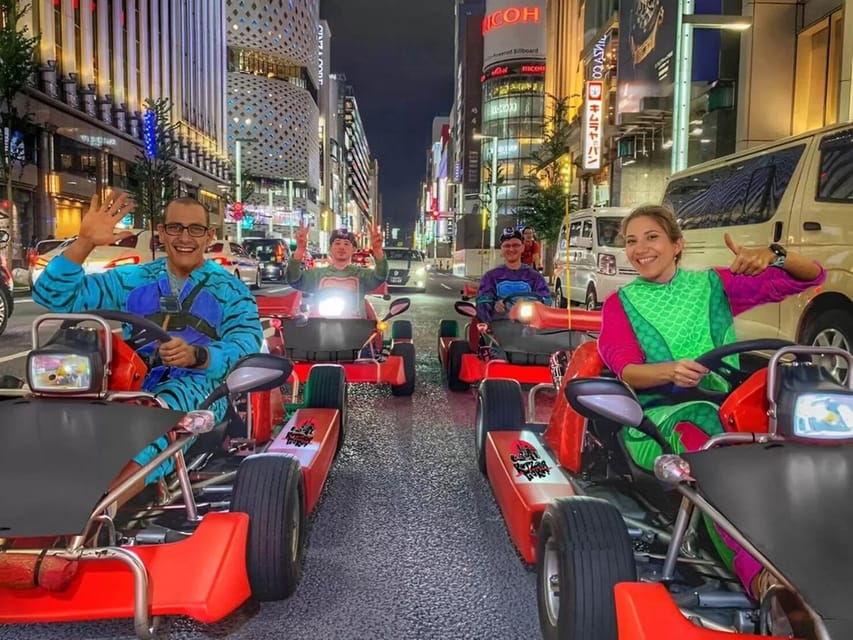
Ginza is one of the strongest parts of the route, especially in the evening. Its illuminated storefronts, wide avenues, and polished commercial streets make the city feel theatrical from a low seat in an open kart.
One guide tip is worth taking seriously: an evening departure can make the most of Tokyo’s neon lights. The route is still worthwhile during daylight, but night gives Ginza and the central districts a different look.
Kabukiza Theatre adds a cultural note to the Ginza section. Its traditional design and role in kabuki performance connect the modern shopping district with Japanese stage arts. You see the building from outside, so this is a useful introduction rather than a full theatre visit.
Rain is a real possibility. Rain jackets are available, and the facility has towels and hair dryers for use after a wet ride. Still, check the forecast and dress for changing conditions. Water-resistant clothing will make the experience more comfortable than relying only on a thin jacket.
The karts, safety briefing, and radio system
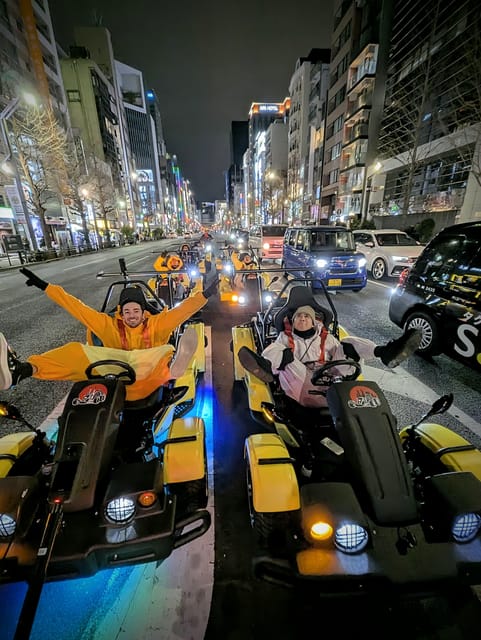
You do not need track-racing experience. The briefing covers basic operation and road safety, and the guide gives directions during the ride. The karts are designed to feel stable and straightforward, which helps first-time drivers settle in.
The hydraulic brakes are useful in a city setting because they allow measured stops. The suspension matters on ordinary streets, where a rough ride would quickly take the fun out of two hours behind the wheel. Reinforced frames also make the karts more practical for a range of body types, including big and tall riders.
You should still take the safety briefing seriously. This is street driving, not a closed circuit. You must follow the guide, obey road rules, stay with the group, and avoid any behavior that could affect other road users.
The experience does not include racing. That is good news if you want a relaxed sightseeing ride, but less appealing if you are looking for a high-speed activity. The guide’s job is to keep everyone together and safe, not to let the fastest driver pull ahead.
Cost and what you receive for $116
At $116 per person, this is not a cheap way to get around Tokyo. Public transport costs far less, and a normal walking route gives you more time at each landmark.
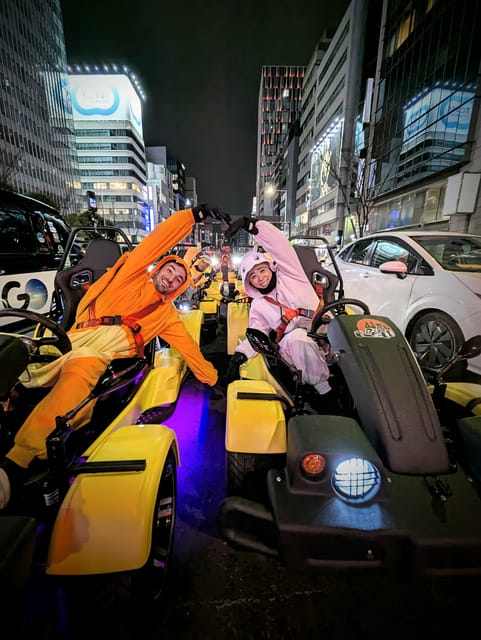
The price makes more sense when you treat the outing as an activity, not transportation. You receive a street-legal go-kart, fuel, a professional guide, accident insurance, an anime costume, drinks, and use of an onboard Insta360 camera if you bring or buy a Micro SD card.
The camera is a practical extra because it lets you record hands-free while driving. Check the card requirement before you arrive. A Micro SD card is not included, though one can be purchased at the facility.
The included costume rental adds a playful element, especially for a group of friends or a special occasion. You do not have to wear a costume to appreciate the tour, but the option helps explain why this is more than a standard sightseeing circuit.
The small group size, limited to 10 participants, also supports the price. A smaller group makes the radio instructions easier to follow and gives the guide a better chance to monitor everyone.
Who will enjoy this most
I would choose this tour if you want a lively first look at Tokyo and are comfortable driving in a major city. It suits adults who enjoy unusual sightseeing, photography, and a little dress-up without needing a racing background.
It is also a good fit for bigger riders who worry about cramped recreational karts. Kartzilla specifically describes its vehicles as suitable for larger and taller bodies, with reinforced frames and a comfort-first design.
Night riders should bring a light rain layer and plan for the possibility of wet weather. The city lights are a major part of the appeal, but rain can affect visibility and comfort.
This is not suitable for children under 18, drivers without an accepted license, visually impaired participants, or people over 95. The activity is wheelchair accessible, but every driver still needs to meet the license and document requirements.
The documents you cannot forget
The license rules are strict, and this is the most important practical warning. Digital licenses, photographs of licenses, and expired documents are not accepted.
You need one of the following:
- A Japanese driving license for Japanese citizens and residents of Japan
- An International Driving Permit issued under the 1949 Geneva Convention
- A driving license from Switzerland, Germany, France, Belgium, Monaco, or Taiwan, together with an official Japanese translation issued by JAF
Non-residents should check the permit convention carefully before booking. Possessing a driving license from another country does not automatically mean you can drive in Japan.
Bring your passport as well. If you arrive without the required documents, you will not be allowed to participate, and no refund will be provided. This is one activity where a last-minute document check is a bad plan.
Languages, timing, and flexibility
Live guiding is offered in English, German, and Spanish. The two-hour duration includes the guided drive, while the mandatory briefing and check-in happen before the scheduled start, so allow extra time beyond the advertised experience.
The facility is reached on foot from Yotsugi Station, and hotel pickup and drop-off are not included. That is easy enough if you are comfortable navigating Tokyo’s rail network, but build the station walk and early arrival into your day.
You can cancel up to 24 hours before departure for a full refund, and a reserve-now, pay-later option is available. Check the available departure times before planning other fixed activities around the tour.
Should you book the Tokyo Uptown Route?
Book it if you want to connect Tokyo’s major sights through a hands-on city ride rather than another bus or train journey. The strongest reasons are the comfortable karts, clear radio guidance, small group size, and the broad route from Skytree through Ryogoku, Tokyo Station, the Imperial Palace area, Tokyo Tower, Ginza, and Kabukiza.
Skip it if you dislike driving in traffic, need long stops at each landmark, or cannot secure the correct permit. At $116, it is a splurge, but the price is easier to justify when you want the kart, guide, costume, insurance, drinks, and camera option as part of one unusual evening.
For the best visual payoff, I would consider a night departure and bring weather-ready clothing. Just arrive early, carry the original documents, and remember that this is a guided sightseeing drive, not a race.
FAQ
How long is the Tokyo Uptown go-kart tour?
The guided experience lasts 120 minutes, or two hours. You must also arrive at least 40 minutes before the scheduled start for check-in and the mandatory safety briefing.
Where does the tour begin?
It begins at the Kartzilla Go Kart facility, about an 8 to 10-minute walk from Yotsugi Station on the Keisei Line. The facility has clear signage and can be located with Google Maps.
Which landmarks are included?
The route passes Tokyo Skytree, Ryogoku Kokugikan, Tokyo Station, the Tokyo Imperial Palace surroundings, Tokyo Tower, Ginza, and Kabukiza Theatre before returning to the Kartzilla facility.
Do I need a driving permit?
Yes. Non-residents need an International Driving Permit issued under the 1949 Geneva Convention, unless they hold a license from Switzerland, Germany, France, Belgium, Monaco, or Taiwan with an official Japanese translation issued by JAF.
What documents should I bring?
Bring your passport, driving license, and International Driving Permit if required. Digital licenses, license photographs, and expired licenses are not accepted.
Is camera equipment included?
The karts offer onboard Insta360 camera use, but you need a Micro SD card. The card is not included, though it is available for purchase at the facility.
Can I cancel the booking?
You can cancel up to 24 hours before the activity for a full refund. A reserve-now, pay-later option is also available.
More Go-Kart Tours in Tokyo

More tours in Tokyo we've reviewed












Go-Karts, compared.
 ★ 5.0Flagship 2-Hours Official Street Go-Kart Tour – Tokyo Bay ShopFrom $642 hours to 2 hours 30 minutes (approx.)
 ★ 5.0Official Street Go-Kart in ShibuyaFrom $76
 ★ 5.0Official Street Go-Kart Tour – AkihabaraFrom $61
 ★ 5.0Tokyo Go Kart: Asakusa, Skytree, and Akihabara **IDP MUST**From $99
 ★ 5.0Shibuya Official Street Go-Kart in Shibuya AnnexFrom $69
 ★ 4.6Tokyo: Asakusa and Skytree Go-Kart Tour and Photo ShootFrom $67