Reviewed · SUSHI MAKING CLASSES
Create Your Own Party Sushi Platter in Tokyo
The fun here is making party sushi from scratch, not simply watching someone slice fish behind a counter. In about two hours, you prepare futomaki, round temari sushi, miso soup, and tamagoyaki, then eat the lunch you helped make.
In This Article
- Key points at a glance
- Making party sushi in Minato City
- What the 11:30 am class includes
- Rolling futomaki with a party in mind
- Shaping temari sushi by hand
- Miso soup and tamagoyaki add everyday value
- English-speaking help keeps the class approachable
- Lunch turns the lesson into a complete outing
- Who will get the most from this class
- The price, group size, and booking risk
- What the strongest feedback tells you
- Should you book this Tokyo sushi class?
- FAQ
- Where does the cooking class take place?
- What time does the class start?
- How long does the activity last?
- What types of sushi will I make?
- What other Japanese dishes are included?
- Is lunch included?
- Are the instructors able to teach in English?
- How many people are required to book?
- Can I cancel or change my booking for a refund?
I like the mix of colorful, celebratory dishes and useful home cooking. I also like the side-by-side help from English-speaking instructors, which makes the fine work of shaping rice and rolling sushi less intimidating. The main drawback is the strict non-refundable policy, so you need firm plans before booking.
Key points at a glance
- Two different sushi styles: Make thick futomaki rolls and neatly formed temari sushi, both designed for festive meals.
- Four Japanese staples in one class: The lesson also covers miso soup and tamagoyaki, a rolled Japanese omelet.
- English-speaking instruction: Instructors provide direct support and conversation during the cooking.
- Lunch is included: Your finished dishes become the meal, rather than an extra purchase afterward.
- Convenient two-hour format: The 11:30 am start fits neatly into a Tokyo sightseeing day.
- Minimum of four people: This works best for friends, families, or a small group with a shared booking.
Making party sushi in Minato City
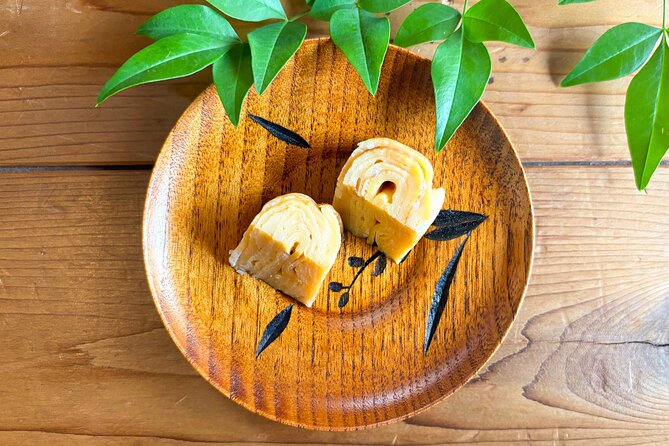
This class focuses on sushi you can serve at a celebration. That matters because futomaki and temari sushi are not only about raw fish and restaurant technique. They are carefully arranged foods made to look festive on a family table.
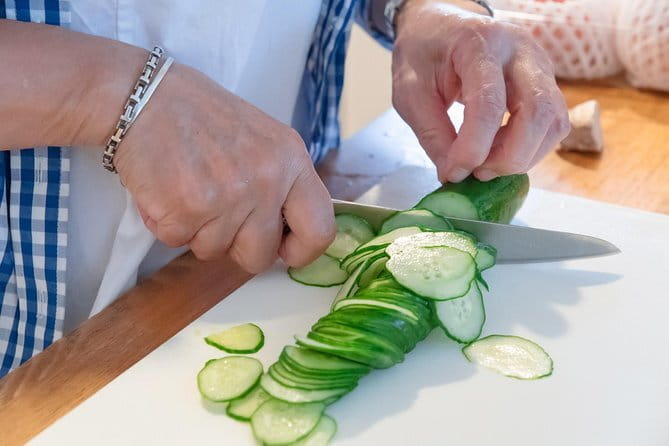
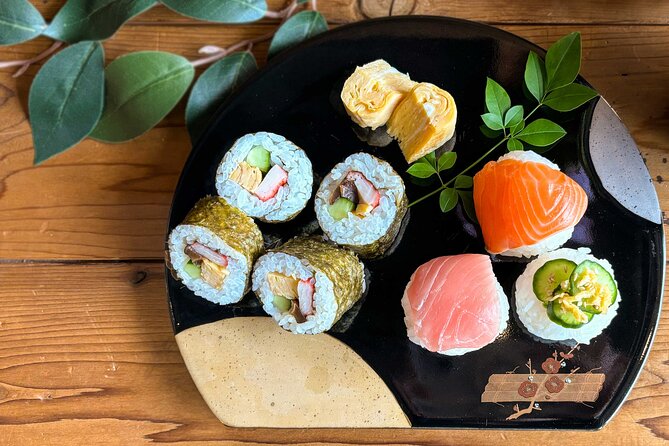
Futomaki is the larger roll. You spread sushi rice over nori, add several ingredients, and roll everything into a thick cylinder. Once sliced, the cross-section reveals the rice and fillings. It is the kind of sushi that rewards patience more than speed.
Temari sushi takes a different approach. You form rice into a small round shape, then top it with sashimi and vegetables. The result is compact and decorative. The class description stresses the careful nature of Japanese cooking, and this is where that idea becomes practical: small changes in pressure, shape, and placement affect the final look.
You are not just learning two ways to eat sushi. You are learning two ways Japanese cooks turn simple ingredients into food suited to a special occasion. That gives the lesson more character than a basic roll-making session.
If you're still narrowing it down, here are other tours in Roppongi we've reviewed.


What the 11:30 am class includes
The experience begins at 11:30 am in Minato City, Tokyo, and ends back at the meeting point. The entire activity takes about two hours, so you can plan it as a morning-to-lunch stop before an afternoon of sightseeing.
The included ingredients remove one common worry with cooking classes: you do not need to shop before arriving. Lunch is included as well, so the dishes you make form part of the meal. The cooking experience itself is also covered in the price.
Private transportation is not included. You will need to make your own way to the Minato City meeting point, and the supplied details do not give a hotel pickup service. Check the exact meeting instructions after booking and allow enough time to arrive for the 11:30 start.
A mobile ticket is provided, which is handy if you keep your Tokyo bookings on your phone. Confirmation is received at the time of booking.
Rolling futomaki with a party in mind
Futomaki is likely the most familiar part of the class for anyone who has tried sushi before, but the thick format brings its own small challenges. You need enough rice to hold the roll together without making it too dense. You also need to place several ingredients so the cut slices look attractive.
That is why direct instruction helps. The English-speaking instructors support you side by side, with conversation and practical care during the lesson. You can ask for help as you work instead of trying to copy a demonstration from several steps away.
The class is not described as a private lesson. Up to 40 people can attend, and the booking requires at least four people. That is a wide possible range. A smaller group may feel more personal, while a fuller session could have a livelier party mood. If you are booking for a company gathering or a larger friend group, the capacity gives you room, but do not expect the feel of a one-on-one chef session.
The best part of futomaki is the reveal. A whole roll can look plain from the outside, then show a patterned center once cut. This makes the dish especially suitable for a group lunch, a celebration, or a sushi party at home after your trip.
Shaping temari sushi by hand
Temari sushi is the more distinctive of the two sushi styles here. Instead of rolling rice inside nori, you form a rounded piece of rice and place sashimi and vegetables on top.
The round shape makes presentation important. You will need to handle the rice with care and keep the topping positioned neatly. The aim is not just a tasty bite, but a small piece of food that looks ready for a special occasion.
I like that this dish gives the class a clear visual contrast. Futomaki teaches you to build and roll. Temari sushi teaches you to shape and decorate. Learning both in one sitting gives you a better sense of how Japanese cooks vary texture, form, and appearance.
The description does not list the exact fish, vegetables, or fillings used on the day. If you have dietary concerns or need to know the ingredients in advance, ask the provider before booking. The supplied details confirm sashimi and vegetables for the temari sushi, but not specific varieties.
Miso soup and tamagoyaki add everyday value
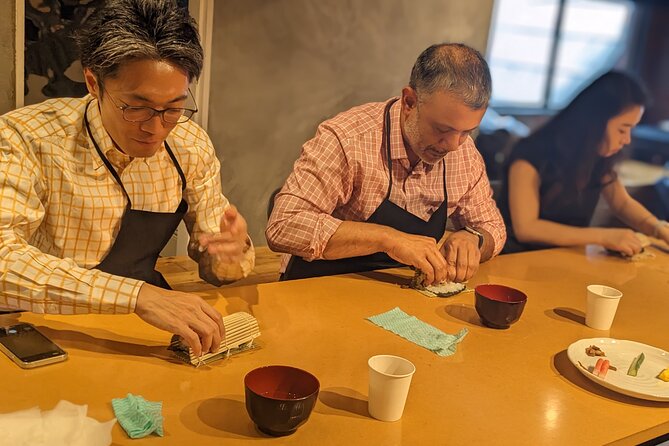
Sushi may be the headline, but the extra dishes make this class more useful for your kitchen at home. You also learn miso soup and tamagoyaki, two familiar Japanese home-style foods.
Miso soup is a basic part of many Japanese meals. Learning it alongside sushi helps you think about the meal as a whole rather than as a single specialty dish. It is also a practical recipe to take home because it fits an ordinary lunch or dinner, not only a celebration.
Tamagoyaki is a Japanese rolled omelet. The word rolled is important here. Like futomaki, it asks you to work in stages and pay attention to shape. The cooking process gives you another example of the care and precision that the class aims to show.
The inclusion of these dishes improves the value of the session. At $109.82 per person, you are paying for ingredients, instruction, lunch, and several recipes rather than for a short demonstration focused on one dish. The price will still feel high if you only want a quick sushi activity, but it is easier to justify if you want a full food lesson with a meal included.



English-speaking help keeps the class approachable
The instructors speak English and support you directly during the cooking. That is useful for tasks where a small adjustment can make a difference, such as handling sushi rice, arranging fillings, forming a round rice base, or rolling the omelet.
The available information does not provide the instructors’ names, so I cannot tell you to expect a particular chef. What is clear is the teaching style: side-by-side guidance, conversation, and care. This sounds suited to beginners and to groups that want to chat while they work.
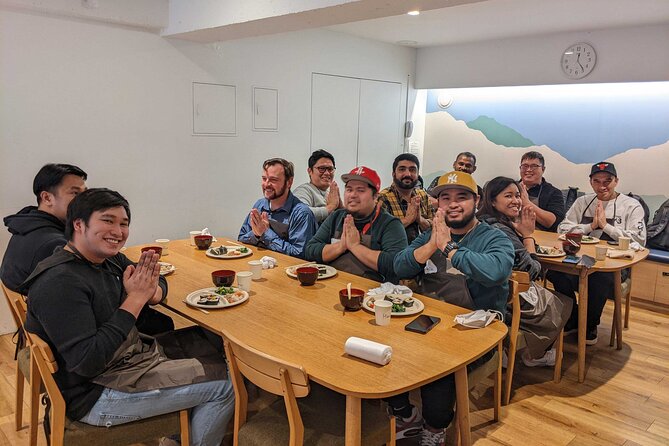
The class has also been used for team-building and socializing. That makes sense given the format. Everyone has a task, the food gives people an easy topic to discuss, and the final lunch creates a shared finish. It can work well for friends traveling together, a family group, or a company outing.
Still, group cooking is not the same as a quiet private lesson. With a possible maximum of 40 people, the atmosphere may depend on the size of the session. Book this for shared activity and conversation, not for a silent, highly customized culinary tutorial.
Lunch turns the lesson into a complete outing
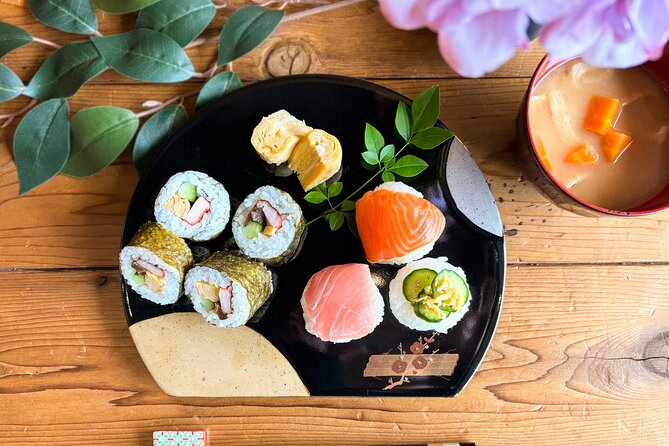
Lunch is included, and that changes the rhythm of the experience. You prepare the food, then have a clear reason to sit down and enjoy the result.
There is also a satisfying personal element in eating sushi you made yourself. The class gives you enough range to compare the thick roll with the rounded temari style, then add soup and omelet to the meal. It is a fuller Japanese lunch than a class that ends after one finished roll.
The experience is described as a chance to learn Japanese food culture as well as recipes. That cultural side comes through in the choice of dishes. Futomaki and temari sushi are linked with celebratory occasions, while miso soup and tamagoyaki belong more naturally to home cooking. Together, they show both the decorative and everyday sides of Japanese food.
Do not expect private transportation or a separate restaurant meal. The meal is part of the class, and you return to the meeting point when the activity ends.
Who will get the most from this class
I would recommend this for several types of visitors:
- First-time sushi makers who want hands-on instruction instead of a cooking show.
- Friends and families looking for a shared activity with an edible result.
- Company groups seeking a social team-building option in Tokyo.
- Food-focused visitors who want to learn more than one sushi style.
- Home cooks interested in miso soup and tamagoyaki as well as sushi.
- Visitors with a free midday slot who can reach Minato City for an 11:30 start.
It may be less suitable if you want a private class, need a flexible cancellation policy, or prefer a highly specialized lesson centered on knife skills or sushi-bar technique. The available details focus on forming, rolling, topping, and preparing home-style dishes. They do not promise advanced fish cutting or professional sushi-counter training.
The price, group size, and booking risk
The cost is $109.82 per person. That is not a small add-on for a Tokyo day, so consider what you receive: about two hours of instruction, ingredients, lunch, and four Japanese dishes to prepare.
For a group activity, the price can make sense because the meal and social element are built in. You also leave with methods you can use at home, especially the party-friendly sushi styles. If you are comparing this with a simple meal at a sushi restaurant, the class costs more, but it gives you participation and practical instruction instead of only dining.
The minimum booking is four people. Solo visitors and pairs cannot assume they can reserve independently under the stated terms. The maximum is 40, so the experience can accommodate larger groups, though the personal feel may vary.
The cancellation policy deserves close attention. The booking is non-refundable and cannot be changed for any reason. If you cancel or request an amendment, you do not receive your money back. The one protection is on the provider’s side: if the minimum number is not met and the activity is canceled, you are offered another date or experience, or a full refund.
That is a firm policy for a paid cooking activity. I would book only after confirming your schedule and group size.
What the strongest feedback tells you
The most consistent praise centers on fun, food culture, and shared participation. The class has been described as a memorable part of a Tokyo trip with friends, especially because the participants ate sushi they had made themselves.
That point is worth taking seriously. Some cooking classes are enjoyable in the moment but hard to remember later. Here, the finished food gives the outing a clear personal marker. You do not simply learn that sushi is carefully made. You feel the difference when your own roll holds together, or when your temari sushi looks presentable.
The social side also receives strong emphasis. The activity has worked for team-building and conversation, not just for people who already cook. The instructors’ friendly support helps keep the mood relaxed.
The praise does not remove the practical limits. The class still has a fixed start, a four-person minimum, a possible large group, and a no-refund rule. I would treat the positive feedback as evidence that the format works well for social groups, not as a guarantee that every session will have the same energy.
Should you book this Tokyo sushi class?
Book it if you want to make and eat your own Japanese lunch, have at least four people, and like the idea of a social cooking session. The mix of futomaki, temari sushi, miso soup, and tamagoyaki gives you more range than a one-dish workshop, while English-speaking instructors make the hands-on work easier to follow.
Skip it if your plans are uncertain, you need a refund option, or you want a private, advanced sushi lesson. For everyone else, this is a useful two-hour break from sightseeing and a pleasant way to take Japanese food culture home with you, one carefully shaped rice ball at a time.
FAQ
Where does the cooking class take place?
The class starts in Minato City, Tokyo, Japan. The activity ends back at the meeting point.
What time does the class start?
The scheduled start time is 11:30 am.
How long does the activity last?
The cooking experience lasts approximately two hours.
What types of sushi will I make?
You will learn to make futomaki, a thick sushi roll made with nori, sushi rice, and several ingredients, and temari sushi, a round piece of rice topped with sashimi and vegetables.
What other Japanese dishes are included?
The class also teaches miso soup and tamagoyaki, a Japanese rolled omelet.
Is lunch included?
Yes. Lunch, the ingredients, and the cooking experience are included in the price.
Are the instructors able to teach in English?
Yes. English-speaking instructors support you during the class with conversation and side-by-side guidance.
How many people are required to book?
A minimum of four people per booking is required. The activity can have a maximum of 40 participants.
Can I cancel or change my booking for a refund?
No. The experience is non-refundable and cannot be changed for any reason. If the provider cancels because the minimum number of participants is not met, you are offered another date or experience, or a full refund.
More tours in Roppongi we've reviewed
Sushi Making Classes, compared.
 ★ 5.0Sushi Making Tokyo Roll and Authentic Japanese Sushi ClassFrom $59
 ★ 4.9Tokyo: Roll and Authentic Sushi Making Class in AsakusaFrom $581h 40m
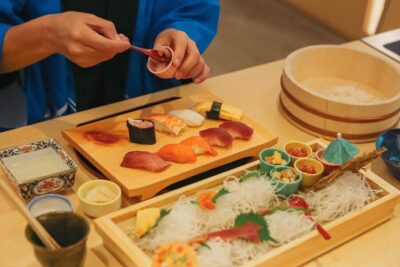 ★ 4.9Tokyo: Sushi Making Class in a Happi Coat near a Famous SpotFrom $421h 30m
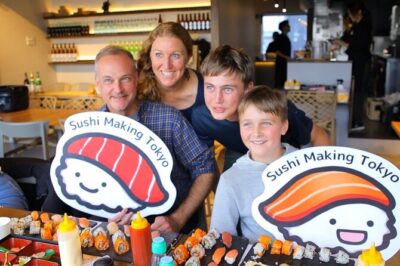 ★ 5.0Sushi Making Tokyo! Popular Maki Sushi & Japanese Sushi(+Recipe!)From $63
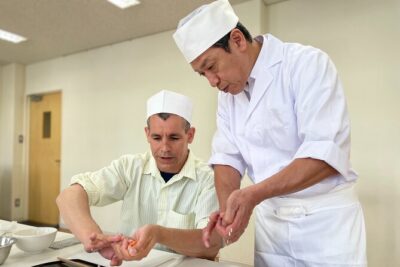 ★ 5.0Tokyo Sushi Making Class in Tsukiji with Professional ChefFrom $49
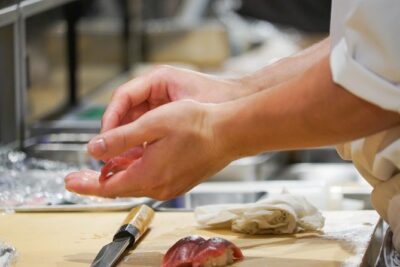 ★ 5.0Tokyo Night Foodie Tour in Shinjuku – Seasonal Sushi, Wagyu BeefFrom $111