Reviewed · PRIVATE
Tokyo Private Tour
Tokyo Private Tour is built around one useful idea: see a huge city without spending your first day learning its train map. In about eight hours, your private guide and driver can take you from Tsukiji’s food stalls to Shibuya Crossing, with old temples, imperial grounds, anime shops, upscale streets, and quiet neighborhood cafés in between.
In This Article
- Key points to know before booking
- Why this private format works well in Tokyo
- Tsukiji Outer Market starts the day with food and texture
- Hama Rikyu Gardens brings calm beside the city
- Ginza shows Tokyo’s polished side
- The Imperial Palace gives the route historical weight
- Akihabara covers anime, games, and electronics
- Senso-ji in Asakusa is the traditional anchor
- Omotesando and Harajuku put style next to youth culture
- Meiji Jingu offers a quiet break from the crowds
- Shibuya Crossing is a quick but memorable photo stop
- Daikanyama and Nakameguro end on a quieter note
- What the vehicle, guide, and timing add
- Is $743.26 a fair price for your group?
- Who will get the most from this Tokyo day?
- Booking details that can affect your day
- Should you book this private Tokyo tour?
- FAQ
- How long does the Tokyo private tour last?
- How many people can join the private tour?
- Is hotel pickup available?
- Is transportation included?
- Is Wi-Fi available during the tour?
- Are food and drinks included?
- Is admission to Hama Rikyu Gardens included?
- Can the tour accommodate most participants?
- What is the cancellation policy?
I especially like the hotel pickup and the freedom of a private vehicle. I also like the personal touch shown by guides such as Soya, Riley, Tomoya, Richie, Moe, and Aimi, who have helped families with wheelchairs, children, restaurant bookings, shopping interests, and last-minute changes. The main tradeoff is time: eleven areas in one day means many stops are short, and Tokyo traffic can reduce time on foot.
Key points to know before booking

- A full city sampler: Visit Tsukiji, Ginza, the Imperial Palace area, Akihabara, Asakusa, Harajuku, Shibuya, and Daikanyama in one day.
- A guide who can adapt: The day can be shaped around your group’s interests, from traditional culture and food to shopping, anime, and photography.
- Comfort in hot or tiring weather: An air-conditioned private vehicle, bottled water, snacks, and onboard Wi-Fi are included.
- Good for families and mixed-age groups: Past arrangements have included wheelchair help and groups ranging from a six-year-old to a 77-year-old.
- The price works best for larger groups: The cost is $743.26 per group of up to nine, not per person.
- Plan for a quick-moving day: The schedule covers a lot, but Hama Rikyu Gardens admission, lunch, and dinner are extra.
Why this private format works well in Tokyo

Tokyo is easy to reach by train, but the city’s scale can make a first visit tiring. Its sights are spread across separate districts, and a day that looks simple on a map can involve several transfers, crowded platforms, long walks, and repeated stops to check directions.
This tour removes much of that work. You are picked up at your hotel, ride in an air-conditioned vehicle, and move between districts with a guide who can explain what you are seeing along the way. That matters most when your group includes children, older family members, or anyone who would rather spend the day sightseeing than navigating stations.
You also get the guide’s full attention, rather than sharing explanations with a busload of people. Guides have adjusted plans for shopping, added restaurants, arranged a hedgehog café reservation, and found a restaurant for an unexpectedly large group. Riley, Richie, Tomoya, Soya, Moe, Aimi, Udi, Ryu, and other guides are named in the tour’s feedback, though your assigned guide will depend on availability.
The private setup does not turn Tokyo into a small city. Traffic still exists, and the itinerary is ambitious. Think of this as a strong first look at many parts of Tokyo, not a slow, in-depth visit to every site.
Other private tours in Tokyo


Tsukiji Outer Market starts the day with food and texture
The first stop is Tsukiji Jogai Market, the outer market that remains after the main wholesale market moved to Toyosu in 2018. You get about 40 minutes to walk among restaurants and shops selling food, kitchen goods, and other Japanese items.
This is a good opening stop because it gives you an immediate sense of Tokyo’s food culture. You might find small counters, unusual ingredients, traditional cooking tools, and quick bites, though the exact shops open during your visit can vary.
The short time limit is the main issue. If you want to eat a full breakfast or browse carefully, 40 minutes can pass fast. Tell your guide if food is a priority before the day begins, since the private format may allow the timing to be adjusted.
Hama Rikyu Gardens brings calm beside the city

Hama Rikyu Gardens offers a sharp change from Tsukiji. This former feudal residence and duck hunting ground dates from the Edo period and later served as a garden. You have about 40 minutes here, with admission not included.
The appeal is the contrast: planted paths, ponds, and traditional garden design set against modern Tokyo buildings. It is a useful place to pause, especially after a busy market and before the denser city stops that follow.
Forty minutes gives you a taste rather than a full walk through the grounds. You should also budget for the entrance fee. Since admission is the one listed site charge, it is small compared with the overall tour cost, but it is still worth carrying some money for extras and food.
Ginza shows Tokyo’s polished side

Ginza receives about an hour. This district is known for major fashion names, Japanese crafts, galleries, restaurants, and bold modern architecture.
I like this stop because it prevents the tour from presenting Tokyo as only temples and neon. Ginza shows the city’s high-end, carefully designed side. It is a good fit if you want shopping, architecture, or a look at Japanese design.
The drawback is that Ginza can be expensive, and a one-hour visit will not allow much serious shopping unless you already know where you want to go. Ask your guide to focus on traditional crafts, department stores, architecture, or food, rather than trying to cover all of them.
The Imperial Palace gives the route historical weight

The Imperial Palace area gets roughly 30 minutes. The grounds were once the castle of the Tokugawa shogun family, which ruled Japan from 1603 to 1868, and later became the Imperial Palace after political power returned to the emperor during the Meiji period.
This stop is mainly about setting and context. You can see a formal part of central Tokyo and hear how the city’s political story changed from shogun rule to imperial government.
The visit is short, so do not expect a full palace tour. The itinerary also passes the National Diet building, completed in 1936 and one of the few Tokyo buildings to survive the air raids of 1945. It is a valuable exterior sight, particularly if modern Japanese politics and wartime history interest you.

Akihabara covers anime, games, and electronics

Akihabara gets about an hour and shifts the mood again. This is the place for gaming, anime culture, and electronics, from tiny shops focused on individual components to large retailers.
For a first visit, the district can feel visually intense, and a guide helps you decide what is worth your time. You might want to browse character goods, look at gaming culture, or compare the small specialist shops with the large electronics stores.
One hour is enough for an introduction but not for serious shopping across the district. If you are bringing purchases home, remember that the vehicle helps with carrying bags, but your guide cannot predict every store’s stock or prices.
Senso-ji in Asakusa is the traditional anchor

Senso-ji receives an hour and is the tour’s main traditional temple stop. It is Tokyo’s oldest temple, linked to the story of a small Kannon statue found by two fishermen in Asakusa in 628.
The approach gives you a clear sense of Asakusa’s religious and historic character. You can see the temple precinct, observe visitors making offerings, and learn basic customs from your guide. This is one of the places where a guide adds real value because small actions and symbols can be easy to miss if you are rushing through on your own.
The area can be crowded, and the hour may feel brief if you want photos, shopping, and a careful temple visit. Keep your expectations practical: this is an introduction to Senso-ji, not a long spiritual retreat.
Omotesando and Harajuku put style next to youth culture

Omotesando gets 30 minutes, followed by 30 minutes in Harajuku. The pairing works because the districts sit close together but express different sides of Tokyo.
Omotesando is lined with major fashion brands, boutiques, and buildings designed by leading architects. It suits you if you enjoy design, retail, and city streets that function almost like outdoor architecture exhibits.
Harajuku gives you a look at youth fashion, unusual building design, and changing style trends. The stop is brief, but it can help you understand why Tokyo fashion is often more playful and individual than the polished storefronts of Ginza.
Thirty minutes in each district means you will mostly walk, look, and take photos. If shopping is your main goal, you should say so in advance and accept that another stop may need to be shortened.
Meiji Jingu offers a quiet break from the crowds
Meiji Jingu is allotted 30 minutes. Its wooded setting provides a welcome pause from Harajuku’s shops and Shibuya’s crowds. You might also see a traditional Japanese wedding ceremony on a Saturday or Sunday, although that cannot be promised.
This is a useful stop for first-time visitors because it introduces shrine customs without requiring a separate trip. The short visit also gives the day a better rhythm: market, garden, commercial districts, temple, fashion streets, then a shrine.
You will not have time to explore every path or linger for long. Still, a half-hour can be enough to appreciate the setting and ask your guide about the difference between a Buddhist temple and a Shinto shrine.
Shibuya Crossing is a quick but memorable photo stop
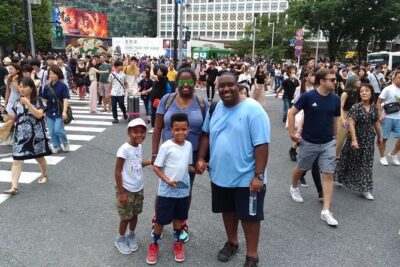
The tour allows about 15 minutes at Shibuya Crossing. That is short, but the crossing itself does not require a long visit. You can watch the waves of pedestrians move through the intersection, take photos, and get a quick look at one of Tokyo’s most famous urban scenes.
I would treat this as a snapshot, not the main event. If you want a longer Shibuya visit, a rooftop viewpoint, or time in nearby shops, discuss that before departure. One review describes a guide taking a group to Shibuya Sky, but that attraction is not part of the listed itinerary and should not be assumed.
The value here is efficiency. You can see the crossing without giving up an hour that might be better spent in Asakusa, Akihabara, or another district that matches your interests.
Daikanyama and Nakameguro end on a quieter note
The final listed area is Daikanyama, with about 30 minutes. The nearby Nakameguro area is also described as a place of boutiques and cafés with a slower feel than Tokyo’s better-known districts.
This is a smart ending for a fast city tour. After the crowds at Senso-ji, Harajuku, and Shibuya, these neighborhoods offer a more relaxed look at everyday urban Tokyo. You might find the boutiques and cafés more appealing than another major landmark, especially if you want to see how residents spend time away from the busiest tourist zones.
Again, 30 minutes is only enough for a sample. If cafés or shopping matter to you, ask your guide to make this a longer stop and trim a district you care less about.
What the vehicle, guide, and timing add
The included vehicle is air-conditioned and private, with bottled water, snacks, and Wi-Fi onboard. Those details matter in Tokyo’s humid summers, on rainy days, and for anyone who tires easily after hours of walking.
Several guides have been praised for safe driving, clear English, flexibility, and attention to children and older family members. One guide brought a wheelchair for a senior guest and accompanied her at each location. Another made special efforts to involve children in conversation, while Aimi noticed a guest’s interest in tableware and redirected the shopping portion accordingly.
These examples show what you should ask for. Send your interests before the tour if possible: food, temples, fashion, anime, gardens, photography, shopping, or family needs. The more specific you are, the easier it is for the guide to make the day useful.
The tour is described as suitable for most participants and near public transportation, but pickup is offered, so you do not need to begin at a station. Accessibility support appears possible based on the wheelchair arrangement, though you should confirm your exact vehicle and mobility needs before booking.
Is $743.26 a fair price for your group?
The listed price is $743.26 for up to nine people. For nine, that works out to about $82.59 per person. For four people, it is about $185.82 each, and for two, about $371.63 each.
That makes the tour strongest for larger families or groups of friends. A group of six to nine can share the cost of private transportation, a dedicated guide, hotel pickup, and a full day of sightseeing. For a couple, the convenience may still be worthwhile, but you should compare it with using trains and booking a shorter private guide.
Lunch and dinner are not included, and Hama Rikyu Gardens admission is extra. Bottled water and snacks are included, but do not read that as a full meal plan. Set aside time and money for food, especially at Tsukiji, where eating may be one of your main reasons for stopping.
The price also buys back time. You are not paying only for a vehicle. You are paying to connect districts that would take more effort by rail and to have someone adjust the day when weather, energy, or family needs change.
Who will get the most from this Tokyo day?
I would consider this tour if you are visiting Tokyo for the first time, have only one full sightseeing day, or want a broad overview before exploring on your own. It is also a strong choice for families, multigenerational groups, cruise passengers, and people who do not want to manage crowded trains.
It suits you less if you prefer one neighborhood at a time, long museum visits, slow meals, or independent wandering. The route covers many districts, so you will trade depth for range.
The tour receives a five-star rating from 69 reviews, with 100 percent recommending it. The repeated strengths are consistent: friendly guides, flexible planning, comfortable transportation, good English communication, and the ability to adjust for families and personal interests.
Booking details that can affect your day
Confirmation is sent within 48 hours of booking, subject to availability. The activity operates daily, with the published hours varying by date period, so check the exact start window for your intended visit.
Free cancellation is available when you cancel at least 24 hours before the start time. Changes or cancellations made inside that window are not accepted for a refund.
Because the tour lasts about eight hours, wear shoes suitable for walking and tell the operator about mobility needs, children, or food interests ahead of time. The vehicle reduces walking between districts, but you still spend time on foot at markets, gardens, temples, shrines, and shopping streets.
Should you book this private Tokyo tour?
Book it if you want maximum coverage with minimum transit stress, especially for a group of four or more. Hotel pickup, a private air-conditioned vehicle, Wi-Fi, and an adjustable plan make this a practical first day in Tokyo.
Skip it if your main goal is slow exploration or keeping costs low for one or two people. For everyone else, the best strategy is to send a clear wish list before the tour and ask the guide to protect time for your top two priorities. That turns a very broad sightseeing day into a useful introduction rather than a hurried checklist.
FAQ
How long does the Tokyo private tour last?
The tour lasts approximately eight hours.
How many people can join the private tour?
The price covers one private group of up to nine people.
Is hotel pickup available?
Yes. Hotel pickup is offered as part of the experience.
Is transportation included?
Yes. Private transportation in an air-conditioned vehicle is included.
Is Wi-Fi available during the tour?
Yes. Wi-Fi is available onboard the vehicle.
Are food and drinks included?
Bottled water and snacks are included. Lunch and dinner are not included.
Is admission to Hama Rikyu Gardens included?
No. Admission to Hama Rikyu Gardens is not included. The other listed stops show free admission.
Can the tour accommodate most participants?
The tour information states that most travelers can participate. A past arrangement also included a wheelchair for a senior guest, but you should confirm your specific mobility needs before booking.
What is the cancellation policy?
You can cancel at least 24 hours before the experience start time for a full refund. Cancellations or changes made less than 24 hours before the start time are not accepted for a refund.
More Private Tours in Tokyo

More tours in Tokyo we've reviewed












Private, compared.
 ★ 5.0Tokyo 6hr Private Tour with Government-Licensed GuideFrom $155
 ★ 5.0Private Tour to Mt. Fuji and Hakone (Fully Licenced Operator)From $497
 ★ 5.0Tokyo Customized Private Tour (Must See Places in 1 Day)From $145
 ★ 4.8Tokyo: Private City Highlights Tour with Local GuideFrom $1064 - 8 hours
 ★ 5.0Private Custom Tour: Tokyo in a DayFrom $159
 ★ 5.0Tokyo 4hr Private Tour with Government-Licensed GuideFrom $109