Reviewed · NIGHT TOURS
Private Tokyo Night Tour
Tokyo changes after sunset. This private night drive links Rainbow Bridge, Tokyo Tower, Shibuya Crossing, and Shinjuku in one evening, giving you a fast look at districts that are spread across a huge city. It is part sightseeing tour, part photo run, and part easy first-night orientation.
In This Article
- Key points at a glance
- Why Tokyo works so well after sunset
- A private van and a route that can change
- Rainbow Bridge and Tokyo Bay
- Ginza’s polished streets
- Tokyo Tower’s best photo moment
- Tokyo Station’s old-meets-new character
- Odaiba and the Tokyo Bay lights
- Roppongi, Omotesando, and the city’s changing moods
- Shibuya Crossing under giant screens
- Shinjuku, Kabukicho, and Golden Gai
- How flexible is the evening?
- Price, timing, and practical details
- Who should book this Tokyo night drive?
- Should you book it?
- FAQ
- How long is the Private Tokyo Night Tour?
- How many people can join the private tour?
- What areas does the tour visit?
- Is admission to Tokyo Tower included?
- Are pickup and child seats available?
- What happens if bad weather cancels the tour?
I like the private format, especially for families or couples who want a flexible evening rather than a fixed group schedule. I also like the practical help: guides such as Douglas, Takumi, Babu, Richie, and Ellie have adjusted routes, found good photo spots, helped with group pictures, and even suggested or arranged places to eat.
The main catch is traffic. You spend much of the 3 to 4 hours in a vehicle, and one unhappy customer found the driving unmemorable. If you want long walks, detailed museum visits, or extended time inside each district, this is not the right tour.
Key points at a glance
- Rainbow Bridge after dark: Begin with Tokyo Bay views and a cool breeze across the bridge.
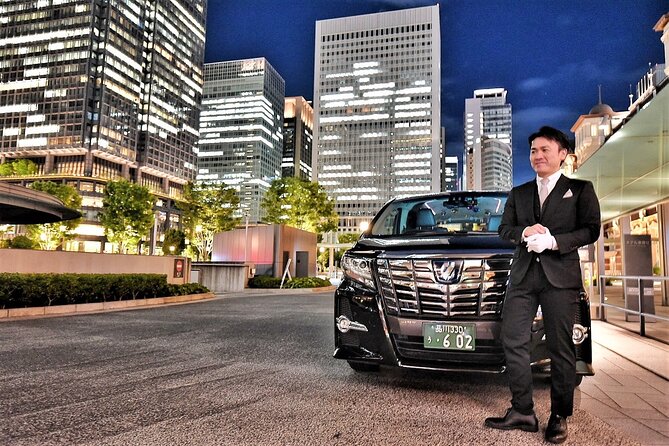
- A private van for up to nine: Keep your own pace and ask to adjust the route.
- Tokyo’s essential night scenes: See Ginza, Tokyo Tower, Odaiba, Roppongi, Omotesando, Shibuya, and Shinjuku.
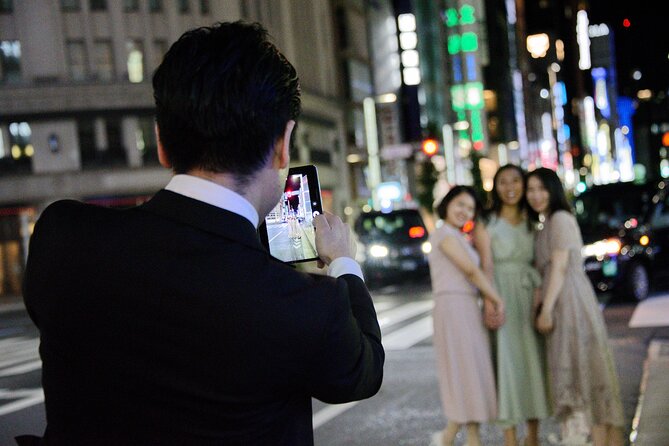
- Strong photo focus: Guides can help with group photos and take you to useful viewpoints.
- A smart first-night overview: Cover a wide area before deciding where to return on foot.
- Good value for a group: The $496.17 price is per vehicle group, not per person.
Why Tokyo works so well after sunset
Tokyo is impressive by day, but the city’s scale becomes easier to understand at night. Office towers glow, shop signs spill light onto the sidewalks, and major districts take on completely different moods. This tour lets you compare polished Ginza, neon-heavy Shibuya, nightlife-focused Roppongi, and the bright entertainment center of Shinjuku in a single outing.
The private vehicle matters here. Tokyo’s key sights are not lined up in one compact center, so moving between them by rail and on foot can take time and energy. A van lets you cross the city without repeatedly finding stations, changing trains, or deciding which exit to use.
You should think of this as a moving introduction to Tokyo, not a deep visit to nine separate neighborhoods. Most stops are photo breaks or short drives through the district. That is useful when you have only one free night, are traveling with children, or want to get your bearings before exploring independently.
The tour is especially practical at the start of a trip. One family used it on their first night to adjust to the time difference, while another group of seven used it to see Tokyo’s lights during a short stay. You can ask your guide to focus on the parts of the city that matter most to you.
A few more Tokyo tours and experiences worth a look


A private van and a route that can change
The tour costs $496.17 per group of up to nine people. That price looks high for one or two people, but the calculation changes with a larger party. Split among nine, it comes to roughly $55 per person. For a family or group that would otherwise pay for several separate taxis, the price can make reasonable sense, particularly because the route covers so much ground.
The vehicle has been repeatedly described as comfortable and clean, with several guides using vans suited to families and larger groups. Baby seats and child seats are available if requested. Pickup is offered, and the activity uses a mobile ticket, which keeps the evening simple.
Your driver-guide is an important part of the experience. The company uses several guides, including Douglas, Takumi, Babu, Richie, Soya, Ellie, Roberto, Shogo, Kana, and Leonardo. The feedback points to a consistent strength: punctual drivers who communicate before pickup and are willing to adjust the evening.
Takumi has helped plan stops, take group pictures, and make dinner arrangements. Douglas has sent a proposed route in advance and adjusted it for seasonal lights. Babu has helped families with photographs and food stops. Shogo has taken guests to less obvious photo viewpoints, including a Godzilla-related spot.
Still, the guiding style may vary. One experience was described as more driver-focused than explanation-focused, with the guide waiting for the group to decide where to go. If you are new to Tokyo and do not know which areas deserve your time, tell the operator that you want active recommendations, not just transportation.
Rainbow Bridge and Tokyo Bay
The evening begins with a drive across Rainbow Bridge. The bridge is lit after dark, and the road gives you broad views toward Tokyo Bay as you move across it. The official stop is about 10 minutes, with no admission charge.
This is a scenic opening rather than a long sightseeing visit. You may step out for photographs, but the key experience is the drive itself. The bay breeze can feel cold, so bring a coat, even if the rest of the evening is mild.
The bridge also sets the tone for the tour. You are not simply checking off indoor attractions. You are watching Tokyo from roads, waterfronts, and carefully chosen stopping points, with the city’s lights providing the backdrop.
Ginza’s polished streets
The drive through Ginza lasts about 30 minutes. Tokyo’s best-known shopping, dining, and entertainment district is known for its bright storefronts, grand buildings, and striking architecture.
Ginza is a good contrast to the louder neon of Shibuya and Shinjuku. The area feels more polished and formal, with major buildings designed by prominent architects. Your guide can help with photographs, which is useful because a passing view from the van does not always show the district at its best.
Do not expect a full shopping visit here. The point is to see the district after dark and understand its character. If you want department stores, restaurants, or luxury shopping, you will need to return another time.
Tokyo Tower’s best photo moment
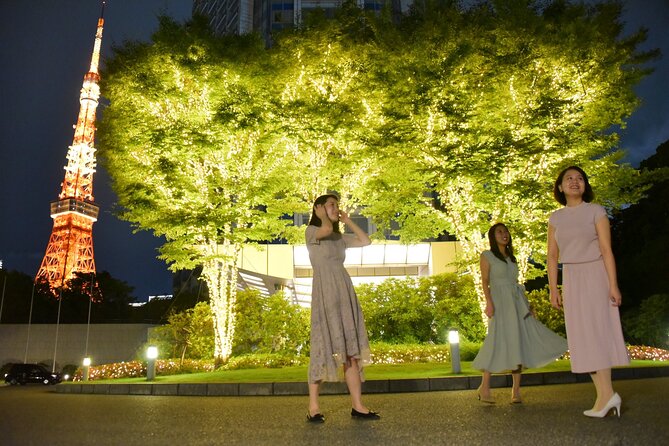
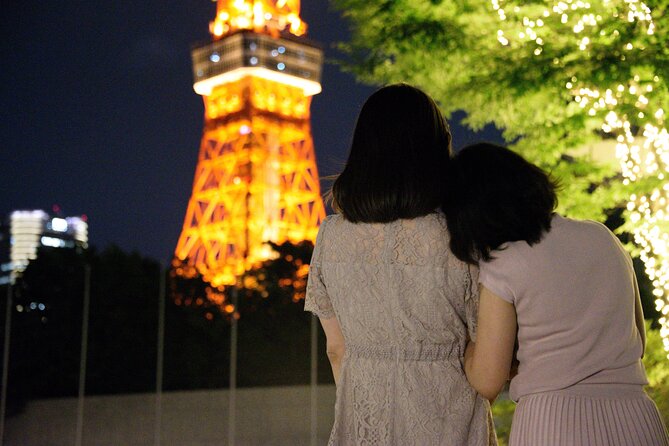
Tokyo Tower is one of the evening’s main stops, with about 20 minutes set aside for photographs. Its orange glow against the night sky gives you one of Tokyo’s most recognizable images.
Admission to the tower is not included. The tour description presents this as an exterior photo stop, so you should not assume that you will have time to go up the tower. That is not a major flaw for a night overview, since the illuminated exterior is the main visual reward, but anyone wanting an observation-deck visit should confirm the plan before booking.
A skilled guide can make this stop much better by choosing a useful angle and helping with pictures. Several guides are praised for knowing where to position a group, which saves you from taking rushed selfies in the dark.
Other private tours in Tokyo

Tokyo Station’s old-meets-new character
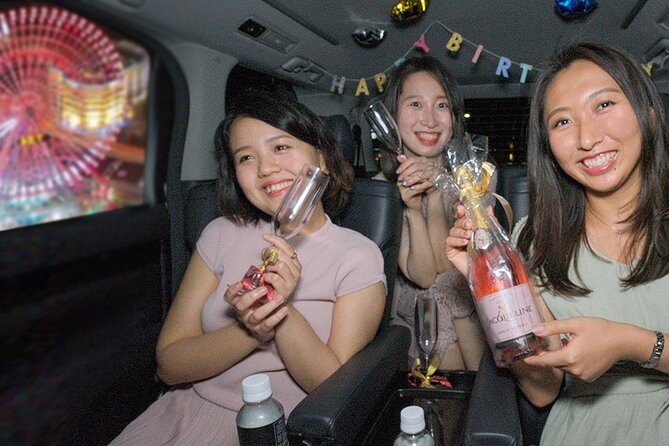
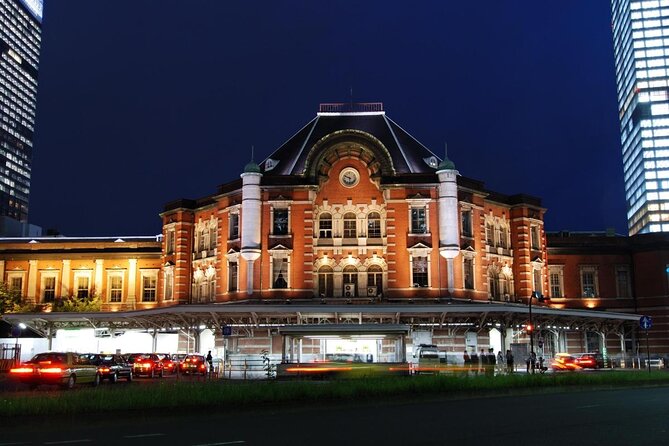
Tokyo Central Railway Station receives about 15 minutes. Built in 1914, the station still has a nostalgic feel that differs sharply from Tokyo’s glass towers and electronic signs.
The stop is aimed at photographs, especially in front of the station’s historic facade. It is also a useful reminder that Tokyo is not only about neon and giant screens. The city mixes older architectural details with some of the busiest transport infrastructure in Japan.
Fifteen minutes is enough for a picture and a quick look, but not enough to explore the station complex. Treat this as a brief visual pause rather than a station tour.
Odaiba and the Tokyo Bay lights
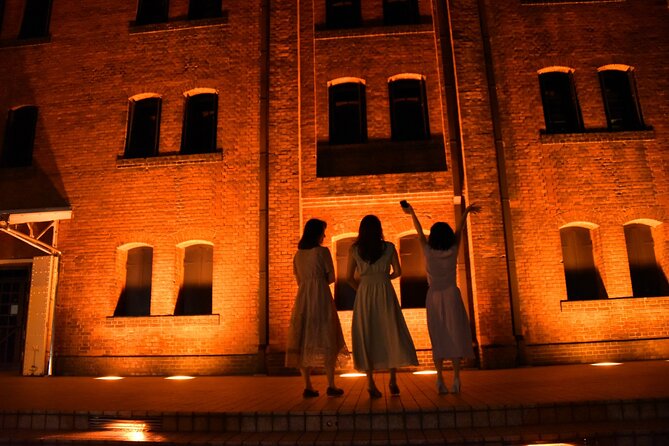
The Daiba, or Odaiba, portion lasts about 40 minutes, making it one of the longer stops. This man-made island in Tokyo Bay combines shopping and entertainment facilities with wide views and bright modern attractions.
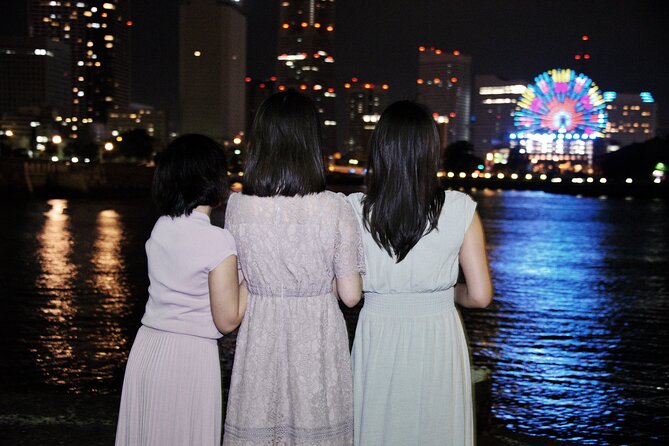
The area is associated with a large Ferris wheel lit by 120,000 neon tubes that can display changing patterns. The colorful lighting fits the night-tour theme perfectly, and the open waterfront setting gives you a change of pace after the dense streets of Ginza.
Odaiba is also a practical stop for groups that want photographs without squeezing through a crowded commercial street. The tradeoff is distance. Reaching the island takes time, and traffic can affect how long you actually have outside the van.
Roppongi, Omotesando, and the city’s changing moods
The drive through Roppongi lasts around 20 minutes. This is Tokyo’s major nightlife district for both Japanese residents and international visitors, and the evening drive shows you its busiest areas.
Roppongi is best understood from the street rather than through a single landmark. Expect a look at illuminated roads, nightlife entrances, and the district’s late-night energy. If you want to eat, drink, or visit a club, this tour does not provide enough time for a proper stop.
Omotesando follows for about 20 minutes. It is unusual among Tokyo avenues because trees line its length, and winter brings seasonal illuminations. The tree-lined boulevard gives you a calmer visual break from Roppongi’s nightlife and Shibuya’s screens.
These two areas show why a driving tour can be useful. You can compare Tokyo’s moods without spending half an hour walking from one neighborhood to another. The limitation is that both stops are short, so you see the atmosphere more than the details.
Shibuya Crossing under giant screens
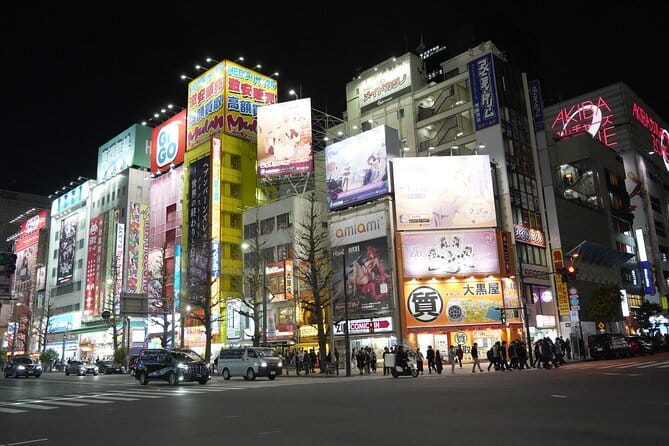
Shibuya receives about 30 minutes and is one of the tour’s most anticipated stops. The district is famous for Shibuya Crossing, where broad streams of pedestrians move through an intersection surrounded by enormous video screens and neon advertising.
The tour gives you a chance to photograph the crossing and take in the scale of the district. Your guide may know a convenient place to stop, which matters in an area full of traffic and pedestrians. The vehicle provides a comfortable base, but you should expect only a short look rather than a long walk through Shibuya’s shops and side streets.
Shibuya can feel especially familiar if you have seen Tokyo in films, television, or anime. The real scene is louder, busier, and less tidy than a screen version, which is part of its appeal. You see a working commercial district, not a staged attraction.
Shinjuku, Kabukicho, and Golden Gai
The final listed area is Shinjuku, with about 20 minutes in the district. The route includes the bright signs of Kabukicho and the tiny bars of Golden Gai, where hundreds of small drinking spots fill narrow lanes.
Golden Gai is best for atmospheric photographs. The lanes are compact, full of signs and little doorways, and look very different from the broad avenues near Shibuya. Because the stop is short, you should not expect to visit several bars or spend a full evening there.
Shinjuku also provides some of Tokyo’s most eye-catching modern advertising, including giant 3D displays. Your guide can point out the best-known screens and photo angles. The district is a fitting finish because it brings together neon, nightlife, narrow streets, and huge commercial signs.
How flexible is the evening?
Flexibility is one of the tour’s strongest features. Guides have changed routes, added requested areas, built in food stops, and adjusted plans for Christmas illuminations. One guide helped a group stop for ramen, while another suggested a place to collect dinner during the drive.
You should communicate your priorities clearly before pickup. Tell the operator if you care most about Tokyo Tower, winter lights, architecture, food, anime-related locations, or waterfront views. If your group includes children or older family members, say so when requesting the route.
Do not assume every stop will receive equal time. The published plan includes nine areas, but traffic, parking, and your requests can change the balance. A private tour gives you control, but you still need to choose between breadth and time outside the vehicle.
The strongest guides take the lead when needed. Roberto, Takumi, Douglas, and Richie are repeatedly described as helpful, friendly, and good at adapting plans. Soya is praised as a careful driver, while Shogo is noted for cultural and geographic explanations. The less successful experience suggests that you should ask for a suggested route if this is your first visit.
Price, timing, and practical details
The usual operating hours are 6:00 PM to 10:00 PM, Monday through Sunday, for bookings through December 23, 2025. From December 24, 2025 through January 4, 2026, the listed hours are 6:00 PM to 7:00 PM. From January 5 through December 10, 2026, the listed hours are 4:00 PM to 7:00 PM.
Because the tour requires good weather, poor conditions can lead to a different date or a full refund. You can cancel for a full refund up to 24 hours before the start time. Confirmation is sent within 48 hours, subject to availability.
Most people can participate, and the tour is near public transportation, though pickup makes that less important. The private format means only your group takes part, with capacity for up to nine people.
The strongest practical advice is to dress for the waterfront and allow for traffic. Tokyo’s roads can slow the pace, especially around major districts. If you want a relaxed night, choose fewer priorities. If you want a broad first look at the city, accept that some stops will be brief.
Who should book this Tokyo night drive?
I would choose this tour for a couple wanting an easy evening, a family with children, or a group of friends splitting the vehicle cost. It also suits anyone arriving in Tokyo with one free night and wanting to see several famous areas without mastering the rail system immediately.
The tour is less suitable if you want detailed cultural talks, long neighborhood walks, shopping time, nightlife, or entry to Tokyo Tower. The experience is built around views, short stops, driving, and photographs.
The rating is 4.9 from 115 ratings, with 99 percent recommending it, and the praise centers on punctuality, clean vehicles, flexible routes, safe driving, photo help, and pleasant guides. Those are meaningful strengths for a private city tour. Still, the low rating shows the basic risk: if you dislike riding in traffic or need substantial time on foot, the evening may feel thin.
Should you book it?
Book this private Tokyo night tour if you want to see a wide slice of illuminated Tokyo in one evening and value comfort, flexible stops, and help with photographs. It is particularly good value for a full group of up to nine.
Before booking, send your preferred sights and ask the operator to recommend the best order. Request a guide who will explain the city and suggest stops rather than simply wait for instructions. Bring a coat for Rainbow Bridge, keep your expectations realistic about traffic, and treat the tour as an orientation with memorable night views, not a series of full neighborhood visits.
FAQ
How long is the Private Tokyo Night Tour?
The tour lasts approximately 3 to 4 hours.
How many people can join the private tour?
The private vehicle can accommodate a group of up to nine people.
What areas does the tour visit?
The route includes Rainbow Bridge, Ginza, Tokyo Tower, Tokyo Central Railway Station, Daiba, Roppongi, Omotesando, Shibuya, and Shinjuku.
Is admission to Tokyo Tower included?
No. Admission to Tokyo Tower is not included. The stop provides time to see the tower and take photographs.
Are pickup and child seats available?
Pickup is offered, and baby seats and child seats are available upon request.
What happens if bad weather cancels the tour?
If poor weather causes cancellation, you will be offered another date or a full refund. You can also cancel up to 24 hours before the start time for a full refund.
More Evening Experiences in Tokyo
More Private Tours in Tokyo
More Night Tours in Tokyo
More tours in Tokyo we've reviewed












Night Tours, compared.
 ★ 5.0Tokyo Night Foodie Tour in Shinjuku – Seasonal Sushi, Wagyu BeefFrom $111
 ★ 4.5Tokyo After 5: Authentic Japanese Food & Drink Night TourFrom $122
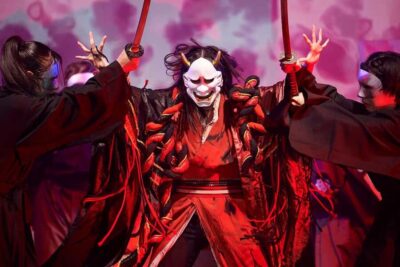 ★ 4.6Tokyo: Legend Samurai Entertainment Night in Kanda ShrineFrom $44
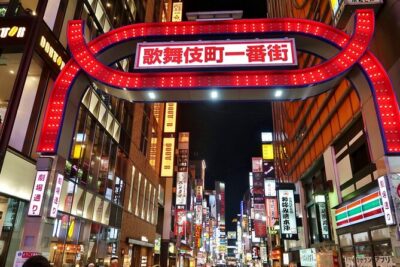 ★ 4.5The Dark Side of Tokyo – Night Walking Tour Shinjuku KabukichoFrom $25
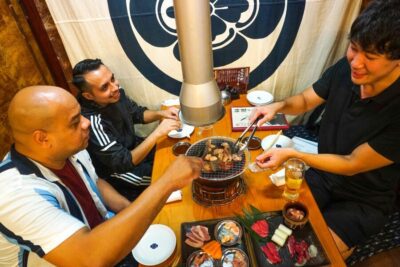 ★ 4.8Tokyo: Night Foodie Tour in ShinjukuFrom $164
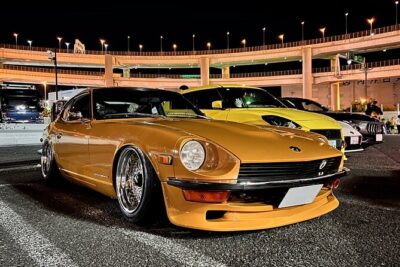 ★ 5.0Tokyo: Daikoku JDM Car Meet & Night Car Culture TourFrom $99